The Spirituality in Recovery: Finding Meaning Beyond Religion

In the demanding world of addiction recovery, many individuals discover that traditional religious paths do not align with their personal beliefs or experiences. Yet spirituality remains a cornerstone of lasting healing. This article explores a completely non-religious approach to spirituality — one rooted in connection, purpose, meaning, and mindful living. These elements support recovery regardless of faith, offering practical tools that strengthen resilience, reduce relapse risk, and restore a sense of wholeness.
Find Meaning & Purpose in Sobriety – Call Our Spiritual Wellness Program
At its core, non-religious spirituality is not about dogma or doctrine. It is about cultivating an inner sense of belonging to something larger than yourself — whether that is nature, community, your own growth, or the present moment. Recovery programs that embrace this broader view help individuals rebuild lives with clarity and strength. You do not need to adopt any belief system to benefit. The practices shared here are accessible, evidence-based in their outcomes across countless recovery journeys, and designed to meet you exactly where you are.
Understanding Non-Religious Spirituality in Recovery
Spirituality in recovery goes far beyond organized religion. It is the personal pursuit of meaning that helps you navigate the emotional turbulence of sobriety. When addiction has stripped away purpose, spirituality gently restores it by focusing on universal human needs: feeling connected, living with intention, and contributing to the world.
This approach is reassuring because it removes pressure. No rituals, no scriptures, no specific higher power required. Instead, it invites you to explore what feels authentic. Research in behavioral health consistently shows that individuals who develop a personal sense of meaning experience lower rates of relapse and higher life satisfaction. The beauty lies in its flexibility — it adapts to your background, culture, and values.
The Healing Power of Connection
Connection forms the foundation of non-religious spirituality. Addiction often isolates. Recovery heals when you rebuild bonds with yourself, others, and the world around you.
- Connection to self means listening to your emotions without judgment, honoring your progress, and treating your body and mind with compassion.
- Connection to others happens through honest conversations in support groups or everyday relationships, reminding you that you are not alone.
- Connection to the larger world arises when you feel part of something greater — a community project, a shared goal, or the natural environment.
These connections reduce the emptiness that once fueled addictive behaviors. They create a safety net of support that feels reliable and real.
Discovering Purpose and Meaning as Your Recovery Compass
Purpose is the quiet force that gives direction when cravings arise or setbacks occur. In non-religious spirituality, purpose emerges from within. It is the answer to the question: “What kind of life do I want to build now that I am free?”
Meaning is not handed to you; it is created through small, consistent choices. Whether mentoring someone new in recovery, pursuing a creative passion, or simply showing up fully for your family, these acts anchor you. They transform recovery from mere abstinence into a fulfilling life story.
The Four Dimensions of Non-Religious Spirituality
Non-religious spirituality rests on four interconnected dimensions that work together to support lasting recovery. These dimensions provide a clear framework you can return to again and again.
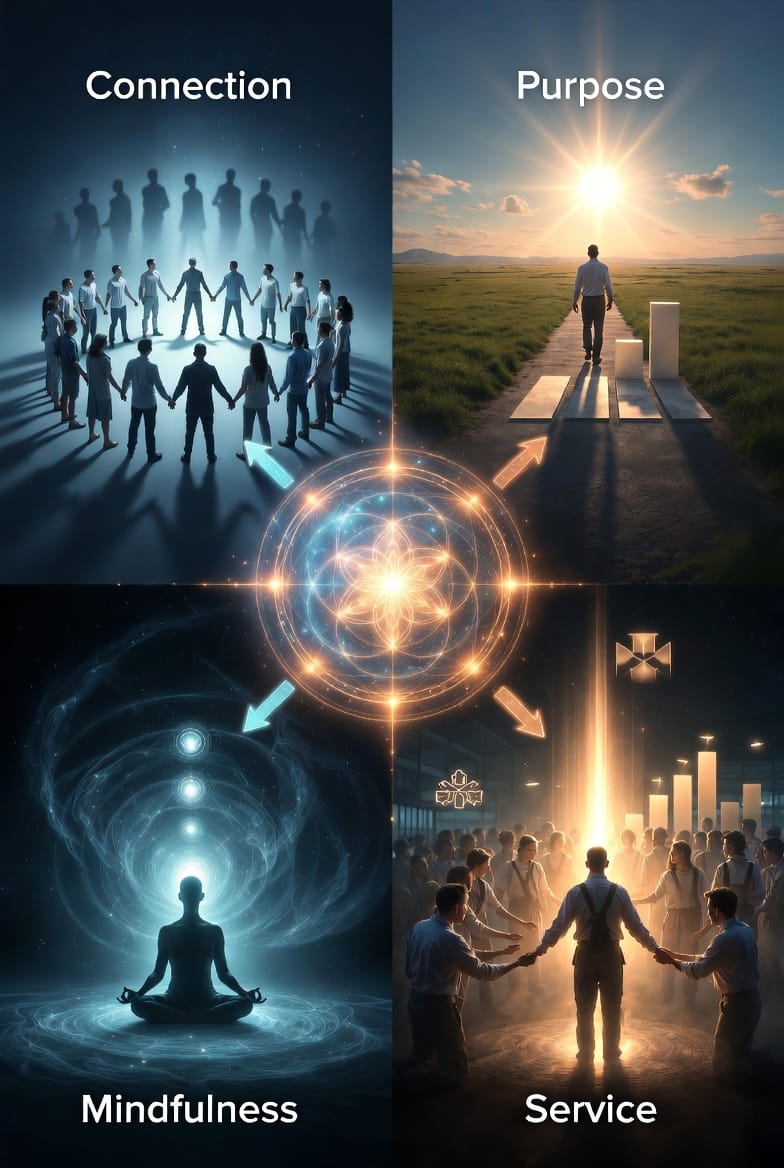
Connection, purpose, mindfulness, and service form a complete system. When practiced together, they create balance and forward momentum in your recovery journey.
Mindfulness and Meditation: Anchoring in the Present Moment
Mindfulness is the practice of observing thoughts and feelings without becoming overwhelmed by them. In recovery, it is a powerful tool for managing triggers and cravings. Simple meditation techniques — even five minutes daily — train the mind to stay grounded.
You begin by focusing on your breath. When difficult emotions surface, you acknowledge them gently and return to the present. Over time, this builds emotional regulation and reduces the automatic urge to escape discomfort through old habits. Meditation is secular, portable, and proven to support long-term sobriety.
Nature Connection: Finding Awe and Renewal Outdoors
Time in nature offers a profound spiritual experience without any religious framework. A quiet walk in the woods, watching a sunset, or sitting by water can evoke a sense of awe that reminds you of life’s larger rhythms.
Nature connection grounds you. It lowers stress hormones, lifts mood, and restores perspective. Many in recovery report that regular time outdoors becomes a reliable source of peace and inspiration.
The Transformative Power of Service Work
Service — helping others — shifts focus from self-centered struggles to meaningful contribution. Whether volunteering at a local shelter, sharing your story in a meeting, or simply offering support to a peer, service builds self-worth and reinforces recovery.
It creates a positive feedback loop: giving back reminds you of your own progress and strengthens your sense of purpose. Service is spirituality in action.
Practical Spiritual Practices You Can Start Today
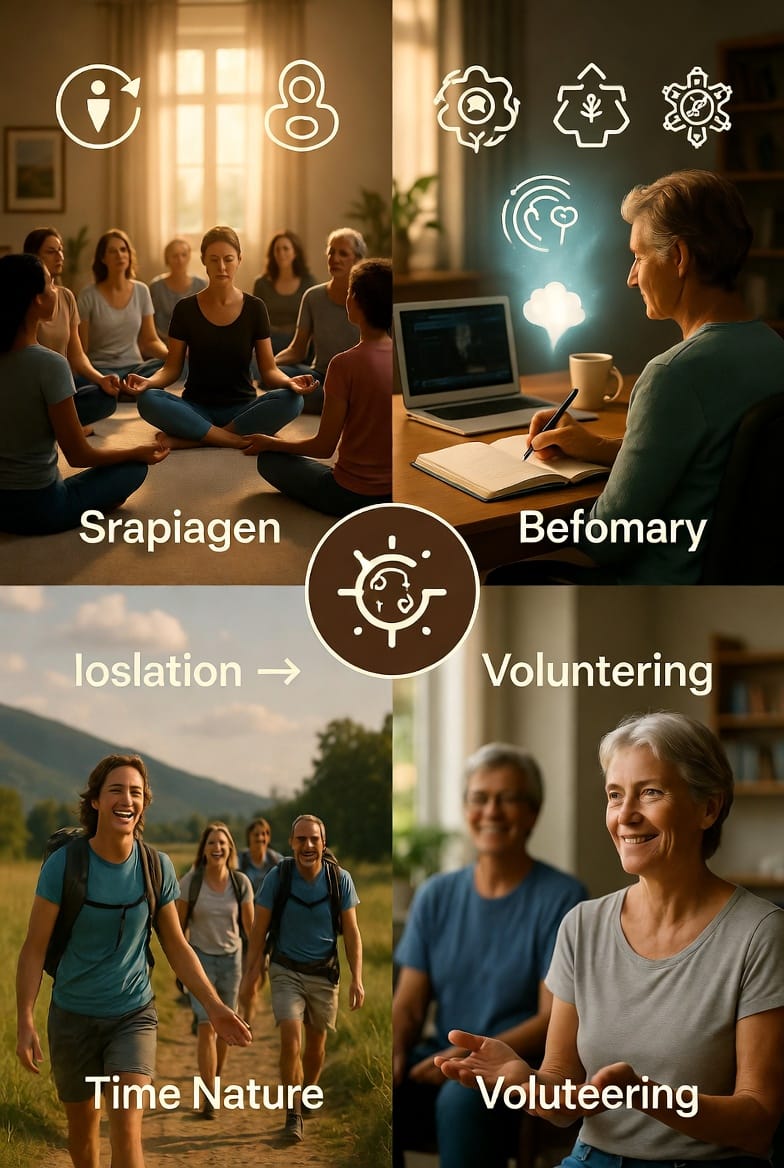
Incorporate these simple, non-religious practices into your routine:
- Meditation: Begin with two minutes of breath awareness each morning.
- Gratitude journaling: Write three specific things you appreciate each evening.
- Time in nature: Schedule weekly outdoor time without distractions.
- Helping others: Perform one small act of service weekly, no matter how modest.
These practices are flexible and grow with you. They require no special equipment — only your willingness.
Overcoming Common Misconceptions
Some worry that spirituality means religion. It does not. Others fear it is too vague to help. In reality, non-religious spirituality is practical and results-oriented. It meets scientific standards for supporting mental health and addiction recovery while respecting personal freedom.
If doubts arise, remember: this path is yours to shape. Start small. Notice what feels meaningful. Adjust as needed.
Real Progress Through Personal Meaning
Countless individuals have rebuilt lives using these principles. They report deeper relationships, renewed energy, and a quiet confidence that cravings no longer control them. The spiritual wellness program at our center integrates these exact dimensions, tailoring them to each person’s unique needs.
Your Next Step Toward a Meaningful Recovery
Spirituality in recovery is not a luxury — it is a practical necessity for sustained healing. By embracing connection, purpose, mindfulness, and service, you create a life rich with meaning that stands strong against challenges.
Find your path to meaning in recovery. The journey begins with a single step, and we are here to walk beside you.
Discover Non-Religious Spirituality in Recovery – Call Today