The Grief and Addiction Connection: Processing Loss in Recovery

Grief is more than sadness — it is a profound, often unspoken force that can quietly shape the path to substance use. At our rehab center, we see time and again how unresolved grief becomes a hidden driver of addiction. When loss remains unprocessed, it creates an emotional void that substances temporarily fill. The good news is that healing is entirely possible. By addressing grief directly within a structured recovery program, individuals reclaim their lives with clarity, resilience, and lasting sobriety.
Heal Your Grief & Break Free from Addiction – Call Now
This article explores the powerful link between grief and addiction. You will discover how unaddressed loss fuels substance use, why grief work must be a core part of treatment, and the proven therapeutic approaches that help people move forward. With compassionate care and the right tools, you can break the cycle and build a future grounded in healing rather than escape.
Understanding Grief as an Underlying Factor in Addiction
Grief touches everyone, yet its role in addiction is frequently overlooked. Loss comes in many forms — the death of a loved one, the end of a relationship, job loss, health challenges, or even the quiet mourning of a life that could have been. When these experiences are not fully processed, they linger beneath the surface as unresolved grief.
In recovery settings, we recognize grief as a primary underlying factor for many entering treatment. The pain of loss creates intense emotions: emptiness, anger, guilt, and overwhelming sadness. Without healthy outlets, the mind and body search for relief. Substances offer a fast but false solution — numbing the ache for a short time while deepening the original wound.
Clients often arrive at rehab believing their addiction is the central problem. Through careful assessment, we uncover that unresolved grief is the true foundation. This insight changes everything. Instead of treating only the surface symptoms of substance use, we address the root emotional pain. This grief-informed approach leads to more complete and sustainable recovery.
How Unresolved Grief Contributes to Substance Use
The connection between grief and addiction is both psychological and physiological. When someone experiences significant loss, the brain’s natural reward and stress systems become dysregulated. The intense sorrow can feel unbearable, prompting a search for anything that dulls the distress.
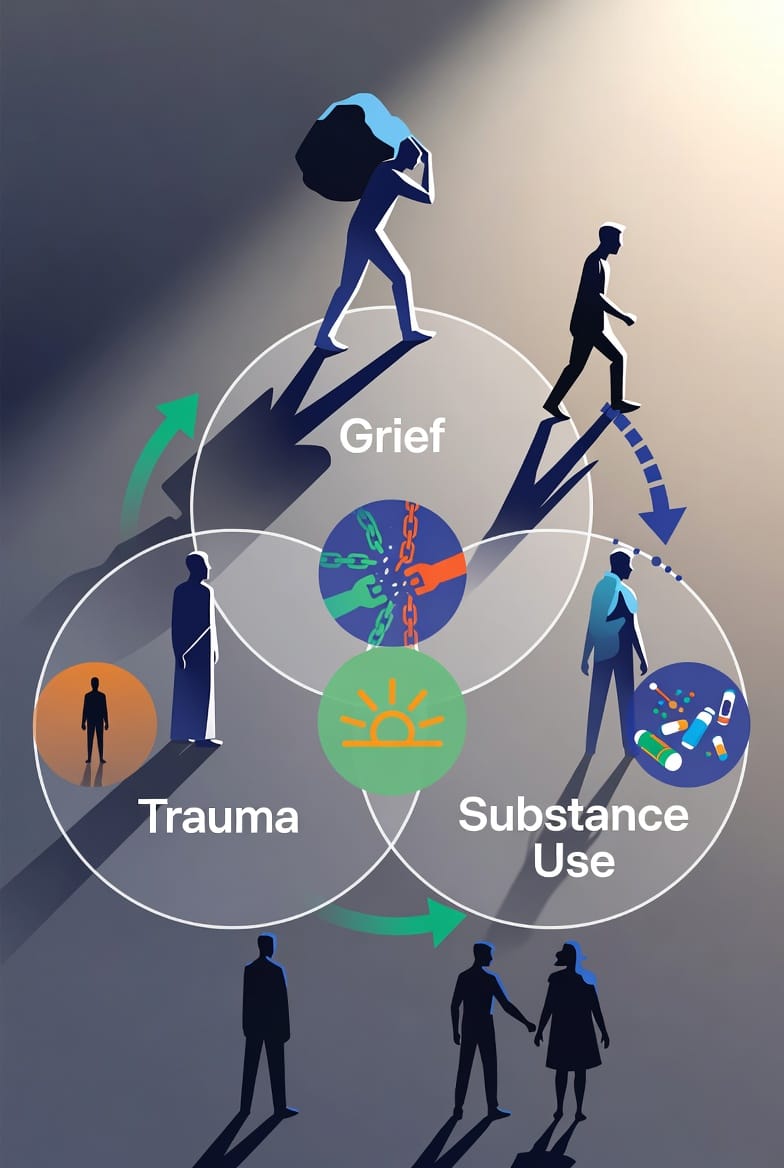
Self-medication becomes the default coping strategy. Alcohol, opioids, or stimulants provide temporary escape from intrusive memories, regret, or the heavy weight of “what if.” Over time, this pattern rewires the brain. The substance no longer simply numbs grief — it becomes necessary for daily functioning. Tolerance builds, dependence follows, and the original grief remains untouched, now compounded by the consequences of addiction.
This creates a vicious cycle. Unresolved grief intensifies cravings, while continued substance use prevents healthy mourning. Families notice the withdrawal, irritability, and isolation, yet rarely connect these behaviors back to hidden loss. At our program, we gently guide clients to see this link. Once they understand how grief fuels substance use, the shame lifts and motivation for true healing grows.
Many describe the moment of realization as liberating. They finally see that their addiction was never about weakness or lack of willpower — it was an understandable response to profound pain. This awareness alone begins the healing process.
Why Grief Work Is Essential in Treatment
Ignoring grief during addiction treatment is like repairing a house while leaving the foundation cracked. Grief work is not an optional add-on; it is a cornerstone of successful, long-term recovery. When individuals process their losses in a safe, supported environment, they reduce the emotional triggers that once drove substance use.
Research within clinical practice consistently shows that clients who engage in dedicated grief processing experience fewer relapses and report higher levels of life satisfaction. They sleep better, form healthier relationships, and rediscover purpose. By contrast, those who bypass grief work often return to old patterns when life stressors reactivate the unhealed pain.
At our rehab, grief-informed care means every treatment plan includes space for mourning. We create a reassuring atmosphere where clients know it is safe — and necessary — to feel the full range of emotions. This work builds emotional resilience. Clients learn that pain does not have to be feared or avoided; it can be met with compassion and transformed into growth.
The benefits extend beyond the individual. Families heal as they witness their loved one’s progress. Relationships strengthen when unspoken grief is finally voiced and understood. Recovery becomes a shared journey rather than an isolated battle.
Proven Therapeutic Approaches for Grief in Recovery
Effective grief work draws on several compassionate, evidence-based methods. We tailor these approaches to each client’s unique story, ensuring the process feels supportive rather than overwhelming.
Bereavement Groups
Bereavement groups bring together individuals who understand the weight of loss. In these safe circles, clients share stories, listen deeply, and realize they are not alone. The power of community normalizes grief and reduces isolation — a major risk factor for relapse. Facilitated by trained professionals, these groups offer validation and practical coping strategies that last well beyond treatment.
Individual Therapy
One-on-one sessions allow deeper exploration of personal grief. Therapists use gentle, proven techniques to help clients revisit memories, release guilt, and reframe their loss within a larger life narrative. This personalized attention ensures that even the most complicated or long-buried grief receives the care it deserves.
Rituals and Creative Practices
Memorial rituals provide tangible ways to honor what was lost while creating space for new beginnings. Clients may write letters, light candles, plant trees, or design personal ceremonies. These acts transform abstract sorrow into meaningful action. Combined with journaling and art therapy, they offer multiple pathways for expression when words alone fall short.
Each approach reinforces the same reassuring truth: grief does not disappear, but it can evolve. With guidance, the pain softens, the memories become treasures rather than triggers, and life regains color.

Real Transformation Through Grief-Informed Recovery
Consider the journey of those who have walked this path before you. Many arrive carrying decades of unprocessed loss alongside their addiction. Through consistent grief work, they experience profound shifts. One client described it as “finally putting down a backpack filled with stones I didn’t know I was carrying.” Another rebuilt family ties that grief and substances had fractured for years.
These stories are not rare exceptions — they reflect the standard outcome when grief is met with skilled, compassionate care. The process takes courage, yet the rewards are life-changing: deeper self-understanding, stronger relationships, and freedom from the need to numb emotions.
Heal Grief to Heal Addiction
Healing grief is the key to healing addiction. When you address the underlying loss, the compulsion to use substances loses its power. You gain tools to navigate future challenges without returning to old patterns.
If you or someone you love is struggling with the silent weight of grief and substance use, know that help is available right now. Our grief-informed program is designed to guide you through every step of this important work in a supportive, professional environment.
Take the first step toward processing your loss and reclaiming a life of clarity and connection. Recovery is within reach — and it begins with honoring your grief.
Process Your Loss and Achieve Lasting Sobriety – Call Now