The Co-Occurring Disorders: Treating Addiction and Mental Health Together

When addiction and mental health challenges arrive together, they create a complex cycle that demands more than separate solutions. Co-occurring disorders – also known as dual diagnosis – affect millions of people who find themselves battling substance use while managing conditions such as depression, anxiety, PTSD, or bipolar disorder. Treating only the addiction or only the mental health issue often leads to incomplete recovery and higher risk of relapse.
Heal Both Mind & Addiction – Call Now
Integrated treatment changes that reality. It delivers coordinated care that addresses both conditions at the same time, in the same place, by the same team. This approach recognizes that the two issues fuel each other and must be healed together. At our rehab center, we have seen time and again how integrated care restores hope, rebuilds lives, and delivers lasting sobriety and emotional wellness.
Understanding Co-Occurring Disorders
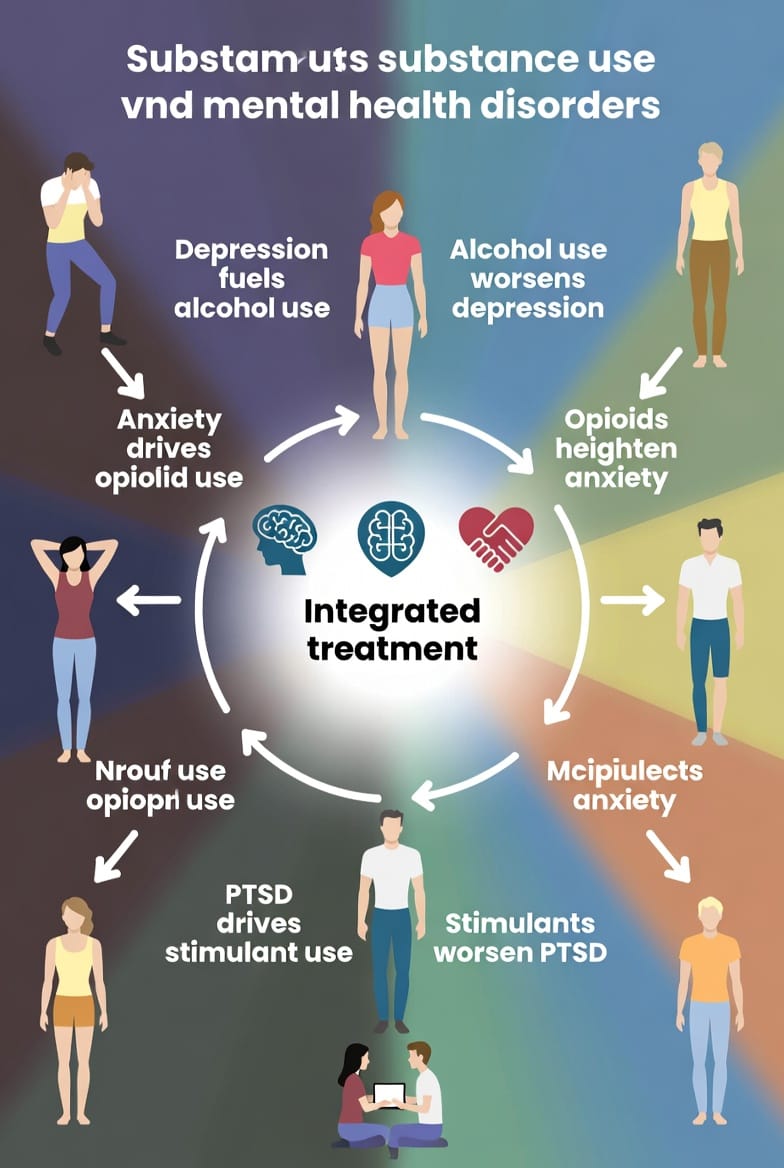
Co-occurring disorders occur when a substance use disorder and a mental health disorder exist simultaneously. The relationship is bidirectional. Someone experiencing chronic anxiety may turn to alcohol or opioids for temporary relief, while long-term substance use can trigger or worsen depression and mood instability.
This overlap is not rare. Many individuals arrive at treatment believing their mental health symptoms are simply a side effect of addiction, only to discover that both conditions have deep roots. Without recognizing this connection, traditional single-focus programs leave critical needs unmet.
Integrated treatment solves this by combining addiction recovery protocols with evidence-based mental health interventions. The goal is not merely abstinence but genuine healing of the whole person – mind, body, and spirit.
Common Mental Health Conditions That Co-Occur With Addiction
Several mental health disorders frequently appear alongside substance use. Recognizing them early is the first step toward effective dual-diagnosis care.
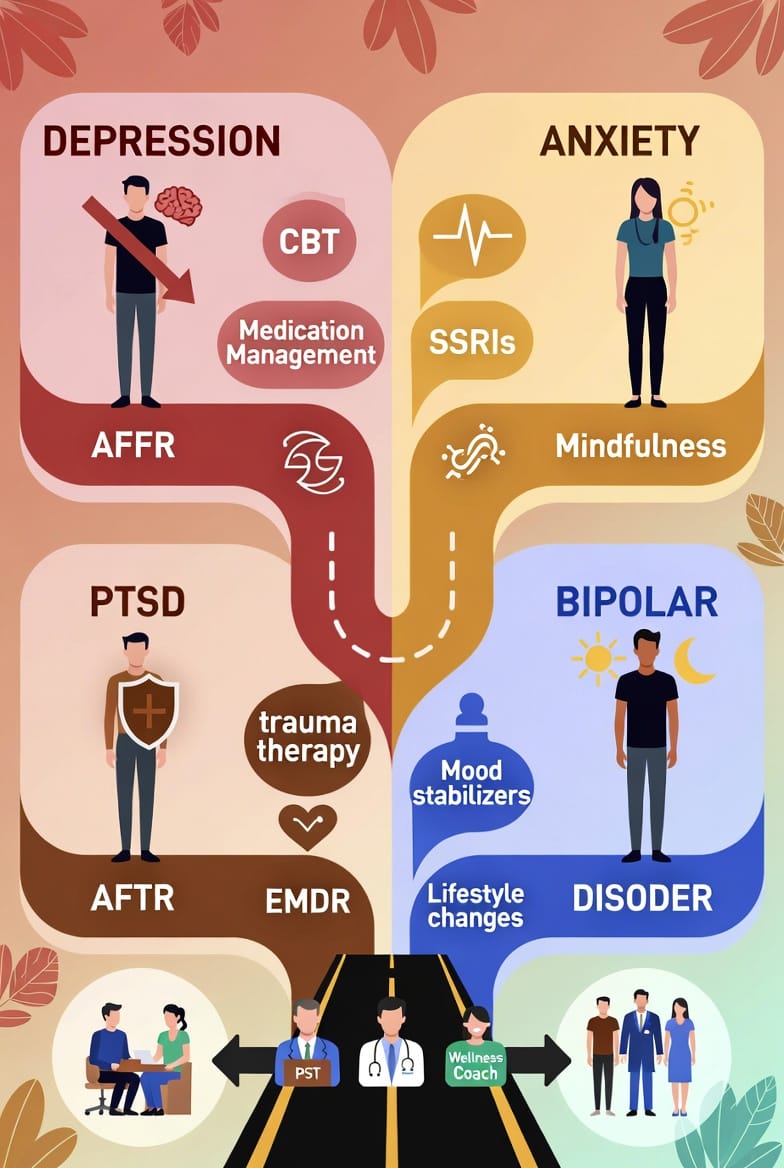
- Depression: Persistent sadness, loss of interest in daily activities, fatigue, and feelings of hopelessness often drive individuals to self-medicate with alcohol or stimulants. In turn, substance use deepens depressive episodes, creating a downward spiral.
- Anxiety Disorders: Racing thoughts, panic attacks, and overwhelming worry can make everyday life feel unmanageable. Many people use sedatives or alcohol to quiet anxiety, yet withdrawal and chemical imbalance intensify the symptoms over time.
- PTSD: Trauma survivors frequently experience flashbacks, nightmares, and hypervigilance. Substances may temporarily numb the pain, but they ultimately prevent true processing of the trauma and heighten emotional reactivity.
- Bipolar Disorder: Extreme mood swings between manic highs and depressive lows complicate recovery. During manic phases, impulsive substance use increases; during depressive phases, self-medication becomes a dangerous coping mechanism.
Each of these conditions interacts uniquely with addiction. Integrated treatment tailors care to the specific combination an individual faces, ensuring no aspect of the struggle is overlooked.
Why Integrated Treatment Is Essential
Treating addiction without addressing the underlying mental health condition is like repairing a leaking roof while ignoring the storm inside the house. Integrated treatment is essential for three powerful reasons.
First, it prevents the “revolving door” effect. When only one issue is treated, the untreated condition often triggers relapse. Someone sober from opioids may still battle severe anxiety, leading them back to old patterns for relief.
Second, it improves outcomes dramatically. Clients who receive simultaneous care show higher completion rates, longer periods of sobriety, and greater improvements in overall quality of life. The brain and body heal faster when both challenges are met with coordinated support.
Third, it restores dignity and hope. Many people with co-occurring disorders have felt misunderstood or dismissed by traditional programs. Integrated care validates their full experience and empowers them with tools that work for their unique situation.
We reassure every client: you are not broken beyond repair. With the right dual-diagnosis approach, lasting recovery is not only possible – it is the expected result.
What Dual-Diagnosis Care Looks Like in Practice
Dual-diagnosis care is comprehensive, compassionate, and highly individualized. Here is how the process unfolds at our program:
- Thorough Assessment: Upon arrival, a multidisciplinary team conducts detailed evaluations of both substance use history and mental health symptoms. This ensures an accurate picture from day one.
- Personalized Treatment Plan: Every plan combines medical detox (when needed), medication management for psychiatric symptoms, and targeted therapies such as cognitive behavioral therapy (CBT), dialectical behavior therapy (DBT), and trauma-informed care.
- Group and Individual Therapy: Clients work one-on-one with licensed therapists while participating in peer groups specifically designed for co-occurring disorders. Sharing experiences with others who understand both struggles reduces isolation.
- Holistic Supports: Nutrition counseling, physical fitness, mindfulness practices, and family therapy address the full spectrum of wellness. These elements strengthen resilience and prevent future crises.
- Aftercare Planning: Before discharge, the team creates a robust continuing-care plan that includes outpatient therapy, support groups, and medication follow-up to maintain progress.
Throughout every phase, the focus remains on integrated treatment. Addiction counselors and mental health professionals collaborate daily, ensuring consistency and depth of care. Clients never feel pulled in conflicting directions.
The Proven Benefits of Treating Both Conditions Together
Clients who complete integrated treatment consistently report:
- Reduced cravings and stronger emotional regulation
- Improved relationships and renewed sense of purpose
- Greater confidence in handling life’s challenges without substances
- Long-term sobriety rates that far exceed single-focus programs
These results stem from addressing root causes rather than symptoms alone. When the mind is stabilized and the addiction is managed, true freedom becomes possible.
We have witnessed countless transformations. Individuals who once felt trapped by the double burden of addiction and mental illness now lead fulfilling, sober lives filled with connection and achievement. Integrated treatment makes that difference.
Taking the First Step Toward Lasting Recovery
If you or someone you love is facing co-occurring disorders, know that help is available and effective. You do not have to navigate this alone. Our experienced team specializes in dual-diagnosis care and stands ready to support your journey with expertise, compassion, and proven results.
Reach out today. Your integrated recovery story begins with one courageous call.
Begin True Healing for Addiction & Mental Health