The Solar String Sizing: How Panel Configuration Affects System Performance
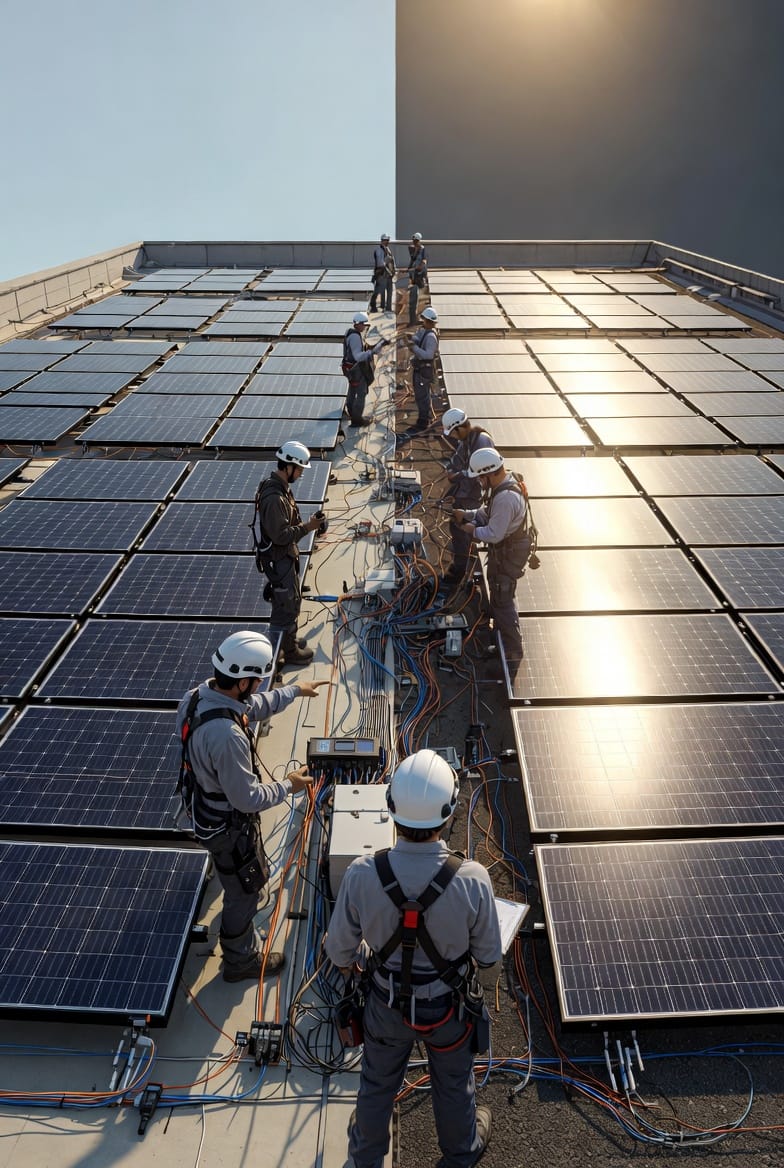
Solar string sizing is one of the most critical yet often overlooked aspects of photovoltaic system design. When panels are configured correctly into strings, your solar array delivers maximum energy output, operates safely within inverter limits, and provides decades of reliable performance. Get it wrong, and you risk voltage mismatches, reduced efficiency, or even equipment damage.
Get Expert Solar String Sizing Advice – Call Today
In this comprehensive guide, we explore the electrical principles behind solar panel strings, how string length and configuration influence voltage and current, and why precise matching to inverter specifications is essential. Whether you are designing a residential rooftop system or a larger commercial installation, understanding these fundamentals empowers you to optimize every kilowatt-hour your panels produce.
What Are Solar Strings and Why Do They Matter?
Solar panels generate direct current (DC) electricity. To create usable voltage levels for modern inverters, individual modules are wired together in series to form a string. In a series connection, the voltages of each panel add up while the current remains the same as the lowest-producing panel in that string.
This design choice is intentional. Inverters require a specific DC voltage window—typically between 200 V and 1,000 V depending on the model—to operate efficiently. By grouping panels into strings, installers can reach the ideal string voltage that keeps the inverter in its maximum power point tracking (MPPT) sweet spot throughout the day.
Proper string sizing directly translates to higher system performance. A well-designed string maximizes energy harvest, minimizes clipping losses, and protects components from overvoltage during cold mornings or undervoltage during peak heat. Homeowners and businesses alike benefit from lower electricity bills and faster return on investment when every panel works in perfect electrical harmony.
How Panel Configuration Influences Voltage and Current
Let’s break down the electrical reality. Suppose each panel has a rated voltage of 40 V and current of 10 A under standard test conditions.
- One panel alone: 40 V at 10 A = 400 W.
- Five panels in series (one string): Voltage becomes 200 V, current stays 10 A = 2,000 W.
- Two parallel strings of five panels each: Voltage remains 200 V, current doubles to 20 A = 4,000 W.
Notice how series connections multiply voltage while parallel connections multiply current. This flexibility allows designers to fine-tune the array to match inverter input requirements precisely.
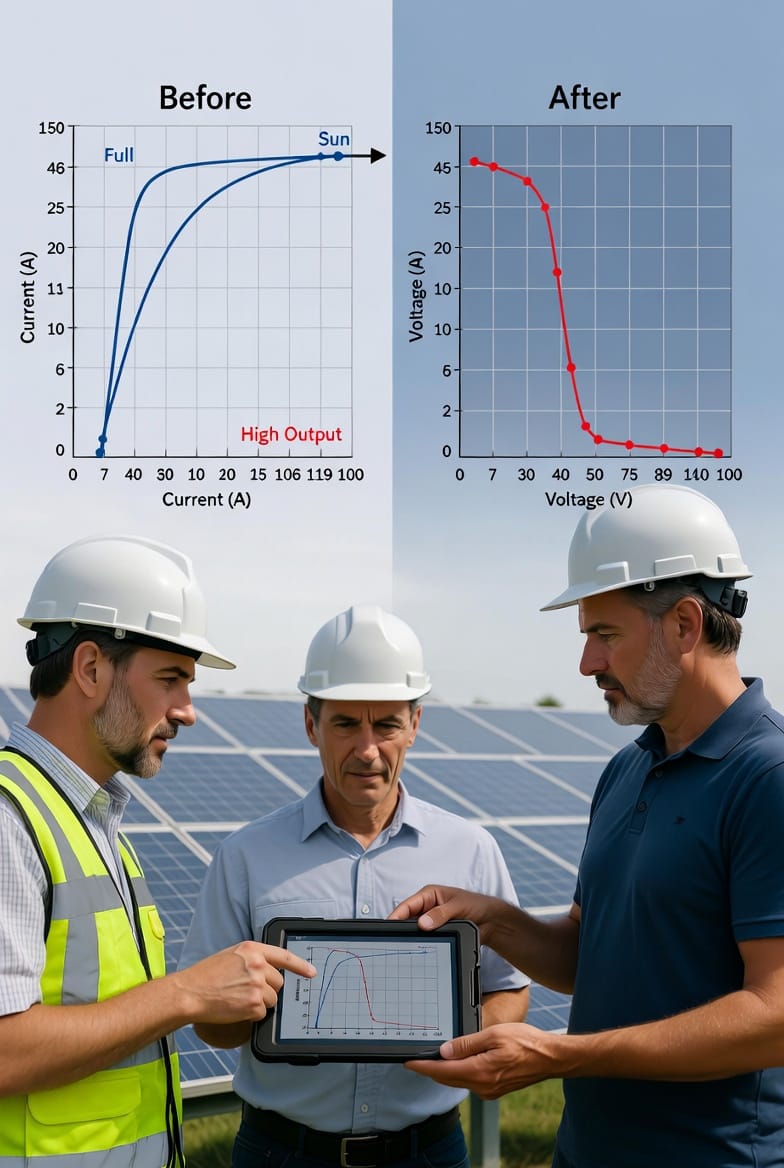
However, real-world conditions introduce variables. Temperature coefficients matter: panel voltage increases in cold weather and decreases in heat. A string sized for 600 V at 25 °C might spike to 720 V at 0 °C—potentially exceeding the inverter’s maximum input voltage if not calculated correctly. Conversely, hot afternoons can drop string voltage below the inverter’s minimum MPPT threshold, causing the system to shut down or produce far less power.
String sizing calculators used by experienced professionals account for these extremes using local weather data, ensuring your system stays within safe operating limits year-round.
The Critical Role of Inverter Specifications
Every inverter has published limits: maximum DC input voltage, MPPT voltage range, maximum current per MPPT channel, and total array power capacity. Matching your panel configuration to these specifications is non-negotiable for safety and performance.
Exceeding the maximum voltage risks inverter failure or fire hazards. Operating below the MPPT range forces the inverter into a less efficient mode or complete shutdown. Oversizing the array beyond the inverter’s AC output rating leads to clipping, where excess DC power is simply wasted.
Reputable system designers always cross-reference panel data sheets, inverter manuals, and site-specific conditions. The result? A balanced system that delivers predictable, high-yield performance without unnecessary stress on components.
Environmental Factors That Affect String Performance
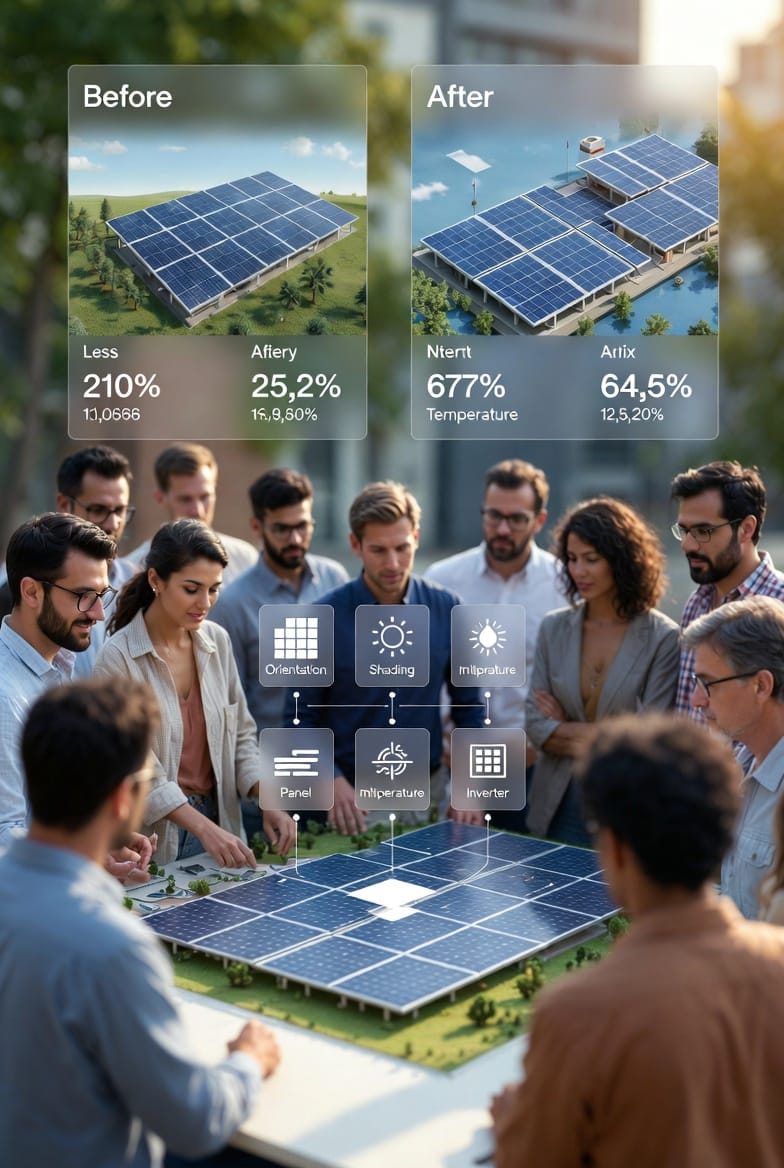
No two rooftops are identical. Orientation, tilt angle, and potential shading all influence how strings behave.
- Panel orientation and tilt: South-facing arrays at optimal tilt capture maximum sunlight, allowing longer strings without voltage drops. East-west splits may require shorter strings or multiple MPPT channels.
- Shading: Even partial shade on a single panel can drag down the entire string’s output because current is limited by the weakest link. Modern panels include bypass diodes to mitigate this, yet the loss remains significant if strings are poorly planned.
- Temperature effects: As noted earlier, extreme temperatures shift voltage dramatically. Professional string sizing incorporates these coefficients for rock-solid reliability.
Smart string design anticipates these challenges and builds resilience into the system from day one.
Risks of Improper String Sizing – And How to Avoid Them
The consequences of incorrect solar string sizing are real but entirely preventable:
- Overvoltage damage during cold snaps can destroy inverters and void warranties.
- Frequent MPPT shutdowns in hot weather waste valuable daylight hours.
- Current mismatch across parallel strings leads to uneven performance and reduced lifespan.
- Excessive clipping wastes potential energy and slows payback periods.
Rest assured, these risks disappear when experienced professionals handle the design. They use precise modeling software that simulates every hour of the year, factoring in local irradiance, temperature swings, and shading patterns. The outcome is a system engineered for maximum uptime and energy production.
Best Practices for Optimal Solar String Configuration
Achieving peak performance follows proven guidelines:
- Calculate string length using the inverter’s MPPT range and panel voltage at both low and high temperatures.
- Limit strings to the manufacturer-recommended maximum to stay safely under voltage ceilings.
- Use multiple MPPT inputs when arrays face different directions or experience uneven shading.
- Verify current compatibility so parallel strings produce balanced power.
- Incorporate module-level optimizers or microinverters only when string-level design cannot fully mitigate shading.
These practices ensure your panel configuration works in harmony with the inverter, delivering consistent, high-efficiency results season after season.
Real-World Performance Gains from Proper String Sizing
Consider a typical 10 kW residential system. With correctly sized strings matched to the inverter, annual output can increase by 8–15 % compared to a generic layout. That extra production means faster ROI and greater energy independence. Commercial installations see even larger gains—sometimes 20 % or more—because every percentage point translates into significant utility savings.
Proper design also extends equipment life. Inverters running within their optimal voltage window experience less thermal stress and fewer shutdown cycles. Panels themselves benefit from balanced electrical loads. The entire system simply works better when string sizing is treated as a science rather than an afterthought.
Key String Design Considerations at a Glance
Professional designers evaluate every variable:
- Local temperature extremes and their effect on open-circuit voltage.
- Site-specific shading analysis using advanced modeling tools.
- Panel orientation, tilt, and azimuth for each roof section.
- Inverter limits including maximum power, current, and MPPT voltage windows.
- Future-proofing for potential panel upgrades or system expansions.
By addressing these factors upfront, you protect your investment and enjoy worry-free solar production.
Why Professional Expertise Makes All the Difference
Solar technology evolves rapidly. New panel efficiencies, advanced inverter features, and updated electrical codes require up-to-date knowledge. DIY string calculations or generic online tools often miss critical site-specific details, leading to suboptimal performance or code violations.
Partnering with qualified professionals ensures compliance, maximizes output, and provides long-term peace of mind. They translate complex electrical principles into practical, high-performing systems tailored to your exact needs.
Optimize Your System Design Today
Solar string sizing is the foundation of superior system performance. When panels are configured correctly, voltage and current stay in perfect balance, inverters operate at peak efficiency, and your solar investment delivers every watt it promises.
Don’t leave energy production to chance. Optimize your system design with expert string configuration guidance.
Avoid Costly String Sizing Mistakes – Speak to an Expert