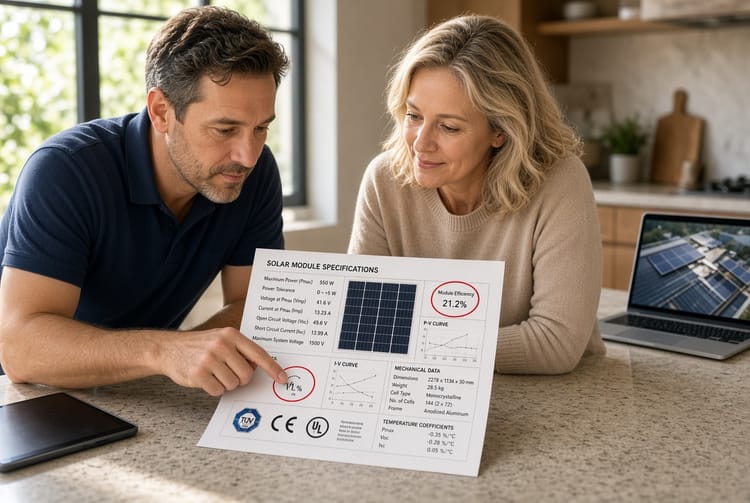
The Solar Panel System Sizing: Calculating Your Home's Energy Needs

In today's energy landscape, solar panel system sizing stands as one of the most critical steps toward achieving true energy independence and substantial cost savings. A properly sized system ensures you generate enough clean power to meet your household's demands without overpaying for excess capacity or falling short during peak usage.
Get Your Custom Solar Sizing Today – Call for Expert Design!
Whether you're transitioning from high utility bills or planning for an electrified future with electric vehicles (EVs) and heat pumps, understanding how to calculate your home's solar needs empowers you to make informed decisions. This comprehensive guide walks you through the process with clear, actionable steps—reassuring you that right-sizing delivers maximum return on investment (ROI) while minimizing risks like underproduction or inefficient spending.
Why Accurate Solar System Sizing Matters
Improper sizing can lead to disappointing performance or unnecessary expenses. An undersized system might leave you reliant on the grid during cloudy periods or high-demand months, while an oversized one inflates upfront costs without proportional benefits.
Key benefits of precise sizing include:
- Optimized energy production tailored to your unique consumption patterns.
- Enhanced financial returns through maximized incentives and reduced electricity bills.
- Future-proofing against rising energy needs from modern appliances and lifestyle changes.
- Improved system longevity by avoiding strain on components.
Professionals emphasize that a well-calculated system can offset 80-100% of your electricity use, depending on your goals. Let's dive into the practical steps.
Step 1: Determine Your Annual Energy Usage
The foundation of any solar sizing calculation begins with your historical electricity consumption. Start by gathering your last 12 months of utility bills—these provide the most accurate picture of your home's real-world energy needs.
How to calculate annual usage:
- Sum the total kilowatt-hours (kWh) from each monthly bill.
- Identify seasonal patterns: Higher usage in summer (air conditioning) or winter (heating) highlights opportunities for solar to shine.
- Average daily consumption: Divide annual kWh by 365 for a baseline.
For context, the average U.S. household consumes around 10,000–12,000 kWh per year, but this varies widely based on home size, location, and habits. A larger family home with multiple electronics might exceed 15,000–20,000 kWh annually.
Pro Tip: Contact your utility provider for detailed interval data if available. This reveals peak demand times, helping align solar production with usage for better self-consumption.
By thoroughly reviewing these records, you gain confidence that your solar investment will directly address your specific challenges, such as rising utility rates or inefficient older systems.
Step 2: Assess Peak Sun Hours in Your Location
Peak sun hours represent the equivalent number of hours per day when sunlight intensity reaches 1,000 watts per square meter—the standard test condition for solar panels. This metric is far more relevant than total daylight hours, as it accounts for actual energy-producing conditions.
Sun hours vary significantly by geography:
- Sunny Southwest regions often enjoy 5.5–7+ peak sun hours daily.
- Northern or cloudier areas might average 3.5–5 hours.
Use reliable tools like the NREL PVWatts calculator by entering your address for precise, location-specific data. Factors like local weather patterns, elevation, and microclimates influence this number.
Why this step is reassuring: Even in less sunny areas, modern high-efficiency panels combined with smart sizing deliver excellent results. Your local sun resource directly impacts how much power each installed kilowatt produces annually.
Step 3: Account for System Efficiency and Losses
No solar system operates at 100% efficiency due to real-world factors. A typical system efficiency factor (or derate factor) ranges from 0.75 to 0.86, accounting for:
- Inverter conversion losses (DC to AC power).
- Temperature effects on panel performance.
- Soiling from dust, leaves, or snow.
- Wiring and connection resistances.
- Shading from trees, chimneys, or nearby structures.
- Panel degradation over time (typically 0.5% per year).
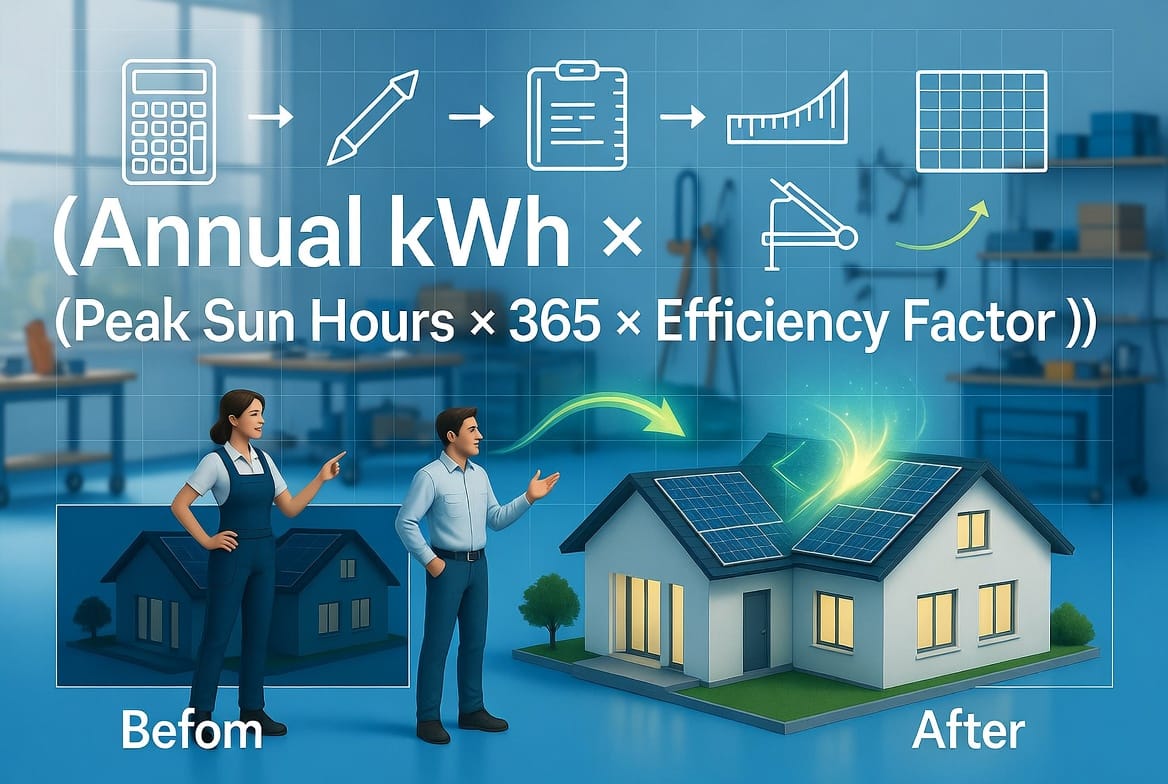
Formula insight: Multiply peak sun hours by 365 days and your efficiency factor to determine annual production potential per kW installed.
Understanding these variables allows you to size conservatively yet effectively, ensuring reliable output year after year.
Step 4: Calculate the Required System Size in kW
Now combine your data with this core formula for solar panel system sizing:
System Size (kW) = Annual Energy Usage (kWh) ÷ (Peak Sun Hours per Day × 365 × System Efficiency Factor)
Example Calculation:
- Annual usage: 10,500 kWh
- Peak sun hours: 4.5
- Efficiency factor: 0.82
System Size = 10,500 ÷ (4.5 × 365 × 0.82) ≈ 7.8 kW
This might translate to roughly 18–22 panels (depending on 350–450W panel ratings). Adjust the target offset percentage—aim for 100% or slightly more for full coverage and net metering benefits.
Number of Panels: Divide the system kW by individual panel wattage and round up appropriately.
This mathematical approach removes guesswork, providing authoritative clarity on what your roof can support.
Step 5: Factor in Future Energy Needs
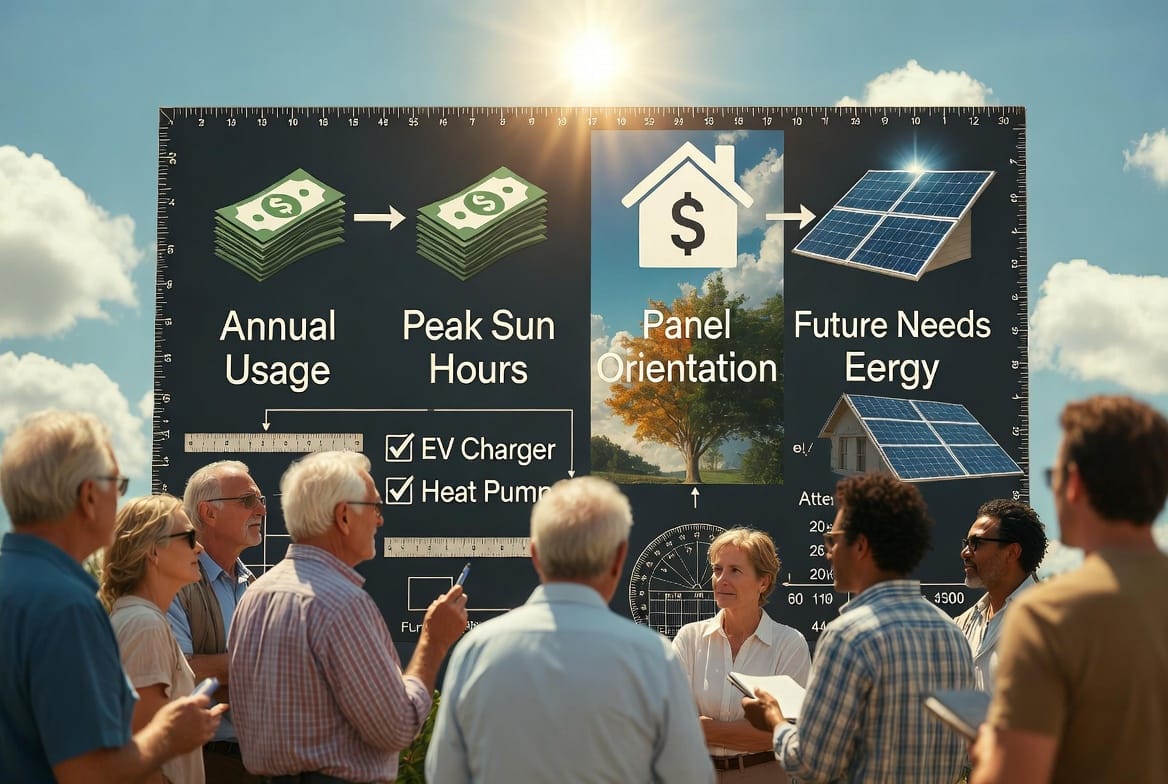
Smart homeowners plan beyond current usage. Consider upcoming changes that could increase demand:
- Electric vehicles: A single EV can add 3,000–5,000+ kWh annually, depending on mileage and charging habits.
- Heat pumps: Replacing gas systems for heating and cooling often boosts electricity use by 20–50%.
- Home expansions, smart appliances, or growing families.
Recommendation: Add a 15–25% buffer to your calculated size. This future-proofs your investment, avoiding costly expansions later. Many experts suggest sizing to 110–120% of current needs for optimal long-term ROI.
By anticipating these shifts, you transform potential challenges into opportunities for greater energy resilience.
Additional Considerations for Optimal Sizing
Roof Orientation and Tilt: South-facing roofs at optimal angles maximize production. East or west orientations may require adjustments.
Shading Analysis: Even partial shade significantly impacts output. Professional site assessments identify issues early.
Panel Types and Inverter Choices: High-efficiency monocrystalline panels paired with microinverters or optimizers enhance performance in varied conditions.
Local Regulations and Incentives: Check permitting, net metering policies, and available rebates or tax credits, which influence overall economics.
Bullet-point risks to watch:
- Ignoring seasonal variations leading to winter shortfalls.
- Overlooking roof structural limits or space constraints.
- Neglecting professional assessment for hidden factors like wiring upgrades.
Addressing these proactively ensures a seamless, high-performing installation.
Common Mistakes to Avoid in Solar Sizing
Even with good intentions, pitfalls occur:
- Relying solely on rough estimates instead of 12-month bills.
- Using national averages for sun hours without local verification.
- Failing to model efficiency losses accurately.
- Not discussing lifestyle changes with installers.
Avoiding these builds a robust, reliable system that delivers peace of mind and consistent savings.
The Long-Term Benefits of a Right-Sized Solar System
A correctly sized system not only slashes monthly bills but also increases property value, reduces carbon footprint, and provides protection against energy price volatility. Homeowners often report transformative financial freedom and satisfaction from harnessing abundant sunlight.
With advancements in technology, today's systems offer greater durability and smarter monitoring, allowing real-time optimization.
Taking the Next Step Toward Solar Success
Calculating your solar panel system size demystifies the process and positions you for success. Right-size your solar system for maximum ROI. Whether you're starting small or aiming for full independence, professional guidance ensures every detail aligns with your home's needs.
We're here to guide you every step of the way, turning sunlight into sustainable savings you can count on for decades.
Future-Proof Your Home Solar – Free Sizing Consultation Today!