The Soil Compaction Test: How to Check and When to Aerate
A beautiful lawn doesn’t happen by accident — it starts with healthy soil. Yet one of the most common hidden problems homeowners face is soil compaction, a silent threat that restricts root growth, limits water penetration, and turns vibrant grass into thin, struggling patches.
Test Your Soil & Aerate Today – Call Now!
Before you invest time or money in aeration, the smart move is always diagnosis first. Knowing exactly whether your lawn is compacted — and how severely — prevents unnecessary treatments and delivers faster, longer-lasting results. In this authoritative guide, we’ll walk you through two simple, reliable DIY soil compaction tests you can perform in minutes, the clear warning signs to watch for, and the precise moment when core aeration becomes the right solution.
You’ll finish this article confident in your ability to read your soil like a pro and make the best decision for your lawn’s future.
What Is Soil Compaction and Why Does It Matter?
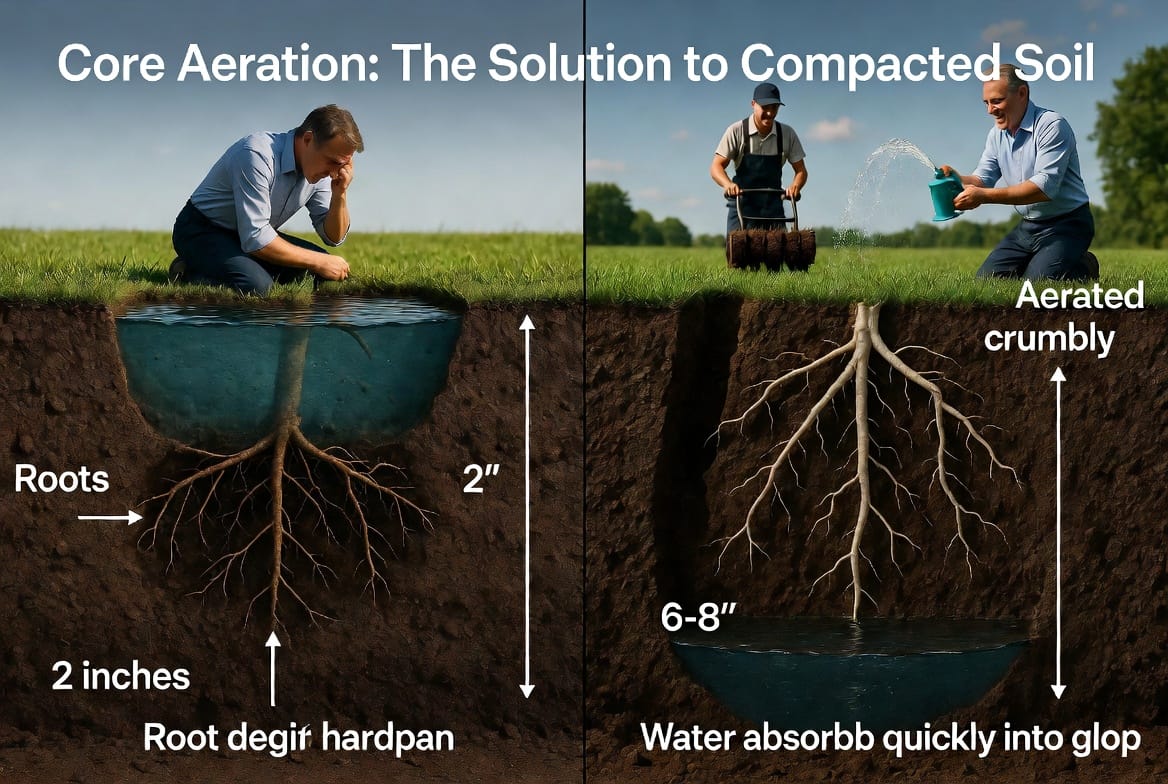
Soil compaction occurs when soil particles are pressed tightly together, reducing the air pockets that roots, water, and beneficial microbes need to thrive. Heavy foot traffic, lawn mowers, vehicles, clay-heavy soils, and even repeated rainfall can create this dense layer just below the surface.
When soil becomes compacted, grass roots stay shallow, nutrients remain out of reach, and your lawn becomes more susceptible to drought, disease, and weeds. The good news? Compaction is completely reversible — but only when you treat it at the right time with the right method.
Recognizing the Early Warning Signs of Compaction
Spotting soil compaction early can save your lawn from serious decline. Look for these unmistakable indicators:
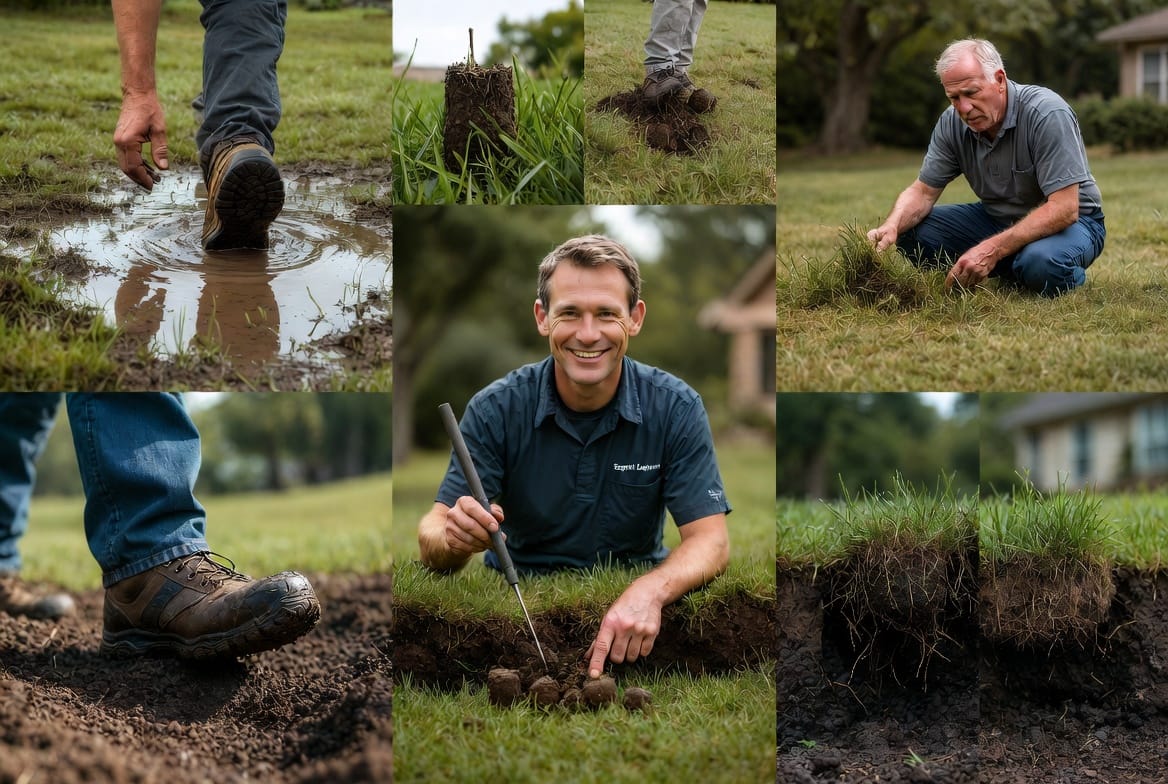
- Puddling water after light rain or irrigation — instead of soaking in, water sits on the surface for hours.
- Thin, patchy grass that refuses to thicken no matter how much you fertilize or water.
- Hard, crusty soil surface that feels like concrete underfoot and resists a simple garden fork.
- Poor root depth — when you pull up a small clump of grass, roots are short, tangled, and brown rather than deep and white.
- Slow recovery after mowing or foot traffic — footprints remain visible for days.
If two or more of these signs appear in your yard, it’s time to test rather than guess.
The Screwdriver Test: Your Fastest DIY Diagnostic Tool
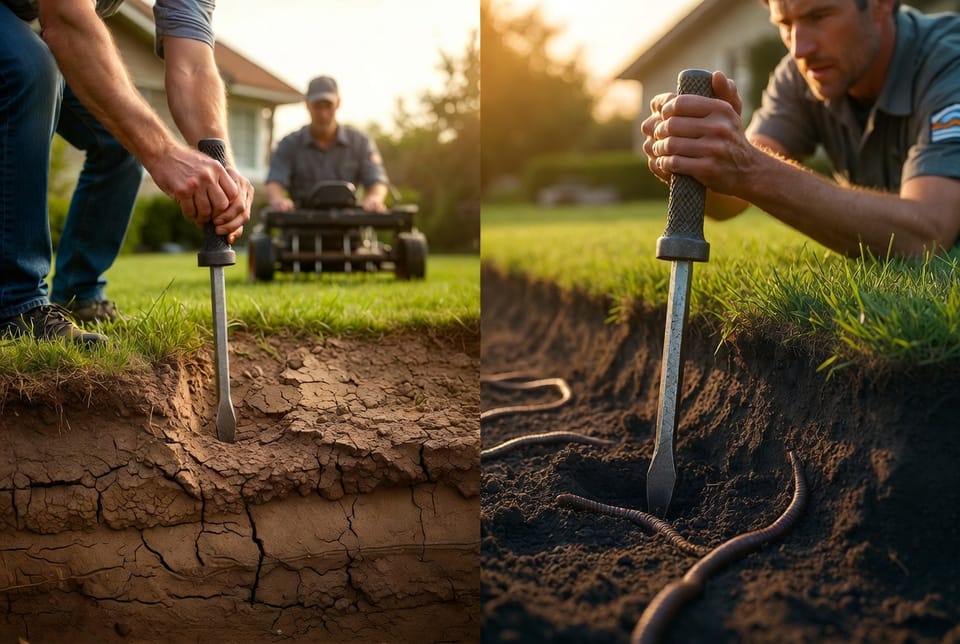
The screwdriver test is the gold-standard quick check used by professional lawn care teams nationwide. It takes less than 60 seconds and requires only a standard flat-head screwdriver (at least 6 inches long).
Step-by-step instructions:
- Water your lawn lightly the night before so the soil is moist but not soggy.
- Choose several representative areas — high-traffic zones, slopes, and areas near sidewalks.
- Push the screwdriver straight down into the soil with moderate hand pressure.
- Note how far it penetrates and how much resistance you feel.
What the results mean:
- Penetrates easily beyond 4 inches — Your soil is healthy; no aeration needed this season.
- Stops at 2–3 inches with moderate effort — Mild compaction is present; monitor closely.
- Barely goes in 1 inch or less — Severe compaction confirmed; core aeration is strongly recommended.
Perform this test in at least five different spots and average the results for accuracy.
The Water Absorption Rate Test: Measuring Real-World Performance
While the screwdriver test gives you immediate feedback, the water absorption test reveals how your soil actually behaves during rainfall or irrigation.
How to perform it:
- Mark a 12-inch by 12-inch square area with string or stakes.
- Pour one gallon of water slowly and evenly over the square.
- Time how long it takes for all the water to disappear into the soil.
Interpretation guide:
- Disappears in under 30 seconds — Excellent drainage and healthy soil structure.
- Takes 1–3 minutes — Mild compaction beginning to limit water movement.
- Takes longer than 5 minutes or leaves puddles — Significant compaction is blocking roots and inviting disease.
Combine both tests for the clearest picture. Many homeowners discover that what looked like a fertilizer problem was actually soil compaction all along.
When to Perform These Tests for Maximum Accuracy
Timing matters. The best periods to test are:
- Early spring (March–April) before the heavy growing season begins.
- Late summer (August–September) after summer stress but before fall aeration season.
- After any period of heavy foot traffic or equipment use.
Avoid testing immediately after heavy rain or when the ground is frozen. Moist but not saturated soil gives the most reliable readings.
Interpreting Results and Deciding on Aeration
If either test shows penetration under 3 inches or water absorption slower than 3 minutes, your lawn is telling you it needs help. Core aeration — the process of removing small plugs of soil to create air channels — is the proven, professional solution.
This is not the same as spiking or slicing, which can actually worsen compaction over time. Core aeration physically relieves pressure, allows oxygen and water to reach deep roots, and encourages beneficial microbes to flourish.
Why Core Aeration Is the Gold Standard Solution
When performed at the right time on confirmed compacted soil, core aeration delivers dramatic improvements:
- Deeper, stronger root systems that withstand drought and heat.
- Better nutrient uptake so fertilizers actually work.
- Reduced thatch buildup and fewer disease problems.
- Thicker, greener turf within 2–4 weeks.
Homeowners who test first and aerate only when needed report up to 50% thicker grass and far fewer bare spots the following season.
Test Before You Aerate: The Professional Recommendation
Rushing into aeration without testing is like taking medicine without knowing if you’re actually sick. You may waste time and money while missing the real issue.
Always test before you aerate. The screwdriver and water absorption tests are free, take minutes, and give you the data you need to make an informed decision. When the tests confirm compaction, professional core aeration is the fastest way to restore your lawn’s health.
Ready to Give Your Lawn the Care It Deserves?
Your grass is counting on you to listen to what the soil is saying. Perform the soil compaction tests this week, interpret the results confidently, and take action only when your lawn truly needs it.
Test before you aerate. Your lush, resilient lawn is just one correct diagnosis away.
Get Professional Core Aeration – Call Today!