The Sawtoothed Grain Beetle: Flat Body Invades Sealed Packages
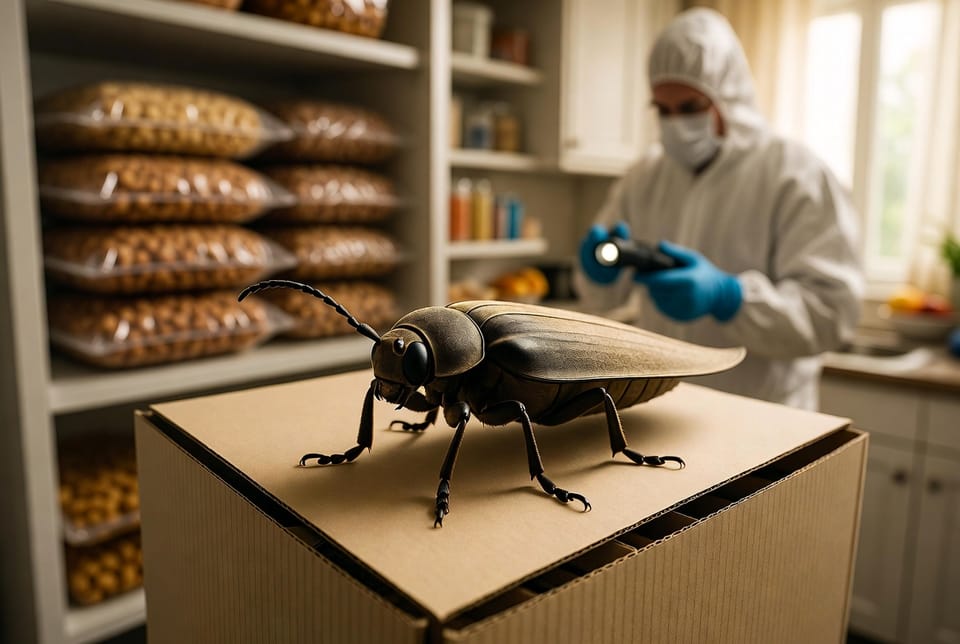
Pantry pests can turn a well-stocked kitchen into a source of frustration almost overnight. Among the most persistent and underestimated invaders is the sawtoothed grain beetle. This small insect earns its reputation through a unique physical advantage: an extremely flat body that lets it slip into packages most people assume are completely secure. Understanding its behavior, recognizing the early signs of an infestation, and knowing the proper elimination steps are essential for protecting your food supply and restoring peace of mind in your home.
Get Expert Pantry Pest Control – Call for Help!
This comprehensive guide examines every aspect of the sawtoothed grain beetle problem. You will learn exactly how the insect exploits packaging weaknesses, which foods are most at risk, the clear warning signs that demand immediate action, and the proven methods for complete removal. Throughout, the focus remains practical and reassuring. With the right knowledge and timely professional support when needed, any household can eliminate this pest and prevent its return.
Understanding the Sawtoothed Grain Beetle and Its Flat-Body Advantage
The sawtoothed grain beetle is a stored-product pest that thrives in dry food environments. Adults measure only about one-eighth of an inch long, yet their elongated, flattened shape gives them extraordinary access. Unlike bulkier insects that must wait for damaged packaging, the sawtoothed grain beetle can force its way through the tiniest folds, imperfect seals, and microscopic openings in cardboard, plastic, and paper packaging.
This flat body is not merely a curiosity—it is the core of the beetle’s success. The insect’s thorax features six distinctive tooth-like projections along each side, which help it grip and push through tight spaces. Once inside a package of cereal, flour, pasta, or pet food, the beetle finds ideal conditions of darkness, dryness, and abundant nutrition. Females lay eggs directly in the food, and the resulting larvae feed and develop without ever needing to leave the package.
Because the beetle can enter packages that appear sealed, infestations often begin unnoticed. A single carton of oatmeal or a bag of birdseed brought home from the store may already contain eggs or adults. Within weeks, the population multiplies and spreads to neighboring items on the same shelf. The risk is therefore highest in pantries that store large quantities of dry goods for long periods.
How the Flat Body Enables Entry into Sealed Packages
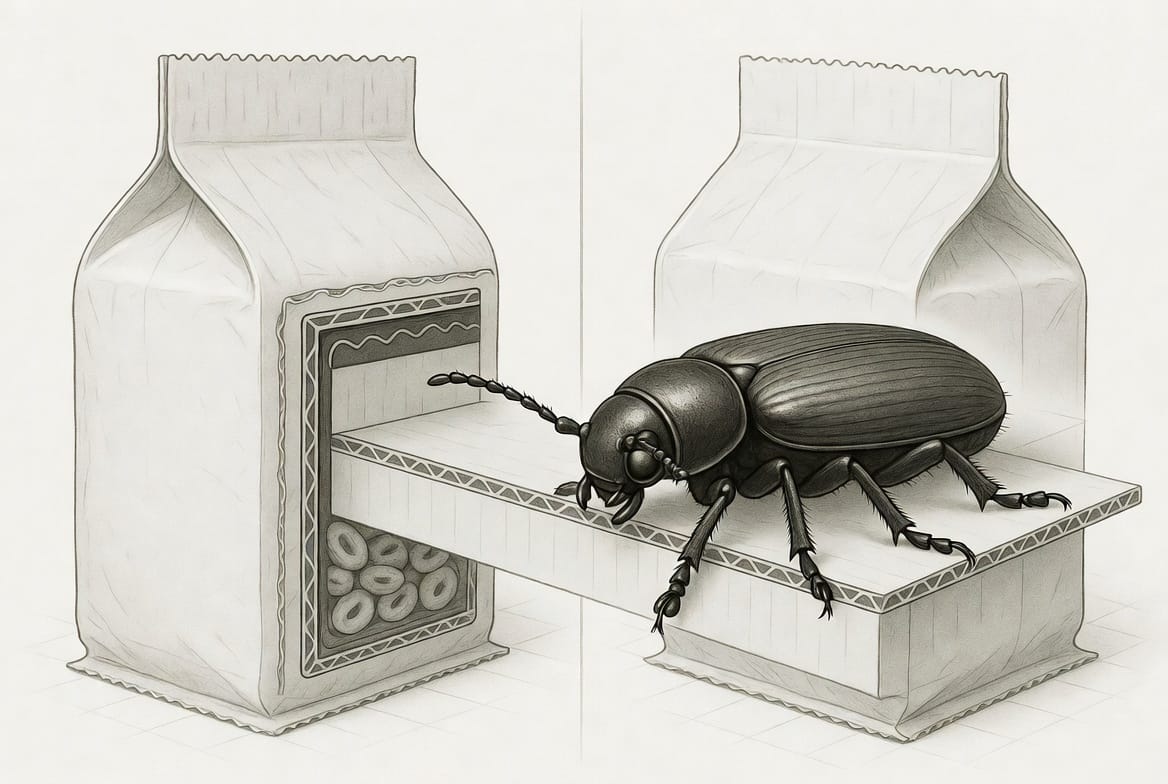
The physics of the flat body is straightforward yet highly effective. Most commercial food packaging is designed to keep out moisture, light, and larger pests. Manufacturers rarely engineer barriers against an insect thinner than a credit card. The sawtoothed grain beetle exploits this design gap with precision.
It first locates microscopic gaps at the folded edges of cereal boxes, the heat-sealed seams of plastic bags, or the glued flaps of flour sacks. Using its strong legs and serrated thorax, the beetle works its way forward, flattening itself even further as needed. Once inside, it remains protected from household cleaning and casual inspection. This ability explains why homeowners frequently discover beetles inside unopened packages that still carry an intact factory seal.
Temperature and humidity influence the process. Warm kitchens accelerate beetle activity, while moderate humidity keeps food soft enough for easy feeding yet dry enough to prevent mold that might deter the insects. In these conditions, a single invading adult can establish a thriving colony within a matter of weeks.
Recognizing the Signs of Infestation Early
Early detection is the single most effective way to limit damage. The signs of a sawtoothed grain beetle problem are distinctive and should never be ignored.
- Small, irregular holes or frayed edges appearing on cardboard boxes and paper packaging
- Live or dead beetles crawling on shelves, countertops, or inside food containers
- Fine powdery residue or webbing mixed with food particles—evidence of larval feeding
- A slightly musty or oily odor coming from stored grains and cereals
- Beetles emerging from packages that have never been opened
These indicators often appear first in the oldest items at the back of the pantry. Because the beetles prefer dark, undisturbed areas, regular rotation of stock and visual checks of every package become critical habits. Finding even a few insects is a clear signal that a broader inspection is required. Delaying action allows the population to expand and migrate to additional food sources.
Foods Most Vulnerable to Invasion
Not every pantry item faces equal risk. The sawtoothed grain beetle shows a strong preference for certain dry goods that offer both nutrition and easy access.
- Breakfast cereals and oatmeal
- Pasta, rice, and other dry grains
- Flour, cornmeal, and baking mixes
- Pet food, birdseed, and animal feed
- Dried fruits, nuts, and chocolate products
- Spices and powdered mixes stored for long periods
Any package that remains on the shelf for months increases the chance of infestation. Bulk purchases and warehouse-club sizes are particularly attractive because they provide a large, continuous food supply once breached. Even items stored in original packaging can become compromised if the seal is imperfect or if beetles are already present when the product leaves the store.

Proven Elimination Steps That Restore a Clean Pantry
Successful elimination follows a clear, systematic process. The first and most important action is discarding infested items. Any package showing signs of beetles, holes, or unusual residue must be sealed in a plastic bag and removed from the home immediately. Do not attempt to salvage the contents; the risk of eggs and larvae remaining is too high.
After removal, empty the entire pantry. Vacuum every shelf, corner, and crack thoroughly, paying special attention to the junctions where walls meet shelves. Wipe all surfaces with a mild soap solution or a vinegar-water mixture to remove residual food particles that could attract future pests. Allow the area to dry completely before restocking.
Transfer remaining uninfested dry goods into airtight containers made of glass, heavy plastic, or metal. These barriers defeat the flat body advantage by eliminating the tiny gaps the beetle needs. Rotate stock so that older items are used first, and avoid overbuying quantities that will sit unused for months.
In cases where beetles have spread beyond a few packages or continue to appear after thorough cleaning, professional pantry pest control becomes the most reliable solution. Trained technicians can locate hidden breeding sites, apply targeted treatments that are safe around food areas when used correctly, and provide guidance on long-term prevention.
Long-Term Prevention Strategies for Lasting Protection
Prevention is simpler and less costly than repeated elimination. Establish a routine of monthly pantry inspections. Keep shelves clean and free of crumbs. Store bulk purchases in the freezer for several days after bringing them home; the cold temperatures kill any eggs or adults that may have entered the packaging during transport or storage at the retailer.
Maintain moderate humidity levels in the kitchen and avoid storing pet food or birdseed in the same area as human food whenever possible. Seal any cracks or gaps in pantry walls and baseboards that could serve as entry points from outside or from neighboring units in multi-family buildings.
These habits, combined with prompt response to the first signs of activity, keep the sawtoothed grain beetle from establishing a foothold. Most households that adopt these practices experience few or no further problems.
Why Professional Help Provides Peace of Mind
While many infestations can be resolved through careful homeowner effort, some situations benefit from expert intervention. Professionals bring specialized knowledge of beetle biology, access to monitoring tools, and the ability to treat structural voids or other hard-to-reach areas that ordinary cleaning cannot address. Their presence also offers reassurance that the problem has been fully resolved rather than merely suppressed.
A thorough service includes inspection of every potential food source, removal guidance, treatment if necessary, and customized recommendations for your specific pantry layout and storage habits. The result is a restored, confident kitchen free from the quiet invasion of the sawtoothed grain beetle.
Taking Action Today Protects Your Food Tomorrow
The sawtoothed grain beetle’s flat body gives it an unusual ability to invade sealed packages, but it does not make the insect invincible. Recognition of the signs—holes in boxes, beetles in food—combined with decisive elimination through discarding infested items and improved storage practices restores control quickly. Consistent prevention then keeps the problem from returning.
Your pantry should be a source of convenience and nourishment, not concern. By understanding the unique biology of this pest and acting with authority at the first indication of trouble, you protect both your food supply and your peace of mind.
Protect Your Pantry from Flat-Body Beetles – Call Today!