The Roof Flashing Repair: Identifying and Fixing Leaks Around Chimneys, Vents, and Valleys
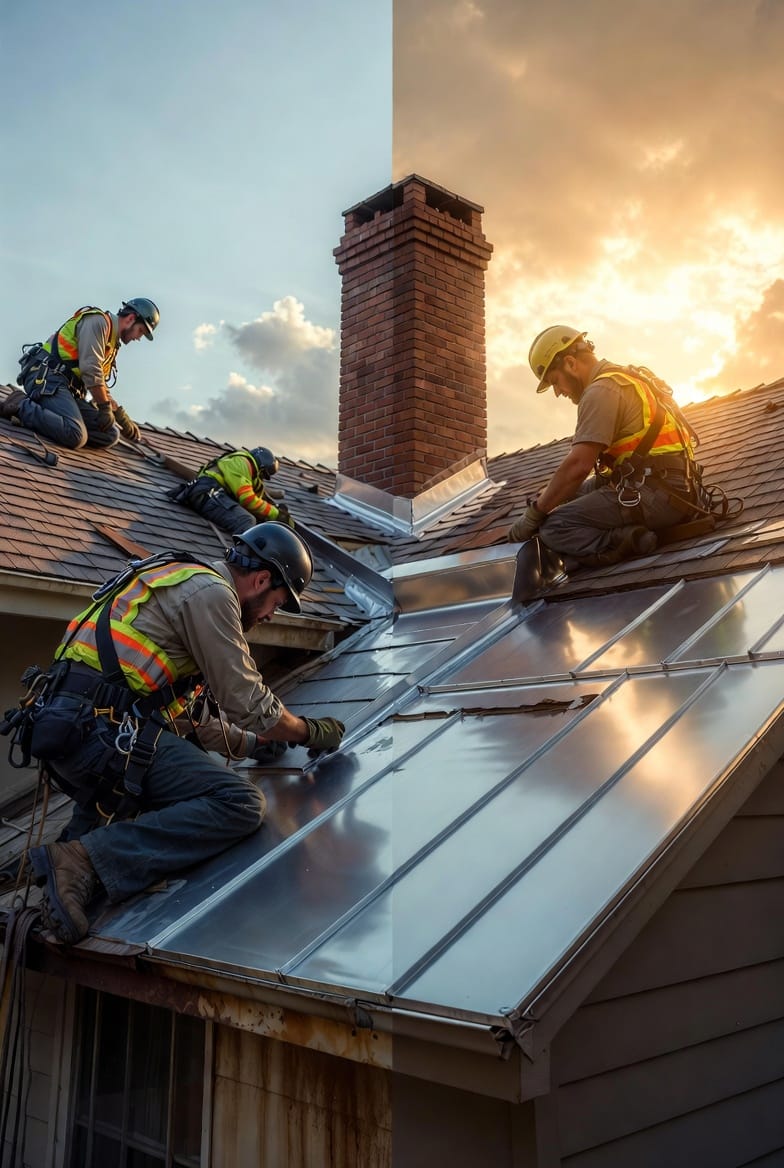
When it comes to protecting your home, few components are as vital yet as overlooked as roof flashing. This specialized material forms a waterproof barrier at every point where the roof meets an obstruction or changes direction. Over time, however, flashing failures account for the vast majority of roof leaks, turning minor weather exposure into expensive interior damage. In this comprehensive guide, we explore the roof flashing repair process, focusing on the most common leak sources around chimneys, vent pipes, and valleys. Whether you’re noticing early warning signs or planning proactive maintenance, understanding these issues empowers you to act decisively and restore your roof’s integrity with confidence.
Get Expert Flashing Repair Today – Call Now!
At its core, roof flashing consists of thin sheets of metal, rubber, or polymer designed to channel water away from vulnerable junctions. Without properly functioning flashing, even the highest-quality shingles cannot prevent water intrusion. Homeowners who invest in timely roof flashing repair not only eliminate active leaks but also extend their roof’s lifespan by decades, avoiding costly full replacements down the line.
Understanding the Critical Role of Roof Flashing
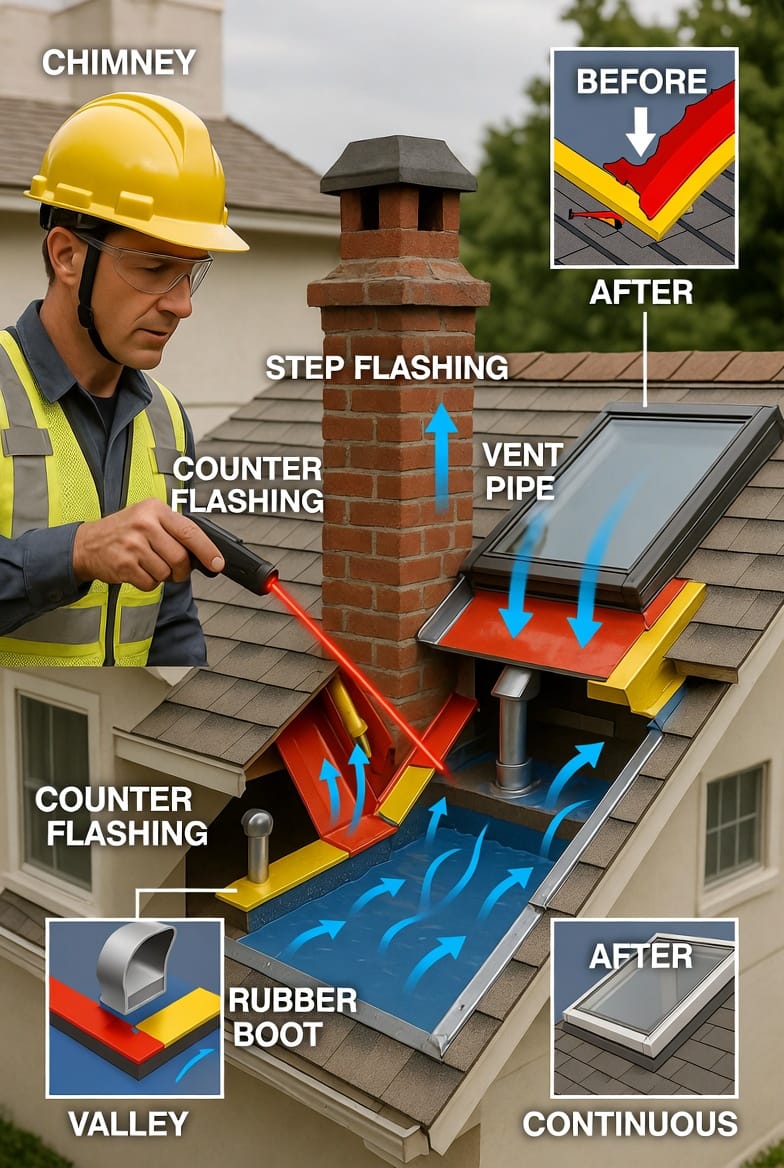
Roof flashing acts as the roof’s silent guardian. Installed at penetrations such as chimneys, plumbing vents, skylights, and roof valleys, it creates a seamless transition that directs rainwater safely off the structure. Different types serve specific purposes: step flashing for vertical walls like chimneys, counter flashing for added layers of protection, valley flashing where two roof planes converge, and pipe boots or vent flashing for round protrusions.
What makes flashing failures so common? Exposure to relentless sun, rain, snow, and temperature fluctuations causes materials to expand, contract, corrode, or separate. Poor initial installation compounds these natural wear factors, leading to gaps that invite water inside. The reassuring news is that most flashing issues are straightforward to diagnose and fix when addressed promptly by knowledgeable professionals. A well-executed roof flashing repair restores full waterproofing without disrupting the rest of your roofing system.
How Flashing Failures Cause Most Roof Leaks
Statistics from roofing professionals consistently show that flashing-related leaks represent up to 70% of all residential roof problems. Water finds the path of least resistance, seeping under lifted edges, through rusted pinholes, or around cracked sealants. Once inside, moisture travels along rafters, soaks insulation, and stains ceilings far from the actual entry point—making the source tricky to locate without expert inspection.
Left unchecked, these leaks accelerate wood rot, mold growth, and structural weakening. Yet the solution is often simpler than a complete re-roof. Targeted roof flashing repair around chimneys, vents, and valleys stops water at its source, delivering immediate peace of mind and long-term savings. Homeowners who choose professional intervention benefit from warranties that DIY attempts simply cannot match.
Common Leak Sources: Chimneys, Vents, and Valleys
Chimney Flashing Repairs: Stopping the Most Frequent Culprit
Chimneys present one of the highest-risk areas due to constant movement between the brick masonry and the roof deck. Step flashing interlocks with shingles in a staircase pattern, while counter flashing embeds into the chimney mortar to create a double barrier. Over years, mortar joints crack, flashing corrodes, or sealant dries and pulls away.
During a professional chimney flashing repair, technicians remove deteriorated sections, clean the substrate, install new corrosion-resistant metal, and reseal every joint. The result? A watertight seal that withstands even the harshest storms. Homeowners often report that after such a repair, previously damp attics remain bone-dry season after season.
Vent Pipe and Skylight Flashing Challenges
Plumbing vents and skylights introduce round or rectangular penetrations that require specialized pipe boot flashing or custom-fitted metal collars. These components can loosen from wind vibration or degrade from UV exposure, allowing water to pool and infiltrate. A skilled roof flashing repair here involves replacing worn boots with modern, flexible rubber models that maintain elasticity for years, or upgrading to premium aluminum flashing with superior sealant technology.
Skylights add another layer of complexity because of their glass-to-roof interface. Proper counter-flashing and perimeter sealant renewal eliminate condensation and leakage risks while preserving natural light.
Valley Flashing: Where Roof Planes Meet
Valleys channel enormous volumes of water during heavy rain. When the valley flashing—typically open metal or woven into shingles—develops rust, separation, or debris buildup, leaks appear quickly along the centerline. Repair involves clearing debris, cutting out damaged sections, and installing continuous, properly lapped metal flashing with enhanced underlayment for extra protection.
Each of these areas demands precise technique. Professional crews approach every roof flashing repair with the same meticulous standard, ensuring your roof performs exactly as engineered.
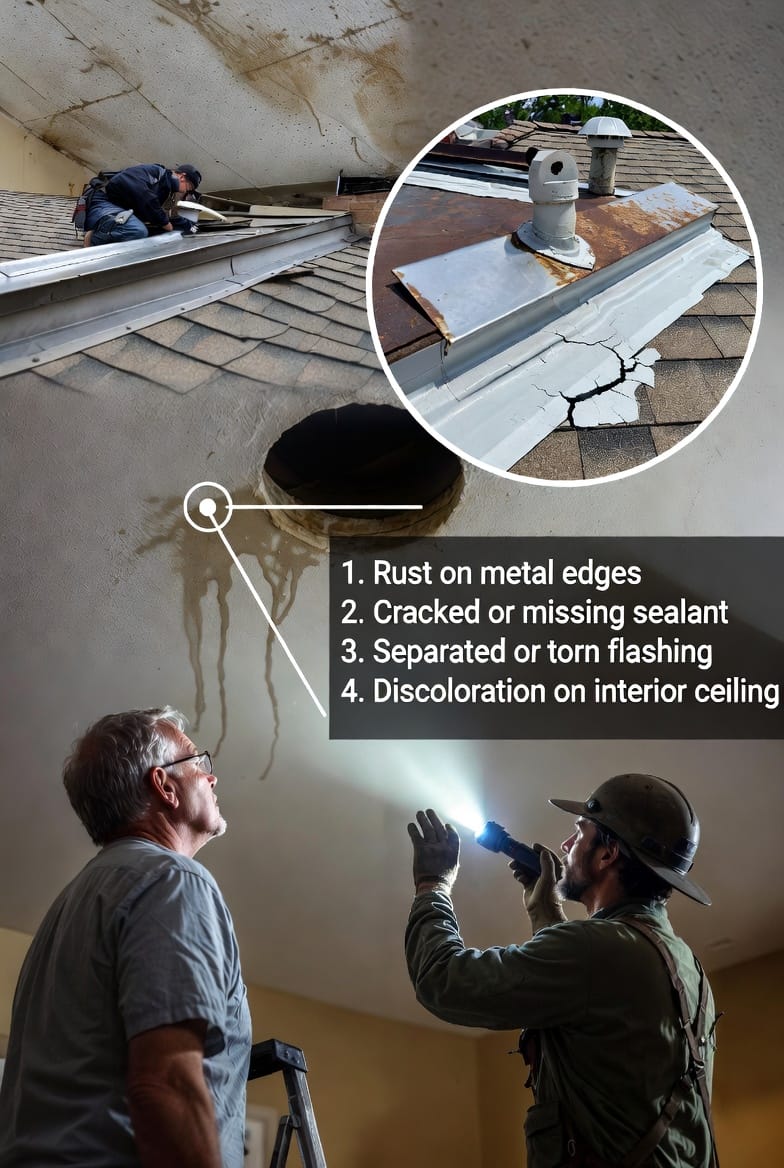
How to Identify Flashing Problems Before They Worsen
Early detection prevents small issues from becoming major headaches. Begin with a safe ground-level visual inspection using binoculars. Look for:
- Rusted or corroded flashing that appears orange or pitted
- Lifted or missing sealant around any penetration
- Water stains on ceilings or walls near chimneys, vents, or valleys
- Granules washing away in concentrated streams below flashing lines
- Dampness or musty odors in the attic after rain
An interior attic check reveals light penetrating through gaps or dark water trails on rafters. These signs of flashing failure are your cue to schedule professional assessment. Remember, roof flashing repair performed at the first hint of trouble is far less invasive and expensive than emergency fixes after extensive damage.
Effective Repair Options for Various Flashing Types
Modern roof flashing repair techniques offer solutions tailored to every material and situation. For metal flashing, technicians may solder seams, replace entire sections with galvanized steel or copper, or apply advanced polymer coatings that resist future corrosion. Rubber boot replacements provide quick, flexible fixes for vent pipes, while full valley re-lining uses heavy-gauge aluminum for superior flow.
In all cases, the process follows rigorous steps: remove debris, dry the area completely, install compatible underlayment, secure new flashing with proper overlaps, and finish with high-performance sealants. This methodical approach guarantees lasting results that homeowners can trust.
Why Professional Roof Flashing Repair Delivers Superior Results
While some minor sealing tasks appear DIY-friendly, the risks of improper installation—ladder falls, incomplete seals, or voided manufacturer warranties—far outweigh any short-term savings. Certified roofers bring specialized tools, proven materials, and decades of experience to every job. They also inspect the entire system, addressing related issues you might miss.
Choosing professional flashing repair means gaining peace of mind, extended roof longevity, and protection for your family’s investment. The service is efficient, minimally disruptive, and backed by solid guarantees.
Preventive Maintenance Keeps Leaks at Bay
After successful roof flashing repair, adopt a simple maintenance routine. Schedule annual inspections, clear debris from valleys and around penetrations, and trim overhanging branches. These small habits dramatically reduce future problems and keep your roof performing at its best.
Stop Leaks at Their Source Today
Don’t let roof flashing failures compromise your home’s comfort and safety. Whether the issue involves chimneys, vents, or valleys, prompt roof flashing repair is the smart, cost-effective solution. Stop leaks at their source.
Stop Leaks Around Chimneys & Valleys – Call Now