The Rental Car Coverage: Using Your Credit Card Instead of Insurance

Renting a car should feel convenient, not like an unexpected bill. At the counter many drivers face a high-pressure offer for the rental company’s own Collision Damage Waiver (CDW) or Loss Damage Waiver (LDW). Those daily add-ons can easily double the cost of a modest rental. A practical, money-saving alternative already sits in many wallets: credit card rental car coverage. When used correctly, certain cards let you decline the rental company’s expensive waiver and still protect the vehicle against collision damage and theft.
Decline Costly Rental CDW – Call for Help
This guide explains how the benefit works, what it typically covers and does not cover, the exact steps required to activate it, and the limits you must respect. The goal is simple: help you keep more of your travel budget while staying protected.
Why Rental Company Insurance Feels Expensive
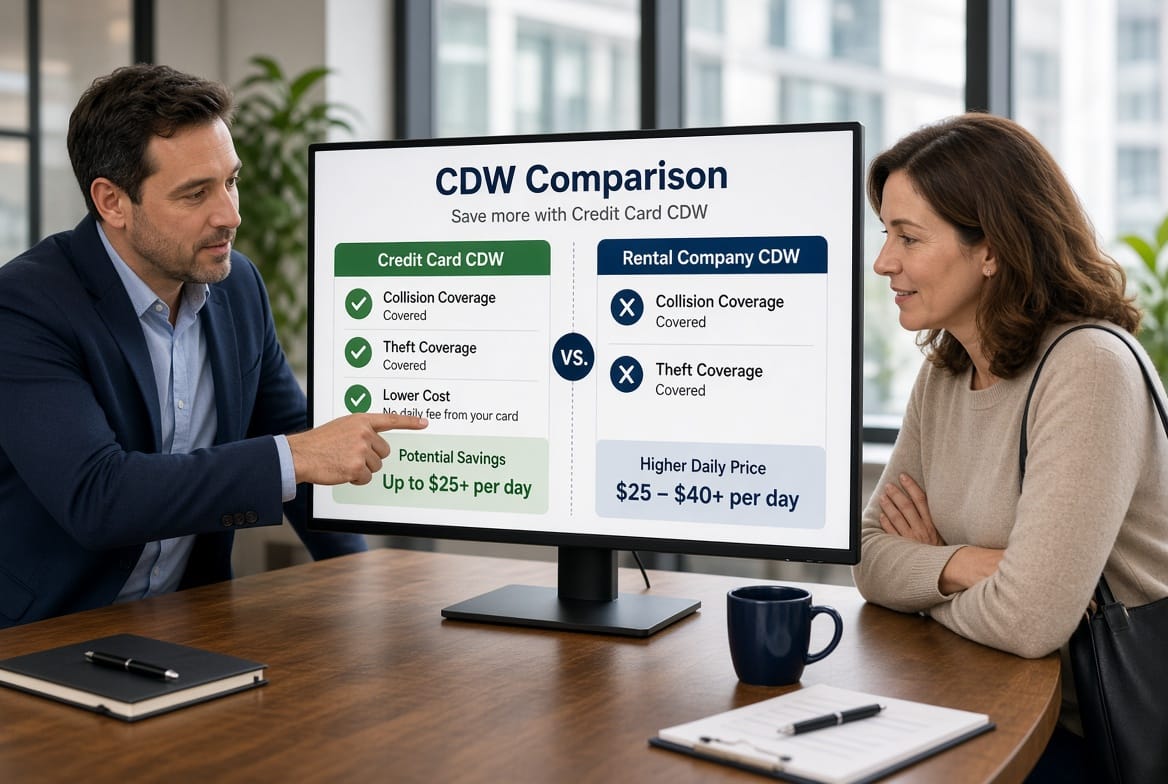
Rental agencies sell CDW because it transfers financial responsibility for damage to the vehicle back to them. The price is often $20–$40 per day, sometimes more for premium vehicles. Over a week-long trip the extra charge can exceed the base rental rate itself. Many travelers accept it out of caution or because they do not realize another option exists.
Your personal auto policy may already provide some protection, yet it frequently comes with a deductible and the risk of a claim affecting future premiums. Credit-card coverage sits between those two choices. It is designed as a targeted, trip-specific layer that can reduce or eliminate the need to buy the rental company’s waiver.
How Credit Card Collision Damage Waiver Works
Most major card networks offer some form of rental-car benefit. The coverage is usually secondary. That means it pays after your personal automobile insurance (if you have it) has been applied. A smaller number of premium cards advertise primary coverage, which steps in first and can spare you from filing a claim with your own insurer.
The benefit is not automatic insurance sold by the card issuer. It is a contractual perk tied to the cardmember agreement. When the conditions are met, the card company (or its insurance partner) reimburses eligible damage or theft costs up to the stated limit, minus any deductible that may apply.
Key features commonly found in these programs include:
- Reimbursement for collision or comprehensive damage to the rental vehicle
- Coverage for theft of the vehicle
- Payment of reasonable towing and storage fees in some cases
- A defined maximum payout per rental period
The exact dollar limits, time limits, and vehicle types vary by card. Always confirm the current terms for your specific card before you travel.
What Credit Card Coverage Typically Covers
When the rules are followed, the benefit generally addresses physical damage to the rented car itself. Typical covered events include:
- Collision with another vehicle or object
- Damage from vandalism or falling objects
- Theft of the entire vehicle
- Certain weather-related incidents, depending on the policy language
Some programs also reimburse the rental company’s loss-of-use charges (the fees they levy while the car is being repaired) and administrative fees. These extras can add hundreds of dollars to a claim, so their inclusion is valuable.
Coverage is almost always limited to the rental period and to passenger cars that meet the card’s eligibility rules. Compact, midsize, and full-size sedans and many SUVs usually qualify. Luxury models, exotic cars, trucks, vans above a certain size, and motorcycles are frequently excluded.
What Credit Card Coverage Does Not Cover
Understanding the gaps is as important as knowing the benefits. Credit-card rental coverage is not a substitute for liability insurance. It does not pay for:
- Injury to you or passengers
- Damage you cause to other vehicles or property
- Medical expenses
- Personal belongings stolen from the car
- Damage caused by off-road use, racing, or driving under the influence
- Wear-and-tear items or interior damage in many policies
Because liability protection is missing, you still need to satisfy the rental company’s minimum liability requirements. In the United States that is often handled by your personal auto policy or by purchasing a separate liability product if you do not own a car. Travelers who rent frequently or who lack personal auto insurance should verify this point carefully.
Additional common exclusions include rentals in certain countries, rentals longer than 15–31 consecutive days (the limit depends on the card), and vehicles rented from peer-to-peer platforms rather than traditional agencies.
How to Use the Benefit and Decline the Rental Company’s Waiver
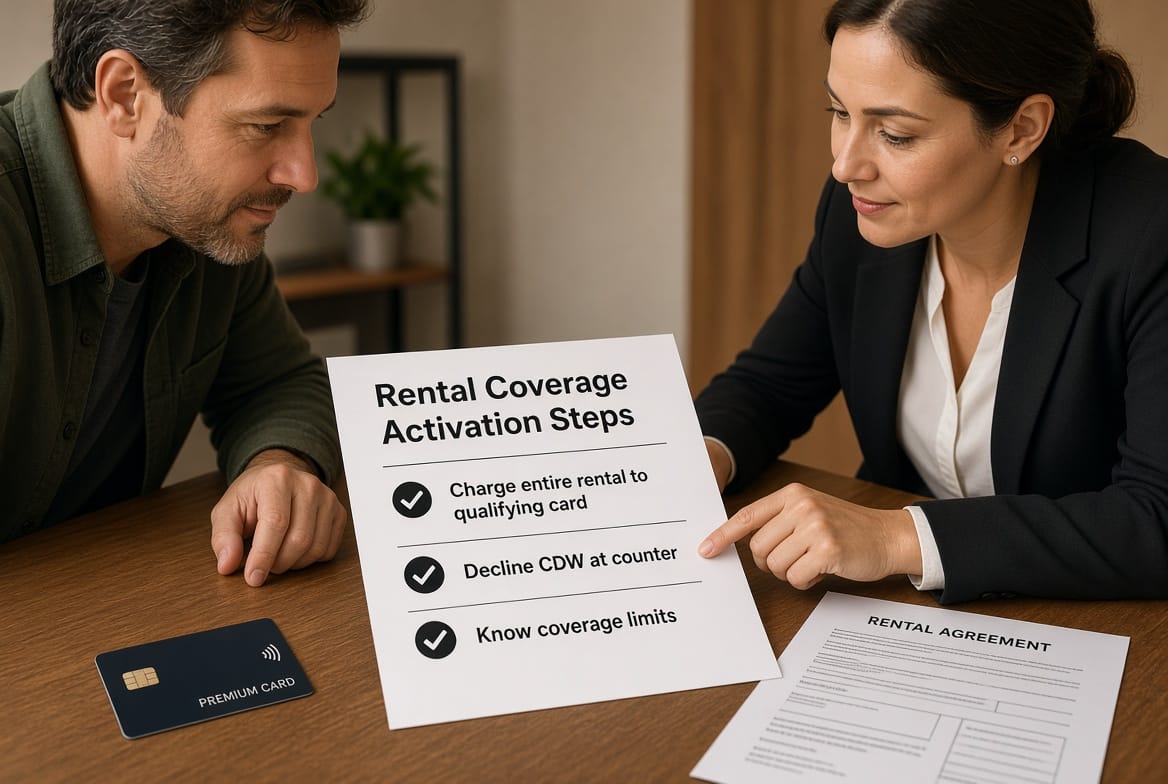
Activation is straightforward once you know the sequence. Follow these steps every time:
- Confirm your card actually offers the benefit and read the current guide to benefits. Benefits change; last year’s terms may no longer apply.
- Reserve and pay for the entire rental with the qualifying credit card. Partial payment or using a different card can void the coverage.
- At the counter, decline the rental company’s CDW or LDW. Say clearly that you will rely on the coverage provided by your credit card.
- Inspect the vehicle thoroughly before leaving the lot. Photograph every existing scratch, dent, and the fuel level. Keep those photos.
- Drive according to the rental agreement and the card’s rules (no unauthorized drivers, no off-road use, etc.).
- If damage or theft occurs, notify both the rental company and the card’s benefits administrator immediately. Most programs require prompt reporting—often within 24–48 hours—and a police report for theft.
- Submit the required documentation: rental agreement showing you declined CDW, itemized repair estimate or invoice, photos, and any police report. The card company will then coordinate reimbursement.
Keep copies of everything. Processing times vary, but having complete paperwork speeds the claim.
Essential Requirements You Must Meet
Three non-negotiable conditions appear in nearly every program:
- The rental must be charged in full to the card that carries the benefit.
- You must formally decline the rental agency’s collision damage waiver.
- You must stay within the published coverage limits, vehicle types, geographic areas, and rental-duration caps.
Failing any one of these usually means the benefit will not pay. Additional fine-print items include using only authorized drivers listed on the rental contract and returning the car on time.
Secondary versus Primary Coverage: Why the Distinction Matters
Secondary coverage is the most common type. It waits until your personal auto insurer has paid its share (or declined the claim). You may still need to involve your own insurance company, which can affect your rates. Primary coverage, offered by a minority of high-end cards, pays first. That can keep the incident off your personal record and simplify the process.
If you rent often or want to avoid any claim on your personal policy, a card with primary coverage is worth considering. Even then, read the exclusions; primary does not mean unlimited.
Practical Tips That Protect Both Your Wallet and Your Claim
- Call the number on the back of your card or visit the issuer’s benefits portal before you travel. Ask specifically about rental-car coverage, current limits, and excluded countries.
- Photograph the car at pickup and drop-off. Time-stamped images resolve most “pre-existing damage” disputes.
- Never assume coverage for an additional driver unless that person is explicitly authorized by both the rental contract and the card benefit.
- If you are traveling internationally, confirm the card’s geographic restrictions. Some popular destinations are excluded.
- Keep the original rental agreement. Digital copies help, but many administrators still request the signed paper version that shows you declined CDW.
- Consider a small personal-auto deductible fund or a travel-insurance policy that fills liability and personal-effects gaps.
These habits turn a contractual perk into reliable protection.
Common Mistakes That Void Coverage
Travelers lose the benefit most often by:
- Paying the rental with a debit card or a different credit card
- Accepting the rental company’s CDW “just in case”
- Renting a vehicle type the card excludes
- Failing to report damage within the required window
- Allowing an unauthorized driver behind the wheel
Each of these errors is avoidable with a two-minute review of the benefits document.
Is Credit Card Coverage Right for Every Rental?
The answer depends on your situation. If you already carry robust personal auto insurance with a low deductible and you rent infrequently, the savings may be modest. If you lack personal coverage, rent several times a year, or want to keep claims off your personal policy, the credit-card route can produce meaningful savings.
Luxury or specialty vehicles, long-term rentals, and travel to restricted countries usually require the rental company’s own products or a standalone policy. In those cases the credit-card benefit is not a substitute.
Final Advice: Save Money with Credit Card Rental Coverage
Used correctly, credit-card rental car coverage is one of the simplest ways to avoid paying twice for the same protection. Charge the rental to the right card, decline the counter waiver, stay inside the stated limits, and keep thorough records. The result is lower out-of-pocket cost without leaving the vehicle unprotected against collision and theft.
Before your next trip, verify the exact terms that apply to your card. Questions about coverage details, current limits. A short conversation today can prevent an expensive surprise at the rental counter tomorrow.
Travel confidently, keep the extra daily fees, and let the benefit you already pay for do its job.
Protect Your Rental the Smart Way – Call Now