The Relapse Warning Signs: Recognizing Early Indicators and Taking Action

Recovery is a powerful, ongoing journey filled with strength, growth, and renewed purpose. At Domain House Rehab, we believe that relapse prevention begins with awareness. By learning to spot the earliest relapse warning signs, you empower yourself to stay firmly on the path of lasting sobriety. This guide is designed to help you recognize subtle shifts before they become crises and to build a clear, personalized action plan for early intervention.
Call Now to Stop Relapse Before It Starts
You are not alone in this. Thousands of individuals successfully navigate these moments every year by choosing knowledge over fear and action over avoidance. With the right tools and support, you can protect your hard-earned progress and continue building a life of freedom and fulfillment.
Understanding Relapse as a Process, Not an Event
Relapse is not a sudden failure—it unfolds gradually through emotional, mental, and behavioral stages. Recognizing this progression is the first step toward effective relapse prevention. Early indicators often appear weeks or even months before any return to substance use, giving you ample time to respond.
At Domain House Rehab, our experienced team teaches clients that awareness is your strongest ally. When you understand the warning signs, you shift from reacting to proactively safeguarding your recovery. This knowledge brings confidence and reduces anxiety, reminding you that every challenge is an opportunity to strengthen your foundation.
Common Emotional Relapse Warning Signs
Emotional shifts frequently appear first and can be easy to dismiss if you are not paying close attention. Isolation is one of the most telling early signals. You may begin withdrawing from supportive friends, family, or fellow recovery members, preferring solitude even when connection has historically helped you thrive.
Dishonesty—even in small matters—often follows. This might show up as minimizing feelings, skipping honest check-ins with your sponsor, or avoiding open conversations about daily struggles. Another critical sign is stopped meetings or reduced engagement in support groups. You may rationalize skipping sessions with thoughts like “I’m fine” or “I don’t need this anymore.”
Returning to old places or people associated with past use is another powerful indicator. Even driving past familiar locations or reconnecting with old acquaintances can trigger emotional vulnerability. These behaviors are not signs of weakness—they are normal signals that your recovery needs extra attention right now.
Bolded key emotional risks to watch for:
- Isolation from your support network
- Dishonesty about emotions or cravings
- Stopped meetings and reduced program participation
- Returning to old places linked to past use
When these signs appear, remember: they are temporary and manageable with the right response.
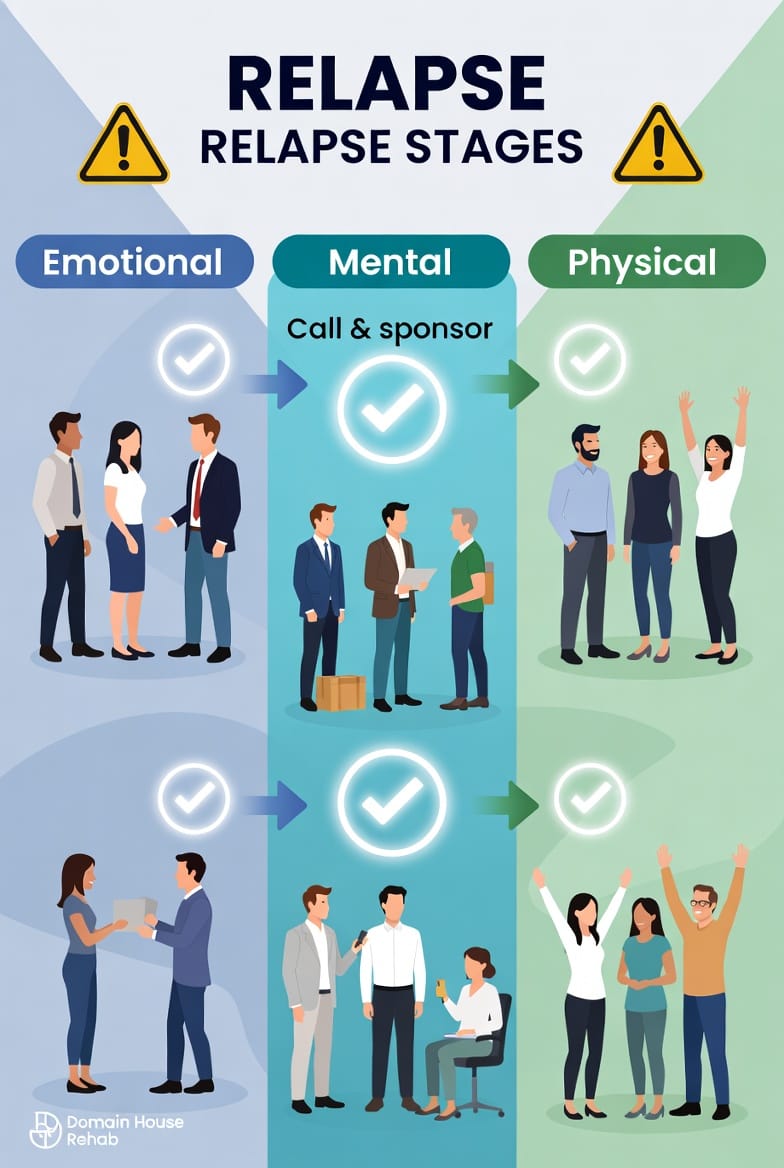
Mental and Cognitive Warning Signs That Demand Attention
As emotional changes deepen, mental relapse warning signs often emerge. You may begin romanticizing past use, replaying memories of substance use with a false glow while forgetting the pain it caused. Irritability and mood swings can increase, making everyday stressors feel overwhelming.
Changes in sleep patterns or eating habits frequently appear here—either sleeping too much or struggling with insomnia, or experiencing sudden loss of appetite or emotional eating. These physical shifts often reflect underlying mental unrest and deserve immediate care.
At this stage, denial can creep in. Thoughts like “I can handle this alone” or “One slip won’t hurt” may surface. Recognizing these patterns early prevents them from escalating. Domain House Rehab emphasizes that these mental signals are your mind’s way of asking for support—not a personal failure.
Behavioral and Physical Indicators to Monitor Closely
Behavioral signs become more visible as the process continues. You might neglect self-care routines, stop exercising, or abandon healthy hobbies that once brought joy. Skipping meetings becomes habitual rather than occasional. Returning to old places or environments tied to past use intensifies.
Physically, you may notice changes in sleep/eating, unexplained fatigue, or increased irritability that affects relationships. These signs are interconnected; addressing one often improves the others.
Comprehensive list of key warning signs to track daily:
- Changes in sleep/eating patterns
- Heightened irritability or mood swings
- Skipping meetings or support group sessions
- Romanticizing past use in thoughts or conversations
- Isolation from loved ones and recovery community
- Dishonesty about how you’re truly feeling
- Returning to old places or high-risk situations

Building Your Personalized Action Plan for Early Intervention
Prevention is most effective when you have a clear, written action plan. At Domain House Rehab, we guide every client to create one tailored to their unique life. Start by identifying your personal triggers and early warning signs. Write them down and share them with your support network.
Step-by-step action plan framework:
- Daily self-check: Spend five minutes each morning reviewing the relapse warning signs list above.
- Immediate response protocol: When any sign appears, contact your sponsor or a trusted recovery partner within 24 hours.
- Re-engage support: Attend an extra meeting or schedule a session with your counselor at Domain House Rehab.
- Healthy coping tools: Practice journaling, mindfulness, exercise, or any proven strategy that restores balance.
- Professional help: Call our compassionate team at (619) 703-0255 for immediate guidance and customized intervention strategies.
- Follow-up commitment: Schedule weekly check-ins to track progress and adjust your plan as needed.
This structured approach transforms potential setbacks into opportunities for deeper healing. Early intervention not only prevents relapse but also accelerates personal growth and resilience.
Proven Strategies for Long-Term Relapse Prevention
Incorporate these evidence-based practices into your daily life. Build a strong support network through regular attendance at meetings and family involvement. Maintain physical wellness with consistent sleep, nutrition, and movement. Develop emotional regulation skills through therapy, meditation, or creative outlets.
Regular self-reflection—such as the journaling shown in our opening image—helps you stay connected to your progress. Celebrate small victories and view challenges as temporary rather than defining.
At Domain House Rehab, our holistic programs combine clinical expertise with compassionate care, ensuring you have every resource needed for sustained recovery.
Moving Forward with Confidence and Hope
Recognizing relapse warning signs early is an act of self-compassion and strength. You now hold the knowledge and tools to protect your recovery journey. By staying vigilant, reaching out for support, and following your personalized action plan, you can navigate any challenge with clarity and courage.
Recovery is possible. Healing is continuous. And at Domain House Rehab, we are here to walk beside you every step of the way.
Recognize signs early. Call today to speak with a caring specialist and discover how our programs can strengthen your path to lasting freedom.
Your brightest chapter is still unfolding—embrace it with confidence.
Protect Your Sobriety Today – Call for Help