The Refrigerator Light Not Working: Bulb, Switch, or Board?
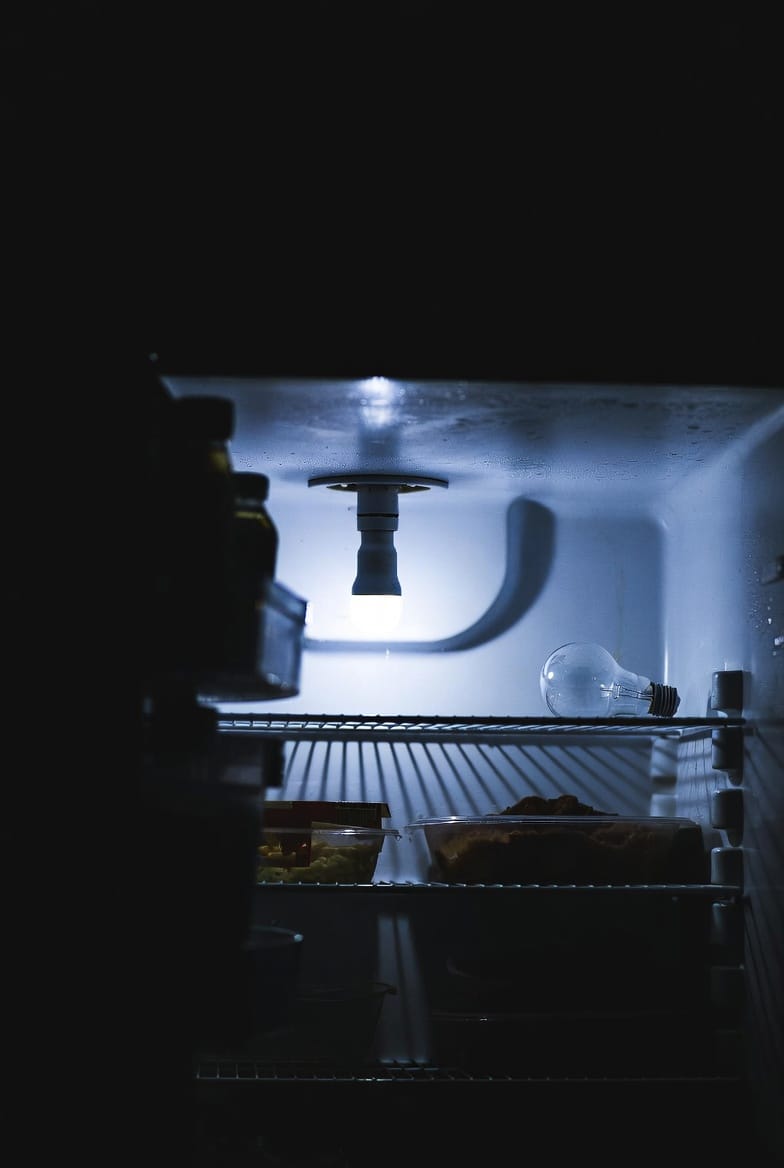
A refrigerator light not working is one of the most common yet frustrating appliance issues homeowners face. You open the door expecting bright illumination, only to be met with darkness. This minor inconvenience can quickly become a major hassle, making it difficult to find items and potentially leading to food spoilage if left unchecked.
Fix Your Fridge Light Today – Call Now!
At Appliance Repair, we’ve helped thousands of households resolve this exact problem efficiently and safely. The good news? In most cases, a dark fridge is an easy DIY fix. This comprehensive guide walks you through the most likely causes and provides clear, step-by-step troubleshooting to restore light to your refrigerator.
Key Point: Identifying whether the issue stems from a simple burnt-out bulb, a faulty door switch, or a deeper control board problem saves time and money.
Why Your Refrigerator Light Matters More Than You Think
Beyond basic convenience, proper interior lighting helps you:
- Quickly locate fresh and stored foods
- Check expiration dates accurately
- Maintain organization inside the fridge
- Prevent unnecessary door-open time that wastes energy
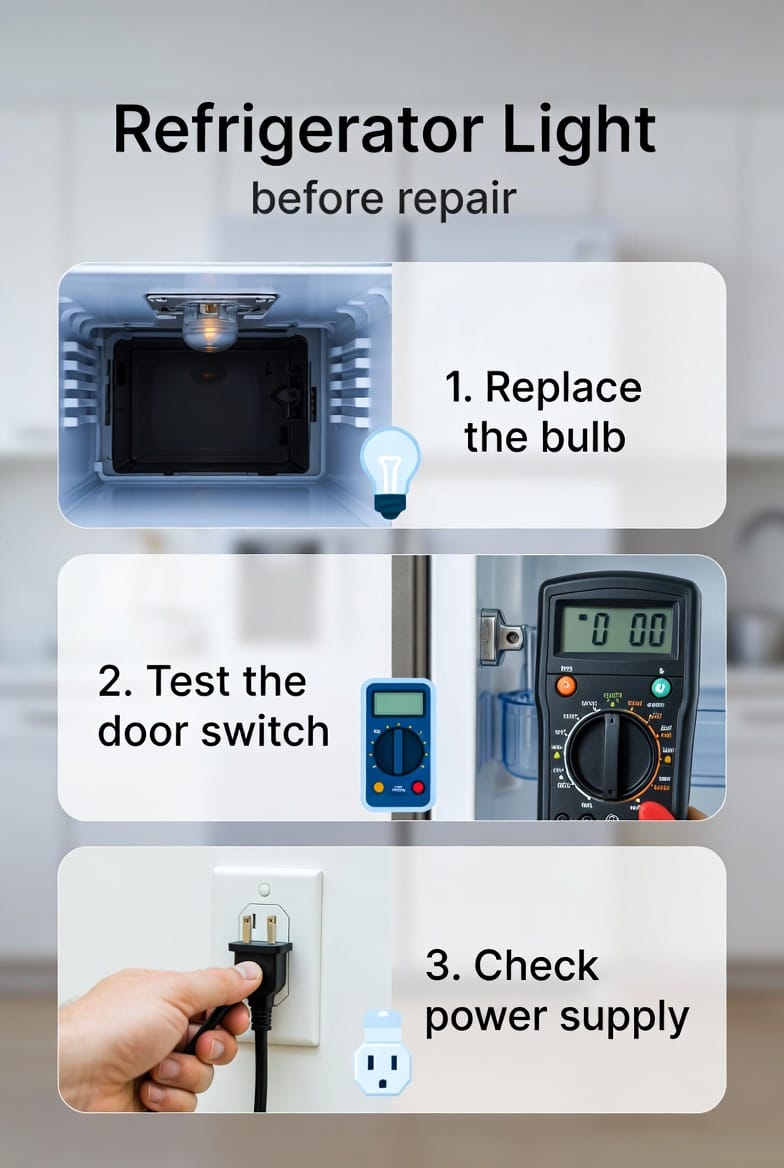
When the refrigerator light stops working, it’s usually due to one of three common culprits. Understanding these will help you diagnose the issue confidently.
Common Causes of Refrigerator Light Failure
Several factors can cause your fridge light to go dark. Here are the primary reasons:
- Burnt-out or loose bulb — the most frequent and simplest cause
- Faulty door switch — fails to detect when the door opens
- Control board or wiring issues — less common but more complex
- Power supply problems to the socket
Pro Tip: Always start with the easiest fix before moving to more technical solutions.
Step-by-Step Troubleshooting Guide
1. Safety First: Essential Precautions
Before touching anything inside your refrigerator:
- Unplug the appliance or turn off the circuit breaker
- Wear protective gloves when handling electrical components
- Work in a well-lit area
- Never force components or use excessive pressure
Safety Reminder: Electricity and moisture can create hazards. If you’re uncomfortable with any step, contact a professional technician immediately.
2. Check and Replace the Bulb
This resolves over 60% of refrigerator light issues.
How to test:
- Open the refrigerator door and locate the light bulb (usually at the top or back)
- Remove the bulb carefully
- Inspect for dark spots, broken filaments, or loose connections
- Test the bulb in another working socket (like a lamp)
Replacement steps:
- Purchase an appliance-rated LED or incandescent bulb matching the wattage
- Screw in the new bulb firmly but gently
- Plug in the fridge and test the door
Bold Tip: Use energy-efficient LED bulbs designed for refrigerators. They last longer and resist temperature fluctuations better than traditional bulbs.
3. Test the Door Switch
If replacing the bulb doesn’t solve the problem, the door switch is often next.
How the door switch works:
It’s a small button or plunger mechanism that turns the light on when the door opens and off when it closes. Over time, these switches wear out or get stuck.
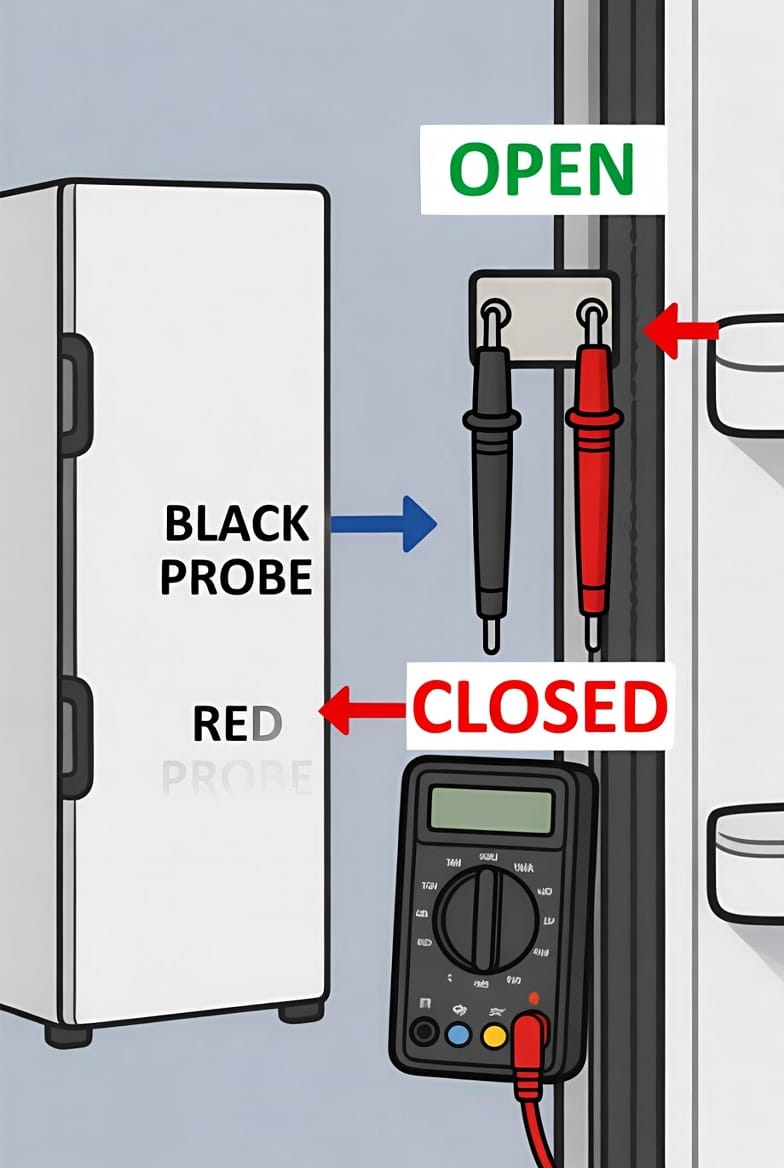
Testing procedure:
- Listen for a distinct click when opening and closing the door
- Locate the switch (usually near the top or side of the door frame)
- Press the switch manually with your finger while the door is open
- If the light comes on, the switch is working
- If not, further testing is needed
Advanced testing with a multimeter:
- Unplug the refrigerator
- Remove the switch carefully
- Set multimeter to continuity mode
- Test across the terminals – you should hear a beep when the switch is pressed
Bypass test (temporary):
Carefully bridge the switch terminals with a jumper wire. If the light turns on, replace the switch.
4. Inspect the Control Board and Wiring
When both bulb and switch test fine, the issue may lie with the main control board or internal wiring.
Signs of control board failure:
- Multiple electrical issues occurring simultaneously
- Digital display showing errors
- Light flickers intermittently
- No power reaching the socket
Diagnosis steps:
- Check voltage at the bulb socket with a multimeter (should show 120V when door is open)
- Inspect visible wiring for damage, fraying, or loose connections
- Look for burn marks on the control board
Important: Control board replacement requires technical expertise and proper part matching by model number.
When to Call a Professional Appliance Repair Technician
While many refrigerator light problems are DIY-friendly, certain situations require expert help:
- No power reaching the socket
- Suspected control board failure
- Refrigerator under warranty (to avoid voiding coverage)
- Multiple symptoms appearing together
- Uncertainty about electrical testing
Our team at Appliance Repair specializes in fast, reliable service for all major refrigerator brands. We carry common parts in our vans, enabling same-day repairs in most cases.
Preventive Maintenance Tips for Reliable Refrigerator Lighting
Keep your fridge light working consistently with these habits:
- Replace bulbs proactively every 2-3 years
- Clean door switch area regularly to prevent sticking
- Avoid slamming refrigerator doors
- Check seals and gaskets for proper alignment
- Schedule annual professional maintenance
Long-term benefit: Proper care extends the life of your refrigerator and prevents small issues from becoming expensive repairs.
Understanding Your Refrigerator Model
Different refrigerator types may have slight variations:
- Top-freezer models — usually have simple bulb and switch setups
- Side-by-side — may feature multiple lights and complex controls
- French door — often include LED lighting systems
- Built-in — typically have integrated smart controls
Always refer to your model’s manual for specific bulb type and location.
Energy Efficiency and Modern LED Conversions
Many older refrigerators still use incandescent bulbs. Upgrading to LED bulbs offers:
- Lower energy consumption
- Brighter, more natural light
- Significantly longer lifespan
- Better performance in cold temperatures
Note: Ensure the LED bulb is rated for enclosed spaces and appliance use.
Common Myths About Refrigerator Lights
Myth 1: The light stays on when the door is closed.
Reality: A working door switch prevents this to save energy.
Myth 2: Any bulb works in a refrigerator.
Reality: Temperature and vibration ratings matter for longevity.
Myth 3: A dark fridge always means expensive repair.
Reality: Most cases are fixed with a $5-15 bulb replacement.
Final Thoughts: Restoring Light to Your Refrigerator
A refrigerator light not working is rarely a serious problem. By following this systematic approach — starting with the bulb, checking the switch, and evaluating the control board when needed — you can resolve the issue quickly and confidently.
Remember: A dark fridge is usually an easy fix.
For professional diagnosis and repair of complex issues involving the door switch or control board, don’t hesitate to reach out to trusted experts.
Our experienced technicians are ready to help restore full functionality to your refrigerator with reliable, efficient service.
This guide provides general troubleshooting advice. Always prioritize safety and consult your owner’s manual or a qualified technician when dealing with electrical components.
Professional Refrigerator Light Repair – Call Now