The Refrigerant Leak Detection: Electronic Sniffers, UV Dye, and Soap Bubble Methods
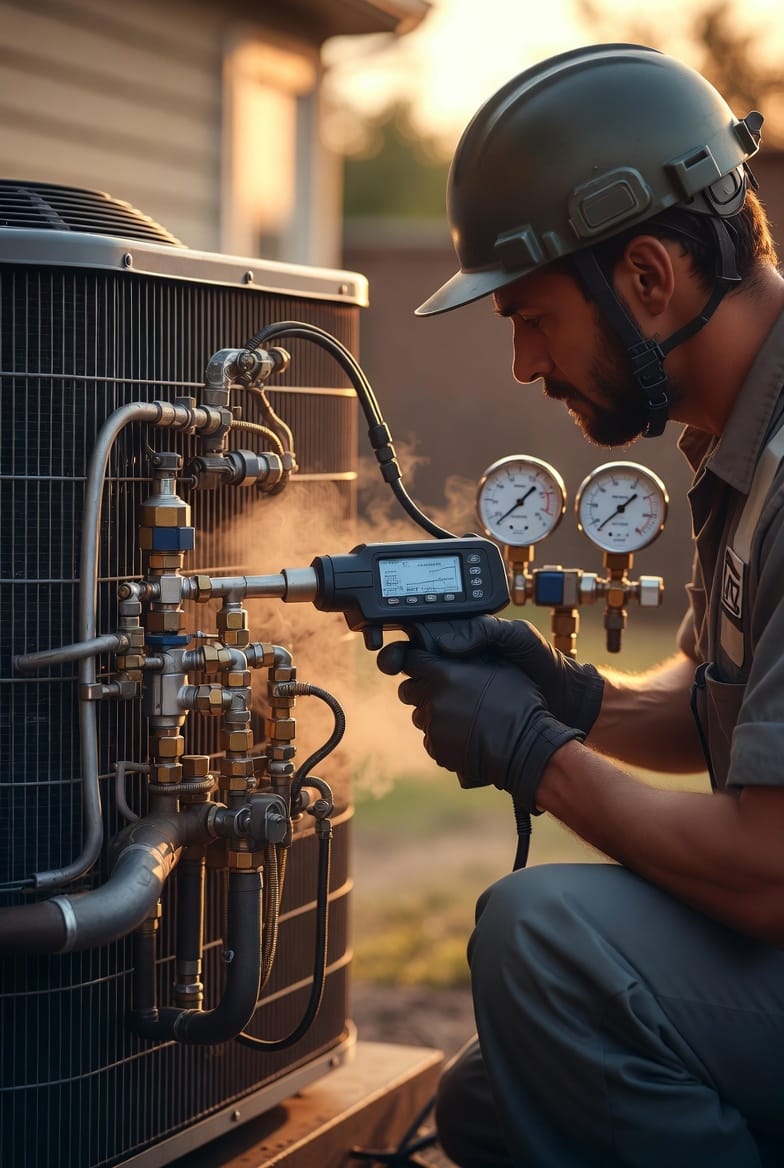
Refrigerant leak detection remains one of the most vital services for keeping air conditioning and refrigeration systems running at peak efficiency. Hidden leaks often develop quietly in joints, valves, or coils, gradually robbing your system of refrigerant and forcing it to work harder than designed. Left unchecked, these leaks lead to poor cooling, skyrocketing energy bills, and unnecessary wear on expensive components.
Stop Refrigerant Leaks Fast – Call for Expert Detection
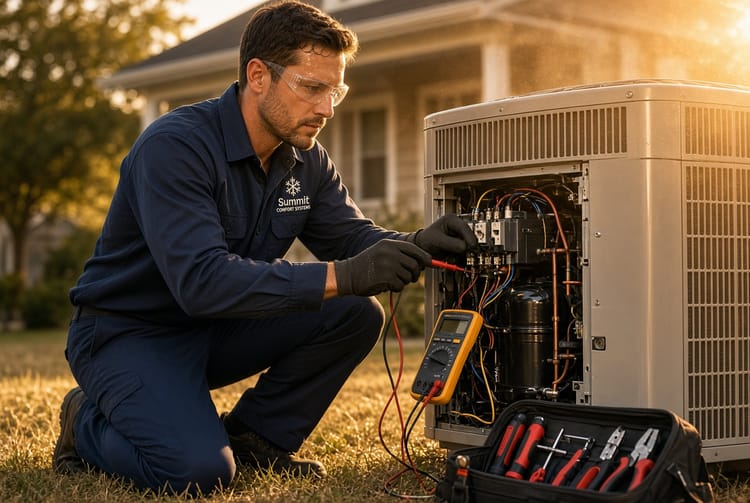
Professional technicians rely on proven methods to locate even the smallest escapes. Electronic sniffers, UV dye, and soap bubble methods each offer unique strengths in sensitivity and application. This guide explains how these techniques work, their detection capabilities, and why swift identification and repair deliver better performance while meeting strict environmental standards.
Why Finding and Fixing Leaks Is Critical
Every refrigerant leak compromises system performance in multiple ways. When refrigerant levels drop, the evaporator coil cannot absorb heat effectively, resulting in warmer air from your vents and longer run times for the compressor. This constant strain raises energy consumption by 15–30 percent in many cases and can shorten compressor life dramatically.
Beyond performance, environmental compliance demands attention. Modern refrigerants are powerful greenhouse gases; even small annual losses contribute to climate impact and may violate federal and state regulations. Recharging without locating the source simply repeats the cycle, wasting money and harming the environment.
Timely leak detection and repair restores full cooling capacity, lowers utility costs, and protects your investment. Homeowners and business owners alike can rest assured that professional methods catch problems early, preventing emergency breakdowns during peak summer heat.
Key risks of ignoring leaks include:
- Reduced cooling efficiency and uneven temperatures throughout the space
- Higher energy bills from overworked compressors
- Premature equipment failure requiring costly replacements
- Environmental violations and potential regulatory fines
- Safety concerns if certain refrigerants accumulate in confined areas
Fortunately, advanced detection techniques make it straightforward to locate and resolve these issues with minimal disruption.
Identifying Common Leak Points
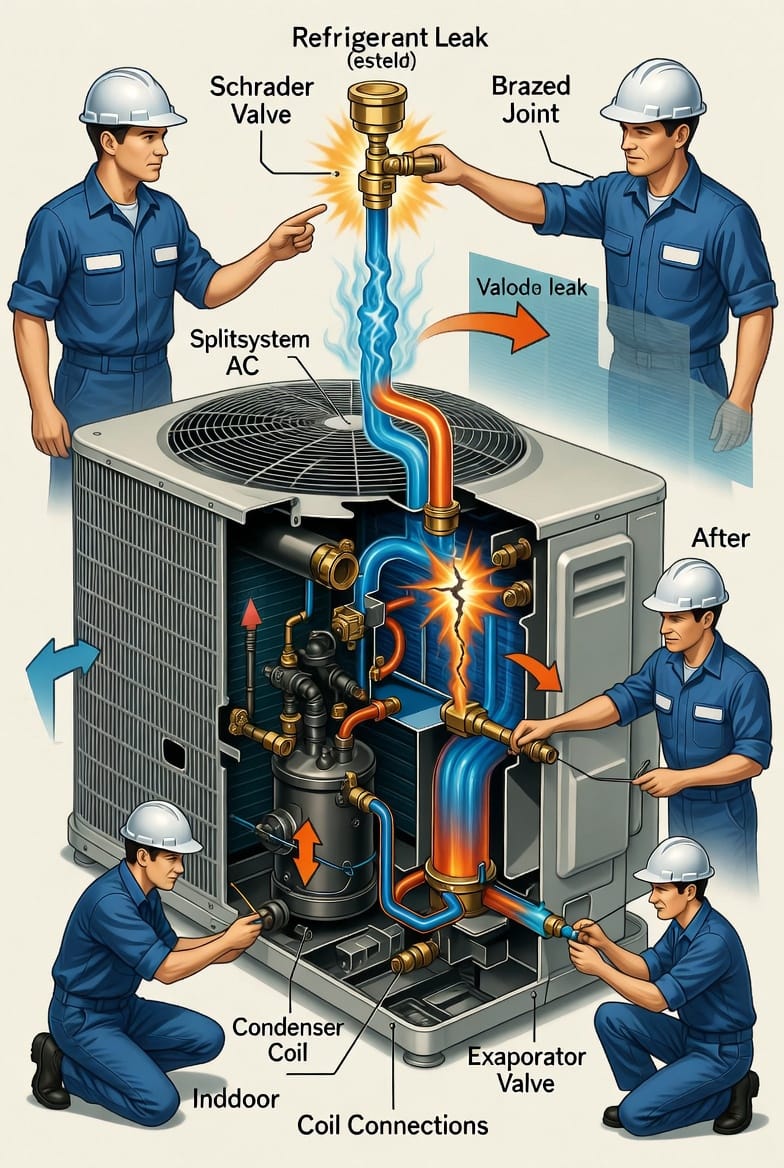
Leaks rarely announce themselves with obvious puddles. They hide in predictable locations where vibration, temperature changes, or installation stress create micro-openings over time.
Common leak points include:
- Schrader valves on service ports, where repeated gauge connections wear rubber seals
- Brazed joints along copper lines that experience thermal expansion and contraction
- Coil connections where factory welds meet field-installed tubing
- Flare fittings on indoor and outdoor units
- O-rings and gaskets around compressor ports or filter-driers
Mapping these areas systematically is the first step in any professional inspection.
Electronic Sniffers: The Most Sensitive Professional Tool
Electronic sniffers represent the gold standard for refrigerant leak detection because of their exceptional sensitivity. These handheld devices draw air across specialized sensors—heated diode, corona discharge, or infrared—designed to recognize specific refrigerant molecules.
Sensitivity levels reach as low as 0.1 ounces per year, allowing technicians to detect microscopic leaks long before performance drops noticeably. The unit emits audible beeps or visual alerts that intensify as the probe approaches the leak source, enabling precise pinpointing even in hard-to-reach areas.
Step-by-step process for electronic detection:
- Pressurize the system with nitrogen or the existing refrigerant to normal operating levels.
- Calibrate the sniffer for the specific refrigerant type (R-410A, R-22, R-32, etc.).
- Scan methodically around all joints, valves, and coils, moving the probe slowly at 1–2 inches per second.
- Confirm the leak by isolating the area and noting peak signal strength.
- Document findings for repair planning and compliance records.
Electronic sniffers shine in situations requiring non-invasive, rapid results. They are safe for occupied spaces and do not require system shutdown for extended periods. Their only limitation is occasional interference from strong cleaning chemicals, which trained technicians easily avoid.
UV Dye Method: Visual Proof You Can See
When a leak needs unmistakable visual confirmation, UV dye delivers dramatic results. A fluorescent dye compatible with the system’s refrigerant and oil is injected into the low-side port. The system runs for several hours or days, circulating the dye so it escapes only at leak points.
Under a high-intensity ultraviolet light and with protective glasses, the dye glows bright yellow or green, revealing the exact escape route—even in dark or confined spaces. Sensitivity covers medium to large leaks effectively, making it ideal for confirming findings from electronic sniffers or locating leaks in evaporator coils behind walls.
Advantages of the UV dye approach:
- Clear visual evidence that convinces homeowners and provides documentation
- Long-lasting detection since dye remains in the system until the next service
- Excellent for complex or hidden piping runs
Technicians combine UV dye with electronic methods for the highest success rate, ensuring no leak goes unnoticed. After repair, the dye is flushed or remains harmlessly in trace amounts.
Soap Bubble Method: Simple, Reliable, and Cost-Effective
Sometimes the most straightforward tool still solves the problem. The soap bubble method involves applying a specially formulated bubble solution to suspected areas. Escaping refrigerant creates visible bubbles that grow and pop, clearly marking the leak location.
This technique works best for larger leaks and pressurized systems. It requires no batteries or special training beyond careful application, making it a reliable backup when other tools face interference. Sensitivity is lower than electronic sniffers, yet it remains invaluable for immediate verification after repairs.
Best practices for soap bubble testing:
- Use only HVAC-grade solutions that resist evaporation
- Apply generously but evenly with a brush or spray
- Watch for bubble formation within 10–30 seconds
- Reapply after repair to confirm zero bubbles
Comparing the Three Leak Detection Methods
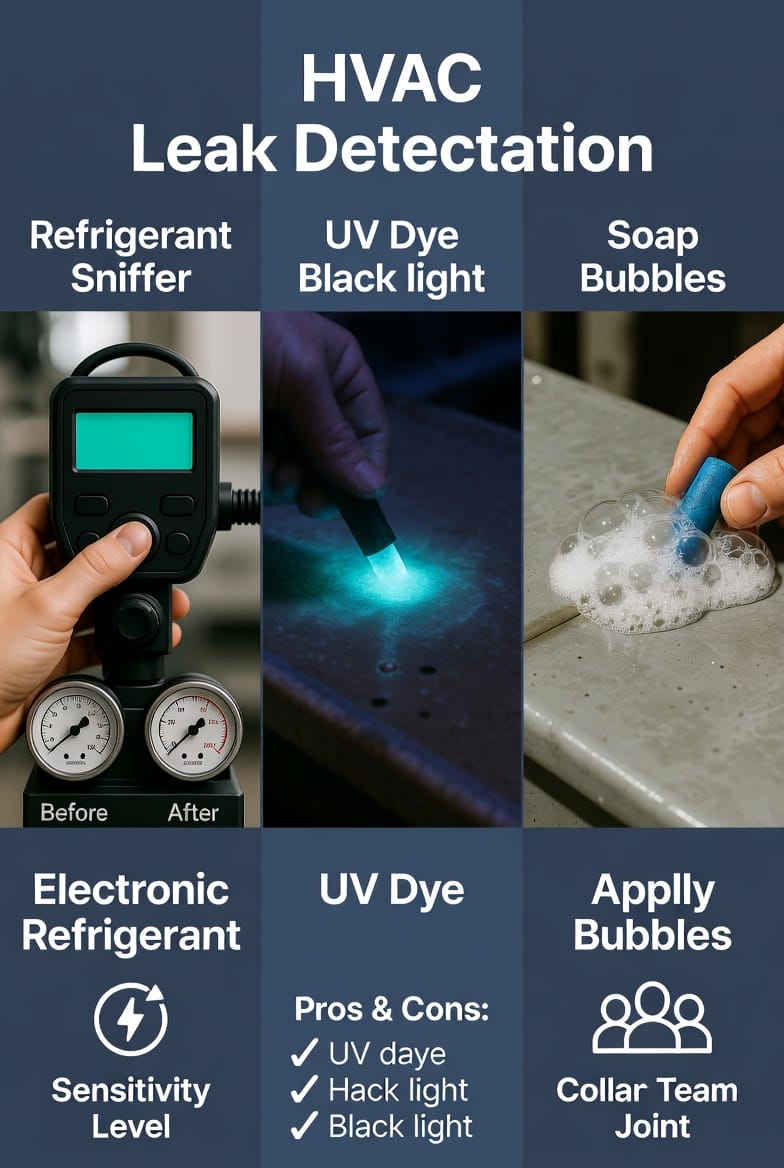
Each method serves a distinct purpose, and professionals often combine them for complete confidence.
Electronic sniffers offer the highest sensitivity and speed for tiny leaks.
UV dye provides unmistakable visual proof and excels in hidden locations.
Soap bubble delivers instant, low-cost confirmation for accessible areas.
Choosing the right combination depends on system size, leak size suspicion, and accessibility. The goal remains the same: locate every escape point so repairs are permanent.
Best Practices for Lasting Results
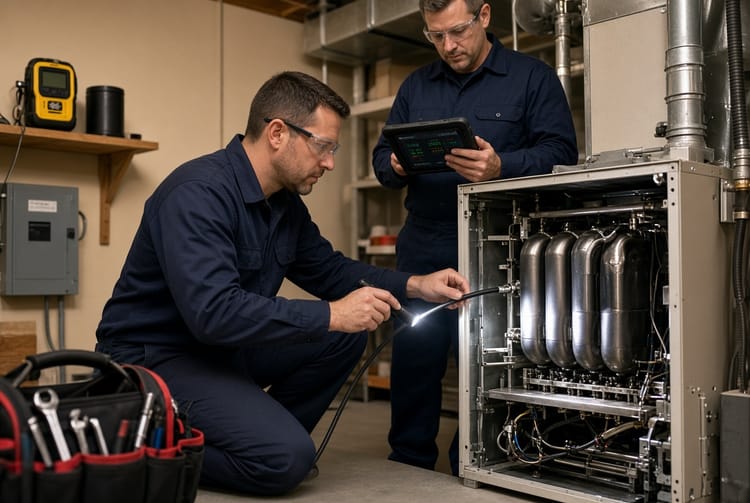
Professional refrigerant leak detection always begins with a thorough system evaluation. Technicians check pressures, temperatures, and superheat/subcooling before selecting the optimal method. After repair, they perform a final pressure test and recheck with at least two techniques to guarantee zero leaks.
Regular preventive maintenance catches developing issues early. Homeowners should schedule annual inspections, especially before summer, to maintain efficiency and compliance.
Find and Fix Leaks for Better Performance
Refrigerant leaks no longer need to compromise comfort or efficiency. With electronic sniffers, UV dye, and soap bubble methods in expert hands, hidden leaks are found quickly, repaired permanently, and verified completely. Your system regains full cooling power, energy bills drop, and environmental responsibility is maintained.
Get Professional Leak Detection & Repair – Call Now