The Refrigerant Charge Balance: Why Proper Pressures Are Critical for System Longevity
In today’s homes, a reliable air conditioning system is more than a convenience—it is a necessity for comfort and health during extreme temperatures. Yet many homeowners overlook one of the most critical aspects of AC installation and maintenance: the refrigerant charge balance. Getting the pressures exactly right is not optional; it is the foundation of efficiency, cooling capacity, and long-term system health. When technicians achieve the precise refrigerant charge, your unit operates at peak performance. Deviations—whether too much or too little—can silently shorten equipment life and drive up energy bills.
Maximize AC Longevity – Schedule Precision Charging Now
At the heart of every modern AC system lies refrigerant, the fluid that absorbs and releases heat to cool your indoor air. The refrigerant charge refers to the exact amount of this fluid the manufacturer designed the system to hold. Proper pressures, measured through superheat and subcooling, confirm that the charge is perfectly balanced. Only experienced, certified professionals should ever adjust refrigerant levels because the process demands specialized tools, EPA certifications, and years of hands-on expertise. When done correctly, the results speak for themselves: consistent cooling, lower operating costs, and a system that can last 15 to 20 years or more.
Understanding Refrigerant Charge and Why Balance Matters
Refrigerant does not simply fill the lines and coils like water in a pipe. It must exist in a precise liquid-vapor state at specific pressures to transfer heat efficiently. Manufacturers calibrate every system—whether a 2-ton central unit or a high-efficiency heat pump—to operate within a narrow pressure window. This refrigerant charge balance ensures the compressor, evaporator, and condenser all work in harmony.
When the charge is correct, your AC delivers the rated cooling capacity measured in BTUs per hour. The system runs quietly, cycles less often, and maintains even temperatures throughout your home. Homeowners notice the difference immediately: faster cooldown on hot days, quieter operation, and surprisingly lower monthly energy statements.
Improper charge throws the entire system out of sync. Undercharging starves the evaporator of refrigerant, while overcharging floods it. Both conditions create stress that compounds over time. The good news? With professional attention during AC installation or service, these risks disappear entirely. Certified technicians use manifold gauges, digital scales, and precise calculations to hit the manufacturer’s target every single time.
How Certified Technicians Measure and Set Proper Pressures
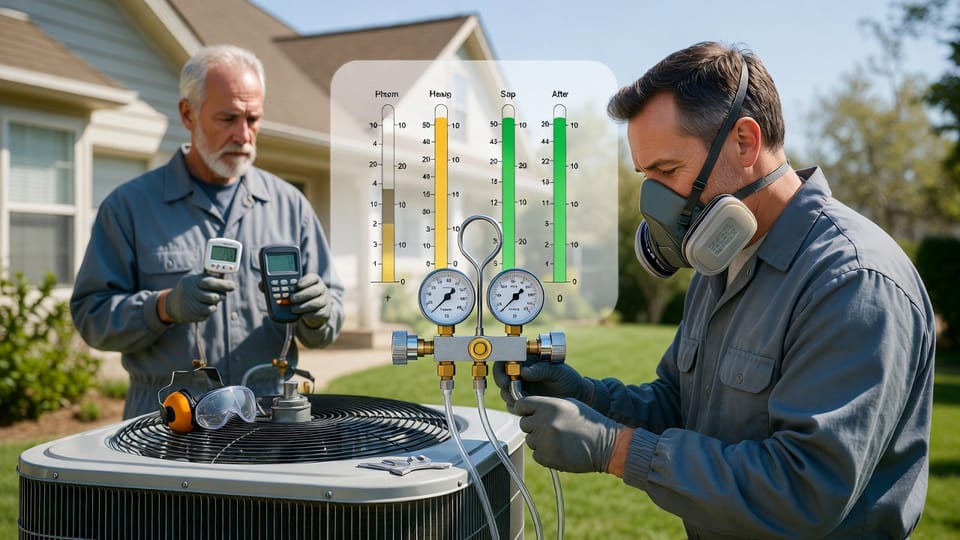
Achieving the right refrigerant charge is a science and an art. Technicians begin by evacuating the system completely with a vacuum pump to remove air and moisture—steps that protect the compressor from internal corrosion. Next, they weigh in the exact refrigerant amount specified on the unit’s nameplate using a calibrated scale.
Pressure readings alone are never enough. Professionals check superheat at the evaporator outlet and subcooling at the condenser outlet. These two values confirm the refrigerant is behaving exactly as engineered. Typical targets might be 8–12°F superheat and 10–15°F subcooling, depending on the model and conditions. Only when both numbers align with manufacturer charts does the system receive the green light.
This level of precision simply cannot be achieved by guesswork or shortcuts. Inexperienced hands often rely on “feeling” the suction line temperature or adding refrigerant until the house feels cooler—methods that almost always lead to imbalance. When you choose experienced professionals, you gain peace of mind knowing every decimal of pressure has been verified and documented.
The Hidden Dangers of Undercharging Your AC System
Undercharging is one of the most common yet damaging issues seen in poorly installed or maintained systems. When refrigerant levels drop below the required amount, several problems cascade quickly:
- Reduced cooling capacity – The evaporator cannot absorb enough heat, leaving rooms warmer than desired even when the unit runs nonstop.
- Ice formation on lines and coils – Low pressure causes the refrigerant temperature to plummet, freezing condensation and blocking airflow.
- Compressor overheating – The compressor works harder to pump the thin refrigerant vapor, generating excessive heat that breaks down oil and shortens motor life.
- Higher energy bills – The system runs longer cycles at lower efficiency, wasting electricity and straining the electrical system.
Left unchecked, undercharging can slash your AC’s lifespan by 30–50%. The compressor, often called the heart of the system, is particularly vulnerable. Without proper refrigerant flow, it experiences liquid slugging or excessive wear, leading to premature failure that can cost thousands in replacement.
Homeowners sometimes notice the warning signs—warm air from vents, hissing sounds, or visible ice—but delay service. The reassuring truth is that a quick visit from certified technicians restores full charge safely and permanently. They not only recharge the system but also locate and repair the underlying leak, preventing recurrence.
Why Overcharging Creates Even Greater Risks
Adding too much refrigerant is equally destructive and often more expensive to correct. Overcharging raises head pressure dramatically, forcing the compressor to fight against excessive resistance. Common consequences include:
- Elevated discharge temperatures that cook the compressor oil and reduce lubrication effectiveness.
- Liquid slugging where liquid refrigerant returns to the compressor, causing mechanical damage in a single season.
- Reduced efficiency despite the extra refrigerant—the system actually works harder and consumes more power.
- Potential safety issues including pressure relief valve activation and possible refrigerant release.
Many believe “more refrigerant means colder air,” but this myth could not be further from the truth. Excess charge disrupts the delicate balance manufacturers engineered, turning a reliable system into a high-maintenance liability. Professional technicians never add refrigerant by “feel.” They follow strict weighing and pressure-testing protocols to guarantee the exact factory specification.
Impact on Efficiency, Compressor Life, and Overall Cooling Capacity
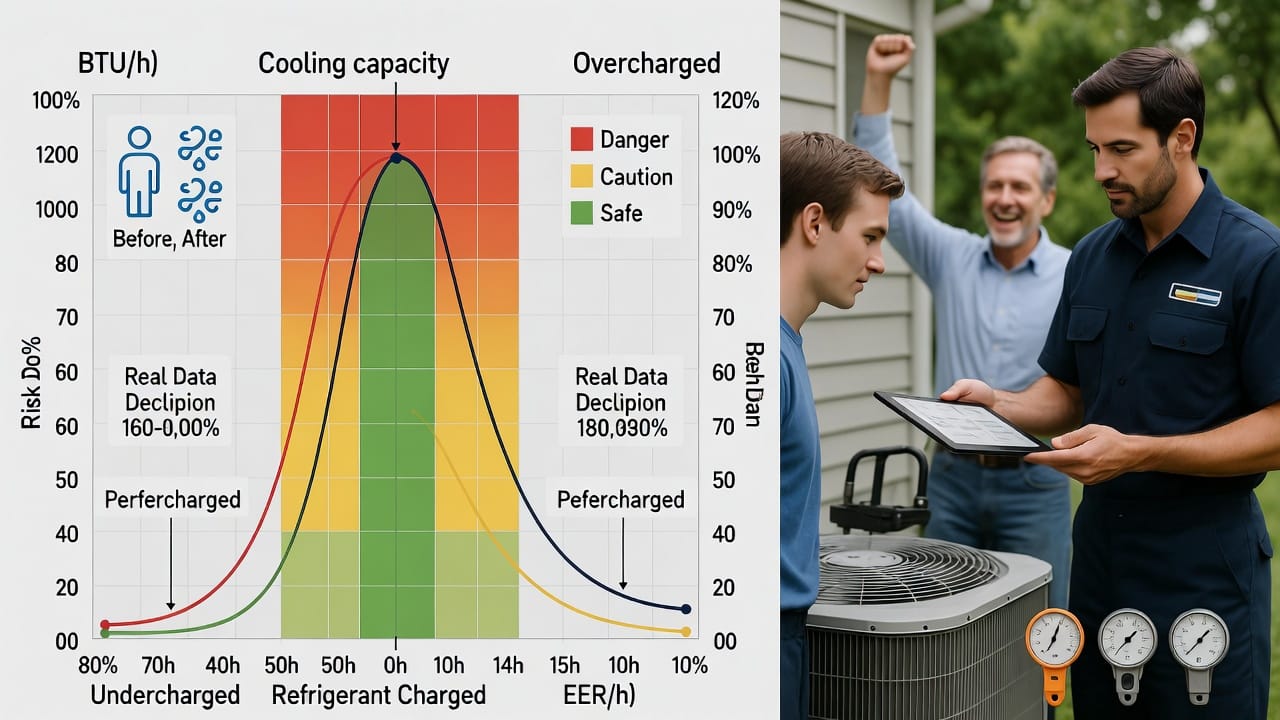
The numbers tell a compelling story. A system running at the correct refrigerant charge can achieve its full rated SEER efficiency. Even a 10% deviation can drop efficiency by 15–20%, adding hundreds of dollars annually to utility bills. Compressor life follows the same pattern: properly charged units routinely reach 15–20 years of service, while imbalanced systems often fail within 7–10 years.
Cooling capacity suffers most noticeably during peak summer heat. An undercharged unit might struggle to maintain 72°F indoors when outdoor temperatures hit 95°F. Overcharged systems cycle erratically, creating temperature swings and discomfort. When pressures are perfect, the system delivers steady, powerful cooling exactly when you need it.
The Critical Reason Only Experienced Technicians Should Handle Refrigerant
Refrigerant is a regulated substance under EPA Section 608 guidelines. Handling it without certification is illegal and dangerous. Beyond legal requirements, true expertise comes from understanding system-specific variables: ambient temperature, indoor load, line-set length, and elevation. Only technicians with thousands of hours of field experience can interpret gauge readings accurately and make the right adjustments on the first visit.
DIY attempts or calls to unqualified service providers frequently result in repeated failures and escalating repair costs. When you partner with certified professionals, you invest in long-term reliability. They arrive with the right equipment, the right knowledge, and the commitment to get it right the first time—every time.
Best Practices for Protecting Your AC Investment
Prevention is always better than cure. Schedule annual professional tune-ups that include pressure checks and leak detection. Modern systems often include advanced diagnostics that alert technicians to tiny charge losses before problems become visible. During AC installation, insist on a full evacuation, triple-pressure test, and weighed charge procedure rather than shortcuts.
Homeowners can help by keeping outdoor units clear of debris, changing filters monthly, and reporting any unusual sounds or performance changes immediately. These simple habits, combined with expert service, keep your system operating at peak efficiency year after year.

Common Myths About Refrigerant and System Performance
One persistent myth claims that refrigerant “wears out” over time and needs routine replacement. In truth, a properly installed and sealed system should never lose refrigerant. Another misconception suggests that adding more refrigerant will make the house cooler faster. As we have seen, the opposite is true—balance is everything.
Understanding these realities empowers homeowners to make informed decisions and avoid costly mistakes. When questions arise, trusted certified technicians provide clear explanations rather than upsells.
Long-Term Benefits of Proper Refrigerant Management
Systems maintained with exact refrigerant charge balance deliver consistent comfort, lower energy consumption, quieter operation, and dramatically extended equipment life. Homeowners enjoy peace of mind knowing their investment is protected. In many cases, the savings on energy bills and avoided repairs more than offset the cost of professional service.
Choosing the Right Team for Your AC Needs
Selecting experienced professionals ensures every service call meets the highest standards. Look for EPA certification, manufacturer training credentials, and a track record of precision work. The right team treats your system with the care it deserves and stands behind their work with strong warranties.
Precision Pressures = Longer AC Life – Call Today!