The Recovery Routine: Building Structure for Sober Living

Recovery is not simply the absence of substances. It is the active construction of a new life. In the early months of sobriety the mind and body are still recalibrating. Old patterns of chaos, isolation, and impulsivity remain close to the surface. A well-designed daily recovery routine supplies the missing framework that substances once falsely provided. Structure reduces uncertainty, lowers anxiety, and creates reliable barriers against relapse. This article offers a practical, step-by-step plan for building that framework so you can live with greater stability, dignity, and hope.
Start Your Daily Recovery Schedule – Call Today
Why Structure Matters in Recovery
The first weeks and months of sobriety often feel like walking through fog. Sleep is fragmented, appetite is unpredictable, and time itself seems to stretch or collapse. Without a plan, empty hours become dangerous hours. Research and clinical experience consistently show that unstructured time is one of the strongest predictors of return to use. When the brain is still healing, it seeks the familiar—even when the familiar is harmful.
A consistent routine does three essential things:
- It reduces uncertainty. Predictable wake times, meals, and activities tell the nervous system that life is now safe and manageable.
- It occupies high-risk windows. Many people previously used substances at specific times of day. Filling those slots with purposeful activity removes the automatic trigger.
- It builds self-efficacy. Each completed day of structure is evidence that you can keep commitments to yourself.
People who maintain even a modest daily plan report fewer cravings, better mood regulation, and stronger connections with support networks. Structure is not rigidity; it is a compassionate container that holds you while new neural pathways form.
What a Healthy Recovery Routine Looks Like
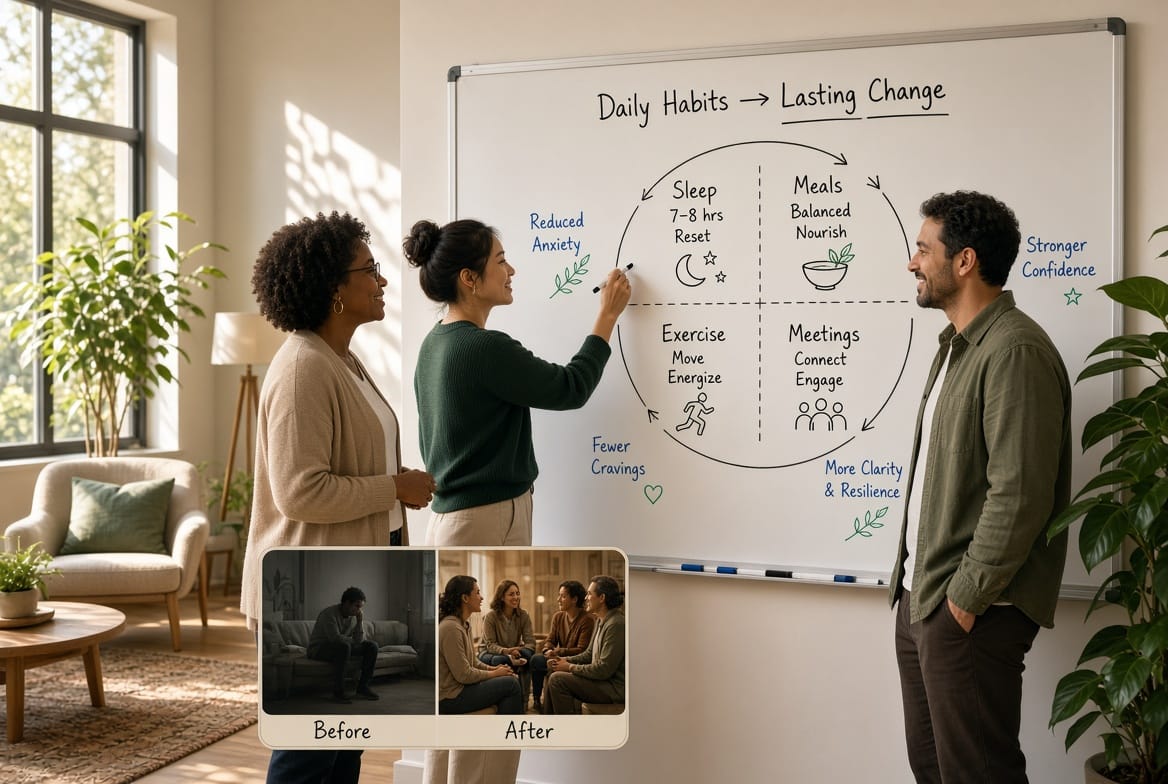
A sustainable routine rests on four interlocking pillars: restorative sleep, regular nourishing meals, consistent meetings and connection, and daily movement. These elements work together rather than in isolation.
Restorative Sleep
Sleep is the foundation. In early recovery the body’s natural rhythms are often disrupted. Aim for a consistent bedtime and wake time—even on weekends—within a 30-minute window. Create a wind-down ritual: dim lights, put screens away 60 minutes before bed, and practice a short breathing or gratitude exercise. A dark, cool room and a simple evening stretch signal the brain that rest is coming. Quality sleep improves emotional regulation and reduces the intensity of cravings the following day.
Nourishing Meals at Regular Intervals
Blood-sugar swings can mimic or intensify withdrawal symptoms and irritability. Eat three balanced meals and one or two small snacks at roughly the same times each day. Include protein, complex carbohydrates, and healthy fats. Simple, repeatable meals—oatmeal with fruit in the morning, a protein-and-vegetable lunch, a modest dinner—remove decision fatigue. Hydration matters equally; keep a water bottle visible throughout the day. Regular eating stabilizes energy and mood, two critical factors in relapse prevention.
Meetings and Supportive Connection
Isolation is a quiet threat. Schedule at least one recovery meeting, counseling session, or peer check-in most days. Whether in-person 12-step gatherings, SMART Recovery, or a sober-living house meeting, the act of showing up creates accountability and reminds you that you are not alone. Pair meetings with brief social contact—coffee with a sponsor or a walk with a housemate. Connection rebuilds the social skills that substances often eroded.
Daily Movement and Exercise
Physical activity is medicine for the recovering brain. It releases endorphins, improves sleep, and gives the body a healthy way to discharge tension. You do not need an intense gym routine. A 20- to 30-minute walk, gentle yoga, or body-weight exercises at the same time each day is enough to start. Movement also occupies time that might otherwise drift toward rumination. Over weeks, many people notice clearer thinking and a quieter inner critic.
How to Build Your Personalized Recovery Routine
Creating a routine is a skill you can learn. Follow these practical steps.
1. Assess your current reality.
For three days, simply observe. Note when you wake, eat, feel restless, or experience cravings. Write it down without judgment. This baseline reveals the gaps that structure must fill.
2. Choose a realistic wake-up time.
Select a time you can keep seven days a week. Set two alarms if needed and place your phone across the room. Consistency here anchors everything else.
3. Block the four pillars first.
On a paper planner or simple digital calendar, assign:
- Sleep window (8 hours plus wind-down)
- Three meal times
- Meeting or support block
- Movement block
Treat these as non-negotiable appointments with yourself.
4. Fill remaining hours with purpose, not pressure.
Add one or two additional activities: light household tasks, reading recovery literature, a hobby, or volunteering. Leave modest buffer time so the day does not feel packed.
5. Start small and review weekly.
Begin with 70 percent of the ideal schedule. After seven days, look at what worked and what felt forced. Adjust one element at a time. Perfection is not required; consistency is.
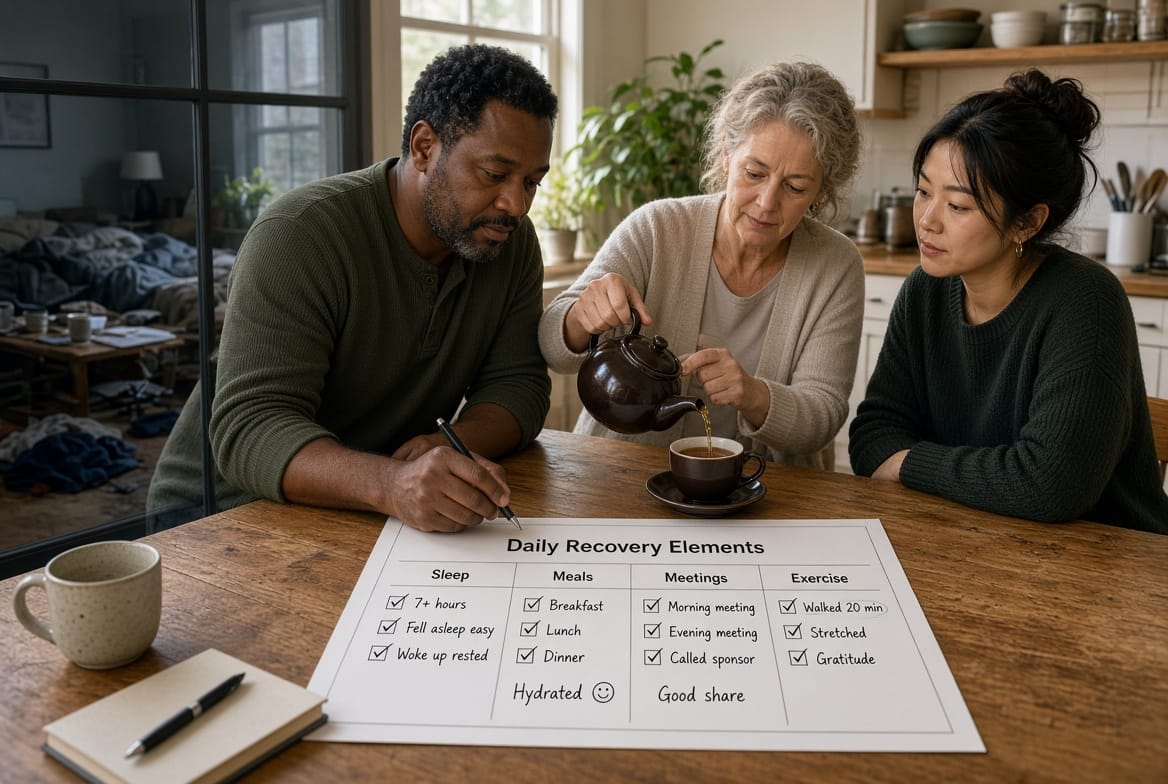
6. Use visual reminders.
A wall calendar, phone alarms labeled with positive phrases (“Time to nourish your body”), or a simple checklist on the fridge keeps the plan visible. Seeing the day laid out reduces the mental load of deciding what comes next.
Common obstacles include over-scheduling, all-or-nothing thinking, and social pressure. If a meeting conflicts with work, choose an earlier or later option. If exercise feels impossible on a low-energy day, walk for ten minutes instead of skipping entirely. Flexibility within structure is a sign of maturity, not failure.
A Sample Weekday Recovery Schedule
Here is one realistic template you can adapt:
- 6:30 a.m. – Wake, hydrate, five-minute stretch
- 7:00 a.m. – Nutritious breakfast and short journal entry
- 8:00 a.m. – Morning meeting or meditation
- 9:30 a.m. – Work, volunteer, or structured free time
- 12:30 p.m. – Balanced lunch
- 1:30 p.m. – Light walk or exercise
- 3:00 p.m. – Afternoon check-in or household responsibility
- 6:00 p.m. – Dinner with others when possible
- 7:30 p.m. – Evening meeting or reading
- 9:30 p.m. – Wind-down ritual
- 10:30 p.m. – Lights out
Weekends can follow the same rhythm with slightly later start times if needed, but keep the pillars intact. The goal is rhythm, not military precision.
Sustaining the Routine Over Time
After the first month, many people notice the routine beginning to feel natural rather than forced. That is the point at which the brain starts to expect healthy patterns. Continue weekly reviews. Celebrate small wins—thirty consecutive nights of consistent sleep, or attending every planned meeting for two weeks. Share the plan with a sponsor, counselor, or trusted housemate so you have external accountability.
If life circumstances change—a new job, a move, or a family event—rebuild the schedule rather than abandon it. Structure is portable. The same four pillars can be rearranged around new demands.
Long-term benefits compound. Better sleep improves decision-making. Regular meals stabilize mood. Meetings keep isolation at bay. Exercise strengthens both body and self-respect. Together they create a life that feels worth protecting.
Conclusion: Your Next Step Toward Stability
A recovery routine is not a prison. It is a scaffold that supports the person you are becoming. By reducing uncertainty and filling the day with purposeful action, you give yourself the best possible chance to stay sober and to grow. Start tonight: choose tomorrow’s wake-up time and write down three meals. Small, repeated actions become the architecture of a new life.
Build a routine that supports your recovery. You do not have to design this plan alone. Support is available, and a more stable day is closer than you think.
Get Help Building Your Sober Living Routine – Call Now