The Recovery Identity: Who You Are Without Substances

Addiction does not simply alter behavior. Over time it quietly rewrites the story a person tells about themselves. The daily rituals of obtaining, using, and recovering from substances begin to define roles, relationships, and even the sense of who one is at the core. When the substances stop, that familiar identity collapses, leaving a profound and often frightening question: Who am I now?
Start Your New Self-Concept Journey – Call Now
This question sits at the heart of a powerful therapeutic concept known as the recovery identity. Building a recovery identity means deliberately constructing a new, coherent self-concept that no longer relies on substances for meaning, belonging, or emotional regulation. It is not about erasing the past. It is about integrating experience while actively creating a future self rooted in values, strengths, and genuine connection. Research and clinical experience consistently show that people who successfully develop a strong recovery identity experience lower rates of relapse, higher life satisfaction, and more stable mental health.
How Addiction Becomes Part of Identity
Long before formal treatment begins, addiction weaves itself into the fabric of daily life. The substance becomes the primary source of relief, the center of social circles, the explanation for missed obligations, and the quiet justification for self-judgment. Over months or years, the individual internalizes a set of beliefs: “I am someone who needs this to function,” “I am unreliable,” or “I am only interesting when I’m altered.” These beliefs harden into an addiction identity.
This identity serves a psychological purpose. It offers predictability in chaos and a ready-made narrative that explains pain. Friends and family may reinforce it, either through enabling or through labels that stick. The brain’s reward system further cements the association, linking the substance to feelings of temporary completeness. Removing the substance therefore feels less like quitting a behavior and more like losing a central piece of the self. Many people describe early recovery as standing in an empty room where every familiar piece of furniture has been removed. The silence is overwhelming.
Recognizing this process is the first step toward freedom. When a person understands that the addiction identity was constructed rather than innate, the possibility of reconstruction becomes real. The therapeutic work shifts from simply stopping use to actively authoring a new story.
The Challenge of Identity Collapse in Early Recovery
The early weeks and months of recovery often bring a quiet crisis of meaning. Without the organizing force of substances, ordinary questions grow large: What do I enjoy? Who are my real friends? What am I good at? How do I fill the hours that used to revolve around using? Self-esteem can plummet because the old identity provided a distorted but consistent sense of competence—even if that competence was only in managing addiction.
This period is normal and temporary. It signals that the old structure has been dismantled and space has opened for something healthier. The key is to approach the emptiness with curiosity rather than panic. Clinicians often describe it as a necessary fallow season before new growth. Supportive environments that validate the discomfort while offering structured opportunities for exploration make the difference between drifting and deliberate rebuilding.
Rebuilding Self-Concept: The Three Pillars of a Recovery Identity
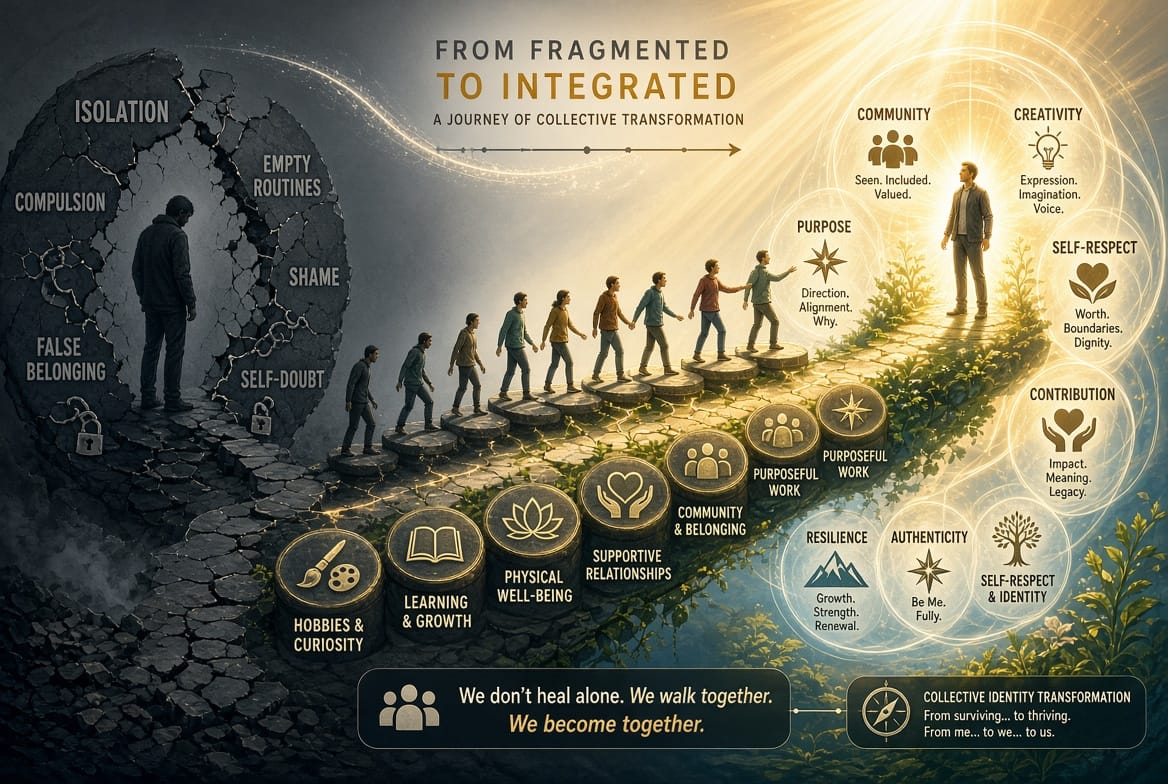
A durable recovery identity rests on three interconnected pillars: developing new interests, building authentic self-esteem, and discovering purpose. Each pillar strengthens the others, creating a self-concept that feels both stable and expansive.
Developing New Interests
Substances often crowd out hobbies, creativity, and simple pleasures. In recovery, reclaiming or discovering interests becomes a practical act of identity formation. Trying new activities is not about instant mastery; it is about gathering evidence that the self can still experience curiosity, competence, and joy without chemical assistance.
Start small and low-pressure. A person who once loved music might begin by listening deliberately again, then progress to learning a single chord. Someone drawn to nature might walk the same local trail three times a week, noticing seasonal changes. The goal is consistency over intensity. Each repeated experience lays down new neural pathways and new self-descriptions: “I am someone who creates,” “I am someone who notices beauty,” “I am someone who shows up.”
Group settings amplify the effect. Shared activities—art classes, hiking clubs, cooking workshops—provide both skill-building and belonging. The social mirror reflects a different self: capable, engaged, and valued for contribution rather than crisis.
Building Self-Esteem from the Inside Out
Self-esteem in active addiction is usually contingent and fragile, tied to the substance’s temporary effects or to external validation that arrives only in certain states. Recovery requires shifting to intrinsic self-esteem—a quieter confidence based on values, effort, and integrity.
Practical pathways include keeping a daily evidence log: three concrete actions that align with personal values, no matter how small. Completing a short workout, keeping a promise to a friend, or preparing a nourishing meal all count. Over time the log becomes a visible record that contradicts the old narrative of failure. Therapy modalities such as cognitive behavioral work help identify and reframe the automatic thoughts that once sustained the addiction identity. Mindfulness practices teach the skill of observing internal experience without immediately identifying with it.
Importantly, self-esteem grows through realistic self-appraisal rather than forced positivity. Acknowledging past harm while recognizing present effort creates a balanced, adult self-view. This balance is protective; it reduces the all-or-nothing thinking that can trigger relapse when imperfect days arrive.
Finding Purpose Beyond Survival
Purpose answers the deeper question of why the hard work of recovery is worth continuing. For many people, purpose emerges at the intersection of personal strengths and contribution to others. It need not be dramatic. Purpose can look like mentoring someone earlier in recovery, creating art that expresses hard-won insight, advocating for better treatment access, or simply showing up as a reliable parent, partner, or colleague.
Purpose provides direction when motivation fluctuates. It turns recovery from a defensive stance—avoiding substances—into an affirmative one—moving toward a meaningful life. Longitudinal studies of long-term recovery consistently highlight purpose as a key protective factor. When people can articulate a reason for living that is larger than themselves, the pull of old patterns loses power.
Practical Strategies for Fostering a Positive Recovery Identity
Building a recovery identity is an active, ongoing process rather than a single decision. The following evidence-informed strategies help accelerate and stabilize the work:
- Narrative rewriting. Journal regularly about the emerging self. Write letters from the future self to the present self, describing the life being built. Share pieces of this evolving story in safe therapeutic or peer settings so that others can reflect the new identity back.
- Role experimentation. Deliberately try on new roles—volunteer, student, athlete, artist, mentor—for limited periods. Notice which roles feel authentic and expand those.
- Environment design. Surround daily life with cues that support the new identity: books, playlists, clothing, and digital content that reflect values rather than old patterns.
- Relationship audit. Gradually invest more time in people who know and affirm the recovering self. Set clear boundaries with those still tied primarily to the old identity.
- Milestone rituals. Mark progress with intentional ceremonies—one month, ninety days, one year—that celebrate identity growth rather than mere abstinence.
- Service as identity fuel. Helping others in recovery provides rapid, powerful evidence of a transformed self. Many find that sponsorship or peer support work solidifies their own recovery identity more effectively than any other single activity.
These practices work best when supported by professional guidance. Structured wellness programs that integrate individual therapy, group process, experiential activities, and family education create the ideal conditions for identity reconstruction.
Common Obstacles and How to Navigate Them
Even with strong intention, setbacks occur. Old identity fragments can resurface during stress, loneliness, or unexpected triggers. The compassionate response is to treat these moments as information rather than failure. Ask: What need was the old identity trying to meet? How can the new identity meet that need more effectively?
Another obstacle is the fear of “losing edge” or becoming boring. Many people worry that sobriety will strip away intensity or creativity. In reality, the opposite usually happens. Clarity and emotional range expand, allowing deeper creative and relational experiences. The recovery identity does not flatten personality; it liberates it from the narrowing effects of substances.
Social identity threats also arise. Former using friends may resist the change, and some family members may struggle to update their mental picture of the person. Consistent, calm demonstration of the new self—paired with clear communication—gradually shifts these external mirrors.
The Long-Term Horizon of Recovery Identity
A mature recovery identity is flexible rather than rigid. It continues to evolve as life circumstances change—new careers, relationships, health challenges, or opportunities. The foundation remains the same: a self that draws strength from internal resources, meaningful connection, and contribution. People who reach this stage often report a quiet pride that is independent of external achievement. They know who they are without substances, and that knowledge becomes an unshakeable anchor.
This identity also becomes a gift to others. By living it visibly, individuals normalize the possibility of profound change and expand the cultural understanding of what recovery can look like.

Conclusion: An Invitation to Discover Who You Are Becoming
The journey from an addiction identity to a vibrant recovery identity is one of the most profound transformations a person can undertake. It requires courage to face the emptiness left by substances and patience to fill that space with authentic interests, earned self-esteem, and lasting purpose. The work is not linear, yet every small step—trying a new activity, keeping a commitment, offering support to another—adds substance to the emerging self.
You do not have to navigate this process alone. Professional wellness programs provide the structure, expertise, and community that accelerate identity rebuilding and make the path safer and more sustainable. Discover your identity in recovery.
Discover Your Recovery Identity – Call Now!