The Radiant Floor Heating Retrofit: Adding Warmth to Existing Concrete Slabs
Radiant floor heating retrofits offer homeowners a proven way to transform cold, uncomfortable concrete slabs into warm, energy-efficient living spaces without the disruption of full demolition. Whether you own a basement, slab-on-grade home, or an older building with exposed concrete floors, modern retrofit solutions deliver consistent, soothing warmth from the ground up.
Transform Your Concrete Slab with Radiant Heat – Call Now!
Rest assured, these upgrades are designed specifically for existing structures. Professional installers focus on minimal height buildup, precise compatibility with your current floor plan, and long-term reliability. In this comprehensive guide, we explore every practical option for adding radiant heat to concrete slabs, key engineering considerations, and why this investment pays dividends in comfort and efficiency.
Why Retrofit Radiant Heat on Existing Concrete Slabs?
Concrete slabs are notorious for feeling icy underfoot, especially in cooler climates or during shoulder seasons. Traditional forced-air systems struggle to counteract this conductive chill because heat rises. Radiant floor heating, by contrast, warms the entire floor surface evenly, creating a gentle upward convection that keeps rooms comfortable at lower thermostat settings.
Homeowners often seek retrofits when remodeling kitchens, bathrooms, or finished basements where the slab remains the structural base. The good news? You do not need to rip out the entire floor. Today's systems are engineered for overlay installation, preserving door clearances and ceiling heights while delivering the same luxurious warmth found in new construction.
Key benefits include lower energy bills, silent operation, allergen-free air, and the ability to zone heat room by room. With proper planning, a retrofit can be completed in days rather than weeks, letting you enjoy toasty floors sooner than you might expect.
Exploring Retrofit Options for Concrete Slabs
Three primary methods stand out for adding radiant heat to existing concrete: electric mats laid directly over the slab, thin-profile hydronic systems, and channeled tubing embedded within the slab. Each balances ease of installation, added floor height, and long-term performance. Professional assessment determines the best fit based on your slab condition, room size, and available utilities.
Option 1: Electric Radiant Heating Mats – Quick and Low-Profile
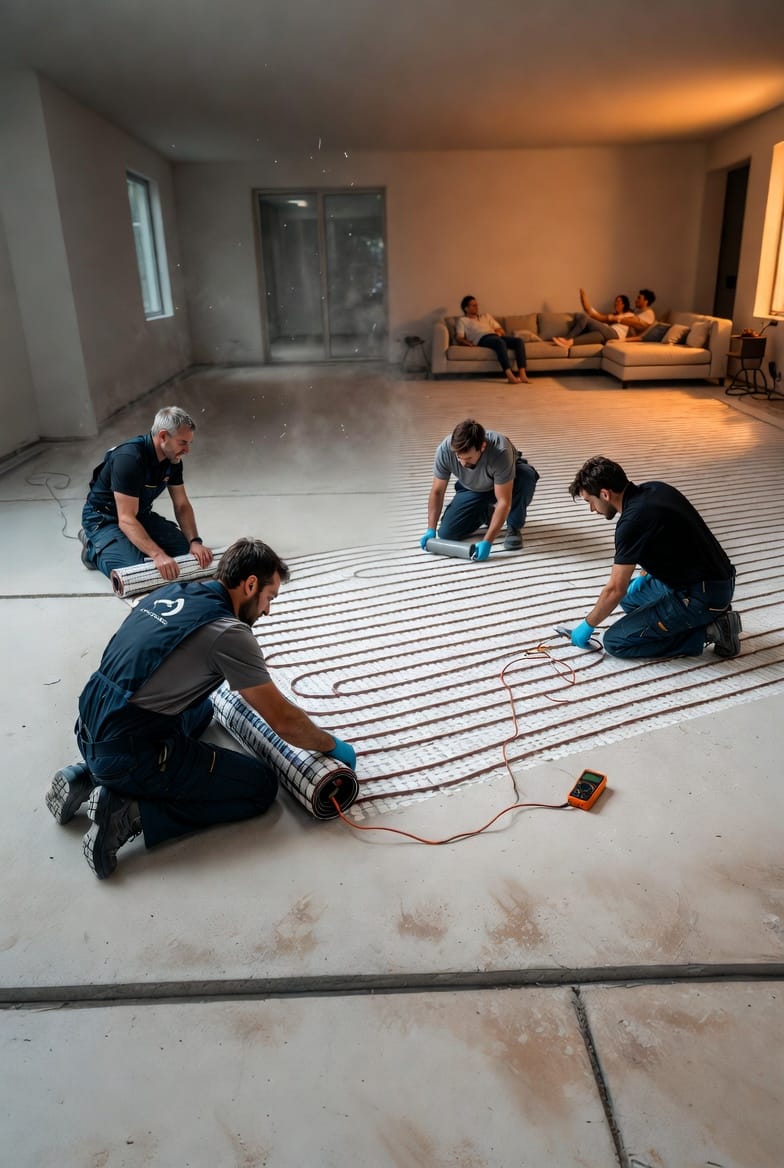
Electric radiant mats represent the simplest retrofit path for most concrete slabs. These pre-assembled mats feature ultra-thin heating cables woven into a durable mesh. Installers roll them out directly over a clean, level slab, secure them, and cover with a thin self-leveling compound before laying your final flooring.
Total added height is typically just ¼ inch or less, making this method ideal when door clearances or transitions to adjacent rooms are tight. No boiler or plumbing modifications are required — simply connect to your existing electrical panel.
Advantages include:
- Rapid installation (often one to two days per room)
- Precise zoning for individual comfort control
- Zero risk of leaks since there is no water involved
- Compatibility with virtually any finished floor type, including tile, hardwood, or luxury vinyl
Homeowners appreciate the plug-and-play simplicity. Mats activate instantly when power is supplied, delivering targeted warmth exactly where needed. For concrete slabs that are already finished or painted, a quick surface prep and insulation board layer ensure heat flows upward rather than downward into the earth.
Option 2: Thin-Profile Hydronic Systems – Efficient and Scalable
When whole-home or larger-area heating is the goal, thin-profile hydronic retrofits shine. These systems use flexible PEX tubing embedded in a slim aluminum or polymer heat-transfer plate that sits atop the slab. A low-profile manifold connects to either an existing boiler or a dedicated high-efficiency water heater.
Added height remains modest — usually ½ inch or less with the right insulation layer — preserving most door clearances. The water circulating at lower temperatures (around 90–120°F) makes the system exceptionally energy-efficient, especially when paired with modern condensing boilers or heat pumps.
Benefits at a glance:
- Superior thermal mass for even, long-lasting warmth
- Ability to integrate with solar or geothermal sources
- Lower operating costs over time compared to electric resistance
- Quiet, maintenance-friendly operation once installed
Professional teams handle all plumbing and pressure testing, ensuring leak-free performance for decades. This option is particularly reassuring for homeowners concerned about rising energy prices, as hydronic systems often qualify for utility rebates and tax incentives.
Option 3: Cutting Channels for Tubing – Minimal Height Impact
For projects where zero added height is non-negotiable, contractors can cut shallow channels directly into the concrete slab using specialized saws. PEX tubing is then pressed into these grooves, covered with a high-conductivity grout, and finished with your chosen flooring.
This method keeps the floor level identical to the original slab, eliminating any door or transition adjustments. While slightly more invasive than overlay systems, modern dustless cutting tools and quick-cure grouts minimize mess and downtime.
Ideal scenarios include:
- Historic homes with strict clearance requirements
- Areas with existing cabinetry or built-ins that cannot be raised
- Homeowners prioritizing the absolute thinnest possible profile
Safety protocols and structural engineering reviews ensure the slab’s integrity remains uncompromised. Once sealed, the channels become invisible, delivering seamless radiant warmth.
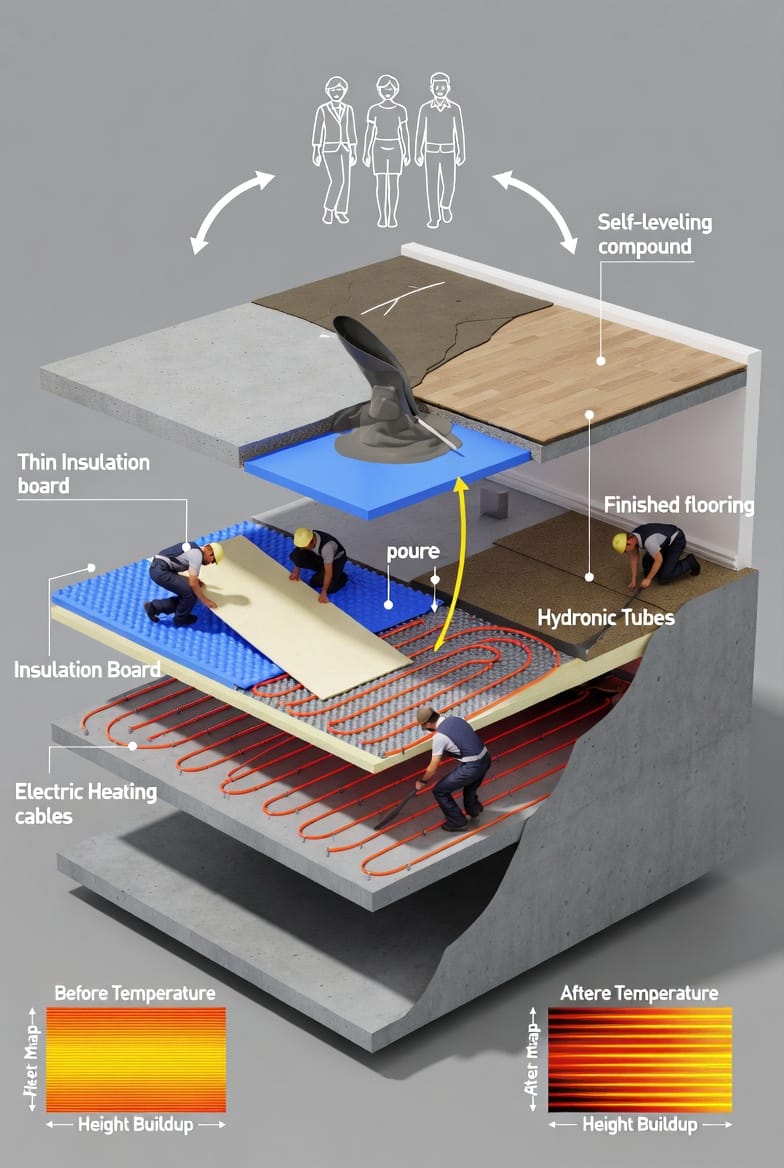
Critical Considerations: Floor Height and Door Clearances
No retrofit discussion is complete without addressing floor height and door clearances. Even a fraction of an inch can affect swinging doors, transitions, or appliance fit.
- Electric mats add the least height and are often the first recommendation when clearances are under ½ inch.
- Thin-profile hydronic systems require careful measurement of manifold placement and pipe routing.
- Channeled tubing preserves original levels entirely but demands precise concrete cutting.
Experienced contractors perform laser-level surveys and create detailed elevation drawings before work begins. They also fabricate custom transition ramps or threshold adjustments if needed. Rest assured, these details are standard practice; your doors will still open and close smoothly, and the finished floor will look as though it was always meant to be warm.
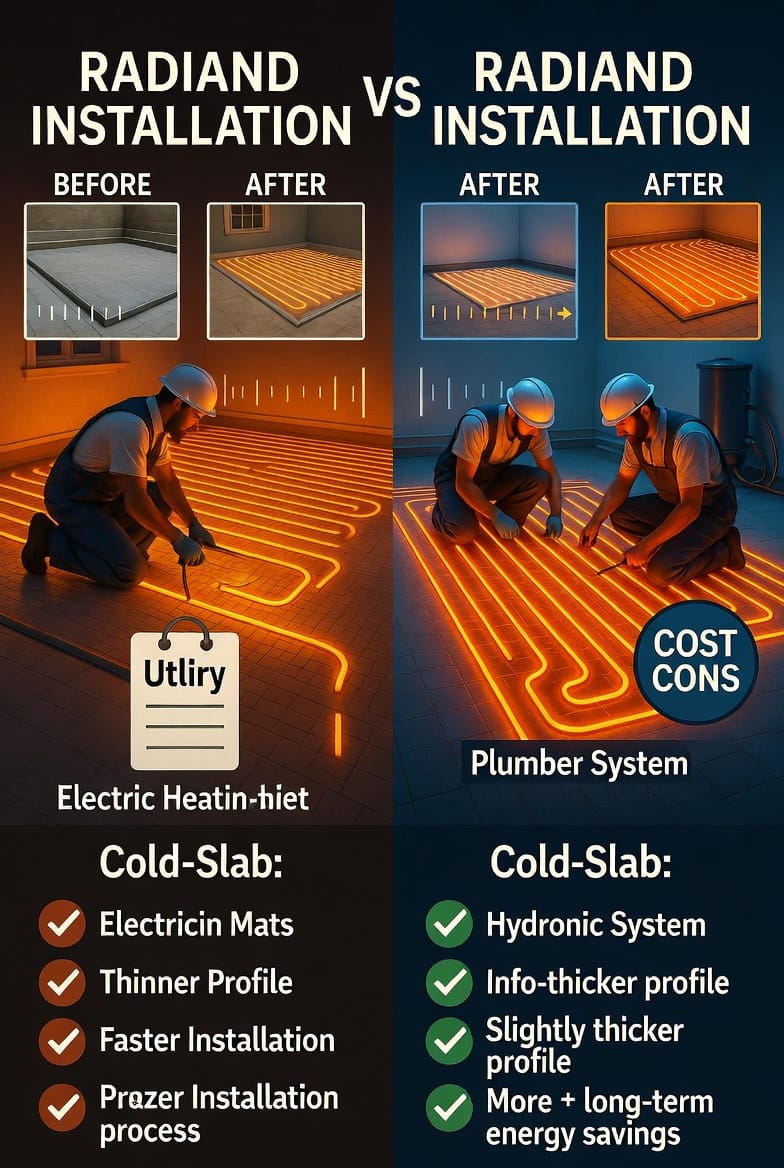
Step-by-Step Professional Installation Process
A successful radiant floor heating retrofit follows a proven sequence that protects your home and guarantees performance.
- Site Assessment – Technicians inspect slab condition, measure moisture, and map heating zones.
- Surface Preparation – Cleaning, crack repair, and optional insulation board placement prevent downward heat loss.
- System Layout – Precise placement of mats, tubing, or channels according to engineered plans.
- Testing – Electrical or pressure tests confirm every loop or circuit functions perfectly.
- Covering Layer – Self-leveling compound or grout creates a smooth, durable base.
- Finished Flooring – Tile, hardwood, or carpet installs directly over the warmed surface.
- System Commissioning – Final calibration and homeowner walkthrough ensure optimal settings.
Throughout, crews use dust containment and protective flooring to keep your living space clean. Most retrofits wrap up within 3–7 days depending on square footage.
Reaping the Rewards: Comfort, Efficiency, and Peace of Mind
Once operational, radiant retrofits deliver measurable improvements. Rooms feel warmer at lower air temperatures, reducing drafts and cold spots. Energy consumption often drops 15–30 % because the system targets the floor where heat is needed most.
Homeowners consistently report better sleep, fewer allergies, and an overall sense of luxury. The technology is also future-proof: compatible with smart thermostats, voice control, and renewable energy sources.
Addressing Common Concerns and Risks
While retrofits are remarkably reliable, transparency builds confidence. Potential challenges such as uneven slabs or limited electrical capacity are identified early through professional evaluation.
Bold risk mitigation includes:
- Moisture testing to prevent mold or system damage
- Load calculations ensuring the slab can support added layers
- Warranty-backed components covering materials and labor for 25+ years
With certified installers, these concerns become non-issues. You gain warmth without worry.
Investment and Return on Radiant Retrofits
Costs vary by method and square footage, yet most homeowners recoup their investment through energy savings and increased property value within 5–8 years. Electric systems often start lower in upfront expense, while hydronic options excel in long-term efficiency. Financing programs and rebates further ease the path to comfortable concrete floors.
Warm Up Your Cold Concrete Floors Today
Radiant floor heating retrofits turn problem slabs into the most comfortable surfaces in your home. Whether you choose electric mats, thin-profile hydronic tubing, or channeled solutions, professional execution ensures lasting results with minimal disruption. Warm up cold concrete floors.
Ready for Warm Floors? Call for Your Free Radiant Retrofit Quote!