The Post-Disaster Document Recovery: Drying Papers and Photos
Water can turn a lifetime of memories and critical paperwork into a soggy, heartbreaking mess in minutes. Whether the cause is a burst pipe flooding a home office, storm-driven groundwater seeping into a basement storage area, or an appliance leak reaching important files, the emotional weight feels overwhelming. Family photographs curl and bleed, birth certificates and legal documents warp beyond recognition, and the instinct to grab everything and start drying often makes the damage worse.
Restore Your Water-Damaged Documents Today – Call Now!
Professional document restoration changes that story. Trained specialists use precise, scientifically grounded methods—primarily freeze-drying and carefully controlled air-drying—to stabilize and recover items that appear beyond saving. These techniques do not simply dry paper; they protect its structure, prevent further deterioration, and return documents and photos to usable, often surprisingly close-to-original condition.
This guide walks you through exactly what happens to water-damaged materials, the critical actions to take in the first hours, and how expert teams bring documents back from the brink. Understanding the process helps you protect what matters most and make informed decisions when disaster strikes.
Why Water Creates Such Complex Damage to Paper and Photographs
Paper and photographic materials are highly sensitive to moisture. Cellulose fibers in paper absorb water rapidly, causing them to swell and weaken the hydrogen bonds that hold the sheet together. Inks and dyes—especially older ballpoint, fountain pen, or certain printer inks—begin to migrate or dissolve. Photographs, particularly older resin-coated prints, can separate from their backing or develop sticky emulsions.
If left untreated, mold growth often begins within 24 to 48 hours in warm, humid conditions. Once mold takes hold, it can permanently stain surfaces and create health hazards during handling. Warping, sticking pages, and distortion become locked in if drying happens too quickly or unevenly. These are not simple cosmetic issues; they represent permanent loss of information and sentimental value.
The good news is that most modern documents and photographs remain salvageable when immediate stabilization occurs and professionals apply the right recovery technology. Time and proper handling are the two most important factors.
What to Do in the First Critical Hours
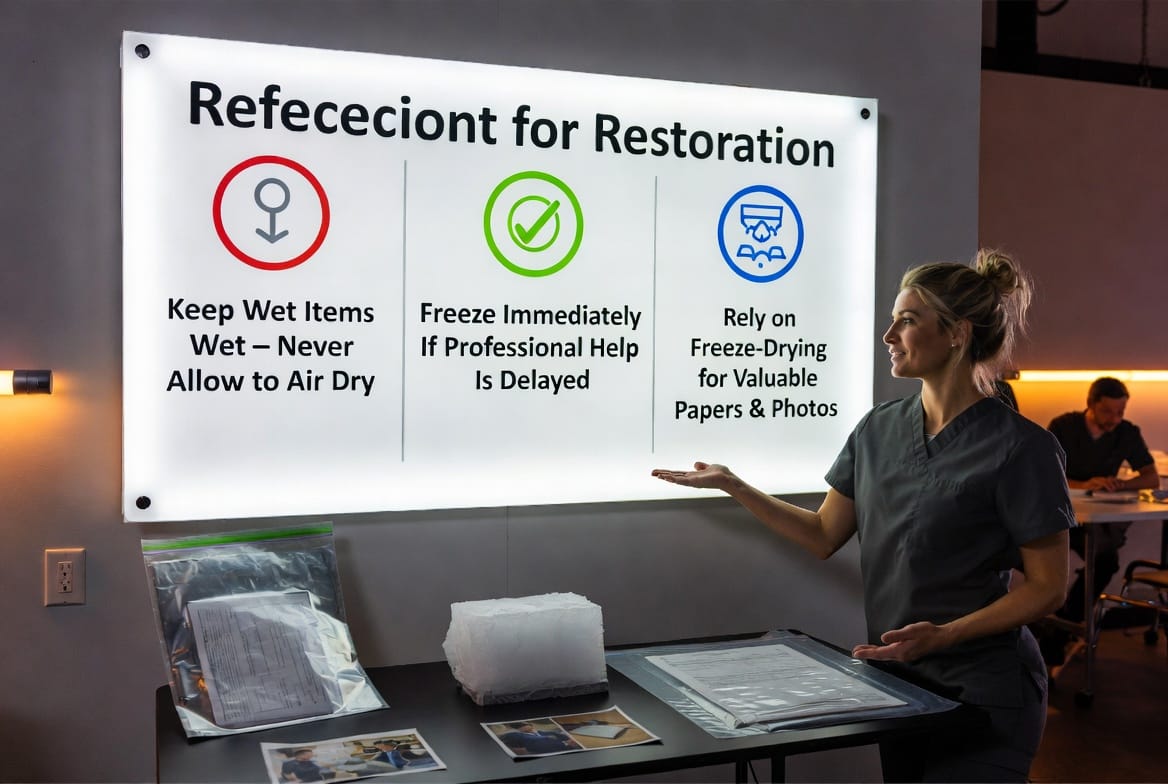
Your actions in the moments after discovering water damage directly influence recovery success. The single most important rule is this: keep wet items wet until professionals can treat them.
- Place documents and photographs in sealed ziplock bags or airtight plastic containers. This prevents uneven drying that causes pages to fuse together permanently.
- Do not attempt to separate stuck sheets, peel apart photographs, or use heat sources such as hair dryers, irons, or ovens. These methods accelerate damage.
- If professional help cannot arrive within a few hours and you have access to a freezer, place the sealed bags inside. Freezing halts mold growth and further chemical changes, buying valuable time.
- Prioritize irreplaceable items first—original photographs, legal documents, heirloom letters, and insurance records—then move to less critical papers.
- Avoid stacking wet items heavily or exposing them to direct sunlight or airflow that would begin uncontrolled drying.
These steps sound counterintuitive to many people who instinctively want to spread everything out to dry. Yet rushing the drying process is one of the most common reasons items become permanently ruined before experts ever see them.
Professional Freeze-Drying: The Gold Standard for Recovery
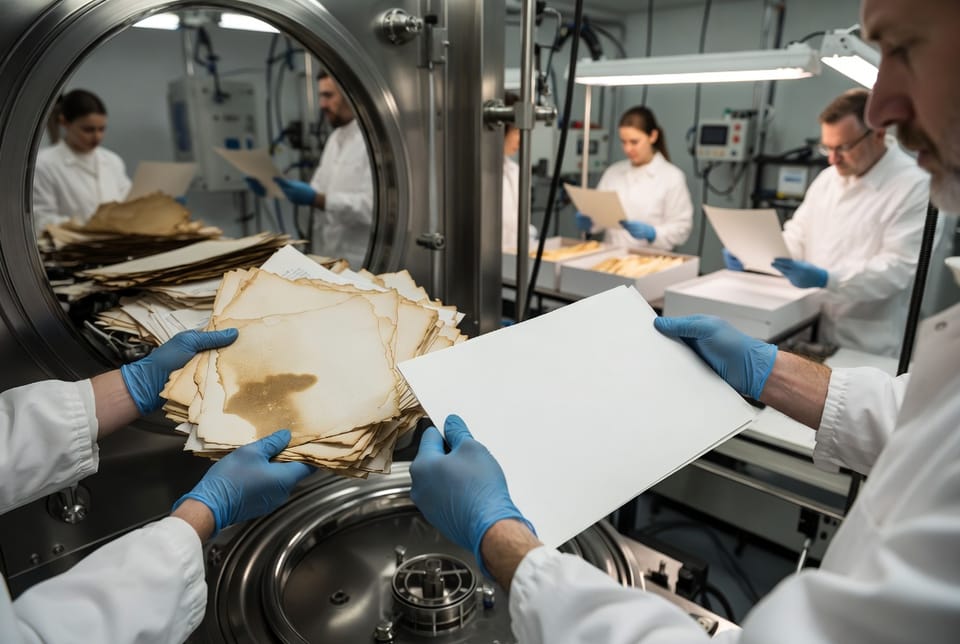
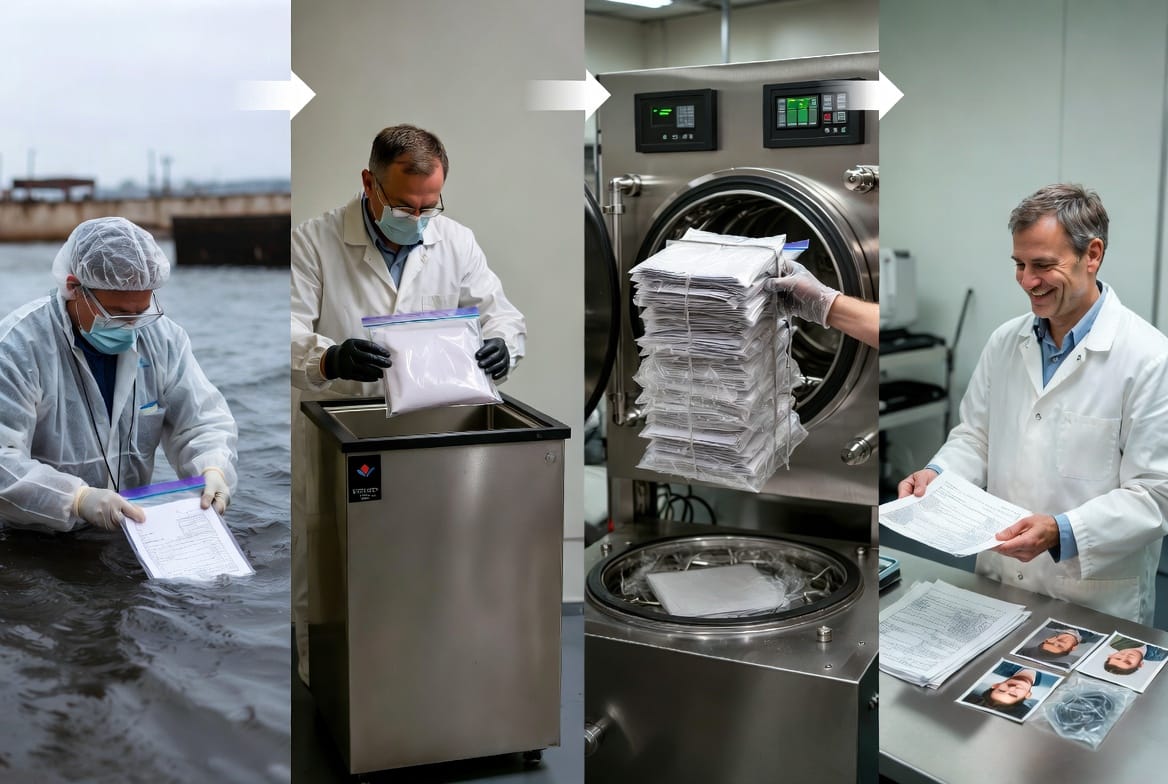
Freeze-drying, also known as lyophilization, represents the most effective method for recovering water-damaged paper and photographs on a large scale. The science is elegant. Documents are first frozen solid, locking any remaining water in place as ice. They are then placed inside a specialized vacuum chamber where pressure is dramatically reduced. Under these conditions, the ice sublimates—transitions directly from solid to water vapor—without ever becoming liquid again.
This process gently removes moisture while preserving the original structure of the paper fibers. Because the water never passes back through a liquid phase inside the document, pages avoid the warping, shrinking, and sticking that plague conventional drying. The result is flat, stable documents that retain legibility and physical integrity far better than items dried by any other means.
Modern freeze-drying chambers used by restoration professionals accommodate hundreds of documents at once while maintaining precise temperature and vacuum controls throughout the multi-day cycle. Technicians monitor progress constantly and adjust parameters based on the specific materials being treated. The method works exceptionally well for most paper types, including coated stocks and many photographic prints.
Controlled Air-Drying for Selected Items
While freeze-drying excels for most bulk recovery, certain materials benefit from expert controlled air-drying. This technique involves trained technicians carefully separating pages where possible, interleaving them with absorbent blotter materials, and placing them in environments with precisely managed airflow, temperature, and humidity. Small fans and dehumidifiers create slow, even evaporation.
Air-drying requires constant attention and deep knowledge of how different papers and inks react. It is often reserved for oversized items that will not fit standard chambers, extremely fragile historical documents, or situations where freeze-drying equipment is not immediately available. When performed correctly by specialists, it still delivers far superior results to any homeowner attempt.
What Types of Documents and Photos Can Be Saved?
Recovery rates depend on several variables: how long items remained wet, the type of water (clean versus contaminated), the presence of mold, and the original materials. In general:
- Highly salvageable — Recent laser-printed documents, many modern color photographs, and most plain paper records respond very well to freeze-drying when treated promptly.
- Challenging but often recoverable — Older black-and-white photographs, documents printed with water-soluble inks, and items that have begun to mold can still yield good results with specialized handling and possible surface cleaning after drying.
- Limited recovery expected — Extremely fragile historical papers, heavily contaminated sewage water exposure, or items already showing advanced mold damage may retain only partial legibility or require additional conservation work.
Professional assessment after stabilization provides a clear picture of realistic outcomes for each item. No ethical restorer promises 100% recovery, but the vast majority of documents treated within the first 48–72 hours show meaningful to excellent results.
The Complete Professional Restoration Process
When you engage a specialized document recovery team, the journey follows a clear, documented path designed to maximize outcomes while protecting your items at every stage.
- Emergency stabilization and collection — Technicians arrive with proper packaging materials and transport items under controlled conditions.
- Initial assessment and documentation — Each group of documents is photographed, cataloged, and evaluated for specific treatment needs.
- Freezing (if not already done) — Items move into commercial freezers to halt all biological and chemical activity.
- Freeze-drying cycle — Materials enter the vacuum chambers for the carefully timed sublimation process.
- Post-drying inspection and separation — Technicians gently separate any pages that remain lightly adhered and inspect for remaining issues.
- Optional surface cleaning and flattening — Where appropriate, conservators perform gentle cleaning and flattening under controlled pressure.
- Archival packaging and return — Recovered documents are placed in acid-free folders and boxes, ready for storage or use.
Throughout the process, detailed records help with insurance claims and provide peace of mind about chain of custody.
Why Professional Expertise Matters More Than Ever
Home attempts to dry documents almost always result in additional, irreversible damage. Pages fuse, inks run further, mold spores spread, and the very information you hoped to save becomes lost. Professional teams bring not only specialized equipment but also the trained judgment to know which technique serves each unique item best. They work under controlled conditions that protect both the documents and the people handling potentially contaminated materials.
Beyond the technical recovery, professional documentation supports insurance claims and provides a clear record of what was recovered. Many homeowners discover that the cost of professional document restoration is far lower than the combined emotional and financial cost of permanent loss.
Protecting Your Records Before the Next Event
While no one can prevent every disaster, simple proactive steps reduce future risk. Store original photographs and important documents in archival-quality boxes on upper shelves away from potential water sources. Consider creating high-resolution digital scans of irreplaceable items and storing them securely off-site or in the cloud. Keep a prioritized “grab list” of documents and photos so you know exactly what to protect first if evacuation becomes necessary.
Your Documents Deserve Expert Care
The loss of water-damaged documents and photographs does not have to be permanent. With rapid stabilization and the proven techniques of professional freeze-drying and controlled drying, the majority of items can be returned to usable condition. The process requires patience, specialized knowledge, and the right equipment—but the results bring back pieces of history, identity, and family legacy that many feared were gone forever.
Don’t let water destroy your irreplaceable documents. Our experienced team stands ready to assess your situation, stabilize your materials, and guide you through every step of recovery with the care and precision these precious items deserve.
Water-Damaged Documents & Photos? Call for Specialized Restoration