The Pipe Insulation Guide: Preventing Freezing, Condensation, and Energy Loss
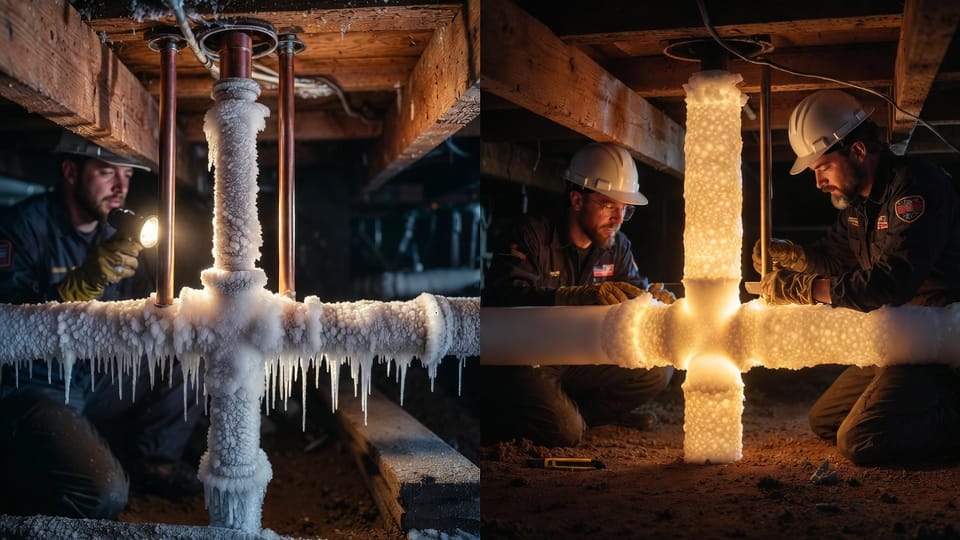
When winter temperatures drop, pipe insulation becomes one of the smartest, most cost-effective ways to protect your home. Uninsulated pipes in cold areas can freeze, burst, and cause thousands of dollars in water damage. Even in milder seasons, condensation on cold-water lines leads to dripping, mold, and reduced system efficiency. Proper pipe insulation delivers three powerful benefits at once: freeze prevention, condensation control, and energy savings that lower your monthly bills year-round.
Stop Frozen Pipes Before They Burst – Call Today
At our plumbing service, we have installed insulation in thousands of homes across every climate zone. The results are always the same: peace of mind for homeowners and measurable reductions in energy waste. This comprehensive guide walks you through exactly where insulation is critical, which materials work best, and how professional installation delivers lasting protection.
Why Pipe Insulation Matters More Than Most Homeowners Realize
Pipes carry water at varying temperatures throughout your home. When those pipes run through unheated spaces, the surrounding air can pull heat away or allow moisture to form.
Pipe freezing is the most dramatic risk. Water expands as it turns to ice, exerting pressure that can split metal or plastic lines. A single burst can flood an entire floor in minutes.
Condensation is the silent issue. Warm, humid air meets a cold pipe surface, droplets form, and over time this moisture damages drywall, insulation, and even encourages mold growth.
Energy loss quietly inflates your utility bills. Hot-water pipes that lose heat before reaching the faucet force your water heater to work harder. Cold-water pipes that sweat waste the energy used to chill the water in the first place.
The good news? A single afternoon of expert pipe insulation eliminates all three problems and pays for itself within the first year through energy savings alone.
Where Pipe Insulation Is Absolutely Critical
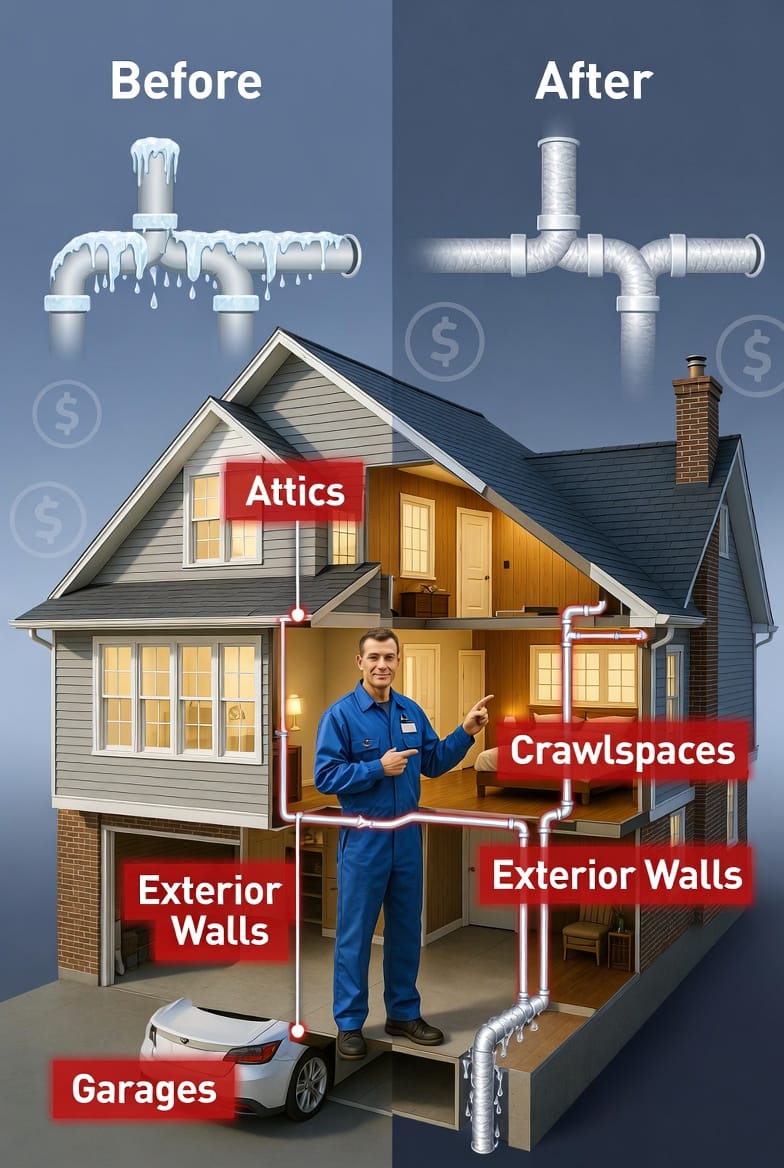
Not every pipe needs attention, but certain locations demand it. Focus your efforts here:
- Crawlspaces and basements – often unheated and exposed to outdoor temperatures
- Attics – extreme summer heat and winter cold swings
- Exterior walls – pipes running inside cavities near siding lose heat rapidly
- Garages – especially those attached to the house but not climate-controlled
- Near exterior doors or foundation vents – direct cold-air exposure
Pro tip: If you can see daylight around a pipe entering your home, that line needs insulation immediately.
Choosing the Right Insulation Materials for Your Needs
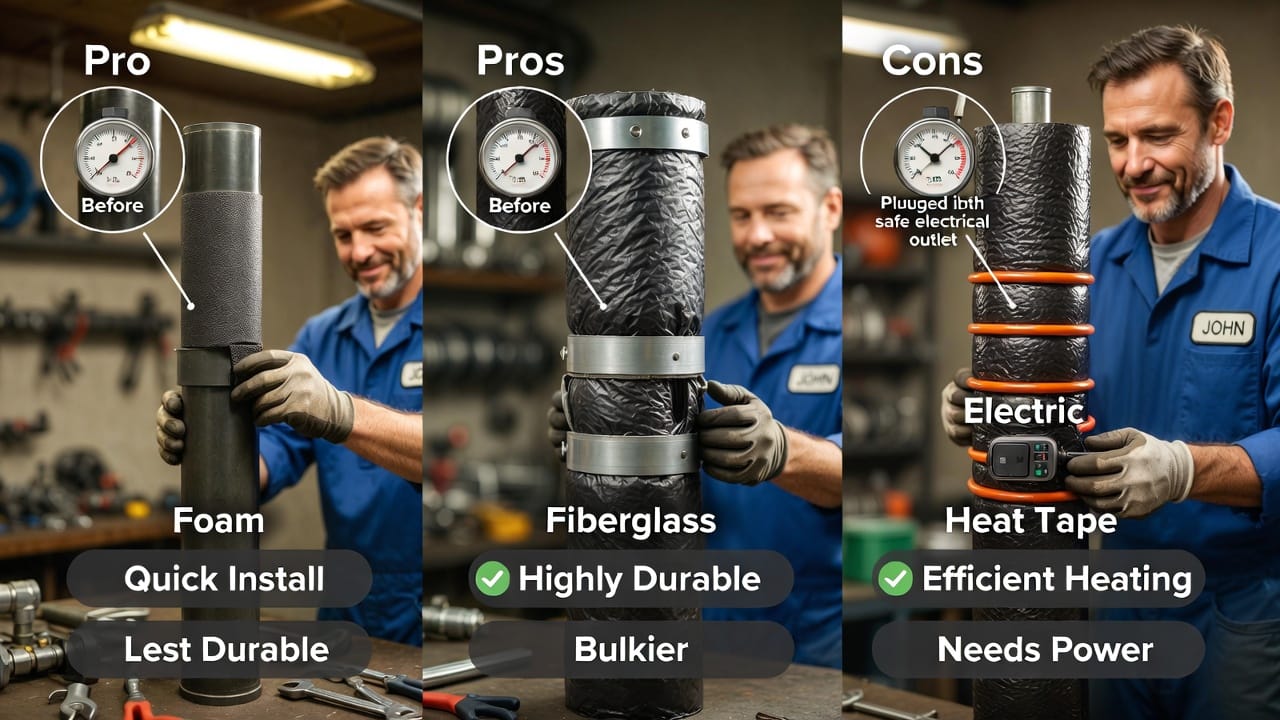
Three proven options cover nearly every residential situation. Each has distinct strengths:
- Foam tube insulation – the easiest and most popular choice for both hot and cold lines. Pre-slit polyethylene or rubber foam slides right over pipes and seals with tape. Excellent thermal resistance and simple DIY-friendly install.
- Fiberglass wrap – ideal for higher-temperature applications or pipes near furnaces and boilers. Dense, flexible batts provide superior heat retention and handle extreme conditions without degrading.
- Electric heat tape – the active solution for the coldest climates. Self-regulating cables wrap around pipes and automatically activate when temperatures drop, delivering targeted warmth exactly where needed.
We always evaluate your specific home before recommending the best mix. Many properties benefit from a combination – foam on most lines and heat tape on the most exposed sections.
Step-by-Step Professional Installation for Maximum Protection
Proper installation separates temporary fixes from lifetime solutions. Here is how our technicians approach every job:
- Pipe assessment – We locate every vulnerable line and measure diameters precisely.
- Surface preparation – Clean pipes remove dust and ensure perfect contact.
- Cutting and fitting – Foam tubes are slit and slipped on; fiberglass is wrapped snugly without gaps.
- Sealing every joint – High-quality foil tape or specialized adhesive prevents air leaks.
- Heat-tape application – Cables are spiraled at manufacturer-recommended spacing and plugged into GFCI-protected outlets.
- Final inspection – We verify full coverage and test for hot spots or cold bridges.
This methodical process guarantees freeze prevention even in sub-zero conditions and eliminates condensation by maintaining consistent surface temperatures.
Real-World Benefits Homeowners Notice Immediately
After professional pipe insulation, customers report:
- No more cold drafts from under sinks
- Hot water arriving faster at faucets
- Dramatically lower heating and cooling costs
- Complete confidence during winter storms
- Elimination of annoying drips from sweating pipes
The protection is invisible once installed, yet it works 24/7 to safeguard your investment.
Common Mistakes to Avoid
Many DIY attempts fail because of:
- Leaving gaps at elbows and tees
- Using the wrong thickness for pipe diameter
- Skipping vapor barriers in humid areas
- Improper heat-tape overlap that creates hot spots
Our licensed plumbers have seen every mistake and know exactly how to prevent them.
Seasonal Maintenance Keeps Your System Perfect
Once installed, pipe insulation requires almost no upkeep. We recommend an annual visual check before winter to confirm tape remains secure and foam has not shifted. Heat-tape systems should be tested each fall to verify the thermostat activates correctly.
Protect Your Pipes from Winter’s Worst
Don’t wait for the first hard freeze to discover a problem. Pipe insulation is one of the most reliable ways to prevent expensive repairs and keep your energy bills under control.
Whether you need a full-home evaluation or targeted protection in crawlspaces and attics, our team is ready to help.
We’ll schedule a free assessment and deliver the lasting protection your home deserves. Your pipes – and your peace of mind – are worth it.
Professional Pipe Insulation – Call for Free Assessment