The Pine Seed Bug: Fall Invader That Mimics Stink Bugs
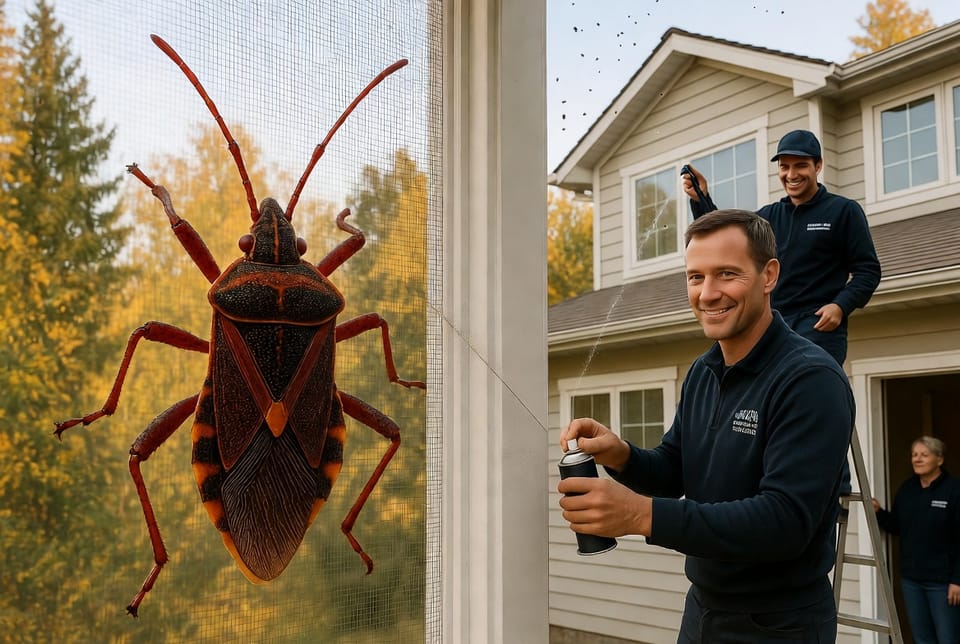
As cooler weather arrives and homeowners begin closing windows against the chill, an uninvited guest often appears on walls, window screens, and ceilings. The pine seed bug is a seasonal nuisance that many people mistake for the more familiar brown marmorated stink bug. This harmless but persistent insect seeks warm shelter inside structures each fall, turning cozy living spaces into temporary overwintering sites.
Protect Your Home from Fall Invaders – Call Today
At our professional pest control service, we see these fall invaders every year. The good news? With the right knowledge and proactive steps, you can stop them before they become a problem. This guide explains exactly what pine seed bugs are, why they appear in autumn, how to tell them apart from stink bugs, and the most effective ways to keep them outside where they belong. You’ll finish reading confident that your home can remain bug-free all season long.
Understanding the Pine Seed Bug
Pine seed bugs belong to the leaf-footed bug family. They are slender, brownish-gray insects roughly three-quarters of an inch long with distinctive flattened, leaf-like expansions on their hind legs. Their bodies appear somewhat elongated compared to the shield-shaped profile of true stink bugs. Adults emerge from conifer trees – especially pines, firs, and spruces – where they feed on developing seeds throughout summer.
As days shorten and temperatures drop, these insects instinctively search for protected crevices to survive winter. They are not aggressive, do not bite or sting, and pose no threat to human health or home structures. However, their sheer numbers and tendency to congregate on sunny south-facing walls can create a startling sight for homeowners.
What makes them particularly challenging is their ability to squeeze through incredibly small openings – gaps as narrow as one-sixteenth of an inch. Once inside, they remain largely dormant until spring, when they become active again and attempt to exit. During this time they may leave small dark fecal spots on windowsills or curtains, but the real frustration comes from their sudden indoor appearance each fall.
Why Pine Seed Bugs Target Homes in Fall
The behavior of pine seed bugs is perfectly timed with seasonal changes. In late summer and early autumn, conifer seeds ripen and drop. With their primary food source dwindling, the bugs begin a mass movement toward light-colored, sun-warmed surfaces – exactly the kind of exterior walls and roofs found on most homes.
They are strongly attracted to south- and west-facing sides that absorb the most heat during the day. Once they locate a suitable structure, they probe every crack, vent, soffit gap, and door frame in search of shelter. This is not random wandering; it is a survival strategy refined over countless generations.
Unlike some pests that breed indoors, pine seed bugs do not reproduce inside your home. They simply want a safe place to wait out the cold months. Understanding this fact is reassuring – eliminating the current generation prevents next year’s problem before it starts. Early action in late summer or early fall delivers the best results.
How to Distinguish Pine Seed Bugs from Stink Bugs
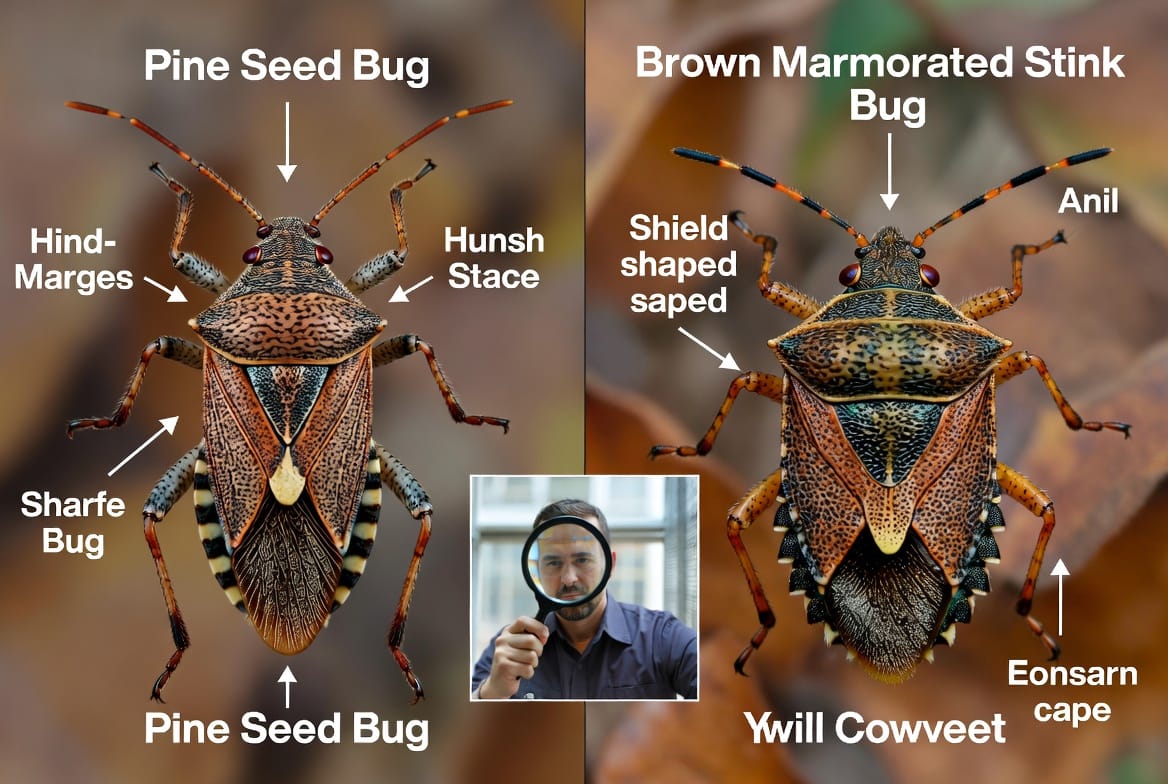
Accurate identification prevents unnecessary worry and ensures you choose the right control strategy. Here is a clear comparison:
- Body shape: Pine seed bugs are longer and narrower; stink bugs are broader and distinctly shield-shaped.
- Legs: Pine seed bugs display prominent leaf-like flares on the hind legs; stink bugs have smooth, uniform legs.
- Antennae: Both have four-segmented antennae, but pine seed bug antennae are thicker and more noticeably segmented.
- Color and markings: Pine seed bugs show subtle white or light-gray lines along the edges of their wings; brown marmorated stink bugs feature lighter bands on the antennae and a more mottled, camouflage-like pattern.
- Odor: When crushed, stink bugs release a strong, pungent smell; pine seed bugs produce little to no noticeable odor.
The Real Risks and Why Action Matters
While pine seed bugs do not damage buildings or spread disease, large indoor populations create several practical concerns. They can trigger allergies in sensitive individuals, stain light-colored fabrics with fecal spots, and produce an audible buzzing when they become active on warm winter days. More importantly, their presence signals that entry points exist – the same gaps that could later allow other pests such as rodents, spiders, or overwintering lady beetles inside.
Homeowners often feel overwhelmed when they suddenly see dozens of bugs indoors. The reassuring truth is that this situation is completely preventable. Professional exclusion and perimeter treatment performed at the right time stops the invasion at the source, giving you peace of mind throughout the colder months.
Proven Prevention Through Sealing and Exclusion
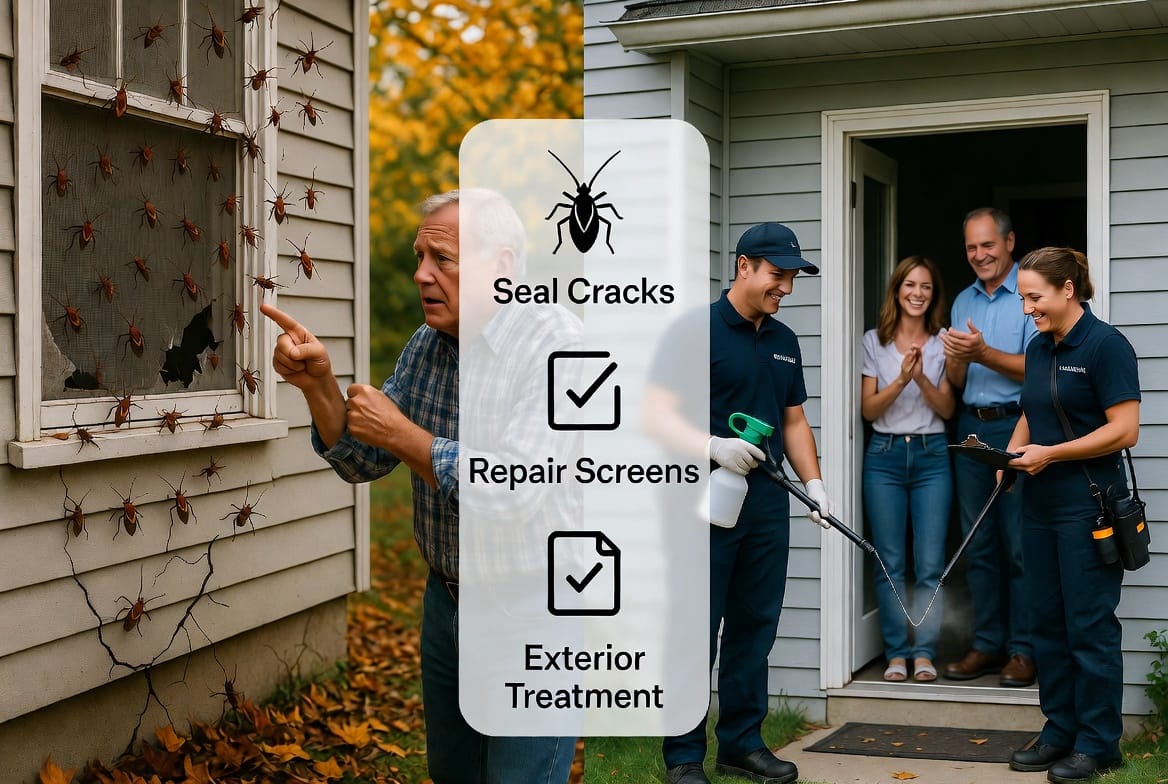
The most effective defense combines physical barriers with targeted exterior treatment. Follow these essential steps in the order listed for maximum protection:
- Inspect and seal exterior cracks: Carefully examine foundation walls, window and door frames, soffits, and utility penetrations. Use high-quality silicone or polyurethane caulk for gaps up to one-quarter inch; expand foam or metal mesh for larger openings.
- Repair or replace window screens: Even tiny tears allow entry. Install tight-fitting screens rated for insect exclusion and ensure all frames are securely fastened.
- Install door sweeps and weather stripping: Gaps beneath exterior doors are prime entry routes. Heavy-duty sweeps and compressible weather stripping create an airtight seal.
- Treat the exterior perimeter before fall: Apply a residual insecticide barrier around the foundation, up to three feet high on walls, and around windows and doors. This creates a protective zone that kills bugs on contact before they reach entry points.
- Reduce attractants: Trim conifer branches that touch the house and keep woodpiles or mulch at least 18 inches away from the foundation.
These measures not only stop pine seed bugs but also reduce overall pest pressure year-round. When performed by trained technicians, the treatment uses precise, low-toxicity products applied only where needed, ensuring safety for your family and pets.
When DIY Falls Short – The Professional Advantage
Many homeowners attempt to handle pine seed bugs on their own with store-bought sprays or vacuuming. While these tactics offer temporary relief, they rarely address the root cause: unprotected entry points. Vacuuming removes visible bugs but leaves the same gaps open for the next wave. Over-the-counter sprays can also drive surviving insects deeper into wall voids, creating hidden problems later.
Professional perimeter treatment delivers longer-lasting results because technicians understand insect behavior, apply products at the optimal time, and combine chemical barriers with physical exclusion. Our team uses industry-approved residuals that remain effective for months, precisely targeting the zones where bugs congregate. We also provide follow-up inspections to confirm complete protection.
Our Comprehensive Perimeter Treatment Solution
When you call our service, the process is straightforward and thorough. First, we conduct a detailed exterior inspection to identify every potential entry point. Next, we apply a specialized barrier treatment around the entire foundation and up exterior walls. We seal visible gaps and recommend additional exclusion work where needed. Finally, we explain ongoing maintenance tips so you stay protected season after season.
Homeowners who choose professional help report dramatically fewer indoor sightings – often zero – even during peak invasion periods. The investment pays for itself in reduced stress, cleaner interiors, and prevention of secondary pest issues.
Take Control Before the Invasion Begins
Fall does not have to mean sharing your home with pine seed bugs. By understanding their behavior, recognizing the differences from stink bugs, and implementing smart prevention, you can enjoy a pest-free environment all winter long.
Stop fall invaders at your door. Our experienced team is ready to inspect your property, create a customized protection plan, and give you back the peace of mind you deserve. Schedule now and let the experts handle the heavy lifting – your home will thank you.
Get Perimeter Treatment Before They Enter – Call Now