The Pantry Pest Prevention: How to Keep Bugs Out of Your Kitchen

Pantry pests remain one of the most common yet preventable household frustrations. These small insects—moths, beetles, weevils, and their larvae—quietly enter kitchens through grocery packaging and quickly find food sources among flour, grains, pasta, nuts, and cereals. Once established they contaminate food, create waste, and cause unnecessary stress. The reassuring reality is that pantry pest prevention depends almost entirely on consistent daily and weekly habits rather than reactive treatments.
Stop Pantry Pests Before They Start – Call Today
This article explains the five core proactive measures that keep bugs out of your kitchen: inspect groceries, use airtight containers, clean regularly, rotate stock, and freeze susceptible items. When practiced together these steps form a reliable defense that protects your food supply, reduces waste, and restores confidence in your kitchen. The tone throughout is practical and authoritative because these methods work when applied steadily.
Understanding How Pantry Pests Enter and Thrive
Most pantry pests do not originate inside the home. They arrive already present as eggs or larvae inside commercially packaged dry goods or they crawl in through tiny cracks after being attracted by spilled crumbs. Warm, dark, undisturbed areas with easy access to food allow them to complete their life cycle rapidly. A single overlooked bag of flour or an open box of cereal can become the starting point.
Recognizing this pattern removes mystery and fear. Prevention is simply a matter of interrupting every stage of that cycle before it begins. The following sections break each interruption into clear, repeatable actions.
Inspect Groceries Before They Reach Your Shelves
The first and most important habit occurs at two moments: while you shop and the instant you return home.
At the store, examine packaging for small holes, webbing, clumped product, or unusual dust. Choose items stored higher on shelves when possible and prefer packages with later expiration dates. Avoid dented, torn, or poorly sealed bags. These few extra seconds of observation stop many potential problems at the source.
Once home, unload bags onto a counter rather than directly into the pantry. Hold each package under bright light, tap boxes and bags, and look for movement. If anything appears questionable, return the item or discard it outside immediately. Never place a suspect package on a kitchen shelf “just for now.”
This inspection step is powerful because it addresses the most common entry route. Families who adopt it report far fewer surprises. It takes only a couple of minutes yet eliminates the majority of hitchhiking pests before they ever reach storage.
Key risk of skipping inspection: a single contaminated package can spread insects throughout an entire pantry within weeks. The corresponding benefit is immediate peace of mind and protected groceries.
Transfer All Dry Goods into Airtight Containers
Paper bags, cardboard boxes, and thin plastic packaging offer almost no barrier. Pantry pests chew through them easily and lay eggs inside.
As soon as inspection is complete, empty contents into airtight containers. Glass jars with rubber gaskets, heavy-duty plastic containers with locking lids, or metal canisters all work well provided the seal is complete. The container must close so tightly that even the smallest insect cannot enter or escape.
Label every container with the product name and the date it was stored. This simple practice supports both organization and later rotation. Keep a few extra containers on hand so new purchases can be transferred immediately.
Airtight storage delivers multiple advantages beyond pest exclusion. It preserves flavor and texture, prevents moisture from causing clumping or mold, and creates a visually calm, professional pantry. The investment in quality containers pays for itself quickly through reduced food waste and fewer replacement purchases.

Clean Regularly to Remove Food Sources and Eggs
Even the best containers cannot protect a pantry if crumbs and spilled grains remain on shelves. These tiny residues sustain pests and provide places for eggs to hatch.
Create a simple cleaning schedule:
- Wipe all shelves with a mild vinegar-and-water solution every two weeks.
- Vacuum corners, cracks, shelf edges, and the area behind appliances once a month.
- Clean spills the moment they occur.
- Remove everything from one shelf at a time so no surface is overlooked.
Pay special attention to the spaces under and behind the pantry itself, along baseboards, and near any nearby appliances that generate warmth. A consistently clean environment removes both the food that attracts pests and any eggs that may have been deposited.
Regular cleaning also makes inspection easier. When shelves are clear you can see packaging condition at a glance. Over time the routine becomes quick and almost automatic. The result is a kitchen that stays fresher and far less inviting to insects.
Rotate Stock Using First-In, First-Out Discipline
Older packages left at the back of a shelf sit undisturbed for months. That stillness gives pantry pests the time they need to develop.
Practice stock rotation by always placing newer purchases behind older ones and using the oldest items first. Check dates regularly. Discard anything that has been open longer than recommended or shows any change in appearance or smell.
A simple handwritten list on the inside of the pantry door or a note on your phone helps track what you have and when it should be used. This inventory habit also prevents over-buying, which itself reduces the chance of forgotten packages.
Rotation shortens the window of opportunity for insects. Combined with airtight containers it creates a moving, well-monitored food supply that pests cannot easily colonize.
Freeze Susceptible Items Immediately After Purchase
Certain foods are especially attractive: whole grains, nuts, seeds, birdseed, pet food, flour, and rice. These items sometimes contain eggs that are invisible at purchase.
Place newly bought susceptible foods in the freezer for four to seven days. The cold temperature kills eggs and larvae without harming the product. After freezing, transfer the food into airtight containers and store it in the pantry as usual.
This extra step is inexpensive, chemical-free, and highly effective. It is particularly useful for bulk purchases or items bought from high-volume stores. Many households now treat freezing as standard procedure for any new dry-good purchase.
Supporting Habits That Strengthen the Core System
Seal cracks and gaps around the pantry, baseboards, and nearby walls with caulk. Insects exploit surprisingly small openings.
Manage humidity. Many pantry pests prefer slightly moist conditions. A small dehumidifier or simply avoiding storage near sinks and dishwashers keeps the environment less hospitable.
Treat pet food and birdseed with the same airtight and freezing discipline used for human food. These products are frequent sources of infestation if left in original bags.
Keep the pantry away from exterior walls or areas that experience large temperature swings whenever possible. Stable, cooler conditions further discourage development.
Building a Lasting Prevention Routine
The most successful kitchens treat these actions as an integrated system rather than isolated chores. Set a monthly reminder to inspect remaining stock, wipe shelves, and rotate items. Involve every household member so everyone understands why food must be transferred and put away promptly.
Within a few weeks the habits feel natural. You will notice food lasting longer, the pantry staying orderly, and the background worry about unexpected insects disappearing. That sense of control is one of the greatest benefits of consistent prevention.
What to Do If You Discover a Problem
Even diligent households occasionally find an issue. Isolate the affected package immediately, place it in a sealed bag, and discard it outside. Deep-clean the surrounding shelves and vacuum thoroughly. Then return to the five core habits. In the large majority of cases this combination stops further spread.
Professional assistance remains available if an infestation has already become widespread, yet the purpose of these proactive measures is to make that step unnecessary.
Conclusion: Simple Habits Deliver Lasting Protection
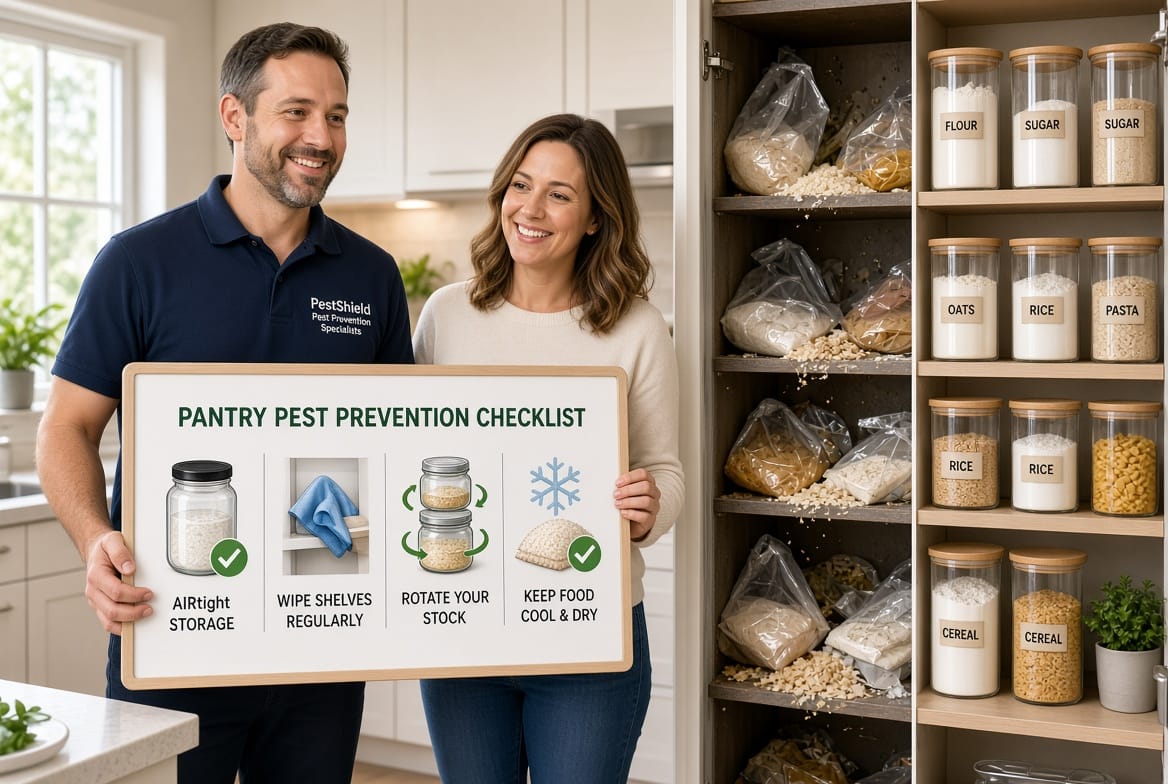
Keeping bugs out of your kitchen does not require complicated equipment or constant worry. It requires five reliable practices applied consistently: inspect every grocery item, store food in airtight containers, clean regularly, rotate stock, and freeze susceptible items. These steps interrupt the pest life cycle at every point and create an environment where insects cannot thrive.
The result is a cleaner kitchen, less wasted food, and genuine peace of mind. Prevention is both practical and reassuring because it puts control back in your hands.
Prevent pantry pests with good habits. Your kitchen can remain a safe, pleasant space for cooking and gathering.
For personalized advice on protecting your specific pantry. Experienced professionals are ready to answer questions and help you maintain a pest-free kitchen.
Call Now for Fast, Professional Pantry Pest Prevention Tips