The Pantry Moth Trap: Using Pheromones for Monitoring
Pantry moths can turn a well-stocked kitchen into a source of frustration almost overnight. Tiny larvae weave silk through flour, cereal, nuts, and dried fruit, leaving behind webbing, droppings, and a lingering sense that something is wrong. The good news is that you do not have to wait until the problem explodes. A simple, non-toxic pheromone trap gives you an early-warning system that reveals activity long before it becomes a full-blown infestation.
Stop Hidden Infestations – Call for Trap Advice
This article explains exactly how these traps work, where to place them, how to read the results, and how they fit into a complete integrated pest management plan. Used correctly, they shift you from reacting to moths after the damage is done to staying ahead of them.
Why Pantry Moths Become a Hidden Problem
The most common pantry pest in North American homes is the Indian meal moth. Adult females release a species-specific sex pheromone that males follow over surprisingly long distances inside a house. After mating, females lay eggs on or near dry food. The larvae that hatch feed for weeks, contaminating packages and spreading to nearby items.
Because the moths are small and often active at dusk, many homeowners miss the first signs. By the time flying adults are obvious, several generations may already be established. That is why a preventive monitoring tool is so valuable. It does not rely on you spotting a moth by chance; it actively draws the males in and records their presence.
How Pheromone Traps Attract Male Moths
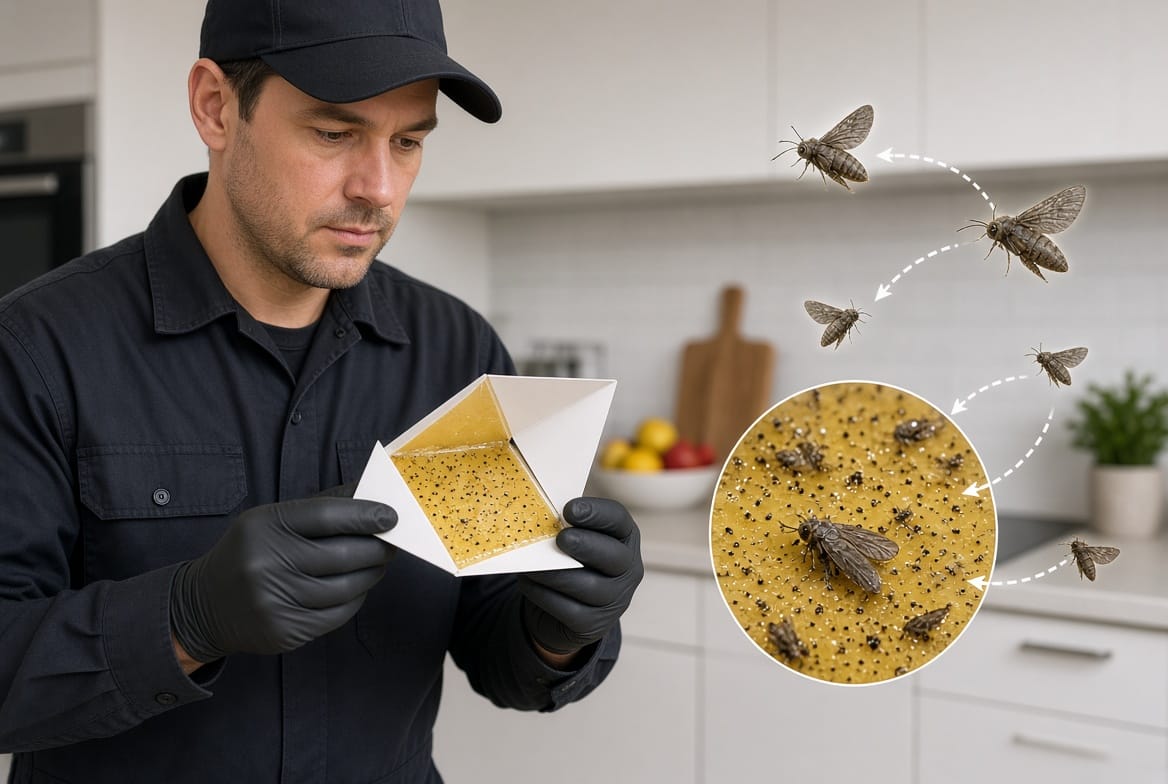
A pantry moth pheromone trap is a small cardboard or plastic device coated with a long-lasting sticky surface and loaded with a synthetic copy of the female moth’s sex attractant. The lure is highly specific: it targets male Indian meal moths and a few closely related species. Other insects, pets, and people are unaffected.
Males detect the scent and fly toward the source. When they land on the sticky board they become trapped. Each captured moth is both a reduction in the local breeding population and a data point. Over time the number of moths caught tells you whether activity is rising, stable, or declining.
The trap does not kill every moth in the house, nor does it stop females that have already mated. Its primary job is monitoring. When catch numbers stay low, you know your sanitation and storage habits are working. When numbers climb, you receive an early alert that extra inspection and cleaning are needed.
Placement Tips That Maximize Accuracy
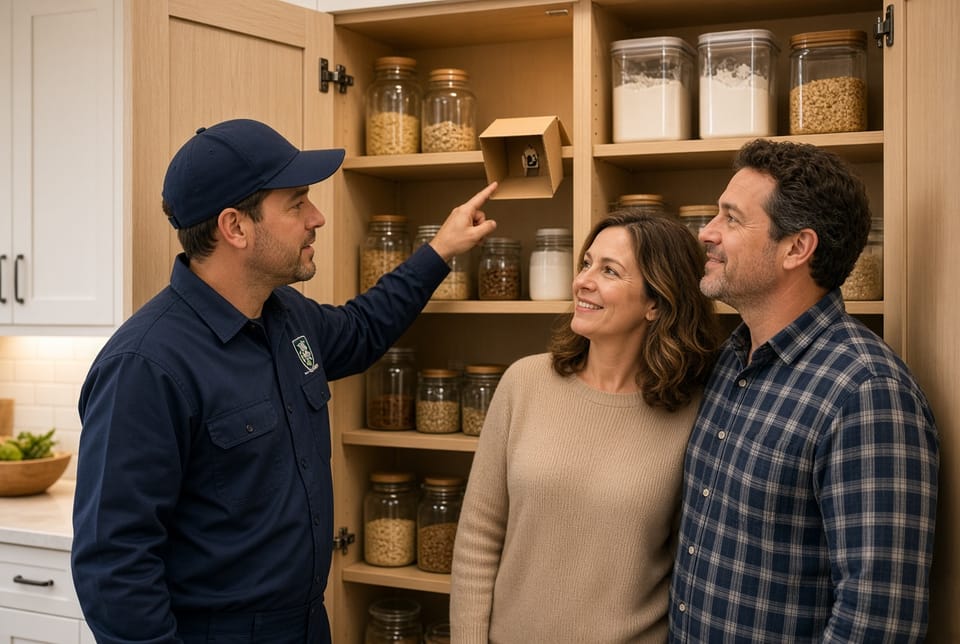
Location determines whether the trap actually samples the moth population or simply sits unused. Follow these proven guidelines:
- Hang or stand the trap 4–6 feet above the floor, the height at which pantry moths typically fly.
- Position it near—but not touching—food storage areas: pantry shelves, upper kitchen cabinets, and the tops of refrigerators.
- Keep it away from strong competing odors such as onions, spices, or cleaning products that can mask the pheromone.
- Avoid direct sunlight, heating vents, and windows that create air currents strong enough to blow moths past the trap.
- In larger kitchens or homes with multiple food-storage rooms, use two or three traps so you can compare activity between zones.
- Never place the trap inside a closed container of food; the goal is to intercept moths moving through the air, not to contaminate packages.
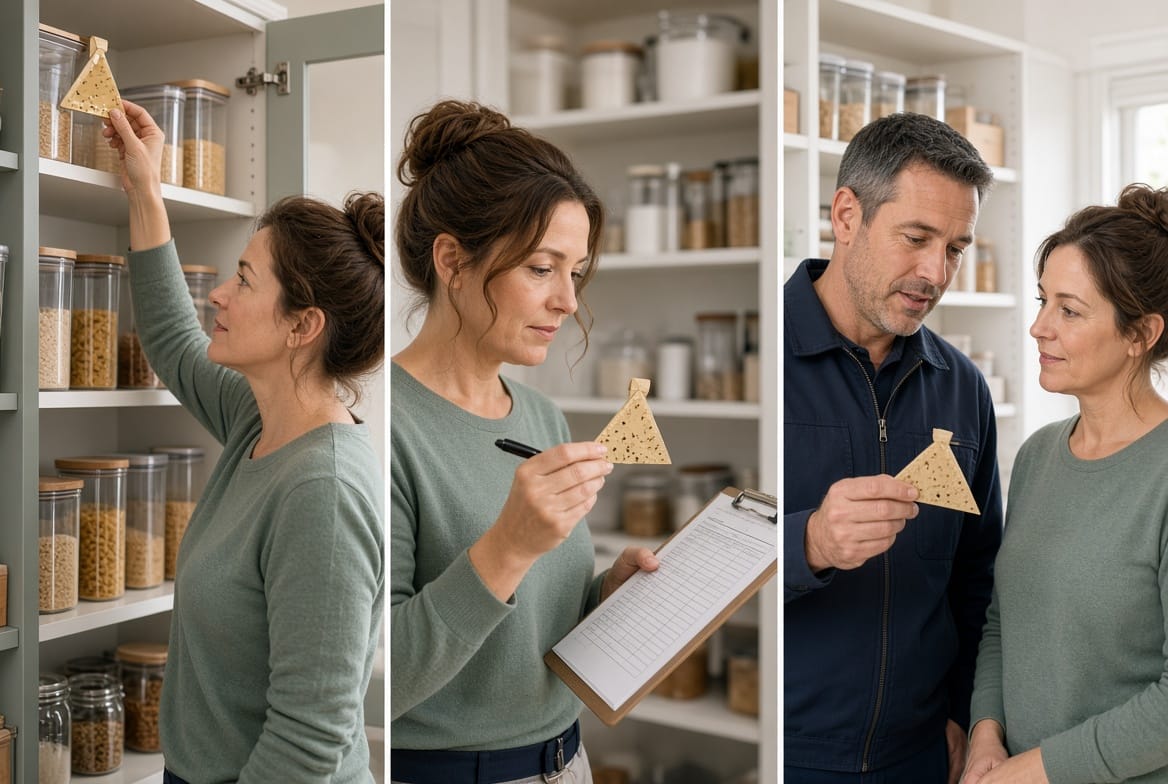
Replace the trap according to the manufacturer’s schedule—usually every 8 to 12 weeks—or sooner if the sticky surface becomes covered with dust or moths. Record the date you installed each trap and the number of moths you see each week. A simple notebook or phone note is enough.
Using Catch Counts as Decision Data
A trap is only useful if you look at it. Check it at least once a week. Zero or one moth over several weeks usually means the situation is under control. A sudden jump to five or more moths in a short period signals that breeding is occurring nearby and that a thorough inspection of dry goods is required.
When counts rise:
- Remove every package of flour, grain, cereal, nuts, dried fruit, pet food, and bird seed.
- Inspect for webbing, live larvae, or tiny holes.
- Discard any infested items in a sealed outdoor trash bag.
- Vacuum shelves, cracks, and the backs of cabinets, then wipe with soapy water.
- Transfer remaining food into airtight glass or heavy plastic containers.
The trap continues to run during this process, giving you feedback on whether the cleanup succeeded.
Building an Integrated Pest Management Plan Around the Trap
Integrated pest management treats the pheromone trap as one tool among several, not a stand-alone solution. The full plan looks like this:
- Sanitation first. Regularly wipe shelves and promptly clean up spills. Moths thrive on forgotten crumbs.
- Inspection and rotation. Buy only the quantities you will use within a few months. Check new packages before they enter the pantry.
- Exclusion. Store susceptible foods in sealed containers the moment they are opened.
- Monitoring. Keep pheromone traps in place year-round so you receive continuous data.
- Targeted action. Use catch numbers to decide when extra cleaning or professional help is warranted.
- Documentation. Note trap locations, replacement dates, and weekly counts. Patterns become obvious over time.
This approach keeps chemical insecticides out of the kitchen while still giving you reliable control. The traps themselves contain no pesticide; they rely solely on attraction and physical capture.
Common Mistakes That Reduce Trap Effectiveness
Even a well-designed trap can fail if it is used incorrectly. Avoid these errors:
- Placing the trap on a low shelf where moths rarely fly.
- Forgetting to replace an old lure after its effective period ends.
- Assuming a single trap covers an entire multi-room kitchen.
- Ignoring a rising catch count because “it’s only a few moths.”
- Using the trap as the only control method while leaving infested packages on the shelf.
Correcting these habits usually restores the trap’s value within one replacement cycle.
When Monitoring Points to a Larger Issue
Most pantry moth problems stay manageable with consistent monitoring and sanitation. Occasionally the numbers keep climbing even after thorough cleaning. That pattern often means moths are breeding in an overlooked location—inside a wall void, under an appliance, or in a seldom-used guest-room pantry. At that point professional inspection becomes the efficient next step. A trained technician can locate hidden sources, confirm species, and recommend additional targeted measures without unnecessary treatments.
Long-Term Prevention Habits That Support the Traps
Once the immediate activity drops, keep the same routines that made the traps successful:
- Date every new package when it enters the house.
- Use older items first.
- Keep pet food and bird seed in sealed bins, preferably outside the main kitchen if possible.
- Vacuum the pantry monthly even when no moths are visible.
- Continue running at least one pheromone trap as a permanent sentinel.
These habits cost almost nothing yet dramatically reduce the chance of a repeat problem.
Reassurance Through Visibility
The greatest benefit of a pantry moth pheromone trap is psychological as well as practical. Instead of wondering whether moths are still present, you have a visible record. Low catch numbers confirm that your kitchen is under control. Rising numbers give you time to act before larvae ruin another bag of flour. That combination of information and action is what turns a recurring nuisance into a manageable, preventable situation.
Pheromone traps are inexpensive, easy to use, and free of harsh chemicals. When they are placed correctly, checked regularly, and paired with basic sanitation, they become one of the most reliable tools available to any homeowner who wants to protect stored food.
Monitor for moths with pheromone traps. For personalized pest-control advice tailored to your kitchen.
Keep Your Kitchen Moth-Free – Call Now