The Outdoor Electrical Outlet: GFCI Protection and Weatherproof Covers
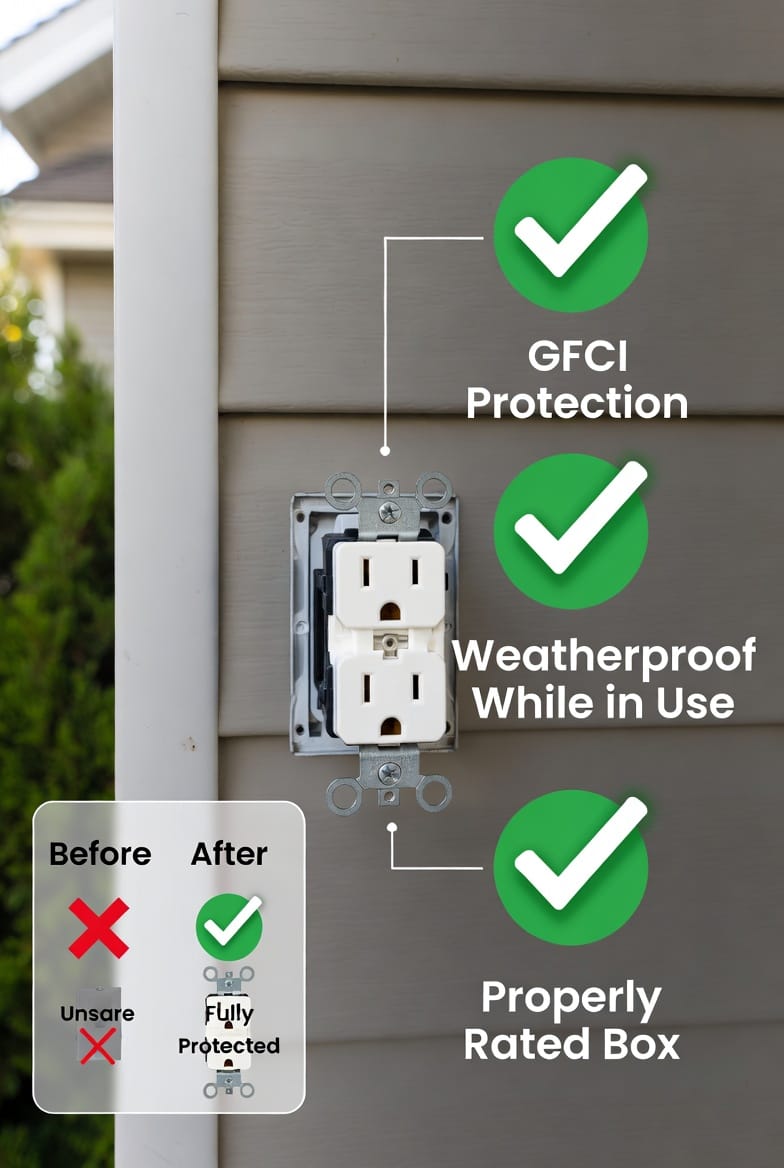
Outdoor electrical outlets bring convenience and functionality to patios, decks, gardens, and exterior workspaces. Yet without the right safeguards, they introduce serious risks that can lead to electrical shock, fire hazards, or costly damage. At the heart of safe outdoor power are three critical elements required by electrical codes: GFCI protection, in-use weatherproof covers (commonly called bubble covers), and proper box sealing.
Get GFCI-Protected Outdoor Outlets Installed Today – Call Now!
These requirements are not optional extras—they are mandatory protections designed to keep your family, home, and property safe no matter the weather. When installed correctly, an outdoor electrical outlet delivers reliable power year-round while meeting strict national standards. This comprehensive guide explains every essential detail so you understand exactly what proper compliance looks like and why it matters.
Understanding the Unique Risks of Outdoor Electrical Outlets
Moisture is the number-one enemy of any electrical system. Rain, snow, humidity, and even morning dew can enter an improperly protected outlet, creating pathways for current to escape. GFCI protection instantly cuts power when it detects a ground fault, preventing shocks that could otherwise prove fatal. Without it, a simple extension cord left plugged in during a storm becomes a hidden danger.
Beyond shock hazards, water inside the electrical box causes corrosion, short circuits, and eventual failure of the entire circuit. In extreme cases, this leads to electrical fires that spread quickly through exterior walls. Proper box sealing and weatherproof covers eliminate these entry points, ensuring your system remains dry and dependable for decades.
Homeowners often underestimate these risks because the outlet looks “fine” on a sunny day. The truth is that code-compliant protection is your invisible insurance policy—quietly working every time you plug in holiday lights, power tools, or a fountain pump.
What Is GFCI Protection and Why Every Outdoor Outlet Needs It
GFCI (Ground Fault Circuit Interrupter) protection monitors the balance between outgoing and returning current. If even a tiny amount leaks to ground—perhaps through water or a damaged cord—the GFCI trips within a fraction of a second, stopping the flow of electricity before harm occurs.
Current electrical codes require GFCI protection for all outdoor receptacles, regardless of location or height. This applies to both new installations and replacements. You can achieve protection in two ways:
- Installing a GFCI receptacle directly in the outdoor box
- Protecting the circuit with a GFCI breaker in your main panel
Both methods deliver identical safety, but the choice depends on your existing wiring and panel location. GFCI protection is non-negotiable because outdoor conditions change constantly. A single rainstorm can create the exact fault condition the device is engineered to stop.
Bold reminder: Even if your outlet is under a roof overhang, code still demands GFCI protection. Partial shelter is never enough when weather can shift without warning.
In-Use Weatherproof Covers: The Bubble Cover Solution for Plugged-In Cords
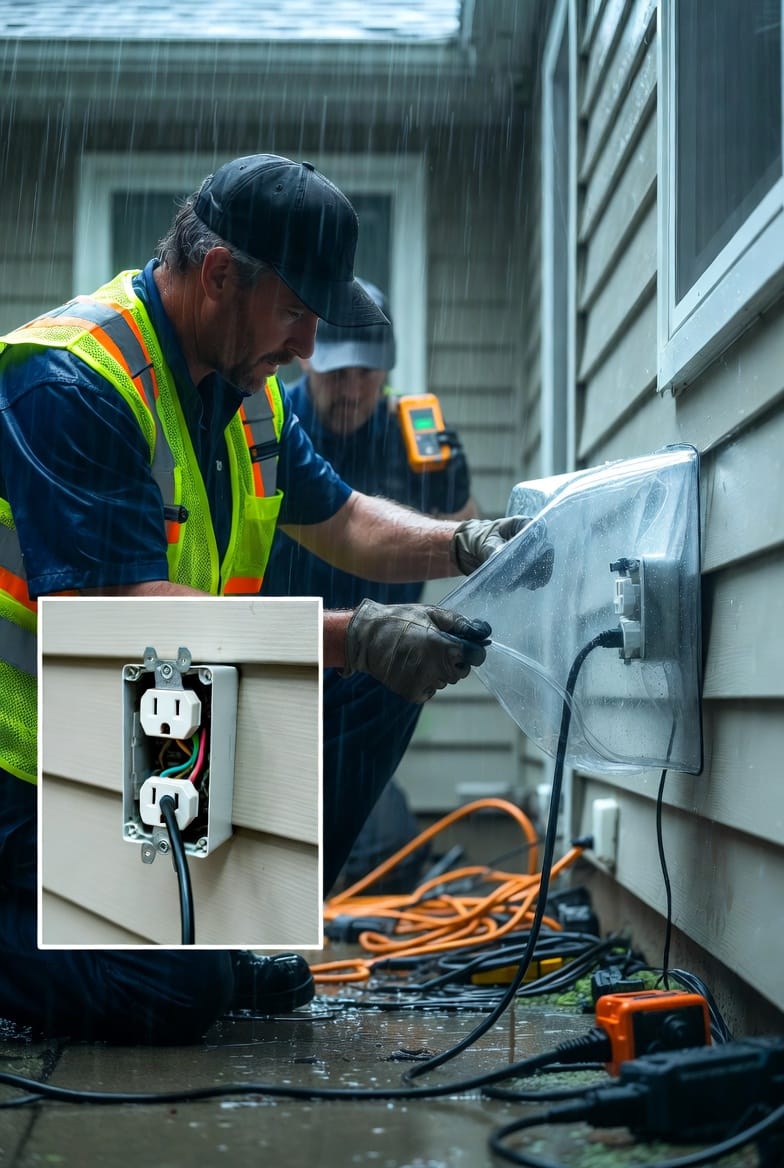
A standard weatherproof cover works only when nothing is plugged in. Once you insert a cord, that cover must stay open—leaving the outlet exposed. This is where in-use weatherproof covers, or bubble covers, become essential.
These larger, clear or gray plastic enclosures expand to accommodate the plug while maintaining a complete weatherproof seal around the cord. The cover snaps tightly against the outlet box even while the cord remains plugged in, directing water away and preventing moisture from reaching live contacts.
Key benefits of in-use bubble covers include:
- Full protection while the outlet is actively powering devices
- Compliance with code requirements for “while in use” scenarios
- Durability against UV rays, freezing temperatures, and physical impact
- Easy one-handed operation for quick cord changes
Without a proper in-use weatherproof cover, your outlet fails code the moment you plug anything in. Professional installers always select covers rated for the specific environment—marine-grade for coastal homes or heavy-duty models for high-traffic patios.
Proper Box Sealing: Preventing Moisture Damage at the Source
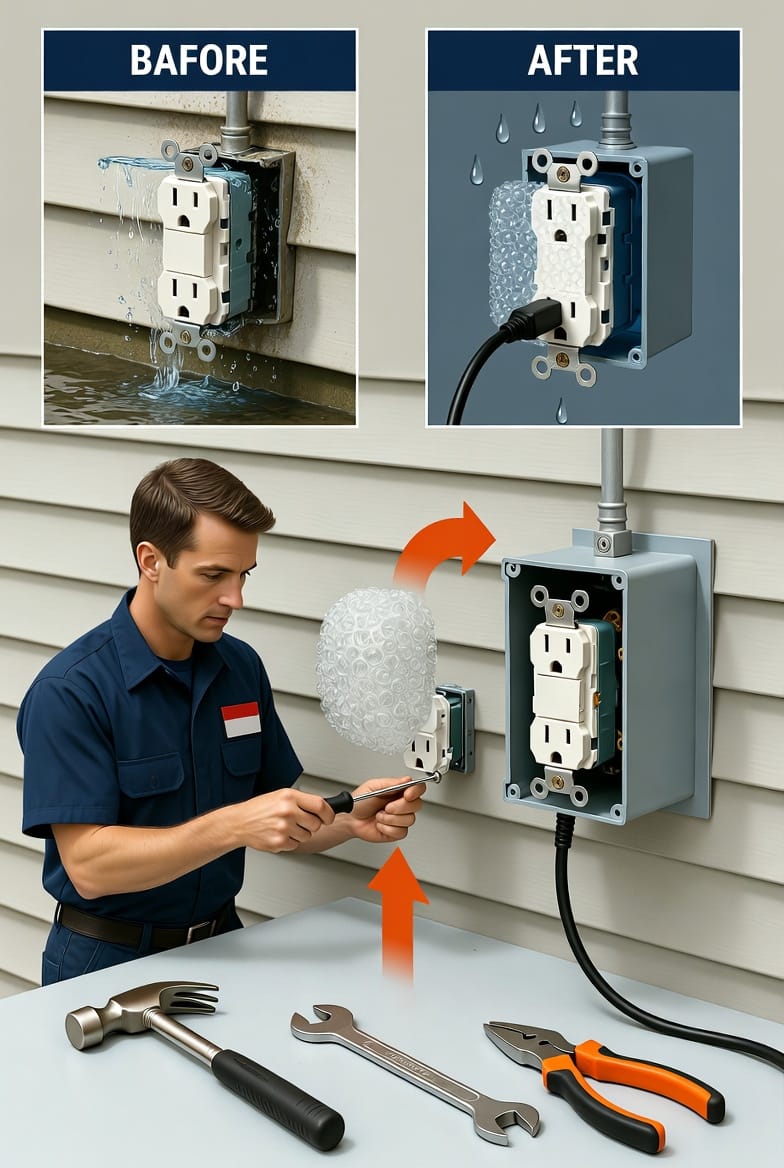
The electrical box itself must be completely sealed against water intrusion. This means using weatherproof boxes with integrated gaskets, foam seals, and correctly torqued mounting screws. Any gap—even hairline—allows moisture to wick inside and compromise the entire installation.
Essential box sealing practices include:
- Installing only weatherproof-rated electrical boxes designed for wet locations
- Using approved gaskets and silicone sealant at all entry points
- Ensuring the box is mounted plumb and flush so the cover seats perfectly
- Sealing all conduit or cable entries with listed fittings
When proper box sealing combines with GFCI protection and in-use weatherproof covers, the outlet becomes a fortress against the elements. This layered defense is exactly what building inspectors verify during final approval.
Meeting National Code Requirements for Outdoor Outlets
Electrical codes exist to protect lives and property. They mandate that every outdoor receptacle must incorporate GFCI protection, remain weatherproof while in use, and sit inside a properly rated and sealed box. These rules apply nationwide, with local amendments possible in high-weather or coastal regions.
Inspectors check three critical points during approval:
- Presence and correct operation of GFCI protection
- Installation of an in-use weatherproof cover sized for plugged-in cords
- Confirmation that the box and all seals meet wet-location standards
Compliance is straightforward when you follow best practices from the start. Non-compliant outlets not only fail inspection but void insurance coverage in the event of an electrical incident. Choosing professional installation ensures your outdoor electrical outlet passes the first time and stays safe for years.
Common Installation Mistakes and How Professionals Avoid Them
Many DIY attempts fall short in subtle but dangerous ways. Using a standard cover instead of an in-use bubble cover, skipping the box gasket, or installing the outlet upside down are frequent errors. Each mistake creates a direct path for water.
Professionals avoid these pitfalls by:
- Always testing GFCI protection immediately after wiring
- Double-checking box orientation and seal integrity
- Selecting covers and boxes rated for the exact exposure level
The result is an installation you can trust completely—no guesswork, no hidden weaknesses.
The Long-Term Benefits of Code-Compliant Outdoor Outlets
A properly protected outdoor electrical outlet delivers peace of mind, extends equipment life, and adds measurable value to your home. You can confidently power outdoor entertainment systems, landscape lighting, or workshop tools without worry. Maintenance becomes simple: occasional visual checks and GFCI test-button presses keep everything functioning perfectly.
Why Expert Installation Is the Smartest Choice
While the technical requirements are clear, achieving perfect compliance demands experience and the right materials. Professional electricians arrive with code-approved components, calibrated testers, and proven techniques that homeowners simply cannot replicate in a single afternoon.
They also provide documentation for your records—valuable if you ever sell the home or file an insurance claim. Most importantly, they guarantee the work meets or exceeds every local requirement, giving you lasting confidence every time you step outside and reach for power.
Protect Your Outdoor Outlets with Proper Weatherproof Covers – Call Now!