The Kitchen Small Appliance Circuits: Code Requirements for Countertop Outlets
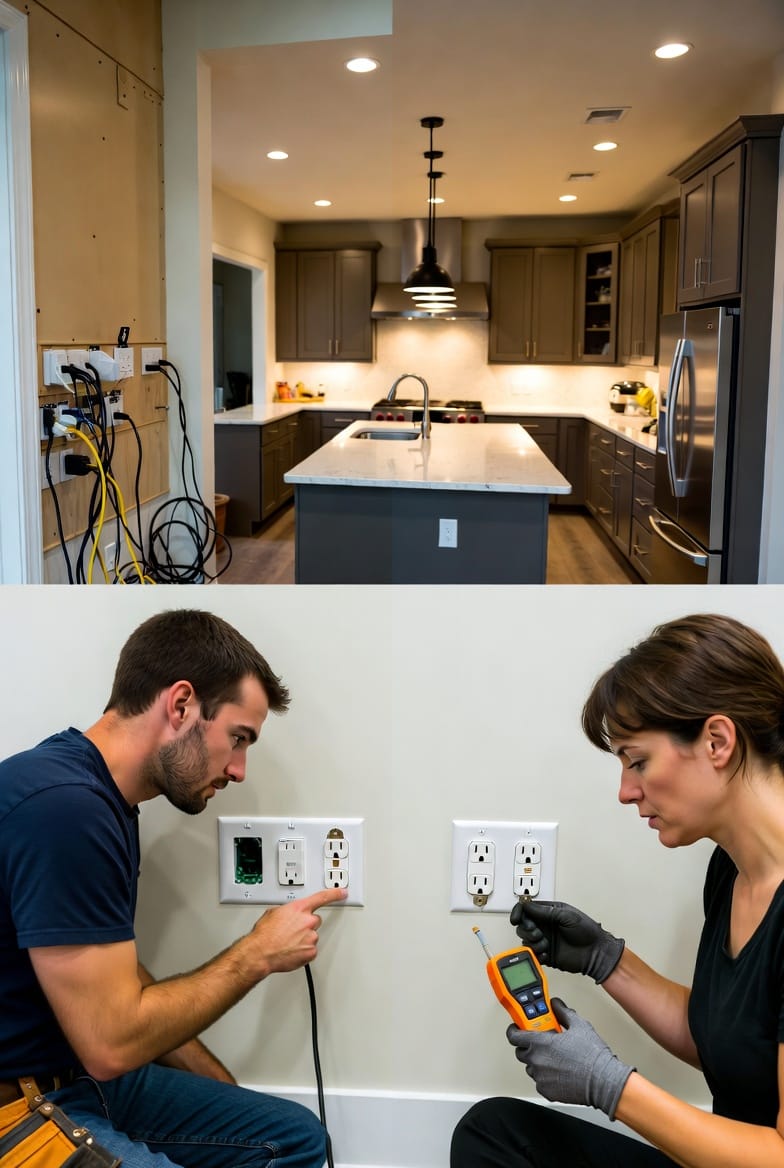
In today’s modern homes, the kitchen serves as the central hub for daily activities — from preparing family meals to hosting gatherings. Yet many homeowners overlook one critical aspect of kitchen design: the electrical infrastructure supporting small appliance circuits and countertop outlets. Proper kitchen electrical design is not just about convenience; it is essential for safety, compliance with building codes, and preventing costly hazards.
Ensure Safe Kitchen Electrical Today – Call for Expert Help!
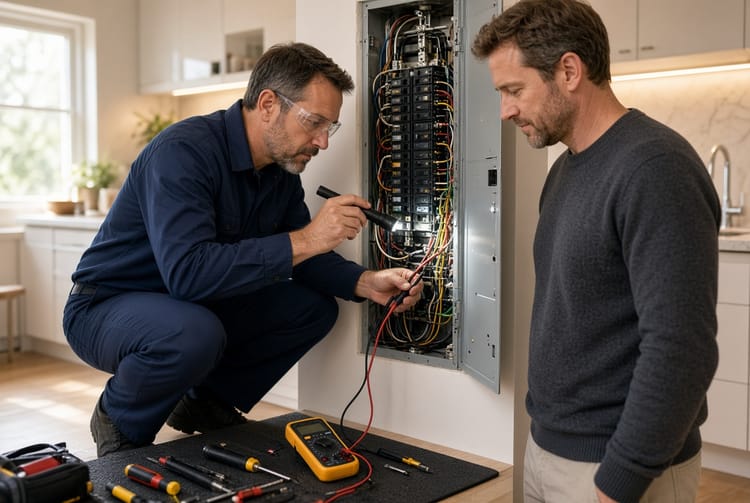
At Domain Nest Pro, we specialize in professional electrical services that ensure your kitchen meets the highest standards. Understanding the National Electrical Code (NEC) requirements for small appliance branch circuits can help you avoid overloaded circuits, nuisance tripping, and serious electrical risks. This comprehensive guide explains why your kitchen needs at least two dedicated 20-amp small appliance circuits, full GFCI protection, and strategic outlet spacing — all delivered in a clear, actionable format.
Image Placement Note: The main opening image appears above this introduction for maximum visual impact, setting the professional tone for the entire article.
When electrical systems fall short, the consequences can range from minor inconveniences to dangerous situations. Overloaded circuits in kitchens frequently cause breakers to trip during peak use, while inadequate grounding increases the risk of shocks near water sources. By following established code requirements, you create a safer environment that supports your lifestyle without compromise.
Why Dedicated Small Appliance Circuits Matter in Kitchen Design
Kitchens demand significant electrical capacity due to the variety of portable appliances in use — toasters, blenders, coffee makers, mixers, and more. A single circuit simply cannot handle simultaneous operation of multiple high-draw devices without risking overload.
The NEC mandates at least two dedicated 20-amp, 120-volt small appliance branch circuits specifically for kitchen countertop receptacles, as well as related areas such as the pantry, breakfast nook, and dining room. These circuits are designed exclusively to serve small-appliance loads and certain wall/floor receptacles in these zones.
Key benefits of dedicated 20-amp circuits include:
- Load distribution — Splitting appliances across two circuits prevents any single line from exceeding safe amperage limits.
- Reduced tripping — Homeowners can run a toaster and coffee maker simultaneously without interruption.
- Future-proofing — Modern kitchens often incorporate more powerful gadgets; 20-amp wiring (typically 12-gauge copper) provides ample headroom.
- Code compliance — Meeting this requirement helps ensure your home passes inspections during renovations or sales.
These circuits must remain dedicated. They cannot supply lighting, fixed appliances like dishwashers or garbage disposals, or outlets outside the specified kitchen-related areas. This separation maintains system integrity and minimizes the chance of widespread outages.
Bold emphasis on risks: Without these dedicated circuits, extension cords become commonplace — creating trip hazards, fire risks from overheating, and potential damage to expensive appliances due to voltage drops.
Understanding GFCI Protection for Kitchen Countertops
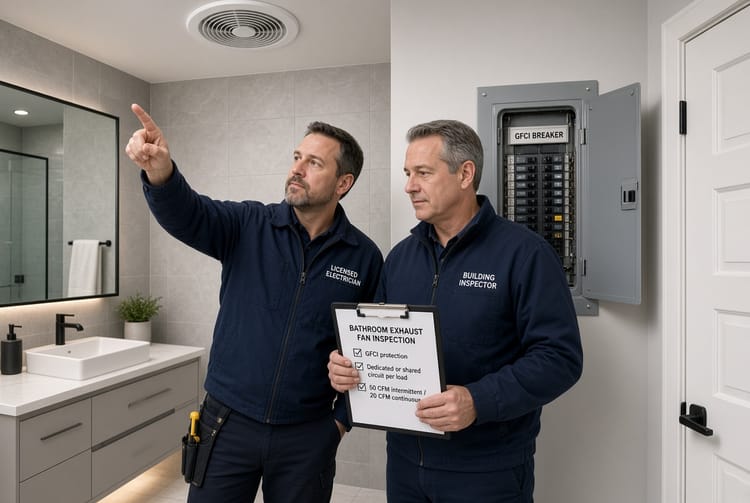
Water and electricity form a dangerous combination, making Ground Fault Circuit Interrupter (GFCI) protection non-negotiable in kitchens. All receptacles serving countertop surfaces must feature GFCI protection, either through GFCI circuit breakers or GFCI receptacles themselves.
GFCI devices monitor current flow and instantly cut power if an imbalance occurs — such as when current leaks through a person or water. This protection dramatically reduces the risk of electrical shock in wet environments near sinks, dishwashers, or beverage stations.
Why GFCI is essential:
- Kitchens involve frequent contact with water from sinks, spills, or cleaning.
- Modern appliances may have electronic controls sensitive to faults.
- Code requires GFCI for all countertop-serving outlets to protect occupants.
Professional installation ensures GFCI outlets are correctly wired and tested. Many older homes lack this protection, leaving families vulnerable. Upgrading provides immediate peace of mind and enhances property value.
Proper Outlet Spacing Requirements for Countertop Safety
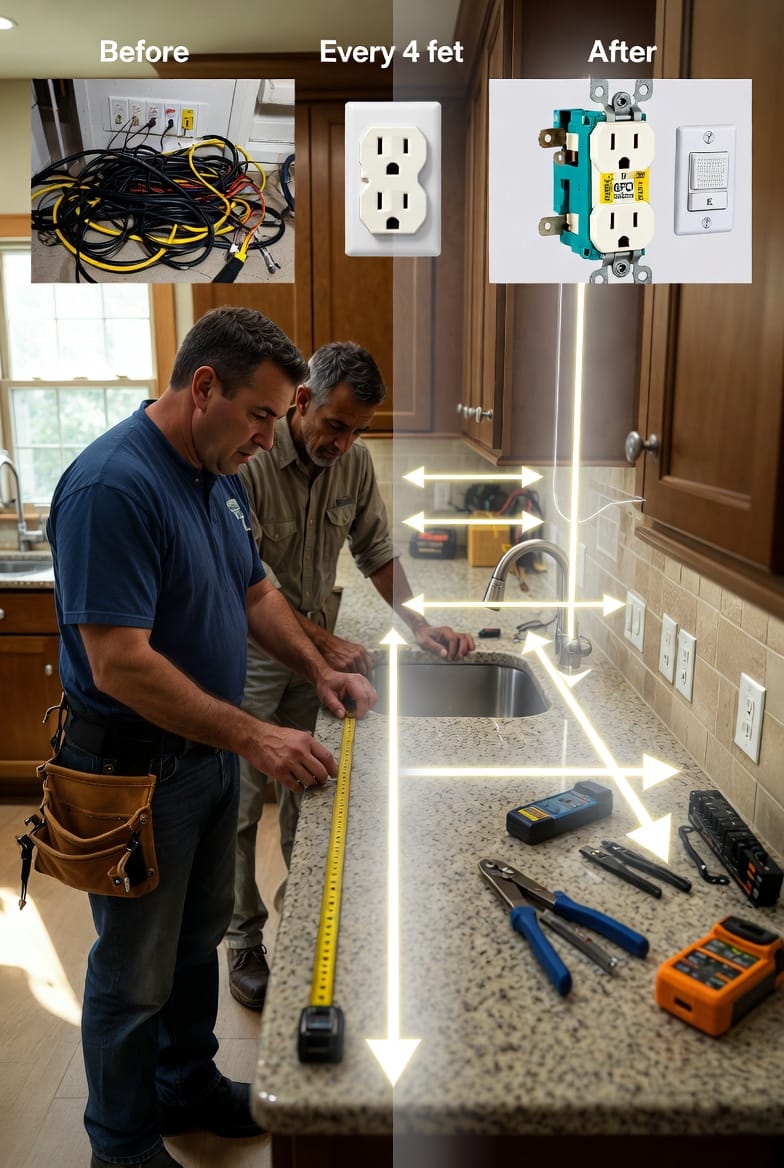
Strategic placement of receptacles prevents the use of dangerous extension cords that can overheat or become damaged. The NEC establishes clear rules for kitchen countertop outlet spacing to guarantee accessibility without excess cord length.
For wall-mounted countertops, a receptacle must be installed at every counter space 12 inches or wider. Critically, receptacles are positioned so that no point along the wall line is more than 24 inches (measured horizontally) from a receptacle. In practical terms, this creates a maximum spacing of 4 feet (48 inches) between outlets along continuous countertop runs.
Additional considerations for islands and peninsulas:
- At least one receptacle for island or peninsula spaces meeting minimum size thresholds (typically 24 inches by 12 inches or larger area calculations in recent code editions).
- Receptacles generally installed above the countertop, not exceeding 20 inches above the surface for easy access.
- Separate countertop sections divided by sinks, ranges, or refrigerators are treated individually.
This “2-foot / 4-foot rule” (no point more than 2 feet from an outlet, outlets no more than 4 feet apart) ensures you can plug in appliances anywhere along the counter without stretching cords across walkways or hot surfaces.
Benefits of proper spacing:
- Eliminates reliance on extension cords, reducing fire and trip risks.
- Supports efficient workflow during meal preparation.
- Enhances overall kitchen ergonomics and safety for all family members.
Professional electricians calculate exact layouts during planning to exceed minimum requirements where practical, especially in larger or high-use kitchens.
Dedicated Circuits for Major Kitchen Appliances
While small appliance circuits handle portable devices, major fixed appliances require their own dedicated circuits to prevent interference and ensure reliable operation.
Common examples include:
- Refrigerator — Often on a dedicated 15- or 20-amp circuit to avoid cycling issues.
- Dishwasher and garbage disposal — Typically dedicated or carefully shared on 20-amp circuits.
- Electric range or oven — Requires high-amperage dedicated circuits (often 240-volt).
- Microwave (if built-in) — May need its own circuit depending on wattage.
Separating these loads from small appliance circuits maintains balance and prevents one appliance from affecting others. This design approach also simplifies troubleshooting and future maintenance.
Common Risks of Non-Compliant Kitchen Electrical Systems
Ignoring code requirements for kitchen small appliance circuits can lead to several serious issues:
- Frequent breaker trips disrupting daily routines.
- Overheating wires and potential electrical fires.
- Shock hazards near water without proper GFCI protection.
- Reduced appliance lifespan due to inconsistent power.
- Failed home inspections during resale or renovation.
Older homes are particularly susceptible, as electrical demands have increased significantly with modern appliances. A professional assessment can identify deficiencies early.
Best Practices for Kitchen Electrical Upgrades
When planning a kitchen remodel or upgrade, consider these authoritative recommendations:
- Engage licensed electricians familiar with current NEC standards.
- Map all countertop spaces and calculate required receptacles in advance.
- Install tamper-resistant GFCI outlets for added child safety.
- Use high-quality 12-gauge wiring for 20-amp circuits.
- Label all circuits clearly at the electrical panel.
- Test GFCI devices monthly to ensure ongoing protection.
These steps create a robust, code-compliant system that supports your kitchen’s functionality for years to come.
Expanding further on practical implementation, proper circuit planning begins with a detailed load calculation. Electricians assess the total expected amperage from typical appliance combinations, ensuring each 20-amp circuit stays well below its maximum continuous load (typically 80% or 16 amps for safety).
In larger kitchens with extensive island seating or multiple workstations, adding a third small appliance circuit provides extra capacity and convenience. This proactive approach prevents future limitations as appliance technology evolves.
GFCI protection extends beyond basic outlets in many jurisdictions. Consider AFCI (Arc Fault Circuit Interrupter) breakers for added fire prevention in bedroom-adjacent or older wiring scenarios, though kitchen focus remains on GFCI for wet locations.
Outlet height and accessibility matter for usability. Receptacles mounted too high or obstructed by appliances fail to deliver practical value. Professional installers prioritize ergonomics alongside code compliance.
For island and peninsula counters, creative solutions like pop-up receptacles or carefully routed wiring maintain a clean aesthetic while meeting spacing rules. These options require skilled workmanship to hide conduits without compromising structural integrity.
Homeowners should also consider integrating smart technology safely. USB outlets or smart receptacles on small appliance circuits must still adhere to the same 20-amp and GFCI standards.
During upgrades, electricians often upgrade the entire panel if capacity is insufficient, ensuring the home can support additional circuits without overload. This comprehensive service delivers long-term reliability.
Code-compliant kitchens are safer kitchens. A properly designed electrical system protects your family, preserves your investment in appliances, and provides confidence during everyday use.
If your kitchen lacks dedicated small appliance circuits, sufficient GFCI protection, or adequate outlet spacing, it is time to act. Addressing these issues now prevents emergencies later and enhances your home’s safety and value.
Ready to upgrade your kitchen electrical system to meet current code requirements? Our experienced team delivers professional, reliable service tailored to your needs.
Make Your Kitchen Safer & Code-Compliant – Call Today!