The Opossum Opportunity: Why These Gentle Visitors Can Be Beneficial and How to Encourage Them to Move On
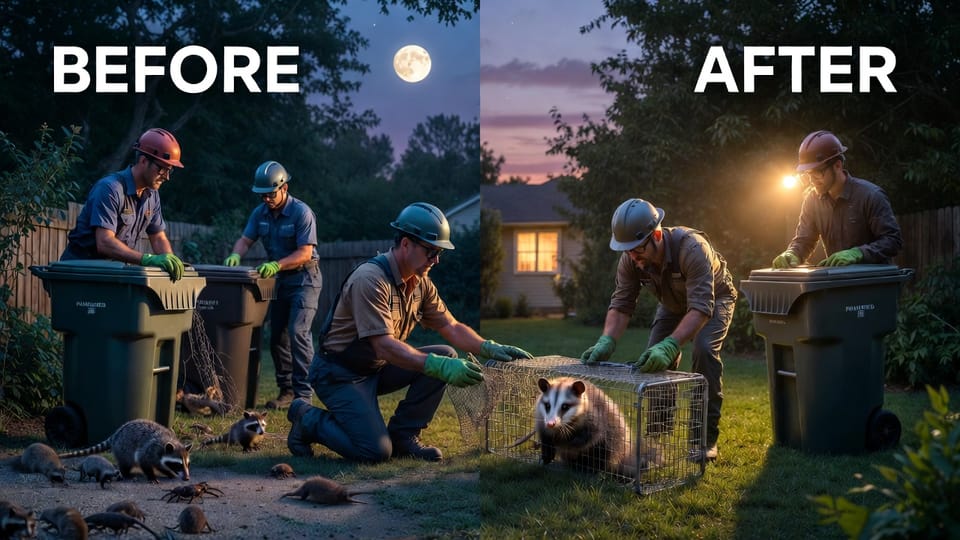
Have you ever spotted a opossum shuffling through your backyard and felt a mix of curiosity and concern? These nocturnal creatures, often misunderstood as pests, are actually valuable allies in our ecosystems. In this comprehensive guide, we'll explore the benefits of opossums, why they're generally non-aggressive, and humane strategies to encourage them to move on if needed. As experts in wildlife removal, we assure you that coexistence is possible—and often preferable—with these gentle visitors. Whether you're dealing with an unexpected guest or simply want to learn more about opossum behavior, this article will equip you with authoritative insights for humane opossum control.
Protect Your Yard Humanely – Call Today!
Understanding the Misunderstood Opossum
Opossums, North America's only marsupial, have earned an unfair reputation as troublesome invaders. With their pointed snouts, hairless tails, and beady eyes, they might look intimidating at first glance. However, opossums are opportunistic foragers rather than aggressive predators. They originated in South America and migrated northward, adapting remarkably to urban and suburban environments.
Contrary to popular myths, opossums are not related to rats—they're more akin to kangaroos in their pouch-carrying habits. Females nurture their young in these pouches, fostering a family-oriented lifestyle that's far from the "vermin" label they're often slapped with. Their playing dead behavior, known as thanatosis, is a defense mechanism triggered by stress, not a sign of disease or danger. This involuntary response can last from minutes to hours, making them appear lifeless, but it's simply nature's way of protecting them from threats.
In terms of size, adult opossums typically weigh between 4 to 14 pounds and measure 2 to 3 feet long, including their tail. They're primarily nocturnal, emerging at night to scavenge for food. This lifestyle minimizes human encounters, but when they do cross paths with us, it's usually because our habits—like leaving out pet food or unsecured trash—attract them. Rest assured, opossums pose minimal risk to humans or pets; they're more likely to flee than fight.
The Surprising Benefits of Opossums in Your Yard
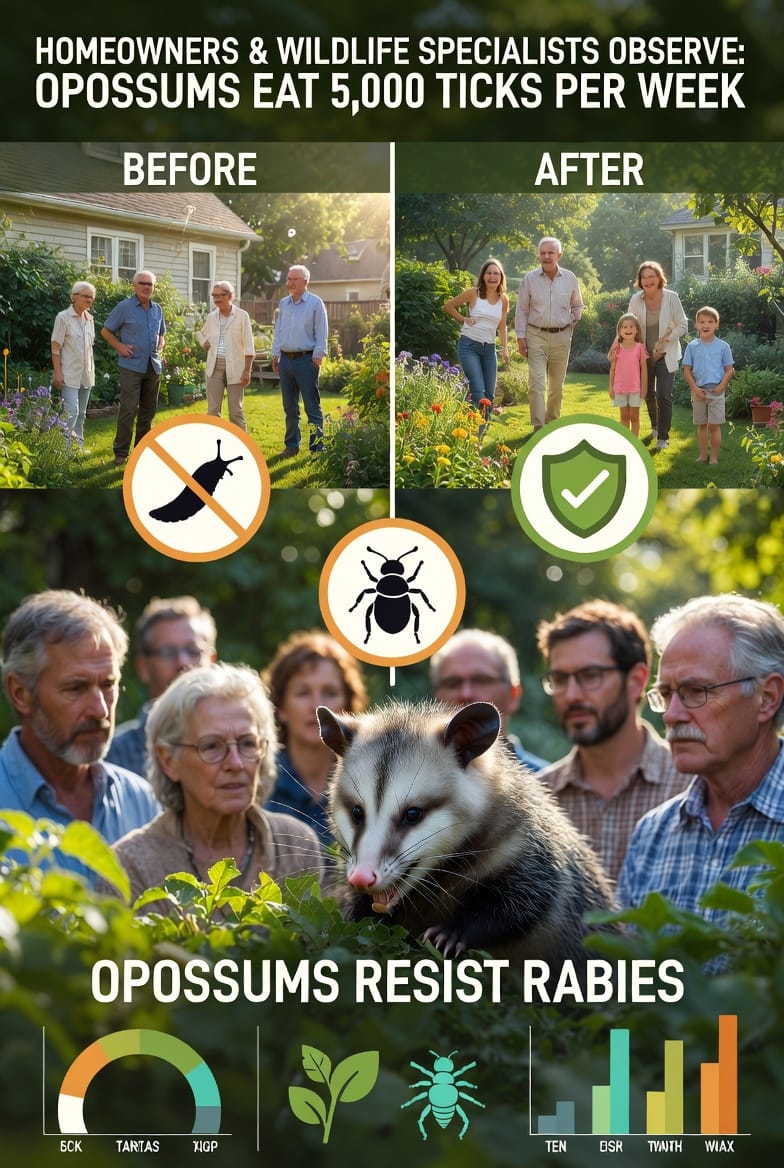
One of the key reasons to view opossums as gentle visitors rather than nuisances is their role in natural pest control. These animals are voracious eaters, consuming up to 5,000 ticks per season—a boon for areas plagued by Lyme disease. Ticks latch onto opossums, but the marsupials' meticulous grooming habits ensure most are eaten before they can spread pathogens.
Beyond ticks, opossums help manage a variety of garden and household pests. Here's a breakdown of their ecological contributions:
- Tick Reduction: As mentioned, a single opossum can eliminate thousands of ticks annually, reducing the risk of tick-borne illnesses for you, your family, and pets.
- Pest Consumption: They feast on slugs, snails, beetles, and cockroaches, protecting your garden from damage without the need for chemical pesticides.
- Rodent Control: Opossums occasionally prey on mice and rats, helping to keep rodent populations in check.
- Carrion Cleanup: By scavenging dead animals, they prevent the spread of bacteria and maintain environmental hygiene.
- Rabies Resistance: Opossums have a low body temperature that makes them highly resistant to rabies, making them unlikely carriers compared to other wildlife.
These benefits highlight why encouraging opossum presence can be advantageous. In fact, studies from organizations like the National Wildlife Federation emphasize their role in biodiversity. If you're in a tick-heavy region, an opossum might be your yard's unsung hero, naturally curbing infestations that could otherwise require professional intervention.
When Opossums Become Unwelcome Guests
While their benefits are clear, there are times when opossums overstay their welcome. They might take up residence under decks, in attics, or near compost piles, leading to concerns about property damage or health risks. Common signs of an opossum nearby include overturned trash cans, scattered pet food, or nocturnal noises like hissing or rustling.
It's important to note that opossums are rarely aggressive. Attacks on humans are virtually unheard of, and they prefer to avoid confrontation. However, if cornered or protecting young, they might bare teeth or growl—cues to give them space. Pups are born tiny and helpless, climbing into the mother's pouch, so disturbing a family unit can cause unnecessary stress.
Health-wise, while rabies is rare, opossums can carry parasites like fleas or transmit diseases through feces. Yet, these risks are manageable with basic precautions, such as wearing gloves when cleaning up after them. The key is addressing the root cause: human-provided attractants. By focusing on humane deterrence, you can encourage them to relocate without harm, preserving their ecological role.
Humane Ways to Encourage Opossums to Move On
The good news is that opossum removal doesn't require traps, poisons, or harm. As advocates for ethical wildlife management, we recommend non-lethal methods that respect these creatures' gentle nature. Start by making your property less appealing, prompting them to seek food elsewhere.
Here are proven, step-by-step strategies for humane opossum control:
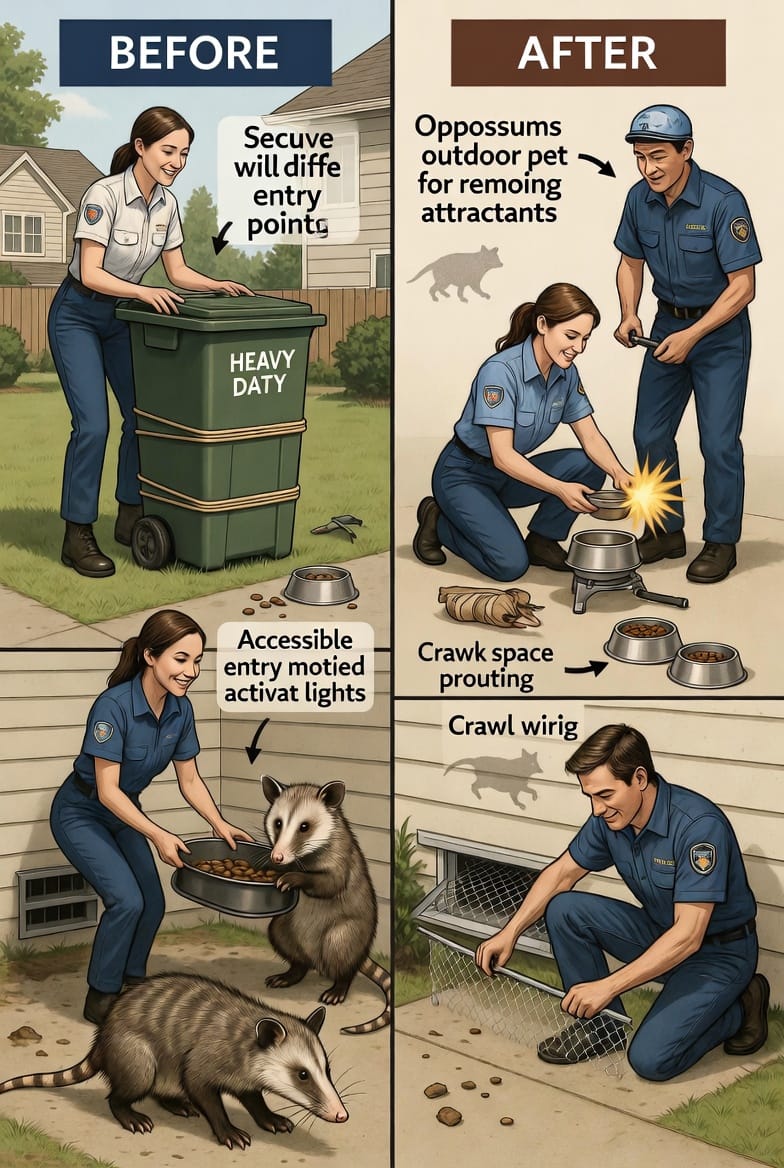
- Remove Food Sources: Bring pet food indoors at night and avoid leaving fruits or vegetables in open compost. Opossums are drawn to easy meals, so eliminating these reduces their incentive to stay.
- Secure Trash Bins: Use lids with latches or bungee cords to prevent tipping. Place bins in garages or enclosures to limit access.
- Close Entry Points: Seal gaps under sheds, decks, or homes with hardware cloth or fencing buried at least 6 inches deep. Check for holes in foundations and repair them promptly.
- Install Motion Lights or Sprinklers: These deter nocturnal visitors without causing distress. The sudden light or water startles them, encouraging relocation.
- Use Natural Repellents: Scatter mothballs, ammonia-soaked rags, or predator urine around entry points. These odors mimic threats, but use them sparingly to avoid environmental impact.
- Habitat Modification: Trim overhanging branches and clear brush piles, reducing hiding spots.
If these DIY approaches don't suffice, professional assistance ensures safe, humane relocation. Experts can assess your situation, implement tailored solutions, and even release opossums in suitable habitats away from urban areas. Remember, harming opossums is not only unethical but often illegal under wildlife protection laws.
Preventing Future Opossum Visits
Prevention is the cornerstone of long-term wildlife management. Once you've encouraged an opossum to move on, maintain habits that discourage returns. Regular yard maintenance, such as mowing lawns and removing debris, makes your space less inviting for shelter-seeking animals.
Consider integrating opossum-friendly elements if coexistence appeals to you. For instance, providing a brush pile in a far corner of your yard can offer habitat without encroaching on living areas. This balanced approach supports biodiversity while minimizing conflicts.
Educating neighbors about opossum benefits can foster community-wide tolerance. Share facts about their pest-eating prowess to shift perceptions from fear to appreciation. In regions with high tick populations, promoting opossums as natural controllers can even enhance public health.
Coexisting Peacefully: The Path Forward
In summary, opossums offer a unique opportunity for ecological harmony. Their ability to devour pests, clean up carrion, and resist diseases makes them beneficial rather than burdensome. By understanding their non-aggressive nature and employing humane methods like removing attractants and securing access points, you can manage their presence effectively.
If challenges persist, don't hesitate to seek professional guidance. Our team is committed to humane solutions that protect both wildlife and your peace of mind. Embrace the opossum opportunity—let's coexist responsibly.
Secure Your Home from Unwanted Guests – Call Now