The Mourning Dove Nesting: Coexisting with These Gentle Birds on Your Property
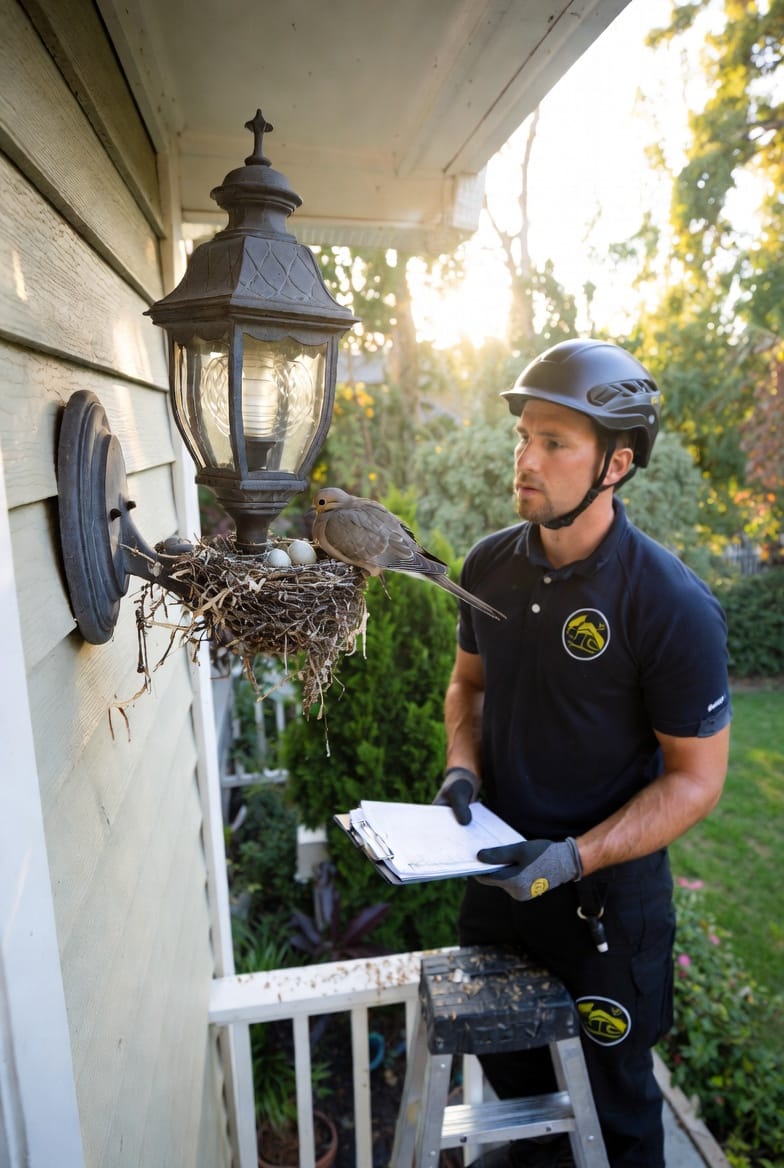
Mourning doves are among the most peaceful and familiar birds you’ll encounter around homes and gardens. Their soft, mournful cooing at dawn and dusk brings a sense of calm to any backyard. Yet when these gentle birds choose to build nests in inconvenient spots like gutters or light fixtures, many homeowners feel torn between protecting their property and respecting these protected wildlife neighbors.
Protect Your Home from Bird Nesting – Humane Solutions Today
At our wildlife removal service, we believe coexisting with mourning doves is not only possible — it’s the smart, legal, and compassionate choice. This comprehensive guide explains everything you need to know about mourning dove nesting behavior, their protected status, and proven humane bird management techniques. You’ll learn how to discourage nesting in unwanted areas while still enjoying these beautiful birds.
Whether you’re dealing with a new nest on your porch light or planning long-term prevention for gutters, the strategies below keep your home clean and safe without harming the doves or breaking the law.
Understanding Mourning Dove Behavior and Nesting Habits
Mourning doves (Zenaida macroura) are slender, gray-brown birds easily recognized by their pointed tails and black spots on the wings. They are ground feeders that prefer open areas where they can quickly spot predators while searching for seeds.
These birds are devoted parents. Pairs form strong bonds and often return to the same general area each year. The female typically lays two pure white eggs in a loose, saucer-shaped nest made of twigs, pine needles, and grass. Unlike many other birds, mourning dove nests are surprisingly flimsy — sometimes so thin you can see the eggs from below.
Nesting season runs primarily from early spring through late summer, with many pairs raising two to three broods per year. Incubation lasts about 14 days, and the young (called squabs) fledge in just 12 to 15 days. Because the cycle is short, timing is everything when it comes to humane bird control.
Doves are adaptable. While they naturally prefer trees and shrubs, they readily use flat, sheltered ledges on buildings. Porch light fixtures, gutters, and eaves offer protection from rain and predators, which explains why they frequently choose these spots on residential properties.
Key fact: Once eggs or young are present, the nest is considered active and protected. Understanding this timeline helps homeowners plan responsibly.
Why Mourning Doves Become a Property Concern
While mourning doves are delightful to watch, nesting in the wrong place can create practical challenges:
- Droppings accumulation that stains siding, decks, and vehicles
- Clogged gutters leading to water damage during heavy rains
- Fire hazards when nests are built too close to electrical fixtures or lights
- Aesthetic and maintenance issues that affect curb appeal
These concerns are valid, yet they rarely require drastic action. With the right humane deterrence approach, you can address the issues while giving the current family time to complete their cycle.
Protected Status: What the Law Requires
Mourning doves are protected under the Migratory Bird Treaty Act (MBTA), a federal law that makes it illegal to disturb, relocate, or destroy active nests containing eggs or young birds. Violations can result in significant fines.
This protection exists for good reason. Mourning doves play an important role in seed dispersal and serve as a vital food source for hawks, owls, and other native predators. As experienced wildlife professionals, we always emphasize legal compliance first. The good news? The law allows — and even encourages — preventive measures and post-fledging cleanup.
You can legally:
- Install deterrents in areas where no nesting has yet occurred
- Provide alternative nesting sites away from the house
- Clean and seal access points after the young have safely left
Patience during the short nesting period combined with proactive planning keeps everyone within the law while solving the problem humanely.
Common Nesting Locations and Associated Risks
Homeowners most often report mourning dove nesting in these high-traffic areas:
- Porch and garage light fixtures – heat from bulbs can create a warm microclimate
- Gutters and downspouts – flat edges and nearby overhangs feel secure
- Window ledges and air-conditioning units – sheltered and close to food sources
- Roof overhangs and eaves – protected from wind and rain
Each location carries its own maintenance headache. A nest on a light fixture, for example, can block the bulb or create a fire risk if dry twigs contact wiring. Gutters filled with nesting debris can overflow, causing foundation leaks.
Recognizing these patterns early allows you to act before the problem escalates — always with humane methods in mind.
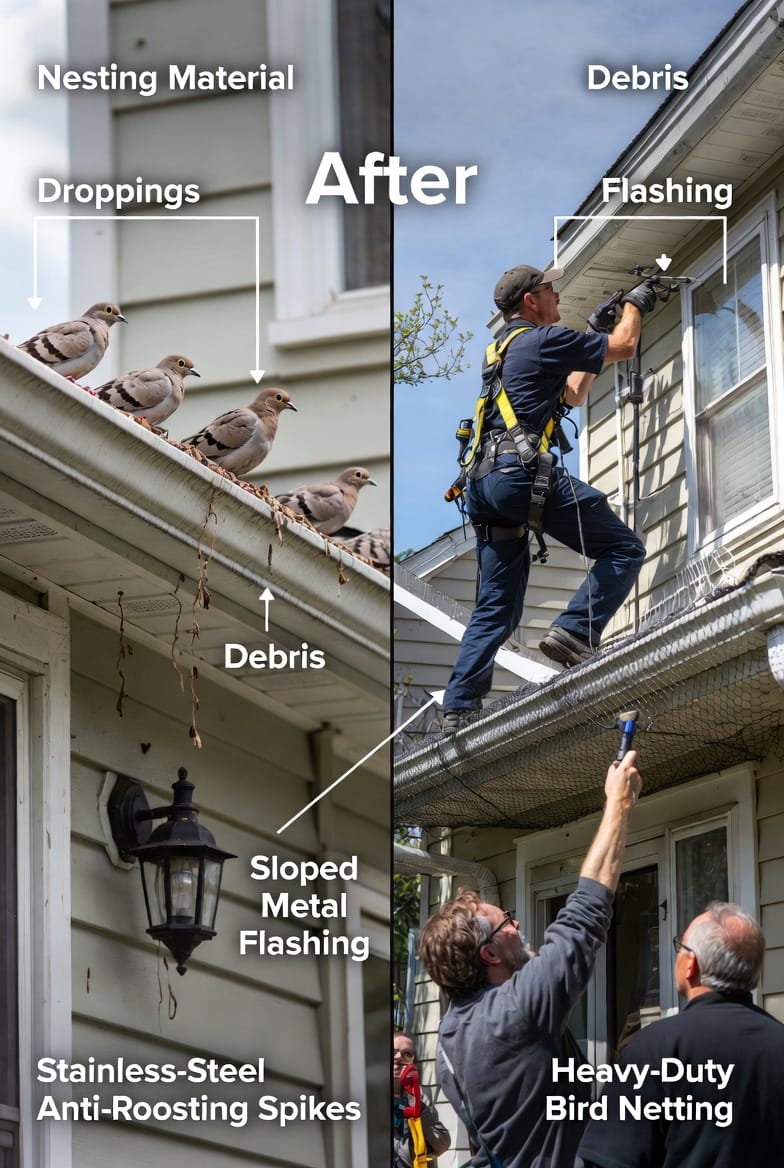
Humane Ways to Discourage Nesting in Unwanted Areas
The goal of humane bird management is prevention without harm. Here are proven, service-tested techniques:
Physical Barriers That Work
- Sloped surfaces on ledges and gutters prevent doves from finding a stable platform for their loose nests. A 45-degree angle is usually sufficient.
- Anti-roosting spikes on light fixtures and beams make landing uncomfortable without causing injury.
- Bird netting installed over gutters and eaves creates a physical barrier while remaining nearly invisible from the ground.
Timing and Seasonal Prevention
The most effective strategy is to modify potential nesting sites before breeding season begins. Late winter is the ideal window. Once a nest is active, focus on coexistence until the fledglings leave.
Non-Lethal Deterrents
Visual reflectors, reflective tape, and gentle wind chimes can add mild discouragement in combination with physical barriers. Because mourning doves are not easily startled, physical modifications remain the most reliable long-term solution.
Coexistence Strategies: Supporting the Birds Responsibly
Many homeowners actually enjoy having mourning doves nearby once the immediate property issues are managed. Here are practical ways to coexist peacefully:
- Wait for fledging – The entire cycle from egg to independent young usually lasts less than a month. Monitor from a respectful distance.
- Block access after the season – Once the nest is empty and the family has moved on, remove the old nest material and install deterrents immediately.
- Provide alternative nesting sites – Install open-style dove nesting platforms or shelves in quieter areas of the yard, away from the house. These mimic natural preferences and draw birds to safer locations.
- Maintain bird-friendly landscaping – Dense shrubs and seed-bearing plants at a distance encourage doves to forage elsewhere while still visiting your property.
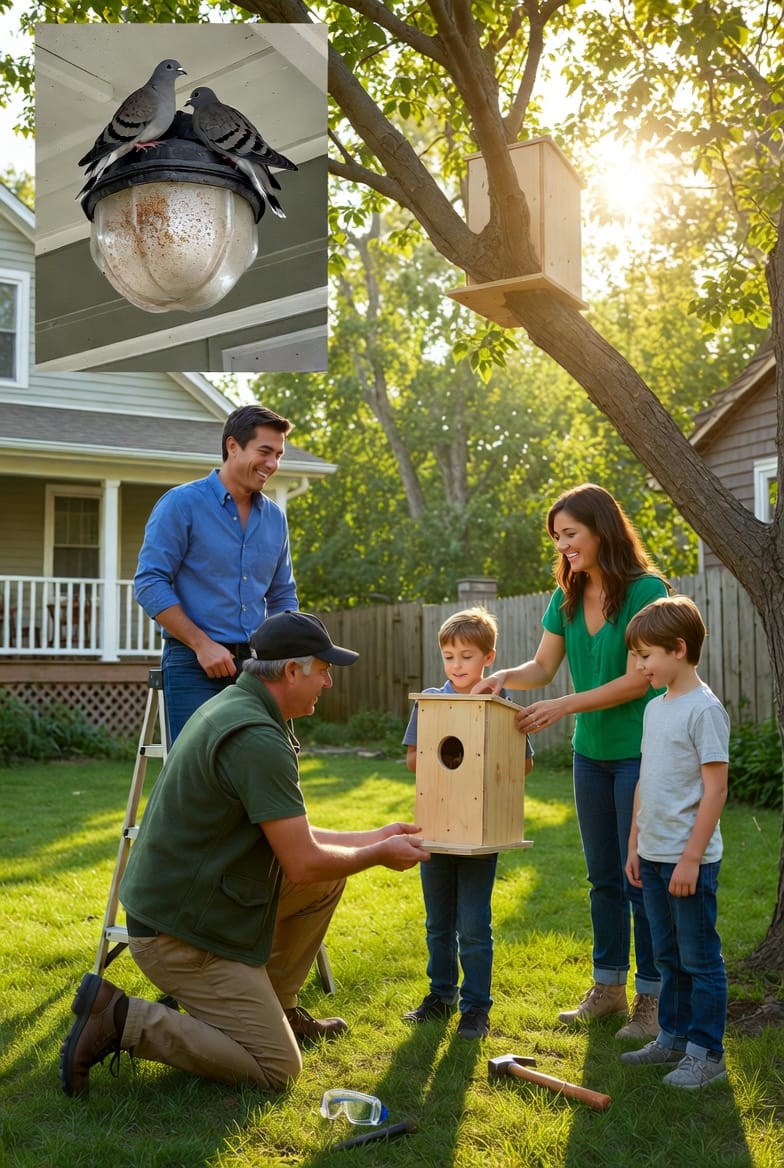
When Professional Wildlife Removal Support Makes Sense
While many preventive steps can be handled by attentive homeowners, certain situations benefit from expert assistance:
- Nests located high on the house or in hard-to-reach areas
- Repeated nesting attempts despite DIY efforts
- Concerns about droppings near play areas or HVAC systems
- Need for guaranteed legal compliance and documentation
Professional wildlife removal teams use specialized equipment, years of species-specific knowledge, and humane protocols that deliver faster, longer-lasting results. We arrive prepared, work discreetly, and leave your property cleaner and better protected.
Long-Term Property Protection and Peace of Mind
Successful mourning dove nesting management is about balance. By understanding their behavior, respecting their protected status, and applying targeted humane deterrence, you protect your home while supporting local wildlife.
Seasonal inspections, timely installation of physical barriers, and the strategic placement of alternative nesting sites create a property that is both beautiful and bird-friendly. Most clients report that once the initial nesting challenge is resolved humanely, they actually look forward to hearing those familiar coos each spring.
Take Action Today – Manage Bird Nesting Humanely and Legally
Mourning dove nesting does not have to become a stressful conflict. With the right knowledge and professional guidance, you can maintain a clean, safe property while continuing to enjoy these gentle birds.
If you’re currently dealing with doves in gutters, on light fixtures, or anywhere else on your property, don’t wait for the problem to grow. Our team is ready to provide compassionate, legal, and effective solutions tailored to your specific situation.
Call Now for Humane Mourning Dove Nest Removal & Prevention