The Mindfulness Meditation: A Tool for Recovery
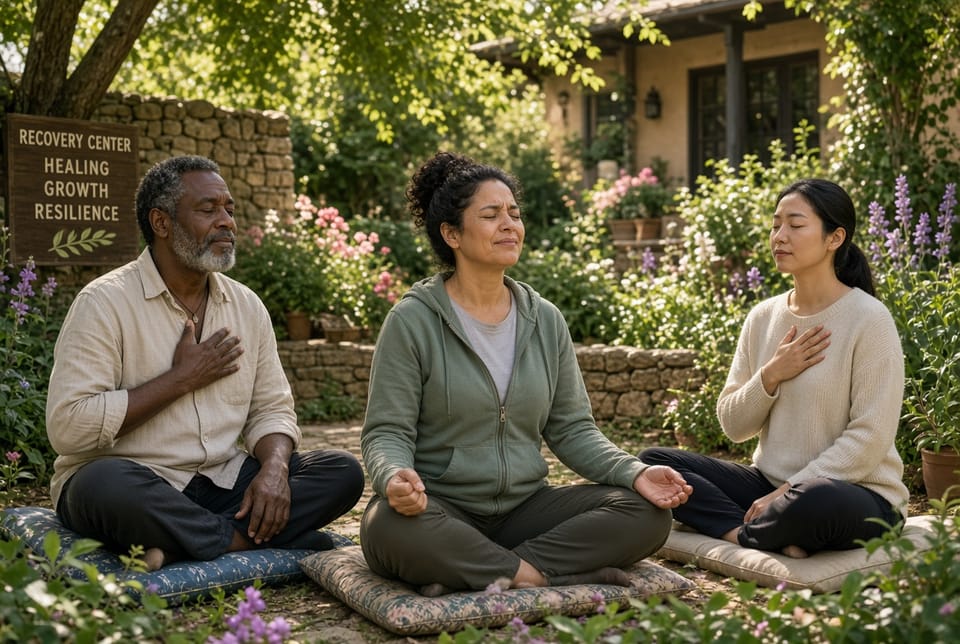
In the journey of recovery, many individuals face overwhelming challenges that extend far beyond physical symptoms. Emotional turbulence, persistent stress, and intense cravings often stand as formidable barriers to lasting change. Mindfulness meditation emerges as a powerful, evidence-informed therapeutic practice that equips people with practical tools to navigate these obstacles. This approach fosters presence, self-awareness, and inner resilience, helping individuals reclaim control over their thoughts and emotions. Far from being a fleeting trend, mindfulness meditation serves as a reliable ally in recovery programs, offering a structured yet accessible path toward healing.
Find Peace Through Mindfulness – Call for Our Program
This article explores how mindfulness meditation supports recovery by reducing stress, improving emotional regulation, and diminishing cravings. It also provides clear guidance on beginning a practice through breath awareness, body scan techniques, and a simple 5-minute daily routine. Written in a professional yet approachable style, the content aims to reassure those seeking stability while delivering authoritative insights grounded in practical application. Whether you are early in recovery or supporting a loved one, these strategies can integrate seamlessly into daily life.
Understanding Mindfulness Meditation in the Context of Recovery
Mindfulness meditation involves intentionally focusing attention on the present moment without judgment. It trains the mind to observe thoughts, feelings, and bodily sensations as they arise, rather than reacting impulsively. In recovery settings, this practice becomes especially valuable because addiction and related struggles often thrive on automatic responses to discomfort. By cultivating mindful awareness, individuals interrupt cycles of avoidance or escalation.
Recovery is rarely linear. Moments of doubt, triggers from past environments, and internal pressure can surface unexpectedly. Mindfulness meditation addresses these realities by building a foundation of calm observation. Practitioners learn to notice a rising urge or stressful thought and respond with deliberate choice instead of automatic behavior. This shift fosters a sense of agency that many describe as transformative.
The practice draws from ancient traditions yet adapts readily to modern therapeutic frameworks. In professional recovery environments, facilitators introduce mindfulness meditation as a complementary skill alongside counseling, peer support, and structured routines. Its non-invasive nature makes it suitable for diverse participants, requiring no special equipment—only willingness and consistency.
How Mindfulness Meditation Reduces Stress in Recovery
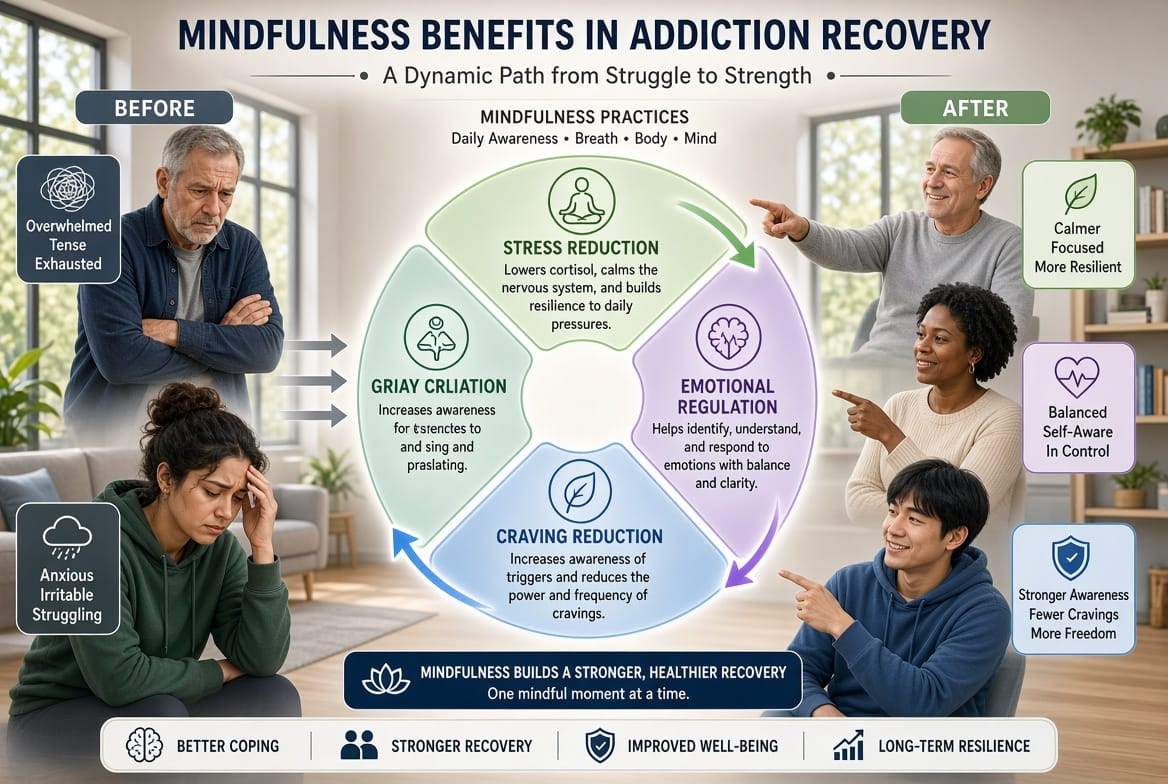
Stress ranks among the most common triggers for setbacks in recovery. Heightened stress activates the body’s fight-or-flight response, elevating heart rate, tightening muscles, and flooding the system with cortisol. Over time, chronic stress erodes resilience and intensifies vulnerability to old patterns.
Mindfulness meditation counteracts this by activating the parasympathetic nervous system—the body’s natural relaxation pathway. Through focused attention, practitioners slow breathing, lower physiological arousal, and create mental space between stimulus and reaction. Regular practice measurably decreases perceived stress levels, allowing individuals to face daily challenges with greater equilibrium.
Consider a typical stressful moment: an unexpected confrontation or a wave of self-doubt. Without tools, the mind may spiral into catastrophic thinking. With mindfulness meditation, the same individual pauses, notes the physical sensations of tension, and returns attention to the breath. This simple interruption prevents escalation and restores a baseline of calm. Over weeks, the cumulative effect builds a buffer against stress, making recovery feel more sustainable.
Key benefits related to stress reduction include:
- Lowered baseline anxiety that previously fueled restless nights
- Improved sleep quality through evening wind-down practices
- Enhanced ability to tolerate discomfort without seeking external relief
- Greater capacity to engage fully in therapy sessions and daily responsibilities
These outcomes reinforce a reassuring truth: stress need not derail progress. With consistent mindfulness meditation, individuals develop an internal resource that remains available anytime, anywhere.
Improving Emotional Regulation Through Mindful Awareness
Emotional regulation—the capacity to experience feelings without being overwhelmed—lies at the heart of successful recovery. Many people enter recovery with underdeveloped skills in this area, having relied on substances or behaviors to numb or amplify emotions. Mindfulness meditation rebuilds this capacity by teaching observation rather than identification with every emotional wave.
When a strong emotion arises, the untrained mind often merges with it: “I am angry” becomes an all-consuming identity. Mindfulness introduces a subtle yet profound separation: “I notice anger arising.” This linguistic and cognitive shift creates distance. From that space, individuals choose responses aligned with their recovery goals instead of reacting from the intensity of the moment.
Practice strengthens the prefrontal cortex regions associated with self-control while calming the amygdala’s reactive circuitry. The result is steadier emotional tides. Joy feels more accessible, sadness more manageable, and frustration less likely to cascade into self-sabotage. Participants frequently report feeling “more like themselves” again—an authoritative indicator of restored balance.
Practical markers of improved emotional regulation include:
- Recognizing early signs of irritability before they intensify
- Responding to criticism or disappointment with measured reflection
- Experiencing positive emotions more fully without fear of loss
- Maintaining composure during high-stakes conversations or environments
This development proves especially empowering. Recovery no longer requires constant suppression of feelings; instead, emotions become information that can be acknowledged and released.
Reducing Cravings with Mindfulness Techniques
Cravings represent one of the most persistent challenges in recovery. They can appear suddenly, driven by environmental cues, emotional states, or even subtle physical sensations. Traditional approaches often emphasize distraction or willpower alone. Mindfulness meditation offers a complementary strategy: turning toward the craving with curious, non-judgmental attention.
Rather than fighting or fleeing the urge, practitioners observe its physical location, intensity, and fluctuating nature. Many discover that cravings resemble waves—they build, crest, and subside if not fed by resistance or indulgence. This insight alone reduces their power. Over time, the brain rewires associations, weakening the automatic link between trigger and response.
Scientific understanding supports this process. Mindfulness engages brain areas involved in interoception (awareness of internal states) and diminishes activity in reward-seeking circuits when practiced regularly. Individuals gain confidence that a craving, no matter how intense, remains temporary and manageable.
Effective craving-management strategies within mindfulness meditation involve:
- Labeling the experience neutrally (“This is a craving sensation”)
- Exploring associated bodily feelings without story-making
- Returning gently to the breath as an anchor
- Noting the eventual decrease in intensity
These steps transform a potential crisis into a practice opportunity. The reassurance here is clear: cravings lose their commanding presence when met with steady awareness.
Getting Started: Practical Foundations for Mindfulness Meditation
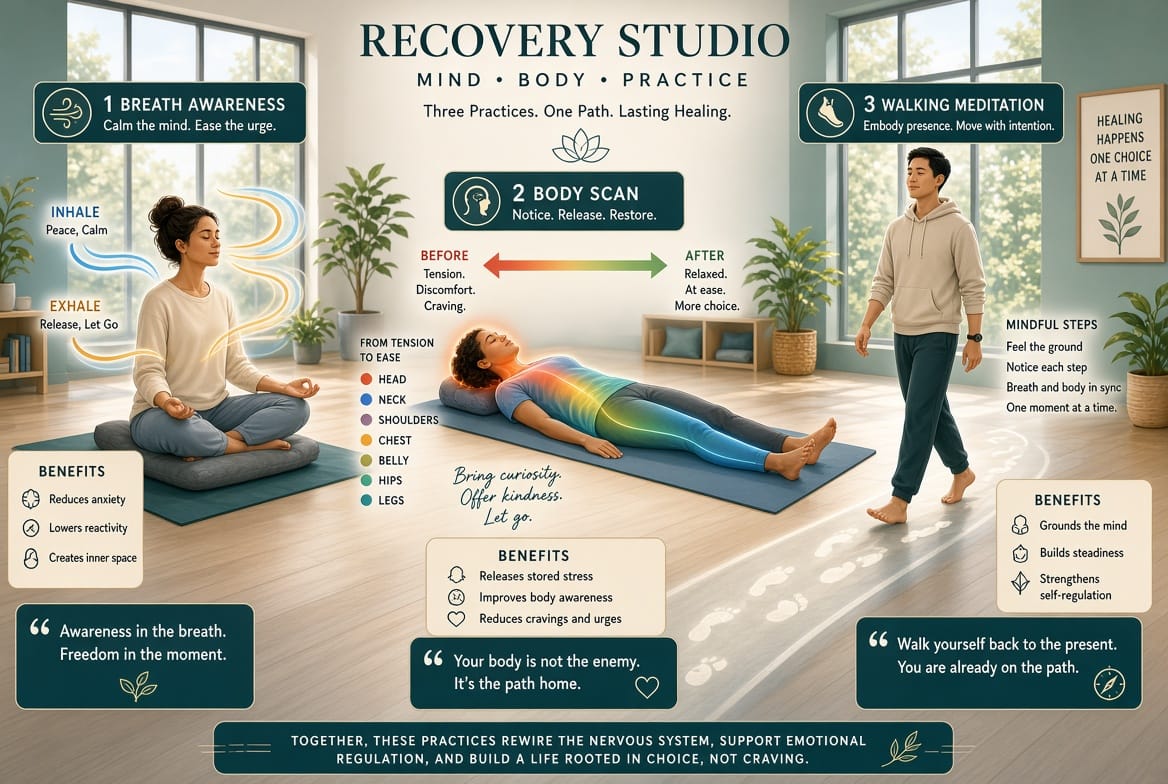
Beginning mindfulness meditation requires no prior experience or elaborate setup. The most effective entry points focus on simplicity and consistency. Three foundational techniques—breath awareness, body scan, and a structured 5-minute daily practice—provide an accessible on-ramp for anyone in recovery.
Breath Awareness: The Core Anchor
Breath awareness forms the cornerstone of most mindfulness practices. The breath is always present, making it an ideal focal point. Sit comfortably with a straight yet relaxed spine. Close the eyes or soften the gaze. Direct attention to the natural rhythm of inhalation and exhalation—perhaps the cool sensation at the nostrils or the gentle rise and fall of the abdomen.
When the mind wanders (as it inevitably will), notice the distraction without criticism and return to the breath. This gentle redirection constitutes the real training. Each return strengthens attentional muscles. In recovery, breath awareness offers an immediate tool during moments of rising stress or cravings. A few conscious breaths can shift physiology within seconds.
Body Scan: Cultivating Embodied Awareness
The body scan extends mindfulness into physical sensation. Lie down or sit comfortably. Systematically move attention from the toes upward, noticing any tension, warmth, coolness, or neutrality in each area. Approach every sensation with curiosity rather than the urge to change it.
This practice reveals how emotions and cravings often manifest as bodily tightness or restlessness. By observing these signals early, individuals intervene before patterns escalate. Many recovery participants find the body scan particularly soothing at day’s end, promoting deeper rest and reducing residual stress.
Building a 5-Minute Daily Practice
Consistency matters more than duration. A 5-minute daily practice establishes a sustainable habit without overwhelming a busy recovery schedule. Choose a consistent time—upon waking, during a lunch break, or before bed. Use a simple timer.
Structure the five minutes as follows:
- Minutes 1–2: Settle into posture and begin breath awareness
- Minutes 3–4: Expand into a brief body scan of major areas
- Minute 5: Rest in open awareness, noting the overall sense of presence
Even this modest commitment yields noticeable benefits within days. Over weeks, the practice expands naturally as comfort grows. Track progress in a simple journal: note mood before and after, any observed cravings, or shifts in emotional regulation. These records reinforce motivation and highlight personal growth.
Additional supportive tips for success include:
- Creating a quiet corner free from distractions
- Using a cushion or chair for comfort
- Approaching sessions with an attitude of experimentation rather than perfection
- Seeking guidance from trained facilitators when available
Integrating Mindfulness into Broader Recovery Life
Mindfulness meditation thrives when woven into everyday activities. Walking mindfully—feeling each footstep, noticing surrounding sounds—extends formal practice into movement. Eating with full attention transforms meals into moments of gratitude and presence. Conversations benefit when participants listen without preparing their next response.
In structured recovery environments, group mindfulness sessions foster shared accountability and reduce isolation. Participants often report that practicing together amplifies the sense of safety and mutual support. Individual practice, meanwhile, builds private resilience that travels beyond program walls.
Challenges will arise. Restlessness, skepticism, or temporary increases in awareness of difficult emotions are common early experiences. Approach these as normal parts of the process. The authoritative guidance remains: persist gently. Each session, however imperfect, contributes to neural and emotional rewiring.
Long-term practitioners describe a profound shift. Life’s inevitable difficulties continue, yet the relationship to them softens. Stress becomes information rather than threat. Emotions flow without drowning. Cravings lose their urgency. This transformation underpins the enduring value of mindfulness meditation as a recovery tool.
Overcoming Common Obstacles with Reassurance and Strategy
New practitioners sometimes worry they “cannot meditate” because thoughts keep appearing. This misconception dissolves quickly with accurate understanding. The mind’s nature is to generate thoughts; mindfulness simply observes them. Success lies in the repeated act of returning, not in achieving a blank mind.
Time constraints represent another frequent concern. The 5-minute framework directly addresses this. Even brief sessions accumulate benefit. On especially demanding days, a single mindful breath counts as practice.
Physical discomfort during sitting can be managed by adjusting posture, using supportive props, or switching to lying-down body scans. Experimentation reveals what works best for each individual body.
Doubt about effectiveness may surface. Track concrete changes—better sleep, fewer reactive moments, increased patience—and allow evidence to speak. Professional recovery settings often incorporate progress reviews that highlight these gains objectively.
The overarching message stays reassuring: every person possesses the capacity for mindfulness. It is not a talent reserved for a select few but a trainable skill available to all who approach it with openness.
Sustaining Progress and Deepening the Practice
As comfort with basic techniques grows, individuals may explore longer sessions or complementary approaches such as mindful walking or guided visualizations focused on recovery themes. Some integrate short practices before high-risk situations, using breath awareness as a preparatory shield.
Community support enhances sustainability. Sharing experiences in group settings normalizes challenges and celebrates milestones. Professional programs frequently offer ongoing mindfulness modules that evolve with participants’ needs, ensuring continued relevance.
The cumulative impact of sustained mindfulness meditation extends beyond symptom management. It nurtures a broader sense of self-compassion and purpose. Individuals begin relating to themselves with the same kindness they would offer a close friend. This internal climate supports every other aspect of recovery work.
Conclusion: Embracing Mindfulness as a Lifelong Ally
Mindfulness meditation stands as a versatile, empowering tool for recovery. By systematically reducing stress, strengthening emotional regulation, and diminishing the hold of cravings, it addresses core vulnerabilities with precision and compassion. Starting remains straightforward: breath awareness anchors attention, the body scan cultivates embodied insight, and a 5-minute daily practice builds lasting momentum.
The path invites patience and persistence. Results unfold gradually yet reliably, creating a foundation of inner stability that supports every recovery goal. Approach each session as an act of self-care rather than another obligation. In doing so, the practice itself becomes a source of quiet strength.
Discover Recovery Through Meditation – Call Now