The Mediterranean Flour Moth: Pantry Pest That Weaves Silk
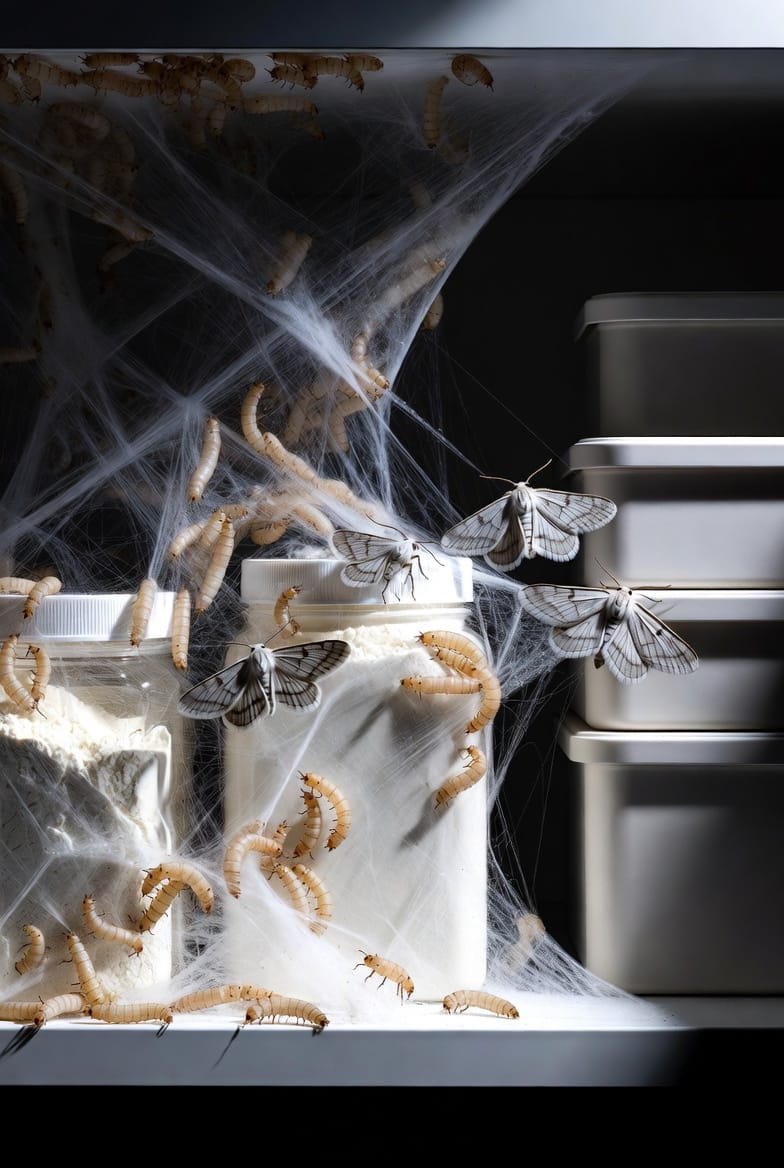
The Mediterranean flour moth (Ephestia kuehniella) is one of the most persistent pantry pests homeowners encounter. Known for its distinctive silk webbing, this moth doesn’t just fly around – its larvae actively spin silk threads while feeding on flour, grains, and other dried goods. If you’ve spotted clumpy flour or tiny webs in your cereal boxes, you’re likely dealing with this resilient insect.
Eliminate Pantry Moths Today – Call Now!
The good news? With the right knowledge and prompt action, you can reclaim your pantry and prevent future issues. This comprehensive guide walks you through everything you need to know about this pantry pest and effective control strategies.
Identifying the Mediterranean Flour Moth
Accurate identification is the first step to effective management. Adult Mediterranean flour moths are small, approximately ½ inch long, with a wingspan of about ⅝ inch. Their forewings appear grayish-white with subtle dark bands or zig-zag patterns, while their hindwings are lighter and fringed.
When at rest, they often hold their wings in a roof-like position over their bodies. The larvae are creamy-white to pinkish caterpillars with dark heads, growing up to ½ inch long. You’ll frequently find them surrounded by the silk webbing they produce as they feed and move through food sources.
Key identification features include:
- Silk webbing clumping flour or other dry goods
- Small larvae crawling in infested products
- Adult moths fluttering near pantry shelves, often at dusk
- Tiny fecal pellets (frass) mixed with webbing
Differentiating from similar pests: Unlike Indian meal moths (which have coppery wing tips), Mediterranean flour moths have more uniform grayish tones and produce heavier silk webbing directly in flour-based products.
Understanding Their Behavior and Life Cycle
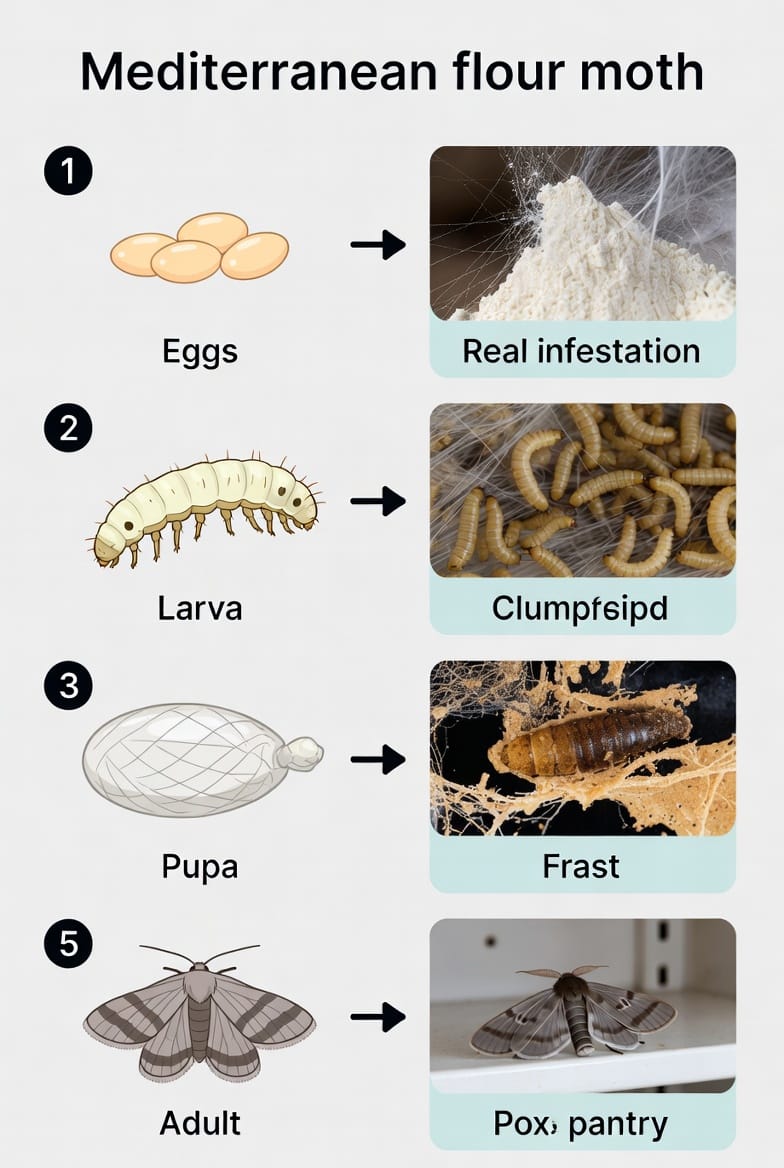
The Mediterranean flour moth thrives in warm, humid environments typical of many kitchens and pantries. Females lay up to 200–300 eggs directly on or near suitable food sources. These eggs hatch within 3–7 days into larvae that immediately begin feeding and spinning protective silk tunnels.
Larvae are the primary damage stage. They weave silk webbing as they crawl through flour, grains, dried fruits, and other staples, creating a messy, clumpy appearance. This webbing protects them from predators and helps maintain moisture. After feeding for 4–6 weeks, larvae pupate in cocoons, emerging as adults ready to restart the cycle.
A complete generation can develop in as little as 6–8 weeks under ideal conditions (70–85°F). This rapid reproduction explains why a small infestation can quickly become overwhelming if left unchecked.
Signs of Infestation and Associated Risks
Early detection saves time and money. Look for these clear indicators:
- Silk webbing binding together flour, cereal, or pasta
- Clumpy or discolored dry goods that feel sticky
- Small larvae or adult moths in pantry areas
- Frass (insect waste) resembling fine sand
- Musty or unpleasant odors in severely infested products
Health and quality risks are significant. Consuming infested food can lead to:
- Allergic reactions or respiratory irritation from moth scales and frass
- Contamination with bacteria or mold encouraged by webbing
- Wasted money on spoiled pantry staples
- Potential spread to neighboring cabinets or even neighboring homes in apartment buildings
While not known for transmitting diseases directly, their presence signals poor food storage practices and can affect food safety.

Vulnerable Items and How Infestations Spread
Mediterranean flour moths target a wide range of stored products:
- Flour and baking mixes
- Breakfast cereals and oatmeal
- Pasta, rice, and other grains
- Dried fruits and nuts
- Chocolate and cocoa powder
- Spices and dried herbs
- Pet food and birdseed
They spread easily through contaminated packaging from stores or by adults flying between storage areas. Even sealed packages can become infested if eggs were laid before sealing or if tiny openings exist.
Effective Elimination Strategies
Immediate action is crucial. Follow these proven steps:
- Inspect and discard – Carefully check all pantry items. Throw away anything showing webbing, larvae, or clumping. Seal infested materials in plastic bags before disposal to prevent spread.
- Deep cleaning – Remove all shelves and vacuum thoroughly, paying special attention to cracks, corners, and shelf edges. Wash surfaces with hot soapy water or a vinegar solution.
- Temperature treatment – For salvageable items, freeze packages at 0°F for 4–7 days or heat in an oven at 140°F for 30 minutes to kill eggs and larvae.
- Pheromone traps – Place sticky traps designed for pantry moths to monitor and reduce adult populations.
Bold prevention habits make the biggest difference long-term:
- Store all dry goods in airtight glass or plastic containers
- Rotate stock using the “first in, first out” method
- Keep pantry areas cool, dry, and well-ventilated
- Regularly inspect incoming groceries before storage
- Clean up spills immediately
When to Call Professional Pantry Pest Control
DIY methods work for minor issues, but recurring or widespread infestations often require professional intervention. Licensed technicians use targeted treatments, thorough inspections, and follow-up monitoring that homeowners cannot easily replicate.
Professionals also identify hidden infestation sources – such as behind appliances or in wall voids – that are difficult to access. Their expertise ensures complete elimination while minimizing chemical use in food storage areas.
Long-Term Pantry Protection Plan
Building sustainable protection involves both physical barriers and consistent habits. Invest in quality storage containers, maintain organized shelving, and schedule seasonal deep-cleaning sessions. Educate family members about proper food storage to create a team approach to prevention.
Many homeowners find that after one thorough treatment and improved storage practices, Mediterranean flour moth problems disappear for years.
Webbing in your flour means moths. Don’t let pantry pests compromise your food safety and peace of mind.
Our trained technicians deliver fast, effective, and discreet solutions tailored to your home. Restore confidence in your kitchen with professional Mediterranean flour moth elimination services you can trust.
Protect what matters most – your home and family’s health – with reliable pest management support.
Protect Your Pantry from Flour Moths – Call No