The Mealworm Beetle: Pest of Stored Grains and Pet Food
The quiet corners of your kitchen pantry and the sealed bags of pet food in your storage area can harbor one of the most persistent and overlooked invaders in modern homes: the mealworm beetle. This common pantry pest thrives in the dry, nutrient-rich environments created by grains, cereals, and animal feeds. Understanding its habits, recognizing early warning signs, and taking decisive elimination steps protects both your food supply and your peace of mind. This comprehensive guide delivers authoritative, practical knowledge so you can confront the problem with confidence and restore order to your household storage.
Protect Pet Food & Grains Today – Call for Expert Pest Control
Understanding the Mealworm Beetle as a Pantry Pest
The adult mealworm beetle is a dark, elongated insect belonging to the darkling beetle family. Measuring roughly half an inch in length, it features a hard, shiny outer shell that ranges from reddish-brown to nearly black. While the adult beetle itself causes limited direct damage, its larval stage—the well-known mealworm—is the primary consumer of stored products. These larvae are cylindrical, segmented, and creamy yellow to light brown, growing up to an inch long before pupating.
What makes the mealworm beetle particularly troublesome is its preference for exactly the items most households keep in quantity: dry pet food, bird seed, flour, oats, rice, cornmeal, and other dried goods. Once established, populations can expand rapidly because the beetles are highly adaptable and capable of surviving in relatively low-moisture conditions that would deter many other insects. The risk is not merely aesthetic or financial; contaminated food can introduce unpleasant odors, allergens, and a general sense of unease about the safety of what you and your pets consume.
Homeowners often discover the problem only after noticing unusual activity near food storage. By then, the infestation may already span multiple packages. The good news is that mealworm beetles do not typically infest living spaces beyond the pantry or storage areas, and they pose no direct threat of biting or transmitting serious diseases. Still, their presence demands prompt, thorough action to prevent ongoing loss of food and recurring outbreaks.
Behavior and Feeding Habits of Mealworm Beetles and Larvae
Mealworm beetle behavior centers on finding and exploiting dry organic matter high in carbohydrates and proteins. Adult females seek out cracks in packaging, poorly sealed containers, or already compromised bags to lay eggs. Once hatched, the larvae begin feeding immediately. They bore into grains, chew through pet food kibble, and consume flour and similar products, leaving behind a trail of waste known as frass—a fine, powdery mixture of fecal matter and chewed material.
Larvae are especially destructive because they remain active for weeks or months depending on temperature and food availability. They prefer darker, undisturbed locations, which is why infestations often start in the back of shelves or the bottoms of large bulk containers. Adult beetles, while less voracious feeders, contribute by spreading to new packages and continuing the reproductive cycle. Both stages can survive for extended periods without food if conditions are cool, allowing hidden populations to persist through seasonal changes.
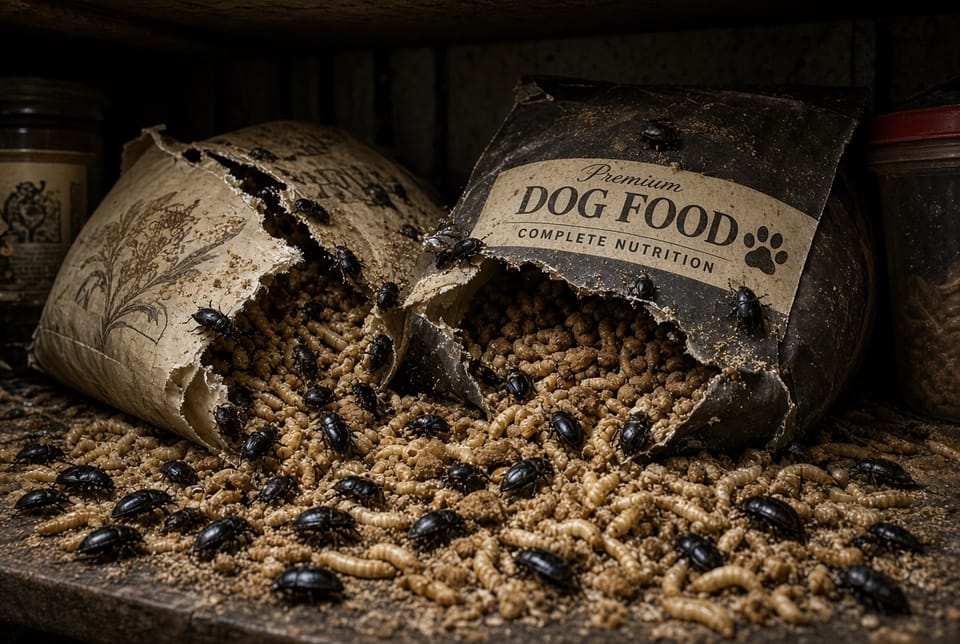
Pet food presents a particularly attractive target. Many commercial dry dog and cat foods contain grains, proteins, and fats that closely match the nutritional profile preferred by mealworms. Open bags left in garages, utility rooms, or pantries become ideal breeding sites. Similarly, bulk grains purchased for baking or bird feeding can introduce or sustain an infestation if not inspected carefully upon arrival. The beetles’ ability to chew through thin plastic or cardboard packaging increases the chance of cross-contamination between items stored close together.
Temperature plays a critical role in activity levels. Warmer indoor environments accelerate development and feeding, while cooler areas slow the process. Humidity, though less critical than for some other pantry pests, still influences survival; extremely dry conditions can reduce egg hatch rates, yet mealworm beetles remain more tolerant than many competitors. This resilience explains why the pest appears in climates ranging from humid coastal regions to arid inland areas.
Recognizing the Signs of Infestation
Early detection is the cornerstone of effective control. The most obvious indicators include the physical presence of larvae and adult beetles. You may spot the yellowish worms crawling across shelves, emerging from bags, or clustered in corners of containers. Adult beetles are more mobile and may be seen scurrying when lights are turned on or packages are moved.
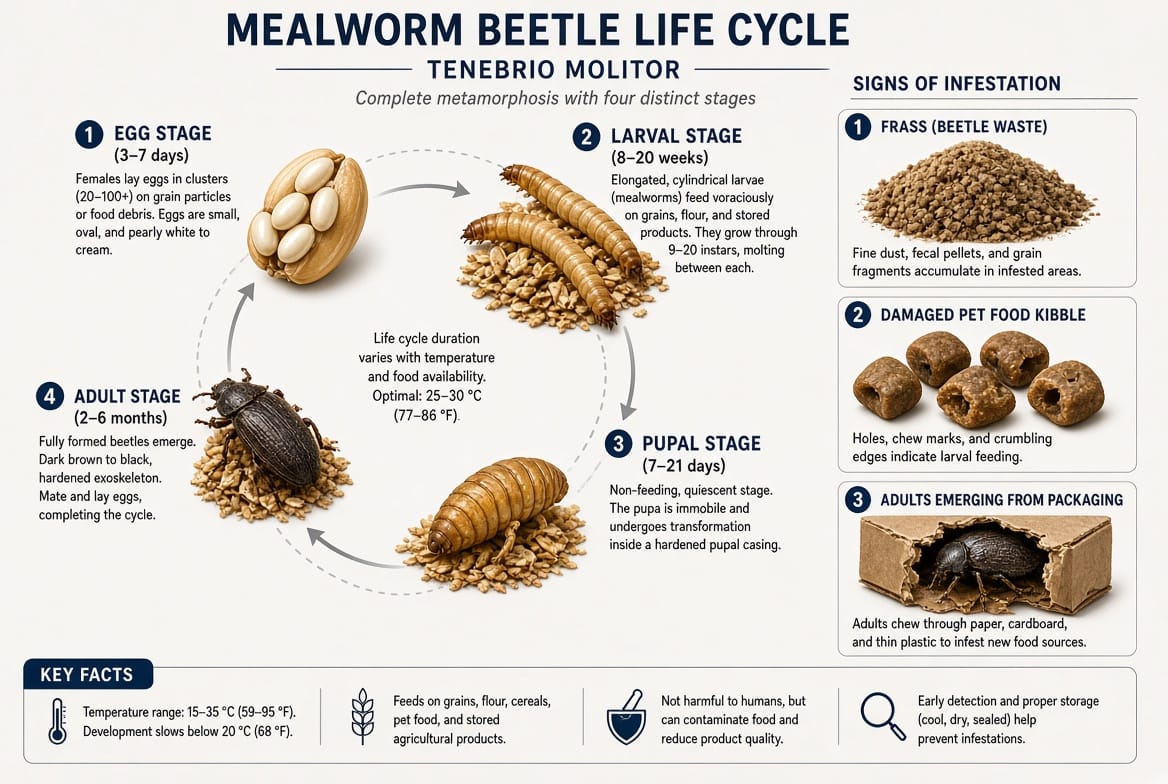
Frass is another reliable marker. Look for fine, dusty powder that resembles ground grain or flour but feels slightly gritty. This material often accumulates at the bottoms of bags, along shelf edges, or beneath infested packages. Damaged packaging—small holes, chewed edges, or webbing-like debris—further signals activity. In severe cases, a musty or slightly sour odor develops as the insects and their waste break down the food substrate.
Examine pet food carefully. Kibble may appear partially eaten or surrounded by fine particles. Bird seed mixes can show similar signs, with individual seeds hollowed out. Flour and other powdered goods may develop clumps or discoloration where larvae have tunneled. Because mealworms prefer undisturbed areas, rotate stock regularly and inspect older packages first. Finding even a few individuals warrants a full inventory check of nearby items.
Do not overlook less obvious locations. Storage bins in basements, garages, or utility closets can harbor populations that later migrate into the main kitchen. Multi-pet households face elevated risk simply because larger quantities of food are kept on hand. Regular visual checks combined with attention to unusual smells or fine dust accumulations form the practical foundation of monitoring.
The Life Cycle and How Populations Expand
The mealworm beetle progresses through complete metamorphosis: egg, larva, pupa, and adult. Females deposit dozens to hundreds of tiny, sticky eggs directly onto or near suitable food sources. Under favorable conditions, eggs hatch within one to two weeks. The resulting larvae feed continuously, molting several times as they grow. This stage lasts from several weeks to several months, depending on temperature, humidity, and nutrition. When ready, larvae form a pupal chamber within the food mass or nearby crevices. After a relatively short pupal period, the adult beetle emerges, hardens its outer shell, and begins seeking mates and new egg-laying sites.
A single pair of beetles can generate substantial numbers of offspring over successive generations. Warm household temperatures shorten the cycle, allowing multiple overlapping generations to coexist. This continuous reproduction is why a small initial introduction—perhaps from a single contaminated bag of grain or pet food—can escalate into a widespread pantry problem within a few months if left unaddressed.
Understanding the timeline helps prioritize response. Interrupting the cycle at the larval or adult stage by removing food sources and cleaning thoroughly reduces the chance of re-establishment. Because eggs are minute and often hidden, surface cleaning alone may miss some; therefore, discarding compromised materials remains essential.
Effective Elimination Through Discarding and Thorough Cleaning
Successful removal of a mealworm beetle infestation relies on two complementary actions: discarding all infested items and performing meticulous cleaning of the surrounding environment. Begin by isolating the affected storage area. Remove every package of grain, pet food, flour, cereal, dried pasta, and similar products. Inspect each one under good lighting. Any package showing larvae, adult beetles, frass, holes, or unusual odors should be sealed in a plastic bag and discarded outdoors immediately. Do not attempt to salvage partially contaminated food by sifting; residual eggs or small larvae can restart the cycle.
After discarding, empty the shelves completely. Vacuum every surface thoroughly, paying special attention to corners, cracks, shelf edges, and the undersides of supports. Use a crevice tool to extract frass and any hidden insects. Follow vacuuming with a wash using hot, soapy water or a mild detergent solution. Wipe all surfaces, allowing them to dry fully before returning any items. For stubborn residue, a solution of white vinegar and water provides additional cleaning power without harsh chemicals that might later contact food.
Inspect and clean any storage containers, bins, or canisters that held the affected products. Wash them in hot soapy water, rinse, and dry completely. Consider replacing cardboard boxes or thin plastic bags with sturdy, airtight containers made of glass, metal, or heavy-duty plastic with tight-fitting lids. These physical barriers prevent future entry and make monitoring easier.
In cases where the infestation has spread to multiple rooms or persists after initial efforts, professional intervention becomes the most reliable path. Trained technicians can identify residual hotspots, apply targeted treatments safe for food-storage areas, and advise on long-term exclusion strategies. The reassuring reality is that mealworm beetles respond well to consistent sanitation and source removal; once food access is eliminated and the environment cleaned, populations collapse.
Prevention Strategies for Long-Term Protection
Prevention centers on denying mealworm beetles the conditions they need to thrive. Store all dry goods—including pet food—in sealed, airtight containers immediately after purchase. Transfer bulk items from original packaging as soon as they enter the home. Maintain a first-in, first-out rotation system so older stock is used before newer purchases. Keep storage areas cool, dry, and well-ventilated; excessive warmth accelerates development.
Inspect new purchases carefully. Look for damaged packaging or signs of prior infestation before bringing items indoors. Avoid buying more pet food or grains than can be reasonably consumed within a few months, especially in warmer seasons. Clean up spills promptly and vacuum pantry floors and shelves on a regular schedule. Periodically empty and wipe down the entire storage space even when no pests are visible.
For pet owners, designate a specific, elevated storage location away from walls and floors when possible. Elevate bags off the ground and keep the surrounding area free of debris. If you maintain bird feeders or store seed outdoors, use sealed containers and position them away from entry points to the home.
These habits form a robust defense. Combined with the knowledge of signs and elimination methods, they transform a potential recurring problem into a manageable and largely preventable one.

Why Professional Support Provides Lasting Assurance
While many mild infestations yield to thorough discarding and cleaning, larger or repeated problems benefit from expert assessment. Professionals bring experience in locating hidden reservoirs, understanding local conditions that favor mealworm beetles, and recommending structural improvements that reduce future risk. Their approach remains focused on safety around food and pets, using methods compatible with household environments.
The presence of mealworms in pet food and grains is more than a minor nuisance; it represents a disruption of the clean, reliable storage every household deserves. Taking decisive steps restores that reliability. By combining personal vigilance with the option of professional help when needed, homeowners regain full control over their pantries and storage spaces.
Get Your Stored Goods Mealworm-Free – Call Today!