The Manual J Load Calculation: Why Proper Sizing Matters More Than Efficiency Ratings

When it comes to choosing a new HVAC system, many homeowners focus solely on efficiency ratings like SEER or AFUE. While these numbers matter, they tell only part of the story. True comfort, reliable performance, and long-term savings begin with something far more fundamental: the Manual J load calculation. This precise engineering process determines the exact heating and cooling needs of your home, ensuring your system is sized correctly from the start.
Call Today for Accurate Manual J Load Calculation
At its core, proper HVAC system sizing through the Manual J load calculation prevents the common pitfalls that plague so many installations. An incorrectly sized unit—whether too large or too small—can lead to discomfort, higher energy bills, and premature equipment failure. Rest assured, when your HVAC contractor invests time in this critical step, you gain peace of mind knowing your system will deliver consistent temperature control and optimal humidity management year-round. In this comprehensive guide, we explore why the Manual J load calculation stands as the foundation of effective HVAC design and how it outperforms efficiency ratings alone in delivering real-world results.
What Exactly Is a Manual J Load Calculation?
The Manual J load calculation is the industry-standard method developed by the Air Conditioning Contractors of America (ACCA) for determining a home’s precise heating and cooling requirements. Unlike rough estimates based on square footage alone, this detailed analysis accounts for every variable that affects how your home gains or loses heat.
Think of it as a comprehensive blueprint for your HVAC system. It calculates the total load—the amount of heating or cooling capacity needed—in British Thermal Units (BTUs) per hour. This ensures your system matches your home’s unique characteristics rather than relying on generic assumptions.
A professional Manual J load calculation considers heat gain in summer and heat loss in winter, factoring in conduction through walls, infiltration of outside air, solar radiation through windows, and internal heat sources. The result? A system that runs efficiently at the right capacity, avoiding the extremes of constant operation or rapid cycling. Homeowners who prioritize this step report noticeably better comfort and lower utility costs, proving that accurate sizing is the true key to performance.
Key Factors That Determine Your Home’s True HVAC Load
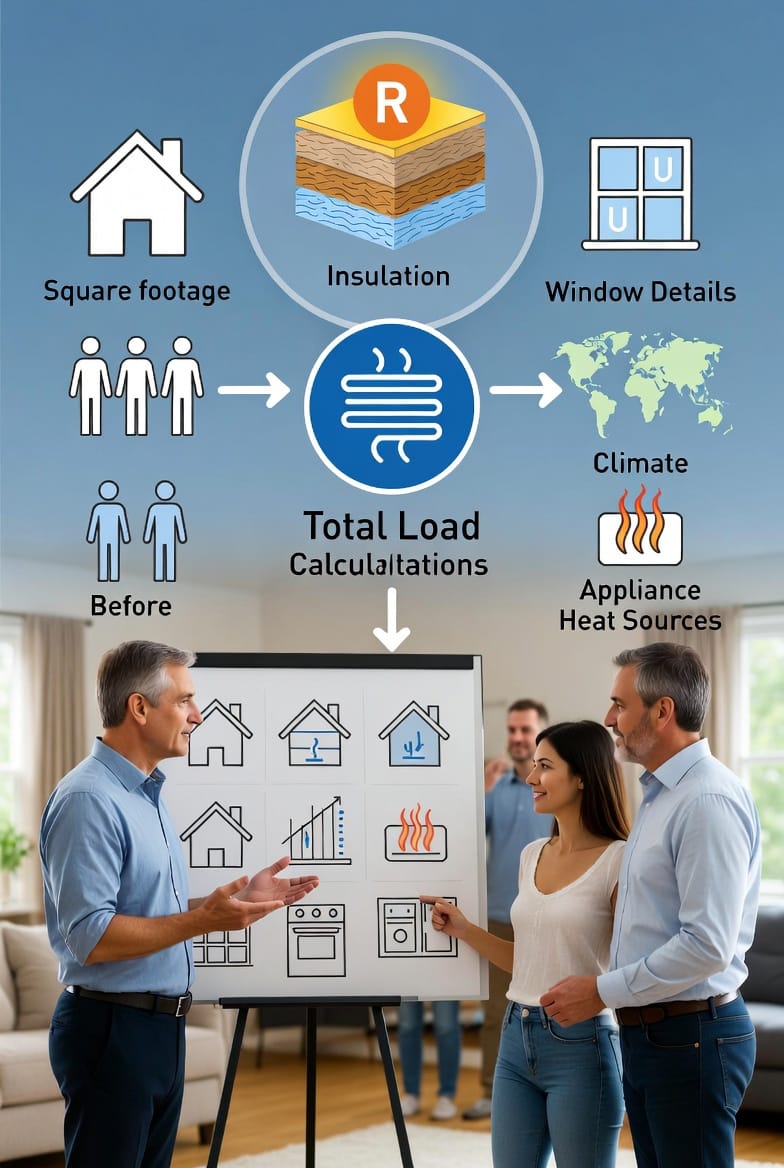
No two homes are identical, which is why a thorough Manual J load calculation examines multiple interconnected elements. Here are the primary factors professionals evaluate:
- Square footage and room layout: Larger spaces or open floor plans require more capacity, but room-specific needs vary based on usage and airflow paths.
- Insulation levels and quality: Well-insulated attics, walls, and floors reduce heat transfer; older or inadequate insulation increases load dramatically.
- Window types, quantity, and orientation: Double-pane low-E glass minimizes solar heat gain, while south-facing windows in sunny climates add significant cooling demands.
- Climate zone and local weather patterns: Extreme summer highs or harsh winter lows directly influence the required BTU output for year-round reliability.
- Occupancy and lifestyle: The number of residents, plus activities like cooking or entertaining, generate internal heat and moisture that must be accounted for.
- Appliances and lighting: Refrigerators, ovens, electronics, and even ceiling fans contribute to the overall heat load inside your home.
- Infiltration and ductwork efficiency: Air leaks around doors, windows, and poorly sealed ducts can add up to 30% more load if not properly addressed.
By meticulously analyzing these elements, the Manual J load calculation delivers a custom-sized recommendation tailored to your property. This level of detail ensures your HVAC system works in harmony with your home rather than fighting against it.
Why Efficiency Ratings Alone Can Mislead Homeowners
It is tempting to select an HVAC unit based purely on its SEER rating or energy-efficiency label. However, even the most efficient system will underperform if it is not sized correctly for your home. A high-efficiency unit that is too large or too small wastes its potential and drives up costs in unexpected ways.
Efficiency ratings measure performance under ideal laboratory conditions, not in your specific home environment. Without a Manual J load calculation, you risk installing equipment that cannot operate at its rated efficiency. Proper sizing ensures the system runs at optimal capacity for the right duration, maximizing both comfort and energy savings.
The Hidden Dangers of an Oversized HVAC System
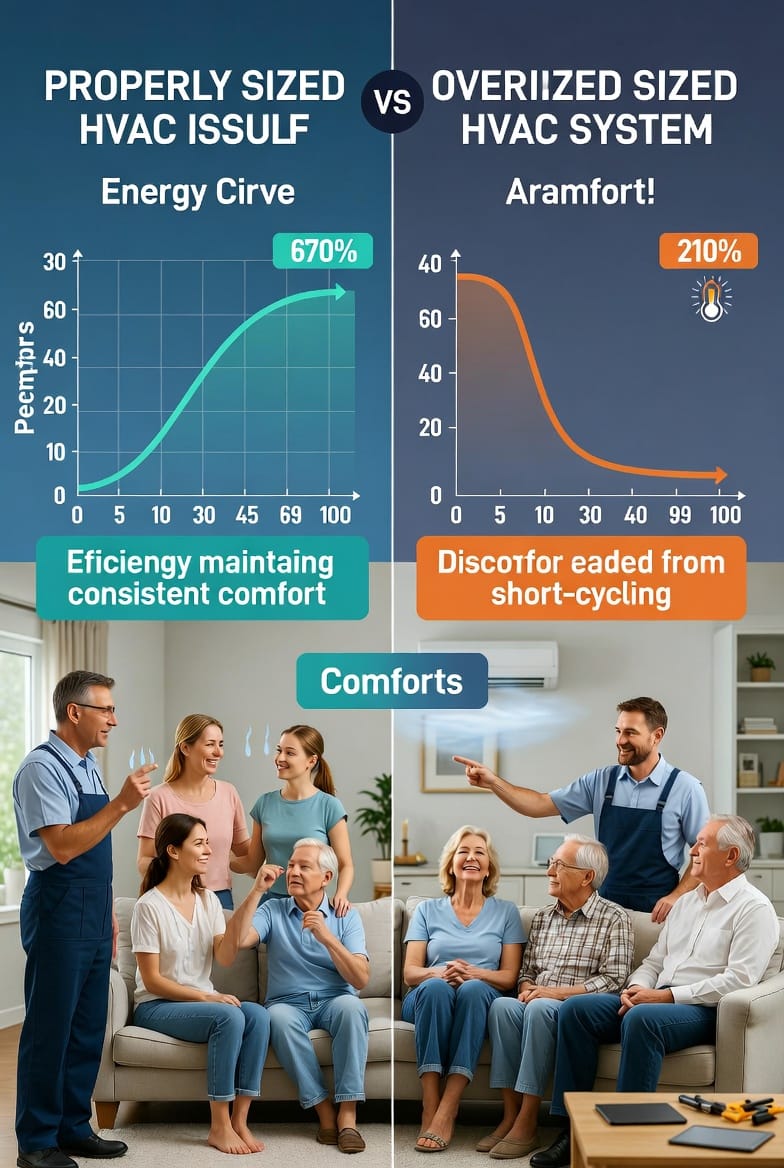
One of the most common—and costly—mistakes is installing an oversized system. While it may seem like extra capacity provides a safety margin, the reality is quite different. Oversized systems tend to short-cycle, turning on and off frequently rather than running steadily.
This rapid cycling prevents the system from effectively dehumidifying the air. In humid climates, short running times leave excess moisture in the home, leading to sticky discomfort, potential mold growth, and poor indoor air quality. Homeowners often notice uneven temperatures, with some rooms feeling chilly while others remain warm.
Additionally, frequent starts and stops place unnecessary stress on components, accelerating wear and increasing repair frequency. Energy consumption rises because the system never reaches peak efficiency during those brief operating periods. Rest assured, a correctly sized unit avoids these issues entirely, delivering smooth, quiet operation and consistent humidity control.
Why an Undersized System Can’t Keep Up
On the opposite end, an undersized system struggles to meet your home’s demands. It runs constantly yet never quite reaches the desired thermostat setting, especially during extreme weather. This nonstop operation drives up energy bills and shortens equipment lifespan due to continuous strain.
Comfort suffers as temperatures fluctuate and hot or cold spots persist. Families report feeling perpetually uncomfortable, with higher humidity levels compounding the problem. An undersized unit simply lacks the capacity to handle peak loads, leaving you reliant on supplemental heating or cooling that further inflates costs.
How Proper Sizing Delivers Superior Comfort and Efficiency
When your HVAC contractor performs a thorough Manual J load calculation, the benefits extend far beyond the numbers. A properly sized system maintains even temperatures throughout your home, effectively removes humidity for crisp, fresh air, and operates quietly at peak efficiency.
You enjoy lower monthly utility bills because the equipment runs for optimal durations rather than wasting energy on short cycles or endless operation. Equipment longevity improves dramatically, often adding years to the system’s service life and reducing the frequency of expensive repairs.
Moreover, proper sizing enhances indoor air quality by allowing integrated filtration and ventilation systems to function as designed. Homeowners consistently describe the difference as transformative—reliable comfort without the guesswork or compromises.
What a Professional Manual J Process Looks Like
Experienced HVAC professionals follow a structured approach to the Manual J load calculation. They begin with a detailed on-site assessment, measuring square footage room by room, evaluating insulation, documenting windows and doors, and noting occupancy patterns. Advanced software then processes this data alongside local climate information to generate precise load figures.
The technician reviews results with you, explaining recommendations and answering questions. This collaborative process ensures the final system design aligns perfectly with your lifestyle and budget. By choosing a contractor committed to this standard, you protect your investment and secure years of dependable performance.
Size Matters for Comfort and Efficiency
In the end, size matters far more than efficiency ratings when it comes to HVAC performance. The Manual J load calculation provides the essential foundation for a system that delivers reliable comfort, controls humidity effectively, and operates efficiently for the long term. Avoid the risks of short-cycling, constant running, or inadequate capacity by insisting on proper sizing from the beginning.
If you have questions about load calculations or want to ensure your next HVAC installation is done right. We are here to help you achieve the perfect balance of comfort and efficiency in your home.
Call Now for Expert Manual J Load Calculation