The Life Skills in Recovery: Building Independence and Confidence

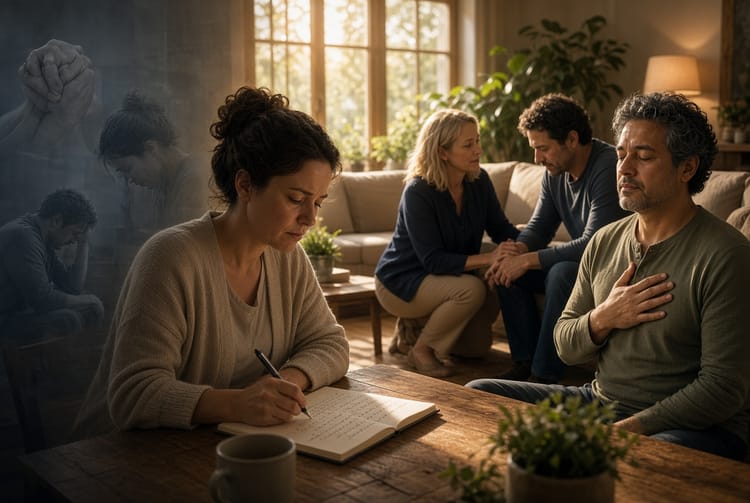
Recovery is not only the absence of substances. It is the presence of a workable, self-directed life. For many people entering treatment, years of active addiction have quietly dismantled everyday competencies that most adults take for granted. Bills go unpaid. Meals become irregular or nonexistent. Job applications feel overwhelming. Days lose shape. These gaps are not character flaws; they are predictable consequences of a brain and lifestyle organized around obtaining and using. Life skills training inside a professional treatment program directly addresses those gaps so that sobriety can be lived, not merely maintained.
Rebuild Confidence After Addiction – Call Now
The goal is straightforward and profound: to restore independence and to rebuild confidence through repeated, supported practice of practical abilities. When a person can plan a week of meals, stay within a modest budget, show up on time for an interview, and structure a day without chaos, the risk of returning to old patterns drops. Competence breeds self-respect. Self-respect supports continued recovery.
Why Life Skills Matter After Treatment
Addiction often occupies the space that ordinary adult functioning should occupy. Decision-making narrows. Future planning disappears. Basic self-care becomes inconsistent. When substances are removed, the person is left with both a newly clear mind and a set of unused or underdeveloped skills. Without those skills, early recovery can feel like standing in an empty house with no furniture and no map.
Independence is the first major benefit. A person who can shop for groceries, cook a simple nutritious meal, track income and expenses, and keep appointments does not need to rely on others for every daily function. That reduced dependence lowers stress and resentment—two common relapse triggers.
Confidence follows competence. Each completed task—paying a bill on time, preparing dinner, sending a résumé—provides evidence that change is possible. Over weeks these small proofs accumulate into a more stable self-image: “I can handle this.” That internal shift is more durable than motivational speeches.
Life skills also serve relapse prevention in concrete ways. Financial chaos creates desperation. Poor nutrition worsens mood and energy. Unemployment or underemployment isolates a person and removes structure. Disorganized time leaves long empty hours that old habits rush to fill. Teaching the opposite skills closes those doors.
Treatment programs that include structured life-skills components recognize that clinical work and practical work must travel together. Therapy addresses why a person used; life-skills training addresses how they will live once they stop.
Budgeting and Financial Management
Money trouble is nearly universal among people entering recovery. Savings may be gone. Credit may be damaged. Income may be irregular or absent. Many have never created a simple spending plan or distinguished needs from wants.
Effective programs begin with the basics: listing all sources of income, listing fixed and variable expenses, and creating a realistic weekly or monthly budget. Residents learn to track every purchase for a period of time so that spending patterns become visible rather than mysterious. They practice distinguishing essential costs (housing, food, transportation, treatment-related expenses) from discretionary ones. They learn the difference between a need and a craving disguised as a need.
Counselors and financial coaches often use simple tools—paper worksheets, basic spreadsheets, or budgeting apps—so the skill can travel home. Residents role-play conversations with landlords, utility companies, or family members about money. They learn how to prioritize debts and how to avoid high-interest traps that can quickly recreate crisis.
The emotional layer is equally important. Shame around past financial decisions is common. Programs address that shame directly so that a person can look at numbers without collapsing. When someone successfully stays within a small budget for two consecutive weeks, the feeling is not merely “I followed the rules.” It is “I am capable of managing my own life.” That feeling supports independence.
Cooking and Everyday Nutrition
Nutrition is frequently neglected during active addiction. Irregular eating, reliance on convenience food, and poor appetite regulation leave many people physically depleted when they arrive in treatment. Learning to cook is therefore both a health intervention and a life-skill intervention.
Programs typically start with accessible, low-cost meals that require few specialized tools. Residents learn food safety, basic knife skills, how to read a simple recipe, how to shop from a list, and how to store leftovers. Emphasis is placed on balanced plates—protein, vegetables, complex carbohydrates—because stable blood sugar and adequate nutrients support mood stability and sleep, both critical in early recovery.
Group cooking sessions serve multiple purposes. They teach the mechanical skills, they create opportunities for healthy social interaction, and they give residents a sense of contribution. Preparing a meal that others enjoy is a small but powerful experience of competence and generosity.
Many programs also address the practical realities of limited kitchens, limited budgets, and limited time. Residents practice cooking in the same kinds of spaces they will actually have after discharge. The result is not gourmet training; it is the ability to feed oneself reliably. That ability removes one more source of daily chaos and one more excuse to return to old coping methods.
Job Searching and Vocational Readiness
Employment provides structure, income, social connection, and a sense of purpose. Yet many people in recovery face gaps in work history, legal issues, or simply rusty job-search skills. Treatment programs that include vocational components treat job readiness as a core recovery task rather than an afterthought.
Typical training covers résumé writing that honestly accounts for time away from the workforce, cover-letter basics, online application platforms, and interview practice. Residents learn how to talk about recovery in professional settings when it is relevant and how to keep the focus on current reliability and skills. Mock interviews with feedback help reduce anxiety. Some programs offer connections to employers who understand recovery or to vocational rehabilitation services.
Time-management skills overlap here: showing up on time, following through on applications, and maintaining a weekly search schedule. Residents often create a simple job-search plan with measurable weekly targets so progress is visible.
Success in this area does not require landing a dream career immediately. It requires demonstrating that a person can present themselves, follow a process, and persist. Each completed application and each improved interview answer builds the same confidence that other life skills build.
Time Management and Daily Structure
Addiction thrives in unstructured time. Recovery requires the opposite: predictable routines that protect sleep, meals, appointments, self-care, and productive activity. Many people arriving in treatment have lost the habit of planning a day or a week.
Programs teach simple tools: written daily schedules, analog or digital calendars, priority lists, and the practice of estimating how long tasks actually take. Residents learn to build buffers so that one delay does not collapse the entire day. They practice saying no to last-minute demands that would derail priorities. They learn the difference between being busy and being effective.
Sleep hygiene, meal timing, and movement are folded into the same framework because a well-structured day supports physical recovery. Over time the external schedule becomes an internal sense of rhythm. That rhythm is one of the quietest but strongest protections against relapse.
How Quality Treatment Programs Teach These Skills
Effective life-skills programming is not a single lecture. It is repeated, hands-on practice inside a supportive structure. Most reputable programs combine several methods:
- Classroom-style workshops that introduce concepts and tools.
- Supervised practice in real environments (kitchen, computer lab, mock office).
- Individual coaching that tailors the skill to the person’s actual living situation after discharge.
- Peer learning, because watching someone else succeed at a task makes it feel more possible.
- Homework and accountability so the skill is used between sessions.
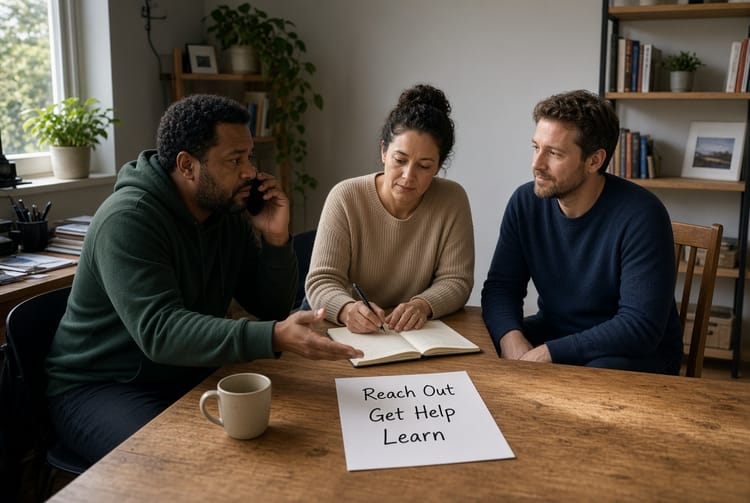
Staff members are typically a mix of clinicians, vocational specialists, and life-skills coordinators who understand both addiction and the practical realities of starting over. The tone is respectful rather than parental. Adults are treated as capable of learning, even if the material feels basic at first.
Programs also assess existing strengths. Some residents already cook well but cannot manage money. Others have work histories but have lost daily structure. Individualized plans prevent wasting time on skills that are already solid and focus effort where the gap is largest.
Progress is measured in observable behavior: a completed budget that is followed for two weeks, a week of planned meals actually prepared, a set number of job applications submitted, a daily schedule kept with reasonable consistency. These concrete markers give both staff and residents clear evidence that change is occurring.
From Skill to Independence to Confidence
The sequence is reliable. First a person learns a skill. Then they use it successfully enough times that it becomes reliable. Reliability produces independence—the ability to meet one’s own needs without constant external rescue. Independence produces confidence—the internal knowledge that one can handle ordinary adult life.
Confidence is not arrogance and it is not fragile positivity. It is the quiet recognition that “I have tools and I have used them.” That recognition changes how a person walks into a grocery store, a job interview, or a difficult conversation with family. It also changes how they respond when something goes wrong. A missed bill or a burned dinner becomes a problem to solve rather than proof that they are incapable.
Over months these experiences accumulate. The person who once felt helpless in the face of daily tasks begins to experience themselves as someone who can plan, execute, and adjust. That identity shift is one of the most powerful protections recovery can offer.
Challenges remain. Some skills take longer than others. Legal or medical issues can complicate employment. Family dynamics can interfere with financial independence. Quality programs prepare residents for these realities instead of pretending the path is linear. They teach problem-solving as its own life skill: identify the obstacle, list possible next steps, choose one, evaluate the result.
Sustaining the Skills After Discharge
The real test occurs after the structured environment of treatment ends. Programs that take life skills seriously therefore include discharge planning that continues the same themes: a written budget for the first 90 days, a simple meal plan and shopping list, a job-search calendar, and a daily/weekly schedule template. Alumni groups and outpatient follow-up often include check-ins on these practical areas, not only on sobriety.
The person who leaves treatment with both clinical tools and practical tools is simply better equipped. They have fewer reasons to feel overwhelmed and more evidence that they can manage what life presents.

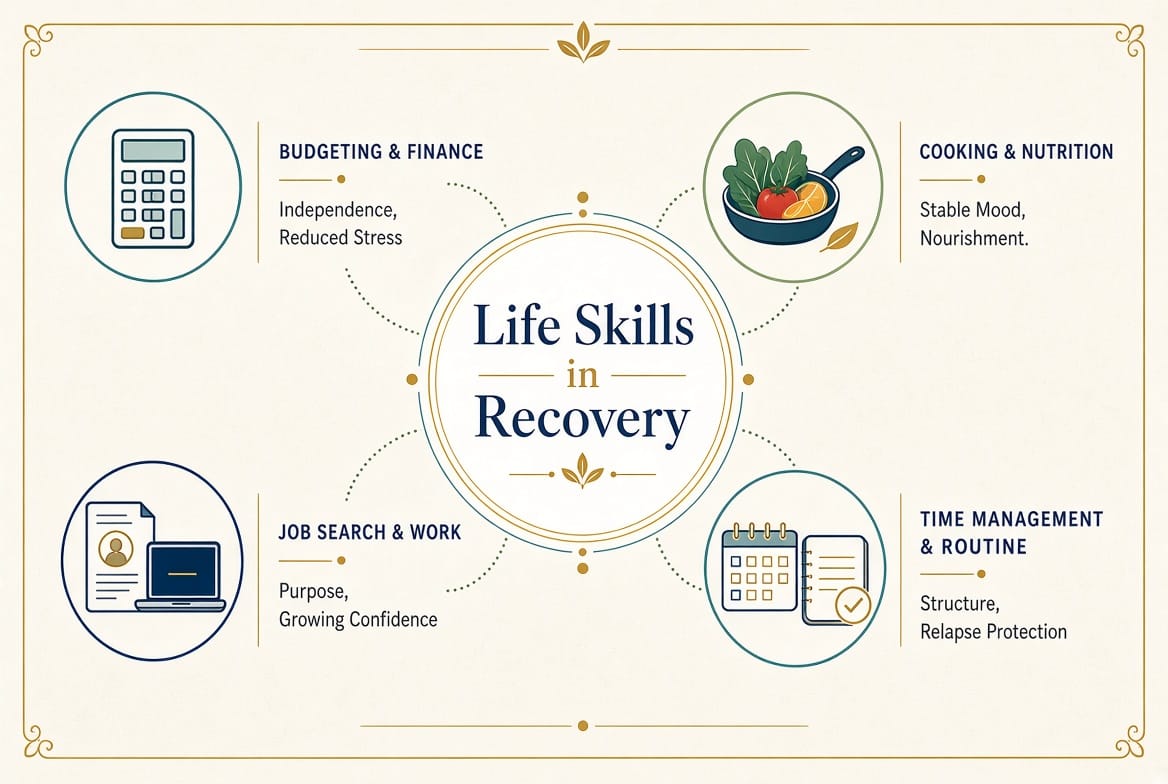
Recovery asks a person to become someone they have not been in a long time, or perhaps have never fully been: an adult who can meet their own needs with reasonable consistency. Life skills training is how that transformation becomes practical instead of purely inspirational. Budgeting restores financial breathing room. Cooking restores physical and emotional nourishment. Job searching restores purpose and resources. Time management restores predictability. Together they restore independence. Independence restores confidence. Confidence makes continued recovery more sustainable.
If you or someone you care about is ready to move beyond abstinence alone and begin building a life that works, structured life-skills support can make the difference between fragile early sobriety and durable change.
Start Building a Workable Life in Recovery – Call Now