The Leased Car Insurance Requirements: GAP, Higher Liability, and More

Leasing a car offers flexibility and access to newer vehicles without the long-term commitment of ownership. However, leased car insurance requirements come with specific obligations that differ significantly from standard auto policies. Understanding these mandates is essential to avoid costly penalties, lease breaches, or financial exposure.
Protect Your Leased Car with Proper Insurance – Call Now
In this comprehensive guide, we explore exactly what leasing companies demand, why these protections matter, and how to secure compliant coverage that safeguards both you and your lease agreement. Whether you're a first-time lessee or renewing your contract, this article provides clear, actionable insights to keep you protected and compliant.
Why Leasing Companies Impose Strict Insurance Rules
When you lease a vehicle, you're essentially borrowing it from the leasing company for a set period. They retain ownership and have a strong financial interest in protecting their asset. This leads to mandatory insurance requirements designed to minimize their risk in case of accidents, theft, or total loss.
Unlike owning a car outright, where you have more freedom in coverage choices, lessees must adhere to the lessor's guidelines outlined in the lease contract. Failing to comply can result in default, forced policy cancellations, or even early termination fees.
Key reason: The lessor wants assurance that the vehicle’s value is protected throughout the lease term. This includes covering repair costs, liability claims, and any shortfall if the car is declared a total loss.
Core Leased Car Insurance Requirements Explained
Most leasing companies enforce several non-negotiable coverage types. Here's a breakdown:
- Higher Liability Limits: Many lessors require $100,000 per person / $300,000 per accident in bodily injury liability, plus substantial property damage coverage. This exceeds minimum state requirements in most areas and protects against major claims that could involve the leasing company as the vehicle owner.
- Comprehensive and Collision Coverage: You must carry both with deductibles of $500 or lower. Comprehensive covers non-collision events like theft, vandalism, or weather damage. Collision handles accidents with other vehicles or objects.
- GAP Insurance (Guaranteed Asset Protection): Often mandatory, GAP insurance bridges the gap between your insurance payout and the remaining lease balance if the vehicle is totaled. Since leased cars depreciate quickly, you could otherwise owe thousands out-of-pocket.
These requirements ensure the lessor’s investment remains secure while giving you robust protection during your lease.
The Critical Role of GAP Insurance in Leases
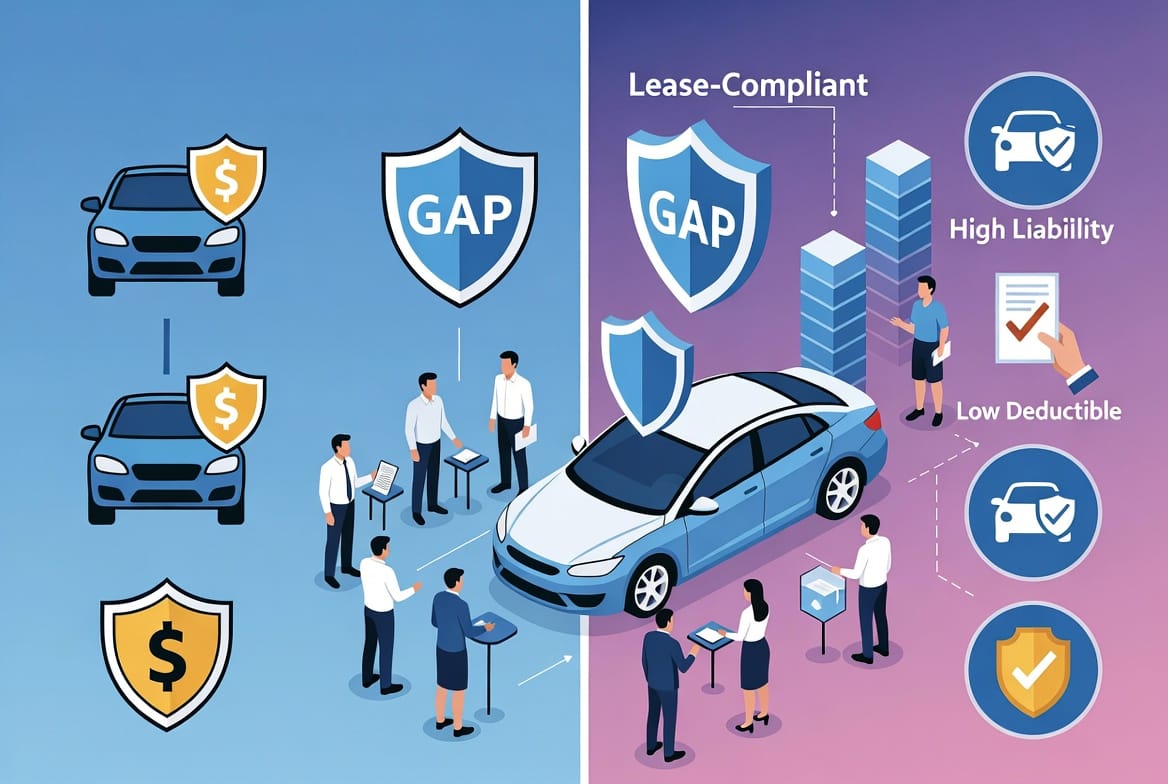
GAP insurance stands as one of the most important yet often overlooked requirements for lessees.
When a leased vehicle is totaled, your standard comprehensive or collision coverage pays only the actual cash value at the time of loss. Because lease payments are structured around the vehicle's depreciation schedule, this value is frequently lower than the outstanding lease balance.
GAP coverage pays the difference, preventing you from facing unexpected thousands in "negative equity." Many lessors bundle or require this protection upfront, but verifying its inclusion and limits remains your responsibility.
Benefits include:
- Elimination of out-of-pocket shortfall payments
- Faster claim resolution with lessor approval
- Maintained credit score by avoiding unpaid lease balances
Without proper GAP protection, a total loss could turn a manageable situation into a major financial setback.
Liability Coverage: Protecting Against Major Claims
Leasing companies typically demand elevated liability limits to shield themselves from lawsuits or claims where the vehicle is involved.
Standard state minimums might suffice for personal ownership, but lessees face stricter standards. $100k/$300k bodily injury liability is common, ensuring adequate coverage for medical expenses, legal fees, and property damage that could exceed basic policies.
Why higher limits matter:
- Leasing companies are often named as additional insured parties or loss payees
- Higher coverage reduces personal financial exposure in serious accidents
- Demonstrates responsibility to the lessor and insurance providers
Selecting the right liability package not only satisfies lease terms but also provides genuine peace of mind on busy roads.
Comprehensive and Collision: Low Deductibles Required
Comprehensive and collision coverage with maximum deductibles of $500 (often $250–$500) form another cornerstone of lease compliance.
These policies ensure the vehicle can be repaired or replaced without excessive out-of-pocket costs that might lead to missed lease payments. Low deductibles encourage prompt claims and maintain the car's condition, which is vital at lease-end for avoiding excess wear-and-tear charges.
Pro tips for compliance:
- Shop for policies that match or beat the lease-specified deductibles
- Confirm the leasing company is listed as the loss payee on declarations pages
- Review policy documents carefully before signing
Maintaining these coverages throughout the lease term avoids violations that could trigger immediate contract issues.
Additional Common Lease Insurance Mandates
Beyond core requirements, lessors may stipulate:
- Lessor named as additional insured and loss payee
- No lapses in coverage – continuous proof required
- Rental reimbursement coverage for downtime after covered losses
- Personal property exclusions or limits for items inside the vehicle
Reviewing your specific lease agreement early helps identify all obligations. Many lessees discover hidden requirements only after an incident occurs.
Comparing Lease Insurance vs. Standard Auto Policies
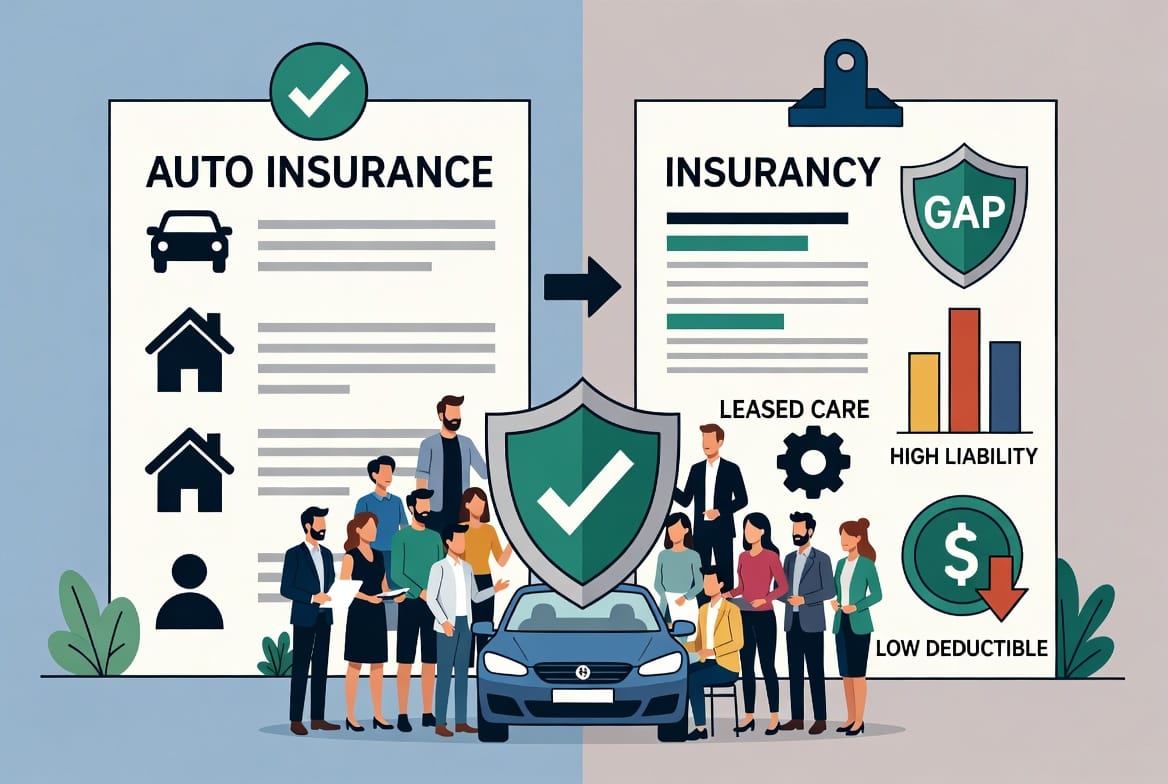
Lease-mandated coverage typically exceeds personal auto policies in several ways. Standard policies prioritize minimum legal compliance, while lease requirements emphasize asset protection for the financing company.
Lease policies often feature:
- Stricter liability minimums
- Mandatory full coverage (comprehensive + collision)
- GAP as standard rather than optional
- Specific endorsement requirements for the lessor
This structured approach ultimately benefits the driver by providing broader protection during the lease period, reducing surprise expenses and ensuring smoother end-of-lease transitions.
Common Pitfalls to Avoid with Leased Car Insurance
Even diligent drivers encounter issues. Here are frequent mistakes:
- Assuming state minimum coverage meets lease standards
- Allowing policy lapses during renewal periods
- Failing to update the lessor with proof of insurance promptly
- Overlooking GAP needs when the lessor doesn't explicitly bundle it
- Choosing high deductibles to save on premiums
Proactive management prevents these problems. Regular policy reviews and open communication with both your insurer and leasing company maintain full compliance.
How to Secure Lease-Compliant Coverage Efficiently
Finding the right policy doesn't have to be complicated. Work with insurance professionals experienced in lease requirements who can tailor coverage precisely to your contract.
Steps to success:
- Share your lease agreement details with your agent
- Request quotes that explicitly meet or exceed all lessor demands
- Verify all endorsements and named insured status
- Maintain organized records of declarations pages and payment proofs
- Schedule annual reviews before renewal dates
Expert guidance ensures you receive competitive rates while staying fully protected.
The Long-Term Benefits of Proper Lease Insurance
Compliant coverage does more than satisfy contractual obligations. It protects your finances, preserves your credit, and provides confidence throughout your leasing experience.
By addressing GAP insurance, higher liability limits, low deductibles, and other mandates, you minimize risks and position yourself for a positive lease-end inspection and return process.
Responsible protection today leads to greater flexibility and savings tomorrow.
Final Recommendations and Next Steps
Don't breach your lease contract. Understanding and fulfilling leased car insurance requirements is fundamental to a stress-free leasing journey. From GAP coverage that eliminates financial gaps to robust liability protection and carefully selected deductibles, proper insurance delivers security and compliance.
For personalized assistance with lease-compliant coverage options tailored to your specific vehicle and contract, reach out to experienced professionals who understand these unique needs.
Protect your leased vehicle investment with confidence. The right coverage ensures you enjoy the benefits of leasing while staying fully safeguarded against unexpected events.
Lease Insurance Experts Ready to Help – Call Today