The Leak Detection Technology: Acoustic Sensors and Thermal Imaging for Finding Hidden Leaks
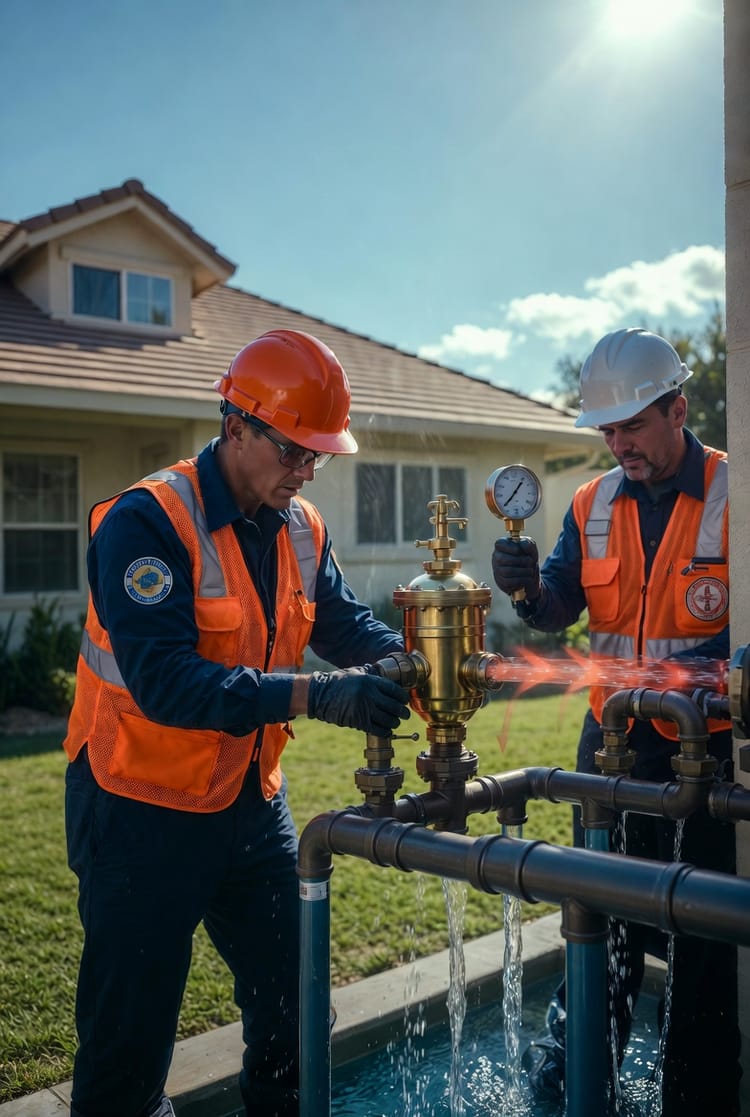
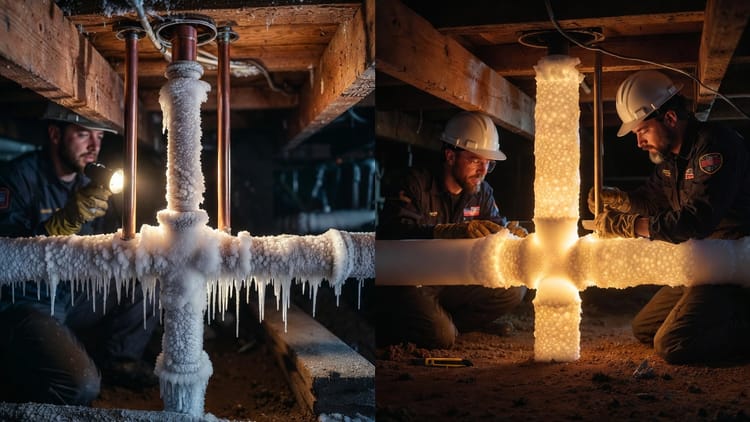
Hidden water leaks can silently wreak havoc behind walls, under floors, and above ceilings, leading to costly repairs if left undetected. Homeowners and property managers often face skyrocketing water bills, mysterious damp spots, or even structural damage without any visible signs. Fortunately, leak detection technology has evolved dramatically, offering precise, non-invasive solutions that protect your property while saving time and money.
Stop Hidden Water Damage Today – Call for Expert Leak Detection
At the forefront of these advancements are acoustic sensors and thermal imaging, two powerful tools that allow experts to pinpoint leaks with remarkable accuracy. These methods eliminate the need for destructive exploration, giving you peace of mind that your plumbing system is secure. Whether you’re dealing with a suspected slab leak, a wall pipe issue, or an underground line problem, modern leak detection technology delivers fast, reliable results. In this comprehensive guide, we explore how these innovations work, their benefits, and why they represent the gold standard for today’s plumbing challenges.
The Hidden Dangers of Undetected Leaks
Every year, undetected leaks cause billions in property damage across the United States. Water slowly seeps into building materials, fostering mold growth, weakening foundations, and inflating utility costs. Risks extend beyond finances—prolonged moisture can compromise indoor air quality and even pose health concerns for your family.
Common warning signs include:
- Unexplained spikes in your water bill
- Musty odors or visible mold patches
- Soft spots in flooring or bulging drywall
- Reduced water pressure in specific fixtures
- Warm or cool areas on walls during extreme weather
Ignoring these signals often leads to emergency repairs that disrupt daily life. That’s why proactive leak detection technology matters. By identifying issues early, you avoid escalation and preserve the integrity of your home.
Why Traditional Methods Fall Short
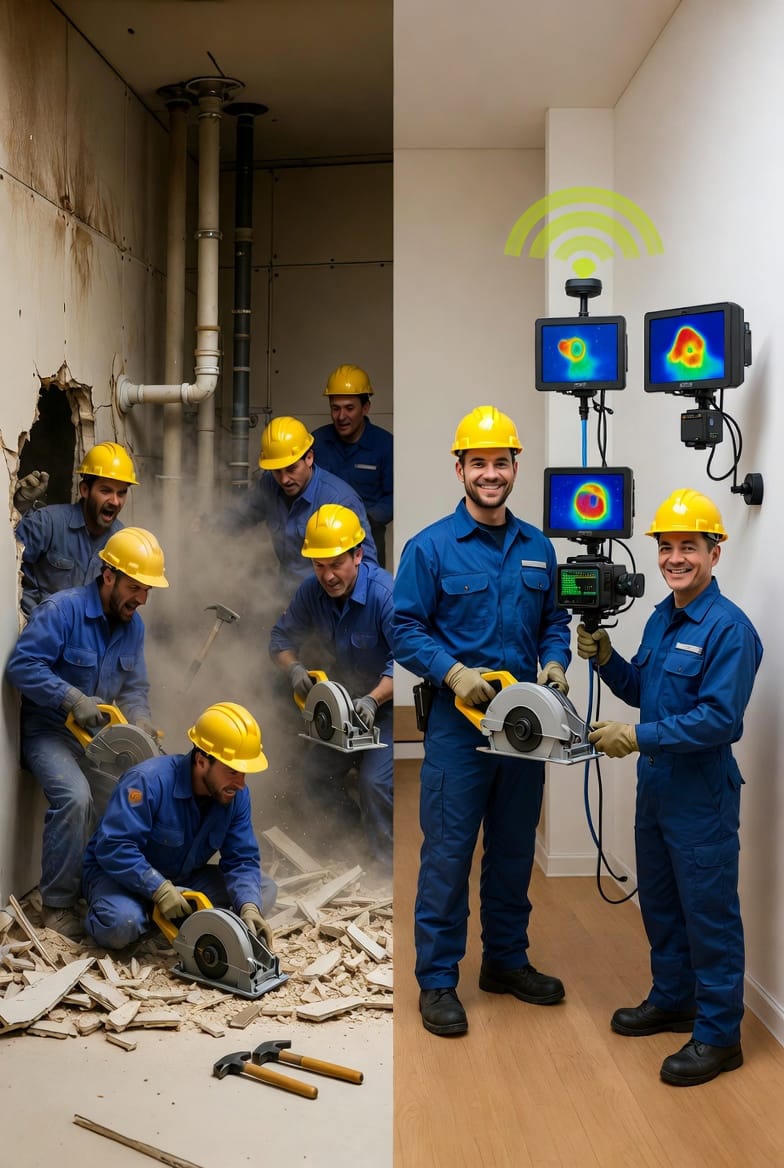
For decades, plumbers relied on guesswork and demolition—cutting into walls, tearing up flooring, or excavating yards to chase leaks. These invasive approaches were time-consuming, expensive, and often inconclusive. Drywall repair, painting, and restoration added thousands to the final invoice, while homeowners endured days or weeks of chaos.
Today’s acoustic sensors and thermal imaging change everything. They provide pinpoint accuracy without a hammer or saw, allowing repairs to focus only on the exact problem area. This shift represents a major leap forward in plumbing service efficiency and customer satisfaction.
Acoustic Sensors: Listening for the Unseen
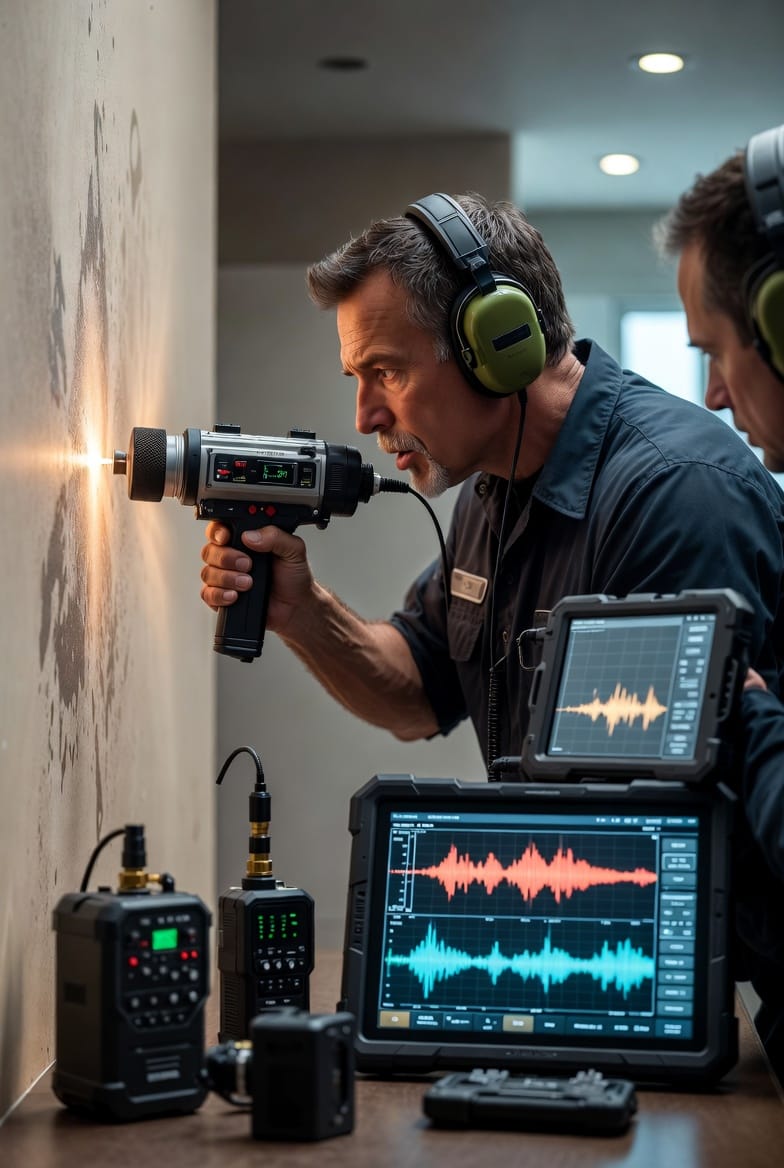
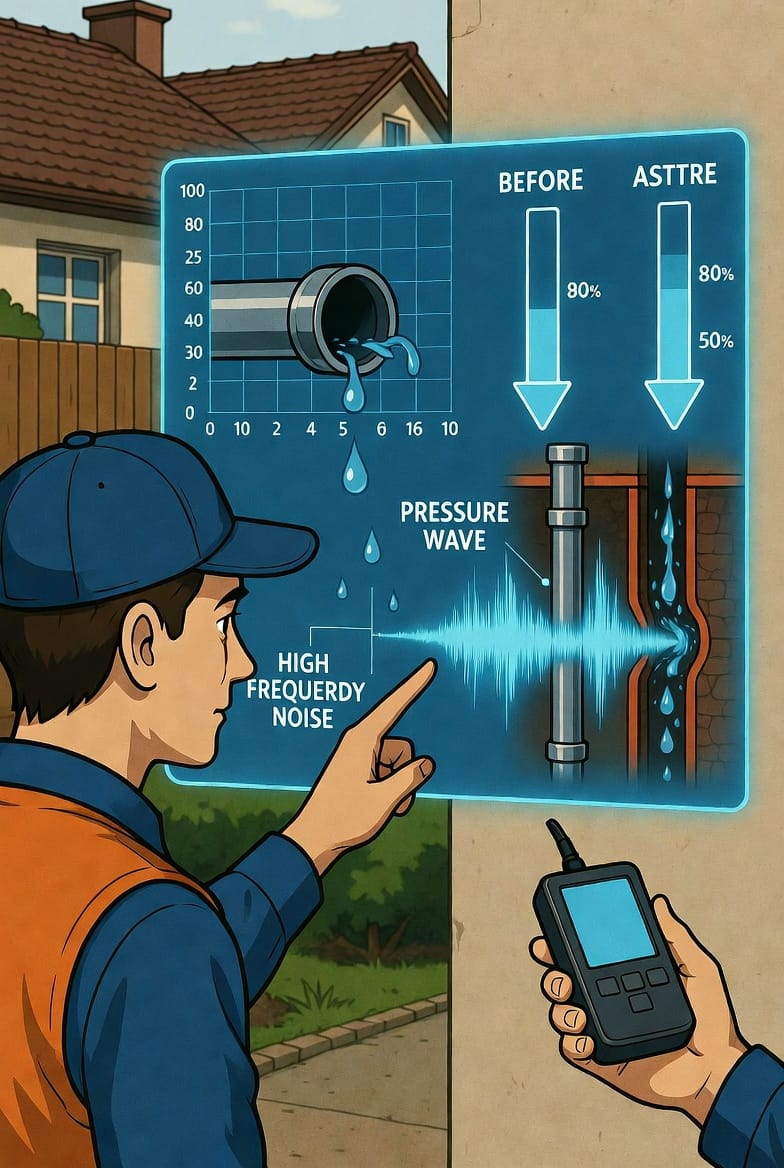
Acoustic leak detection operates on a simple yet brilliant principle: water escaping under pressure creates unique acoustic signatures. Specialized microphones and sensors capture these high-frequency sounds—often inaudible to the human ear—traveling through pipes, soil, or building materials.
Here’s how the process unfolds:
- Technicians attach sensitive acoustic sensors to accessible points like valves, faucets, or exposed pipes.
- The devices amplify and filter sounds, distinguishing leak noise from everyday household sounds such as traffic or appliances.
- Advanced correlators measure the time delay between sensors placed at different locations, calculating the exact leak position through triangulation.
- Real-time data appears on digital displays, guiding technicians to within inches of the problem.
This technology excels in pressurized systems, where even tiny pinhole leaks produce consistent vibrations. Whether the pipe runs through concrete slabs or behind finished walls, acoustic sensors deliver results without disruption.
Professionals train extensively to interpret these signals, ensuring false positives are virtually eliminated. The result? Faster diagnosis, minimal mess, and confidence that the repair will last. Homeowners appreciate the quiet, respectful approach that respects their living space.
Thermal Imaging: Seeing the Invisible Moisture
While acoustic sensors listen for leaks, thermal imaging reveals them visually through temperature differences. Infrared cameras detect subtle variations caused by evaporating water or moisture saturation. A leaking pipe cools surrounding materials as water escapes and evaporates, creating detectable cold spots—even through drywall or flooring.
The process is straightforward yet sophisticated:
- A certified technician scans walls, ceilings, and floors with a high-resolution thermal camera.
- The device translates infrared radiation into a color-coded image where blues and greens indicate cooler, wetter areas.
- Technicians cross-reference thermal anomalies with building plans to trace the source.
- In some cases, active leaks produce warmer zones if hot water is involved, providing additional confirmation.
Thermal imaging for leaks shines in hard-to-reach areas like under tile, behind mirrors, or in multi-story buildings. It also identifies secondary damage, such as moisture trapped in insulation before mold becomes visible.
Combining speed with accuracy, this method allows comprehensive whole-home assessments in hours rather than days. You receive clear visual evidence of the issue, empowering informed decisions about repairs.
The Power of Combining Acoustic and Thermal Technologies
The true strength of modern leak detection technology emerges when acoustic sensors and thermal imaging work together. Acoustic tools confirm active water movement, while thermal cameras map the full extent of moisture migration. This dual approach eliminates guesswork and delivers comprehensive results.
Technicians often begin with thermal scans to identify suspect zones, then deploy acoustic sensors for precise pinpointing. The synergy reduces diagnostic time by up to 70 percent compared with traditional methods and ensures no secondary leaks are overlooked.
Benefits of Modern Non-Destructive Leak Detection
Choosing acoustic sensors and thermal imaging delivers numerous advantages:
- Zero structural damage—no unnecessary holes or demolition
- Significant cost savings on repairs and restoration
- Rapid response—most detections completed in a single visit
- Environmental protection by minimizing water waste
- Peace of mind through documented proof of the leak location
- Long-term prevention by addressing root causes efficiently
These methods are ideal for residential homes, commercial buildings, and multi-unit properties alike.
When to Call the Experts
If you notice any signs of hidden water loss, don’t wait. Professional leak detection technology is your first line of defense. Early intervention prevents minor issues from becoming major headaches.
Conclusion
Modern leak detection technology using acoustic sensors and thermal imaging has transformed how plumbing professionals locate and resolve hidden leaks. These non-destructive methods offer unmatched accuracy, speed, and respect for your property. You no longer need to accept uncertainty or tolerate invasive repairs.
Find hidden leaks without destroying walls. Contact our expert team today to learn more about acoustic leak detection and thermal imaging services.
Protect Your Home from Hidden Leaks – Call Today