The Knob-and-Tube Wiring Identification: What It Looks Like, Why It's Dangerous, and Replacement Options
If your home was built before 1950, there’s a good chance it still contains knob-and-tube wiring — a system that was once state-of-the-art but is now one of the most common hidden electrical hazards in older properties. Homeowners across the country discover this during renovations, insurance inspections, or when flickering lights and warm outlets raise concerns.
Stop Knob-and-Tube Dangers – Schedule Your Inspection
The reassuring news? Knob-and-tube wiring can be safely identified and professionally replaced. With the right expertise, you can protect your family, increase your home’s value, and enjoy modern electrical reliability without disruption.
In this comprehensive guide, we’ll walk you through exactly what knob-and-tube wiring looks like, the very real fire risks it presents, and the proven replacement strategies that thousands of homeowners have successfully used.
What Knob-and-Tube Wiring Actually Looks Like
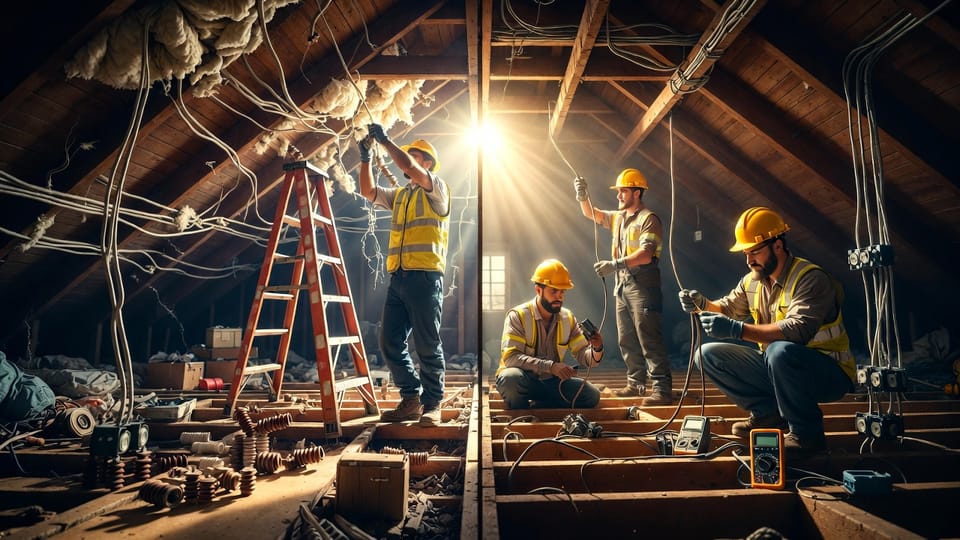
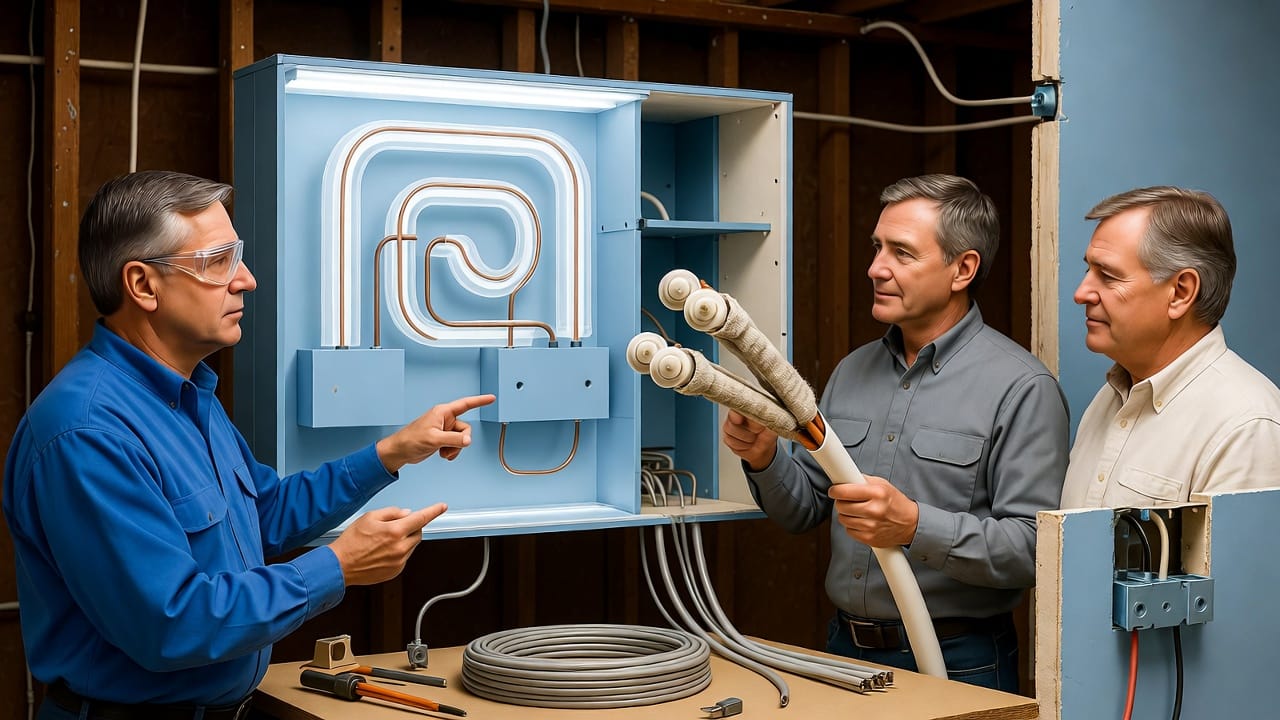
Knob-and-tube wiring is instantly recognizable once you know what to look for. Unlike today’s plastic-sheathed cables hidden inside walls, this early 20th-century system was installed openly along joists and studs.
Key visual identifiers include:
- Porcelain knobs — Small white or off-white ceramic insulators nailed to wooden framing that hold the wires away from surfaces.
- Porcelain tubes — Short ceramic sleeves that protect wires where they pass through studs or joists.
- Cloth insulation — Braided fabric wrapping (often black, white, or weathered gray) that covers the copper conductors.
- Open, exposed runs — Wires strung like clotheslines between knobs, never bundled inside conduit or sheathing.
- Single conductors — Separate hot and neutral wires rather than the paired, sheathed cables used today.
You’ll most often find knob-and-tube wiring in attics, basements, and crawl spaces of homes built between 1880 and 1940. In finished areas, it may be hidden behind walls, but small sections are sometimes visible in unfinished closets or near original light fixtures.
Pro tip: If you see porcelain knobs or cloth-wrapped wires during a home inspection or DIY project, stop and call a licensed electrician immediately. Never attempt to work on or around this wiring yourself.
Why Knob-and-Tube Wiring Is Considered Dangerous Today
While knob-and-tube wiring functioned adequately in its era, modern homes demand far more from electrical systems. Here’s why this vintage wiring now presents serious risks:
1. Complete Lack of Grounding
Modern circuits include a dedicated ground wire that safely redirects fault current. Knob-and-tube systems have no ground. This means:
- Appliances and fixtures lack protection against shocks
- Surge protection is limited
- GFCI and AFCI breakers cannot function properly
2. Deteriorating Insulation
The cloth insulation becomes brittle and cracks over decades. When it flakes away, live conductors can touch wood framing, metal pipes, or each other — creating direct paths for electrical arcing and fire.
3. Inability to Handle Modern Loads
Knob-and-tube wiring was designed for 30-amp services and low-power devices. Today’s homes run air conditioners, EV chargers, microwaves, and multiple electronics simultaneously. Overloaded circuits generate dangerous heat.
4. Improper Modifications
Well-meaning previous owners or handymen often splice, twist, or tape knob-and-tube wiring using modern materials. These “fixes” create high-resistance connections that overheat and become fire starters.
Bold reality: Homes with knob-and-tube wiring are up to three times more likely to experience electrical fires than homes with modern wiring, according to long-term insurance industry data.
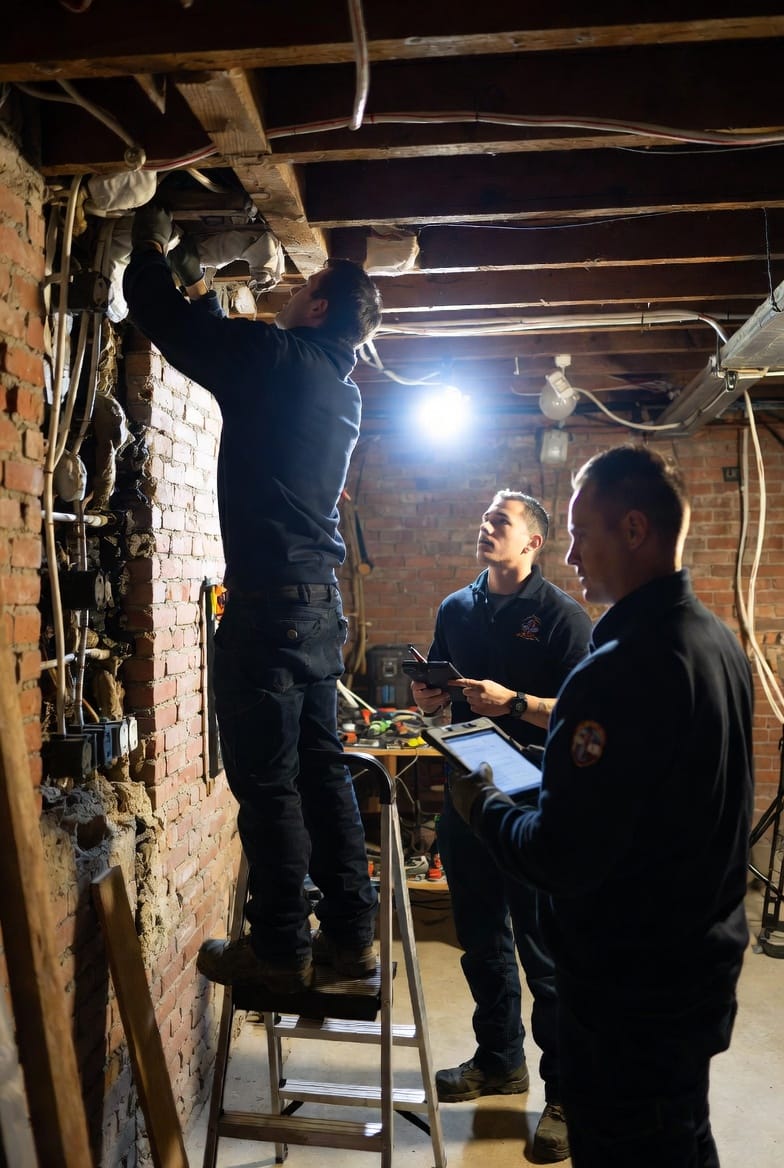
Clear Signs Your Home Has Knob-and-Tube Wiring
Look for these common indicators:
- Fuses instead of circuit breakers in your electrical panel
- Cloth-wrapped wires visible in attics or basements
- Porcelain insulators nailed to framing members
- Warm or discolored outlets and switch plates
- Frequent tripped fuses or flickering lights under load
- Insurance company requesting an electrical inspection
If several of these signs are present, professional evaluation is essential.
Smart Replacement Strategies That Work
Replacing knob-and-tube wiring is a major project, but the long-term benefits far outweigh the investment. Here are the proven approaches:
Full Home Rewiring (Recommended for Most Homes)
- Complete removal of all old wiring
- Installation of modern 200-amp service with grounded circuits
- Addition of AFCI and GFCI protection throughout
- Opportunity to add USB outlets, smart home wiring, and future-proof capacity
Targeted Upgrades
- Replace only the most dangerous sections (attic, kitchen, bathroom)
- Install new circuits for high-load appliances
- Maintain functional original wiring in low-use areas (temporary solution only)
The Professional Replacement Process
- Thorough Inspection — Detailed evaluation of every accessible wire
- Load Calculation — Determine your home’s current and future electrical needs
- Permitting — All work meets current National Electrical Code standards
- Systematic Removal — Old wiring is carefully extracted
- New Installation — Modern NM-B cable, metal or plastic boxes, and quality devices
- Testing & Certification — Full system verification and documentation
Most full rewiring projects take 3–7 days depending on home size, with minimal disruption when handled by experienced crews who use dust containment and protective floor coverings.
The Benefits of Upgrading Today
Homeowners who replace knob-and-tube wiring consistently report:
- Dramatically improved safety for family and pets
- Lower insurance premiums (many carriers offer discounts)
- Increased home resale value — often $5,000–$15,000 more
- Better energy efficiency and fewer power quality issues
- Peace of mind knowing your electrical system is no longer a hidden threat
Frequently Asked Questions
How much does knob-and-tube replacement cost?
Costs typically range from $8,000–$25,000 for an average home, depending on size, accessibility, and scope. We provide free, no-obligation estimates.
Can I live in the house during replacement?
Yes. Professional teams schedule work room-by-room and use excellent dust control.
Will my insurance company require replacement?
Many insurers now require knob-and-tube removal or will only provide limited coverage until the system is upgraded.
How long does modern wiring last?
Properly installed NM-B cable and related components are designed to last 50+ years with minimal maintenance.
Take Action Before a Small Issue Becomes a Major Problem
Knob-and-tube wiring is a known hazard. The longer it remains in your home, the greater the risk to your property and loved ones.
Don’t wait for flickering lights, tripped fuses, or worse — an electrical fire.
Our experienced electricians have successfully upgraded hundreds of older homes, giving families modern safety and reliability while preserving the character of their historic properties.
Your home deserves the safest electrical system available. Let us help you achieve it — confidently and completely.
Expert Knob-and-Tube Replacement Starts Here – Call Now