The Jewelry Floater: Scheduled vs. Blanket Coverage Explained

Your jewelry tells your story. Whether it’s the engagement ring that marked your forever, a family heirloom passed through generations, or a special piece you splurged on for a milestone, these items carry both emotional and financial value. Yet many homeowners are surprised to learn that standard homeowners insurance provides only limited protection for valuables. A jewelry floater changes that. It extends your policy with dedicated coverage tailored specifically for jewelry.
Protect Your Jewelry Today – Call Now!
In this comprehensive guide, we compare the two primary coverage options under a jewelry floater: scheduled coverage and blanket coverage. You’ll discover exactly how each works, their distinct advantages, potential drawbacks, and how to decide which approach best protects your collection. With the right choice, you gain peace of mind knowing your treasures are truly safeguarded.
What Is a Jewelry Floater and Why Do You Need One?
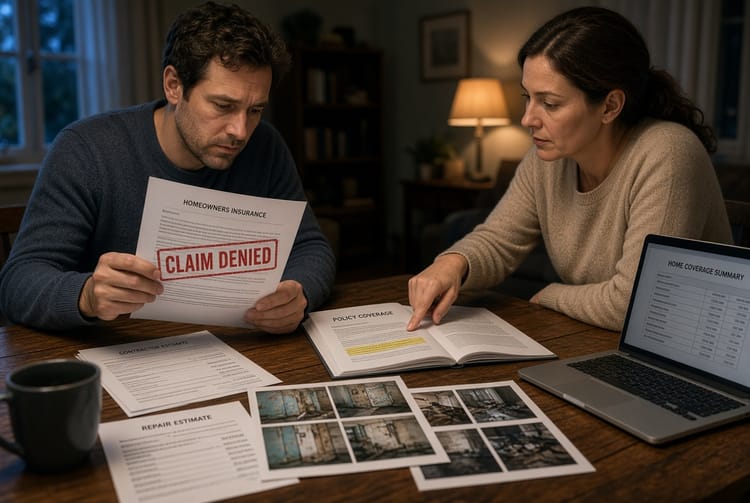
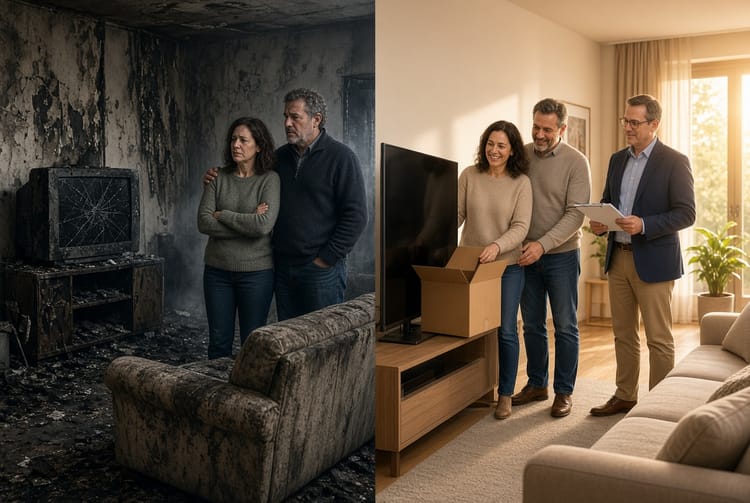
A jewelry floater is an optional endorsement added to your homeowners or renters insurance policy. It removes the typical low limits that apply to jewelry under basic personal property coverage and provides broader, all-risk protection against loss, theft, damage, or mysterious disappearance – anywhere in the world.
Without a floater, you might recover only a fraction of an item’s worth after a claim. With one, you select the coverage type that matches your lifestyle and collection size. Both scheduled and blanket options deliver superior protection, but they differ significantly in structure, cost, and claims experience. Understanding these differences empowers you to make a confident, informed decision.
Scheduled Coverage: Item-by-Item Protection at Its Finest
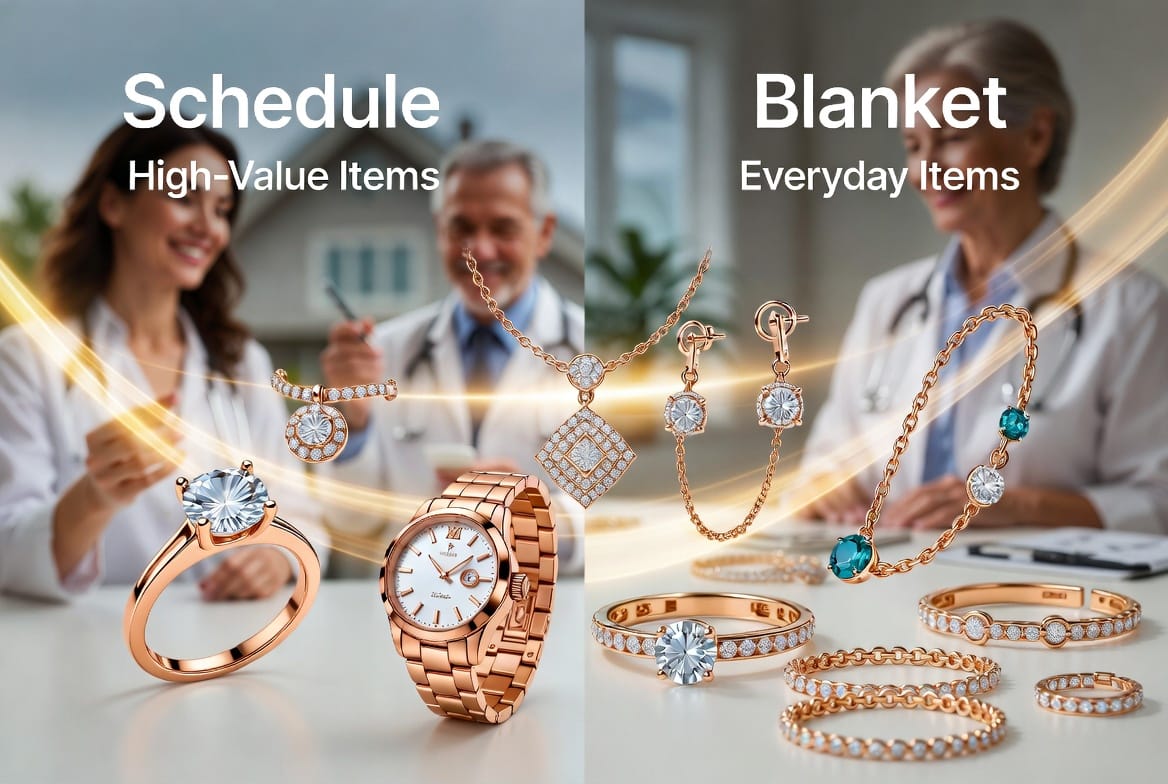
Scheduled coverage lists every piece of jewelry individually on your policy. Each item receives its own coverage limit based on a professional appraisal.
Here’s how it works in practice:
- You submit a current appraisal for each piece (usually required for items valued over $1,000–$5,000, depending on your insurer).
- The insurer adds the item to a schedule with a specific limit equal to or slightly above the appraised value.
- Premiums are calculated per item, reflecting its unique risk and value.
Key benefits of scheduled coverage include:
- Full replacement value – You recover the exact appraised amount without depreciation.
- Easier claims process – Proof of value is already documented, reducing disputes.
- Higher limits – Ideal for high-value, one-of-a-kind, or sentimental pieces.
- Worldwide protection – Coverage travels with you on vacations or business trips.
This approach shines for engagement rings, heirloom necklaces, vintage watches, or custom-designed jewelry. Because each piece stands alone, you avoid the risk of one expensive item consuming the entire coverage pool.
Of course, scheduled coverage also comes with considerations:
- Upfront effort – Appraisals must be obtained and updated every few years as values fluctuate.
- Higher premiums – Individual limits naturally increase cost compared with blanket options.
- Maintenance – New purchases or value increases require policy updates.
Despite these points, most experts view scheduled coverage as the gold standard for serious collectors or those with significant investment pieces. It delivers precision protection that matches your actual risk.
Blanket Coverage: Simple, Flexible Protection for Your Entire Collection
Blanket coverage takes a different approach. Instead of itemizing, it provides a single overall limit that applies to all your jewelry combined – no individual appraisals required.
The process is straightforward:
- You estimate the total value of your jewelry collection.
- The insurer sets one blanket limit (for example, $10,000 or $25,000) that covers everything.
- You pay a single premium for the entire limit.
- In the event of a claim, you provide proof of ownership and value at the time of loss.
Advantages of blanket coverage make it especially appealing:
- Simplicity – No lengthy appraisal process or item-by-item paperwork.
- Lower cost – Premiums are typically more affordable.
- Flexibility – Easily covers growing collections or lower-value everyday pieces.
- Quick setup – Ideal for busy homeowners who want immediate added protection.
Blanket coverage works well for everyday earrings, fashion jewelry, or collections where no single piece exceeds 20–30% of the total limit. It offers reassuring protection without complexity.
Yet blanket coverage has limitations you should weigh carefully:
- Shared limit – One high-value loss could exhaust most or all of the available coverage.
- Proof burden – You must document value after a loss, which can complicate claims.
- Potential gaps – Insurers may apply sub-limits or require additional evidence for expensive items.
When your collection consists mainly of moderate-value pieces, blanket coverage provides efficient, cost-effective security that still far exceeds standard homeowners limits.
Side-by-Side Comparison: Scheduled vs. Blanket Coverage
Choosing between the two options becomes clearer when you see them contrasted directly:
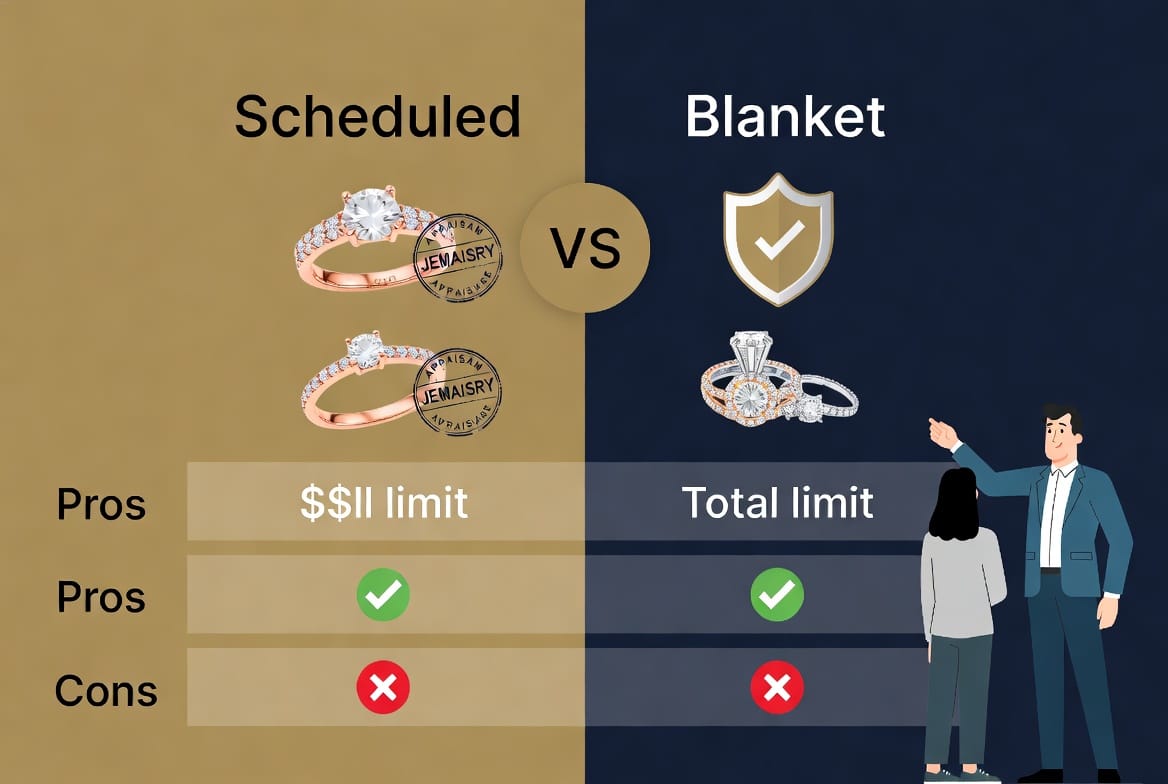
- Appraisal Requirement: Scheduled needs professional appraisals for each item; blanket requires none.
- Coverage Structure: Scheduled assigns individual limits; blanket uses one total limit.
- Claims Experience: Scheduled offers faster, smoother payouts with pre-documented values; blanket may require more post-loss documentation.
- Cost: Scheduled usually carries higher premiums; blanket tends to be more budget-friendly.
- Best For: Scheduled suits high-value, unique, or sentimental jewelry; blanket fits everyday or diversified collections.
- Risk Level: Scheduled minimizes underinsurance risk; blanket may leave gaps if one piece dominates the value.
Both types deliver the core benefit of a jewelry floater – superior protection beyond standard policy limits. The decision ultimately hinges on your collection’s composition and your peace-of-mind priorities.
Choosing the Right Coverage: Practical Guidance for Homeowners
Consider your jewelry inventory honestly. If you own several pieces valued over $5,000 each – think engagement rings, diamond tennis bracelets, or inherited gold – scheduled coverage offers the reassurance you deserve. The individual limits and pre-agreed values eliminate guesswork during claims.
Conversely, if your collection totals a moderate amount and consists of many smaller items, blanket coverage delivers practical protection without unnecessary expense or paperwork. Many homeowners successfully combine both: schedule the most valuable pieces and blanket the rest for optimal balance.
A common pitfall is relying solely on basic homeowners coverage. The typical policy caps jewelry recovery at $1,500–$5,000 total – often far below replacement cost. A floater closes that gap, whether you choose scheduled precision or blanket simplicity.
Real-World Scenarios That Illustrate the Difference
Imagine a homeowner named Michael whose wife’s custom engagement ring – appraised at $12,000 – is stolen during a trip. With scheduled coverage, the claim pays the full $12,000 quickly because the value was already documented. He replaces the ring exactly and moves forward with minimal stress.
Now picture Emily, whose collection of everyday gold chains, earrings, and watches totals $18,000. A house fire damages several pieces. Under blanket coverage, she receives up to the full limit after providing receipts and photos. The process remains straightforward, and she restores her collection without financial strain.
These examples highlight a reassuring truth: both options solve real insurance challenges. The key is aligning the coverage type with your specific needs.
Additional Tips to Maximize Your Jewelry Floater
- Schedule regular appraisals every 3–5 years to keep values current.
- Photograph and document every piece, storing records securely off-site or in the cloud.
- Review your policy annually when renewing homeowners insurance.
- Ask your agent about pairing the floater with other riders for watches or fine art.
- Understand any deductibles or exclusions before signing.
By taking these proactive steps, you transform potential risk into confident protection.
Protect Your Precious Jewelry Properly
Your jewelry deserves more than hope and a standard policy. Whether you select scheduled coverage for precise, high-value protection or blanket coverage for simple, affordable security, a jewelry floater ensures what matters most remains safe.
Take the next step today. Protect your precious jewelry properly. Let our team help you build the exact coverage your collection deserves.
Don’t Risk Your Valuables – Call for Proper Protection