The Interpersonal Skills: Rebuilding Relationships in Recovery

Addiction does more than alter brain chemistry or daily habits. It systematically erodes the very foundation of human connection. Trust fractures. Conversations become minefields. Family dinners turn silent. Friendships fade under the weight of broken promises and unexplained absences. For many people in recovery, the physical and psychological battle with substance use is only the beginning. The deeper, longer-term work involves learning how to relate to others again with honesty, respect, and emotional maturity.
Rebuild Relationships in Recovery – Call Now
Interpersonal skills—the practical abilities that allow us to communicate clearly, set healthy limits, and resolve disagreements without destroying the relationship—are not optional extras in recovery. They are essential tools for rebuilding the connections that addiction damaged. When these skills are practiced consistently, individuals discover they can restore meaningful relationships with family and friends while protecting their own hard-won sobriety.
This article explores exactly how addiction undermines relationships, why interpersonal skills matter so profoundly, and how mastering effective communication, boundary setting, and conflict resolution creates lasting change. The goal is not perfection. The goal is progress that feels sustainable and authentic.
How Addiction Damages Relationships
Substance use disorders rarely stay contained within one person. They ripple outward, affecting everyone who cares. Understanding these patterns is the first step toward healing them.
- Erosion of trust. Repeated lies about whereabouts, money, or substance use create a pattern of doubt. Loved ones begin to question every statement, even after sobriety begins.
- Emotional unavailability. Intoxication or withdrawal often leaves a person distant, irritable, or completely shut down. Partners and children feel ignored or rejected.
- Role reversal and enabling cycles. Family members may take on caretaker roles, covering responsibilities or making excuses. This dynamic breeds resentment on both sides.
- Conflict escalation. Minor disagreements explode because emotional regulation is impaired. Words become weapons rather than tools for understanding.
- Isolation. Shame drives many people to withdraw. Friends stop calling. Family gatherings feel too risky. The result is loneliness that can threaten recovery itself.
These damages are real, yet they are not permanent. Recovery offers a powerful opportunity to reverse the damage through deliberate skill-building. The process requires patience, honesty, and professional guidance, but countless people have successfully restored relationships that once seemed beyond repair.
Why Interpersonal Skills Matter in Recovery
Sobriety removes the chemical barrier. Interpersonal skills rebuild the human bridge. Research and clinical experience consistently show that strong social connections reduce relapse risk, improve mental health, and increase overall life satisfaction. When individuals learn to express needs without aggression, listen without defensiveness, and protect their recovery through clear limits, they create an environment where healthy relationships can flourish.
These skills also reinforce personal accountability. Instead of blaming others for past pain or expecting instant forgiveness, the recovering person learns to take ownership of their part while inviting others to meet them in mutual respect. The result is relationships built on reality rather than fantasy or fear.
Key benefits include:
- Reduced family tension and improved household atmosphere
- Stronger support networks that encourage continued recovery
- Greater self-esteem through successful, respectful interactions
- Lower isolation, which protects against the loneliness that often triggers relapse
- Modeling healthy behavior for children and younger family members
Learning these abilities is not about becoming someone new. It is about recovering the capacity for genuine connection that addiction temporarily obscured.
Effective Communication: The Foundation of Rebuilding
Clear, respectful communication is the cornerstone of every healthy relationship. In recovery, many people discover that years of substance use left them with underdeveloped or distorted communication habits. Some became overly aggressive. Others became passive or completely silent. Relearning how to speak and listen transforms daily interactions.
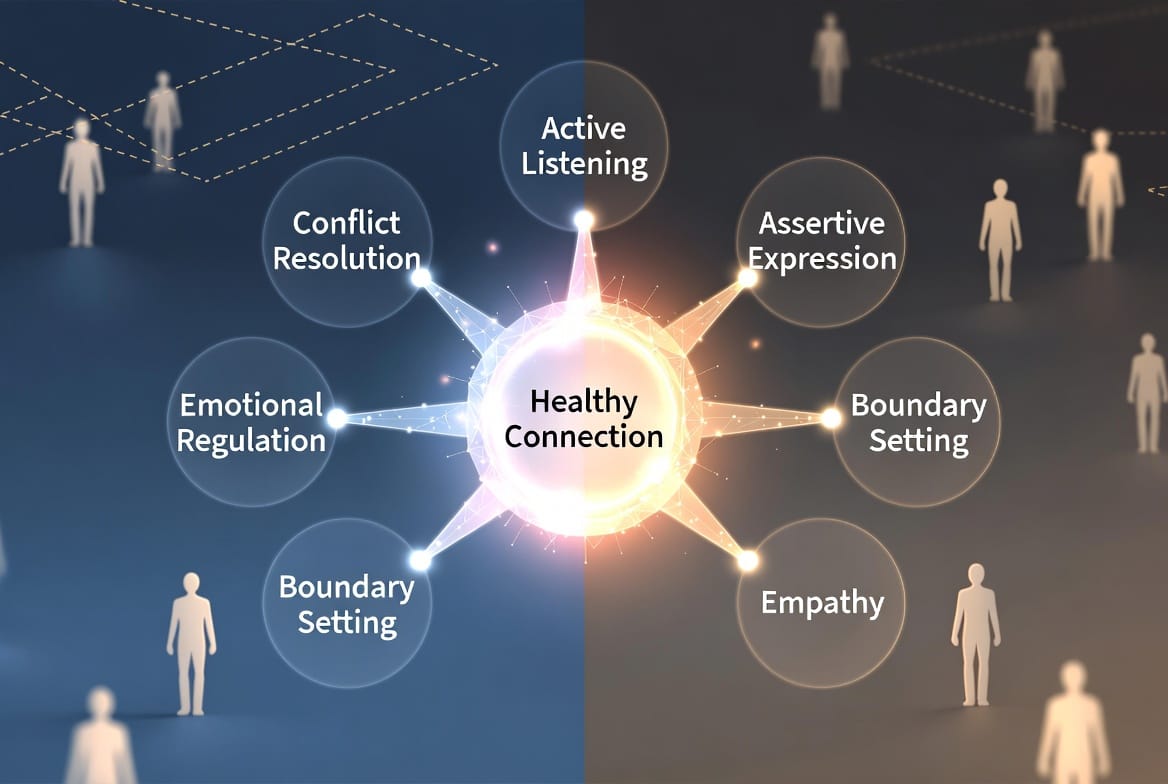
Active listening forms the starting point. This means giving full attention, reflecting back what was heard, and resisting the urge to interrupt or defend. Simple phrases such as “What I hear you saying is…” create space for the other person to feel understood. When family members finally experience being truly heard, defensive walls begin to lower.
Assertive expression is equally important. Assertiveness allows a person to state needs, feelings, and limits without aggression or apology. Instead of “You never listen to me,” a more effective statement is “I feel unheard when conversations get interrupted, and I would like us to take turns speaking.” This shift reduces blame and invites collaboration.
Nonverbal communication also carries significant weight. Eye contact, open posture, and calm tone reinforce spoken words. In early recovery, practicing these elements in a safe therapeutic setting helps individuals develop confidence before applying them at home.
Many people find that structured communication tools—such as “I” statements and scheduled check-ins—prevent old patterns from resurfacing. Over time, conversations that once ended in argument begin to end in understanding.
Setting Healthy Boundaries: Protecting Recovery and Relationships
Boundaries are not walls. They are clear guidelines that protect both the individual in recovery and the people they care about. Without them, old enabling patterns or new resentments quickly reappear.
A healthy boundary might sound like: “I will not discuss past substance use during family dinners because it feels triggering for me right now. I am happy to talk about it during scheduled therapy sessions or one-on-one conversations at another time.” Or: “I need to leave social gatherings by 9 p.m. so I can maintain my sleep routine that supports recovery.”
Setting boundaries requires courage, especially when loved ones react with disappointment or anger. Yet consistent boundaries teach others how to treat the recovering person and simultaneously teach the recovering person that their needs matter. Over time, respect grows on both sides.
Practical steps for establishing boundaries include:
- Identifying personal limits related to time, energy, topics of conversation, and substance exposure
- Communicating those limits calmly and clearly
- Following through with natural consequences when limits are crossed
- Revisiting and adjusting boundaries as recovery progresses and relationships strengthen
Boundaries also protect against codependency. When family members learn they no longer need to rescue or control, they can focus on their own well-being. The relationship becomes more balanced and sustainable.
Mastering Conflict Resolution Without Destroying Connection
Disagreements are inevitable in any close relationship. In recovery, the goal is not to eliminate conflict but to handle it in ways that strengthen rather than damage the bond.
Effective conflict resolution begins with emotional regulation. Taking a short break when anger rises prevents words that cannot be taken back. Returning to the conversation with a calmer mindset allows both parties to focus on the issue rather than attacking character.
Key techniques include:
- Focusing on the specific behavior or situation rather than global accusations
- Seeking to understand the other person’s perspective before defending one’s own
- Looking for win-win solutions that honor both recovery needs and relationship needs
- Knowing when to agree to disagree and when to seek professional mediation
Many recovering individuals discover that conflict, when handled skillfully, actually deepens intimacy. Successfully navigating a disagreement builds confidence and proves that the relationship can withstand difficulty without collapsing.

Integrating Interpersonal Skills into Daily Life
Knowledge alone is not enough. Skills become lasting only through consistent practice. Structured programs that combine education, role-play, and real-world application accelerate progress. Participants learn in a safe environment, receive feedback, and gradually transfer new abilities into family and social settings.
Support from peers who are also working on the same skills reduces isolation and normalizes the learning process. Many people find that sharing successes and setbacks with others in recovery creates accountability and encouragement that pure individual effort cannot match.
Progress is rarely linear. There will be moments of regression, especially under stress. What matters is the willingness to return to the skills, repair any new ruptures, and continue forward. Each successful interaction builds evidence that change is possible and sustainable.
The Long-Term Impact on Family and Friendship
When interpersonal skills take root, the effects extend far beyond the individual. Children observe healthier communication and carry those models into their own futures. Partners experience renewed emotional safety. Extended family members often soften as they witness consistent change rather than temporary promises.
Friendships that survived the chaos of active addiction frequently deepen once trust is re-earned through reliable behavior and open dialogue. New relationships formed in recovery tend to begin on healthier footing because the individual now possesses the tools to maintain them.
The cumulative result is a life no longer defined by isolation or relational chaos. Instead, connection becomes a source of strength that supports ongoing recovery and personal growth.
Taking the Next Step Toward Rebuilding
Rebuilding relationships after addiction is one of the most meaningful and challenging aspects of recovery. It requires courage, practice, and often professional support. Interpersonal skills provide the practical roadmap for that journey.
If you or someone you care about is ready to move beyond survival into genuine relational healing, specialized programs focused on communication, boundaries, and conflict resolution can make a profound difference. These skills are learnable at any stage of recovery and create benefits that last a lifetime.
Call Today to Rebuild Healthy Connections in Recovery