The Inlays and Onlays: Conservative Restorations for Damaged Teeth
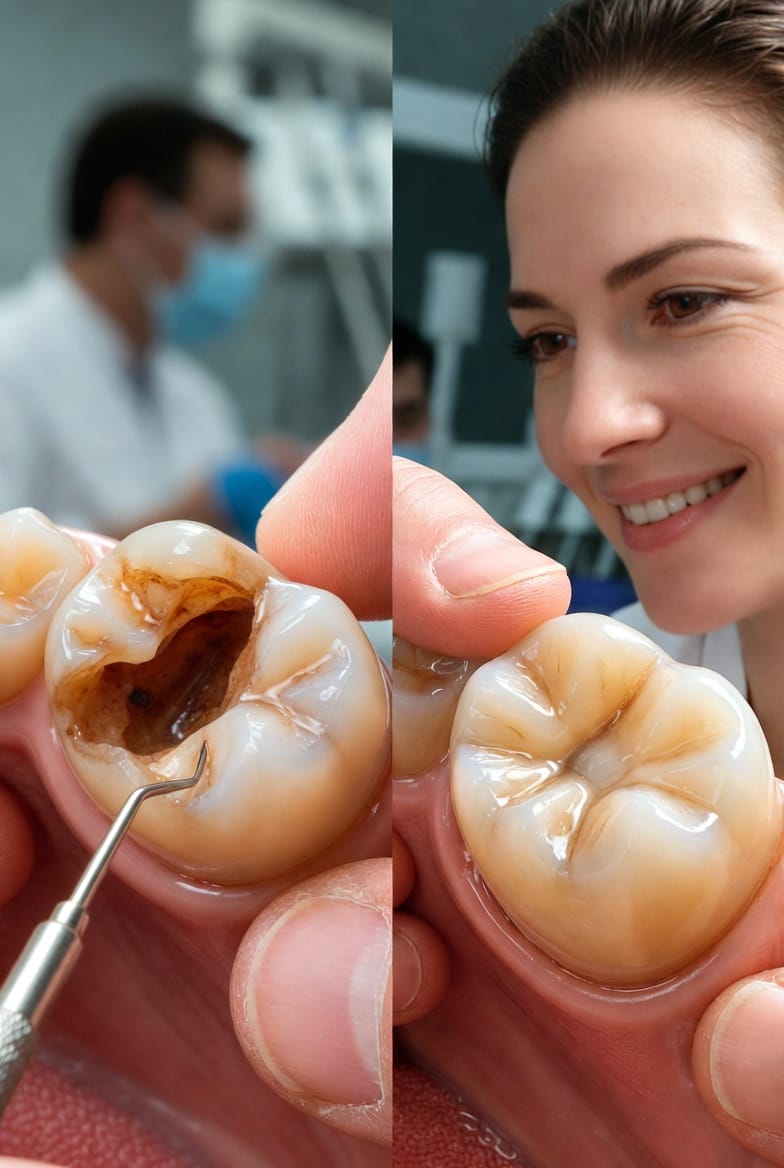
When a tooth suffers damage from decay, fracture, or a failing filling, the goal of modern dentistry is to restore function and appearance while protecting as much of the natural tooth as possible. Inlays and onlays stand out as a smart, conservative alternative to crowns. These precision restorations repair moderate damage without the extensive tooth reduction that crowns require, helping patients keep more of their original healthy structure for better long-term oral health.
Restore Your Tooth Conservatively – Call Now!
At their core, inlays and onlays are custom-fabricated pieces that fit perfectly into or onto the damaged area of a tooth. They are crafted in a dental laboratory from durable, tooth-colored materials—most often high-grade ceramic—that blend invisibly with your natural smile. Unlike simple fillings that are placed directly in the chair, these restorations are designed with exacting detail for superior fit, strength, and longevity.
What Are Inlays? Precision Restorations Within the Cusp Tips
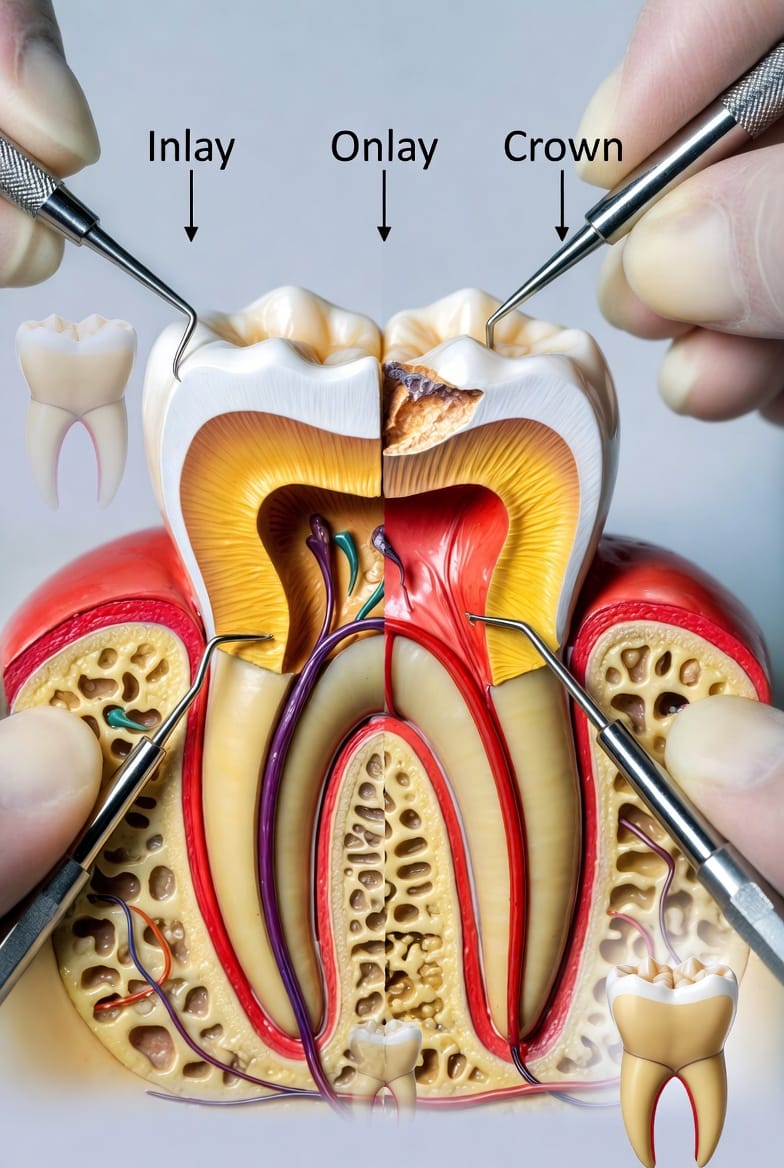
Inlays are created to fill the space within the cusp tips—the raised, pointed areas on the chewing surface of back teeth. When decay or old filling material has compromised the central biting area but the outer cusps remain strong, an inlay restores the missing portion without covering or altering those healthy cusps.
This conservative design preserves the maximum amount of natural tooth enamel and dentin. Because the inlay sits entirely inside the tooth’s natural boundaries, the preparation removes only the damaged tissue. The result is a restoration that reinforces the tooth from within, helping it withstand the forces of chewing while maintaining its original shape and bite relationship. Patients often choose inlays when a standard filling would be too weak to last but a full crown would be unnecessarily aggressive.
What Are Onlays? Coverage That Extends Over the Cusps
Onlays, sometimes referred to as partial crowns, take the concept one step further. They cover one or more of the tooth’s cusps in addition to filling the central area. This added coverage provides extra protection for teeth that have experienced more widespread damage on the chewing surface or have thin, weakened cusps at risk of fracture.
Even though onlays extend over the cusps, they still preserve significantly more healthy tooth structure than a traditional crown. Only the necessary portions of the damaged cusps are reduced, leaving the majority of the tooth’s outer walls and internal structure intact. This balanced approach delivers both durability and conservation—two priorities that lead to stronger, longer-lasting results.
How Inlays and Onlays Preserve More Tooth Structure Than Crowns
The key advantage of inlays and onlays lies in their minimal-preparation philosophy. A full crown requires the dentist to reduce the entire outer surface of the tooth, removing a substantial amount of healthy enamel and dentin to create space for the cap. In contrast, inlays and onlays target only the affected areas, leaving the surrounding healthy tooth walls untouched.
Preserving natural tooth structure is critical. Enamel is the hardest substance in the body and acts as a protective shield. Every millimeter kept intact helps maintain the tooth’s natural strength, reduces the risk of sensitivity, and supports healthier gums by keeping the margins of the restoration higher and easier to clean. Studies in restorative dentistry consistently show that teeth retaining more of their original structure experience fewer complications over time.
Inlays and onlays therefore represent a conservative restoration strategy: they repair the damage without compromising the tooth’s long-term prognosis. This approach is especially reassuring for patients who want to avoid more invasive procedures while still achieving reliable, beautiful results.
When Inlays and Onlays Are the Appropriate Choice
Inlays and onlays are ideal when the damage is moderate—large enough that a simple filling would fail under biting forces, yet not so extensive that the tooth requires full coverage. Common situations include:
- Moderate to large cavities that have weakened the central biting surface
- Cracked or fractured teeth without pulp involvement
- Replacement of old, leaking amalgam or composite fillings
- Teeth with wear or erosion on the cusps that still retain strong walls
- Patients seeking durable, aesthetic restorations without committing to crowns
During a thorough examination, your dentist evaluates the size, location, and depth of the damage using advanced imaging. If sufficient healthy structure remains to support an inlay or onlay, these options provide an excellent balance of conservation and strength. They are not suitable for severely compromised teeth or cases involving root canal therapy, where a crown is typically required for full protection.
The Procedure: Simple, Predictable, and Patient-Friendly
The process for inlays and onlays is straightforward and designed with your comfort in mind. It usually involves two comfortable visits, though same-day options exist with modern digital technology.
First, the dentist gently removes only the decayed or damaged portion of the tooth and takes a precise impression or digital scan. A temporary restoration protects the tooth while the permanent piece is crafted in the laboratory. At the second visit, the temporary is removed, the final inlay or onlay is tried in for perfect fit and bite harmony, and then bonded securely with advanced adhesive materials. The result is a seamless, strong restoration that feels completely natural.
Because the preparation is conservative, most patients experience little to no sensitivity and return to normal activities immediately.
Key Benefits That Make Inlays and Onlays a Preferred Option
Patients and dentists alike appreciate the many advantages these restorations offer:
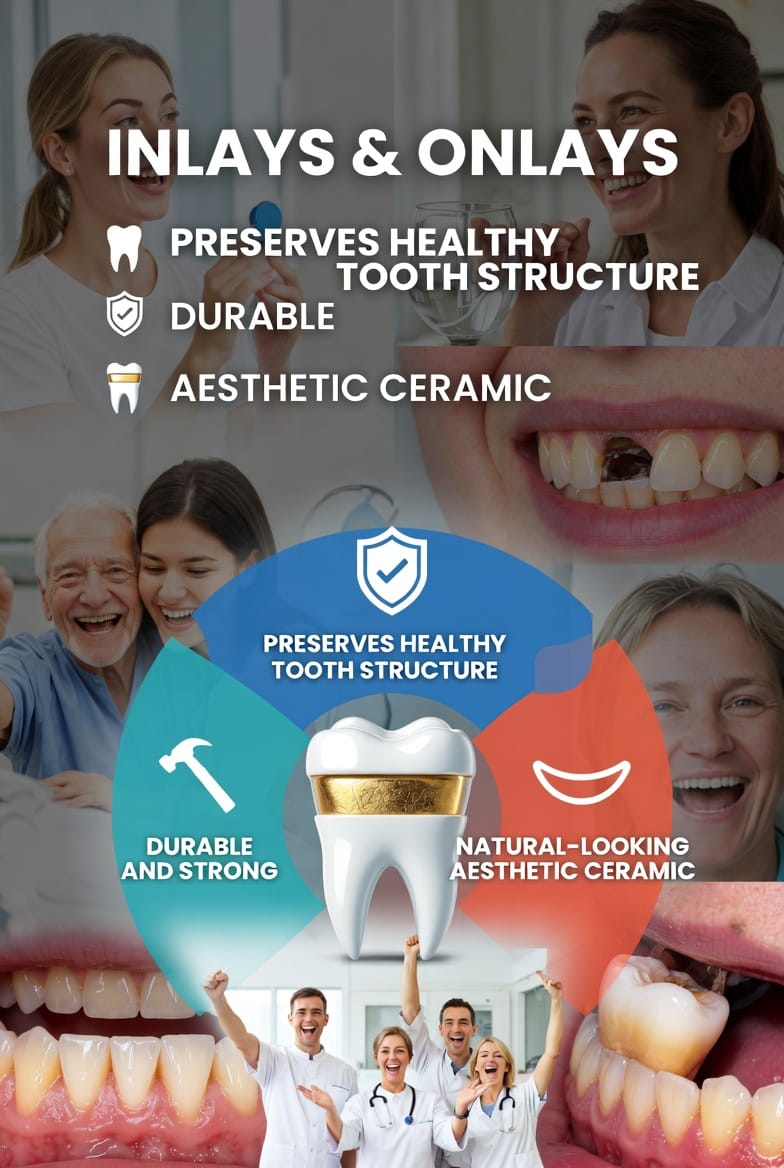
- Preserves healthy tooth structure – Minimal removal keeps the tooth stronger and more resistant to future problems.
- Exceptional durability – High-quality ceramic or gold materials withstand years of chewing forces.
- Superior aesthetics – Ceramic inlays and onlays are custom-shaded to match your natural teeth, creating an invisible repair.
- Improved oral health – Easier cleaning around the margins reduces the risk of recurrent decay.
- Long-term cost effectiveness – By conserving the tooth, they often delay or prevent the need for more extensive work later.
Real Patient Experiences With Conservative Restorations
Consider Michael, a busy professional whose molar had a large old filling that began to crack. Instead of a full crown, he chose a ceramic onlay. The minimal preparation preserved his healthy tooth walls, and the restoration has now served him flawlessly for over seven years with zero sensitivity.
Similarly, Emily came in concerned about a noticeable cavity on a visible back tooth. An inlay restored the area beautifully, and she reports that friends and family cannot tell the difference from her natural teeth. Stories like these highlight how inlays and onlays deliver both clinical success and peace of mind.
Understanding Potential Risks and How They Are Managed
All dental procedures carry minor risks, but inlays and onlays are among the safest options available. Rare issues such as temporary sensitivity or the need for minor bite adjustment are easily addressed. Because the preparation is conservative, the risk of pulp irritation is significantly lower than with crowns. Your dentist uses proven techniques and high-quality materials to minimize any concerns, ensuring a smooth, predictable outcome.
Long-Term Care for Your Inlay or Onlay
Maintaining your restoration is simple: brush twice daily, floss regularly, and attend routine check-ups. Avoid extremely hard foods, and consider a night guard if you grind your teeth. With proper care, these restorations routinely last 15 years or longer, providing reliable service while protecting the investment in your smile.
Frequently Asked Questions About Inlays and Onlays
How do inlays and onlays compare in cost to crowns?
While initial costs are comparable, the conservative nature often makes them more economical over time by preserving the tooth and reducing future treatment needs.
Will the restoration look natural?
Absolutely. Ceramic materials are chosen to match your tooth color and translucency perfectly, creating an undetectable result even under close inspection.
Are inlays and onlays suitable for front teeth?
They are primarily used on premolars and molars where chewing forces are greatest, but in select cases they can address damage on visible teeth with excellent aesthetic outcomes.
How long does the procedure take?
Most patients complete treatment in two short appointments. Same-day digital options can complete everything in one visit for added convenience.
These answers reassure patients that inlays and onlays are a practical, modern solution backed by proven techniques.
Restore Conservatively With Inlays and Onlays
Choosing inlays and onlays means choosing to protect your natural smile while addressing damage effectively. These conservative restorations offer the ideal middle ground—stronger than fillings, less invasive than crowns, and beautifully natural in appearance.
Ready to explore whether an inlay or onlay is right for your situation? Restore conservatively with inlays and onlays. Our team is here to answer your questions and help you achieve a healthy, confident smile that lasts.
Preserve Your Natural Tooth – Schedule Today