The Indianmeal Moth Larvae: Webbing and Damage in Pantries
Pantry pests can turn an ordinary kitchen into a source of ongoing frustration, and few create as much visible disruption as the Indianmeal moth larvae. These small but persistent creatures focus their activity on stored dry goods, leaving behind unmistakable evidence of their presence. Understanding this specific life stage—the larval phase—offers the clearest path to protecting your food supplies and restoring order. This article examines Indianmeal moth larvae behavior, the signs they produce, and proven elimination methods so you can address the problem with confidence and precision.
Clear Pantry Webbing & Infestation – Call Now for Fast Relief!
The larval stage represents the period of greatest damage. Adult moths may flutter near lights or windows, yet it is the larvae that feed, spin, and contaminate. By concentrating on their actions inside pantries, homeowners gain practical knowledge that leads to effective control. Professional support remains available whenever the situation feels overwhelming, ensuring thorough results without unnecessary stress.
Understanding the Focus on Indianmeal Moth Larvae
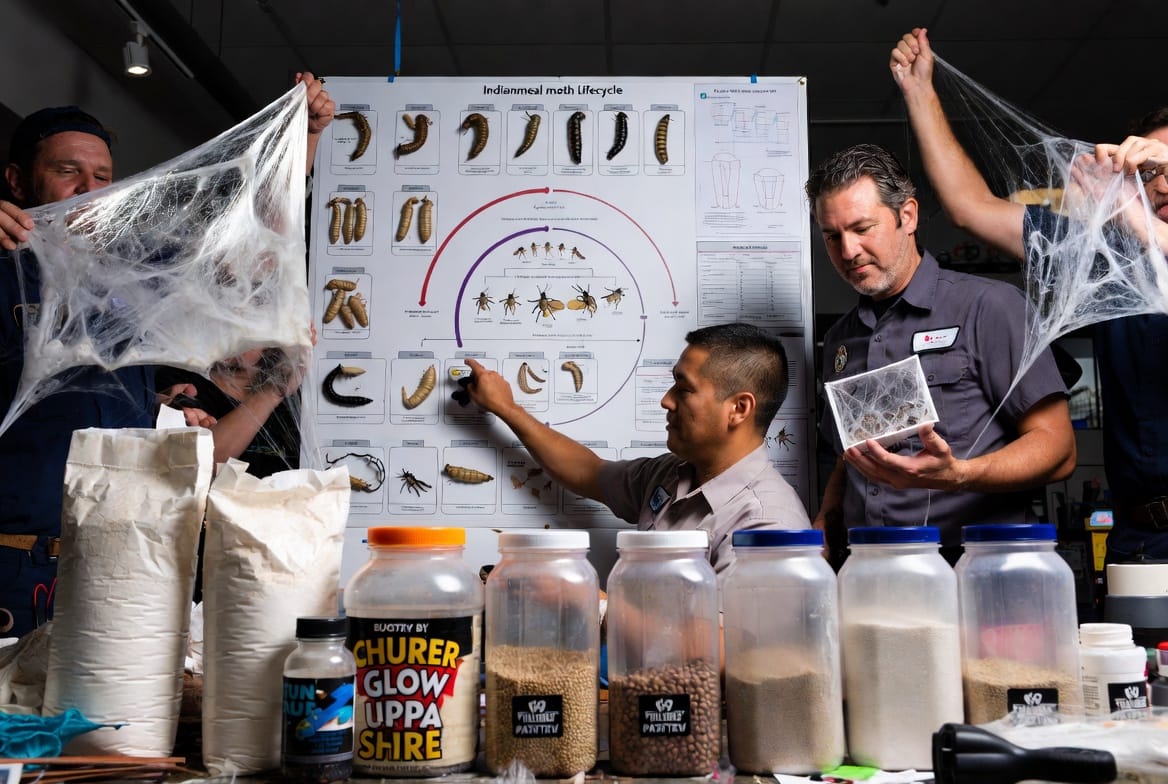
Indianmeal moth larvae develop from eggs laid by adult females on or near suitable food sources. Once hatched, the larvae immediately begin searching for grains, flour, cereals, dried fruits, nuts, spices, chocolate, and similar products. Their soft, elongated bodies—typically creamy white to pinkish with a distinct darker head—allow them to move easily through packaging and settle deep within containers.
This stage lasts several weeks depending on temperature and food availability. During that time the larvae grow through multiple molts, shedding their skins repeatedly. Each molt contributes additional material that mixes with food and webbing. The larvae remain hidden for much of their development, which explains why infestations often go unnoticed until webbing appears or products show clear damage.
Focusing exclusively on the larval phase makes sense because adults do not feed on pantry items. The moths exist primarily to reproduce. Removing or interrupting the larvae therefore stops the cycle at its most destructive point. Homeowners who learn to identify and respond to this stage protect both their food investment and the overall cleanliness of their storage areas.
Behavior of Indianmeal Moth Larvae: Silk Webbing and Contamination
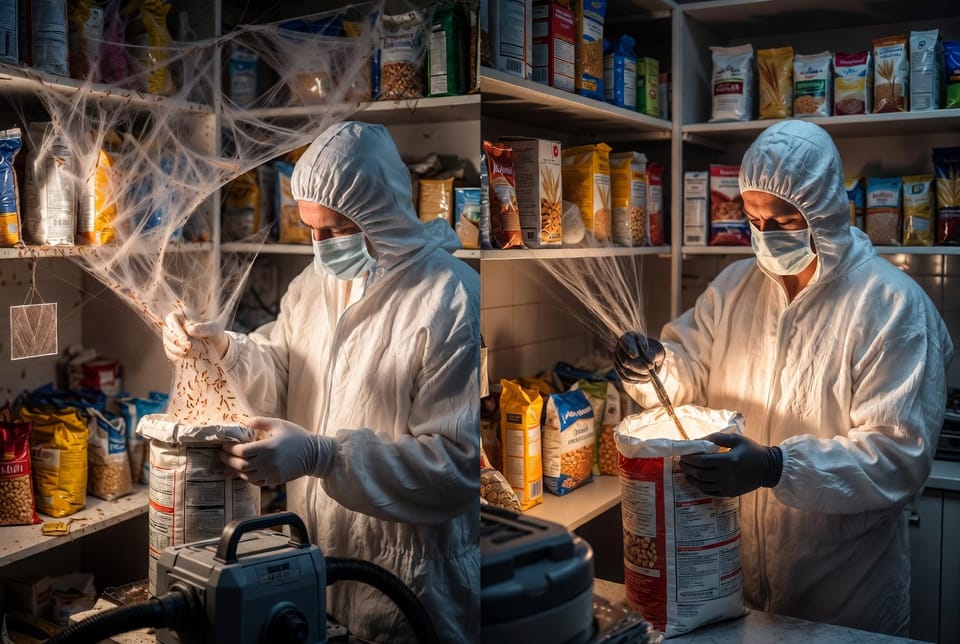
Indianmeal moth larvae exhibit distinctive behaviors that set them apart from other pantry pests. Their most recognizable activity involves spinning silk webbing. As they crawl across and through food products, the larvae produce fine silk threads that form tunnels, mats, and sticky layers. This webbing serves multiple purposes: it creates protected pathways, helps larvae move between food particles, and eventually forms a loose cocoon when they prepare to pupate.
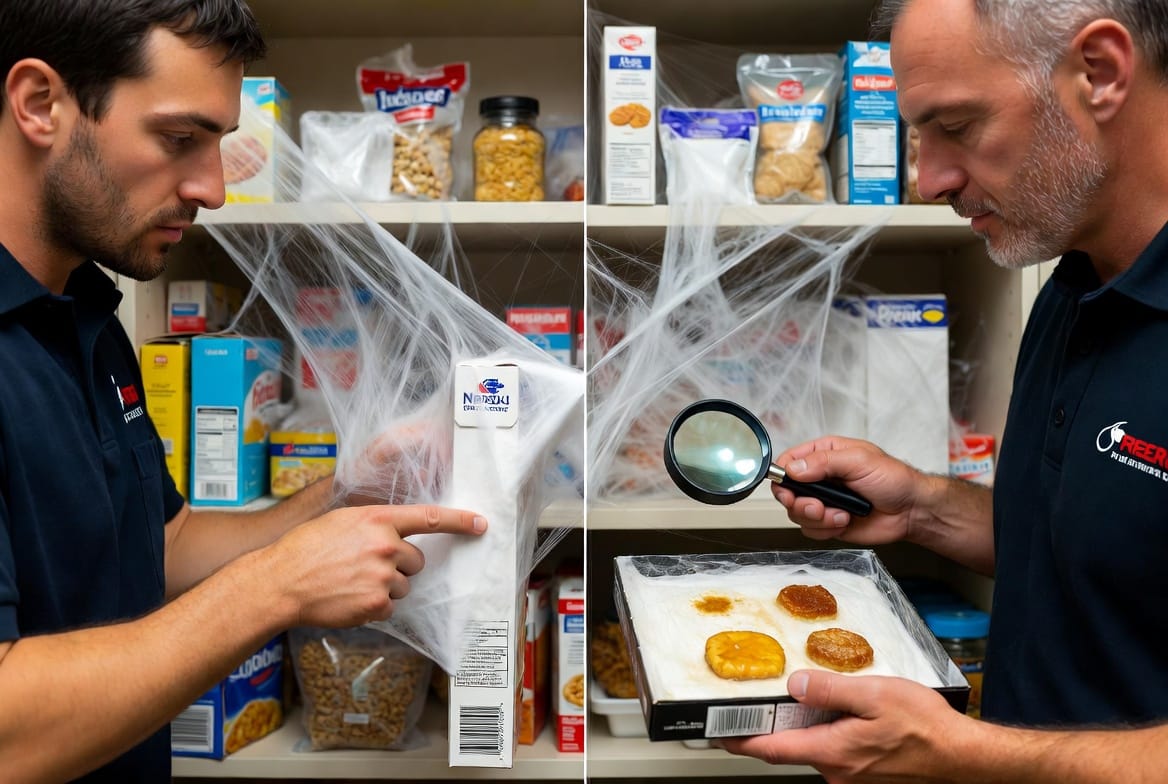
The silk often appears as a dusty or fuzzy coating on the surface of flour, cereal, or grain. In severe cases it binds individual pieces together into clumps. Larvae may also travel outside the original package, leaving silk trails along shelves, walls, or ceiling corners of the pantry. These trails signal that the infestation has expanded beyond a single bag or box.
Contamination occurs simultaneously. Larvae produce feces that appear as tiny dark pellets mixed throughout the food. They also leave behind cast skins from successive molts. These discarded skins look like thin, translucent shells and add further debris. The combination of webbing, fecal matter, and cast skins renders the product unsuitable for consumption. Even if the food remains technically edible after thorough cleaning, most people prefer to discard affected items rather than risk an unpleasant experience.
Larvae prefer warm, dark, and undisturbed environments. Pantries that stay closed for long periods, especially those containing bulk packages or older stock, provide ideal conditions. The insects can chew through thin cardboard, paper, or plastic film to reach new food sources. Once established, a single larva can generate enough webbing and waste to spoil an entire container within days.
Temperature influences activity levels. Warmer kitchens accelerate development and feeding, while cooler conditions slow the process. Regardless of speed, the end result remains the same: progressive contamination that spreads if left unchecked. Recognizing these behaviors early prevents the problem from affecting multiple products and nearby storage areas.
Clear Signs That Indianmeal Moth Larvae Have Invaded
Detecting Indianmeal moth larvae relies on several reliable indicators. The most obvious is the presence of silk webbing. Look for fine, silken strands coating the surface of flour, cereal, rice, or dried fruit. Webbing may also drape across package openings or stretch between items on a shelf.
Visible larvae themselves provide direct confirmation. These caterpillar-like insects measure up to half an inch long when fully grown. Their movement is slow and deliberate as they feed or search for pupation sites. Finding even one larva inside a package warrants immediate inspection of surrounding goods.
Damaged goods complete the picture. Infested products often show irregular holes, clumps of material bound by silk, or discoloration caused by fecal spotting. Flour may develop an off odor or appear less free-flowing. Cereal pieces can look dull or fragmented. In advanced cases the entire package feels lighter because larvae have consumed significant portions.
Additional clues include small adult moths resting on walls or ceilings near the pantry, although the focus stays on the larval evidence. Tiny dark droppings scattered on shelves or the appearance of cast skins mixed into food further support the diagnosis. Regular visual checks of open packages and shelf surfaces help catch these signs before the infestation expands.
Step-by-Step Elimination of Indianmeal Moth Larvae
Successful elimination begins with decisive action. First, identify and discard every infested item. Place affected packages directly into sealed outdoor trash bags to prevent larvae from escaping indoors. Do not attempt to salvage heavily webbed or contaminated products; the risk of remaining eggs or hidden larvae outweighs any savings.
Next, empty the entire pantry. Remove all remaining food, even unopened packages, and inspect each one carefully under good lighting. Wipe down every surface—shelves, walls, corners, and floor—with hot soapy water or a mild vinegar solution. Pay special attention to cracks, crevices, and the undersides of shelves where larvae or silk may hide. A vacuum equipped with a crevice tool removes residual webbing, cast skins, and any wandering larvae. Empty the vacuum contents outdoors immediately afterward.
After cleaning, introduce pheromone traps. These devices release a scent that attracts adult male moths, interrupting the breeding cycle. Place traps according to package directions, usually in the pantry or nearby kitchen areas. While traps do not capture larvae directly, they reduce future egg-laying and provide ongoing monitoring.
For stubborn cases, consider food-safe residual treatments applied only by trained professionals. These products target hidden larvae without contaminating remaining food supplies. Thoroughness matters: any overlooked package or untreated crevice can restart the problem within weeks.
Reorganize the pantry once it is clean and dry. Transfer susceptible items into airtight glass or heavy plastic containers. This simple barrier stops larvae from reaching new food and makes future inspections easier. Rotate stock so older products are used first, and avoid overstocking.
Homeowners who follow these steps typically regain full control. The process feels methodical rather than chaotic when approached systematically. Professional pantry pest control services accelerate results by combining specialized equipment, targeted treatments, and expert inspection that reaches places ordinary cleaning may miss.
Supporting Prevention Measures After Elimination
Prevention keeps Indianmeal moth larvae from returning. Store all dry goods in sealed containers immediately after purchase. Inspect new packages for existing damage or webbing before placing them on shelves. Maintain cooler pantry temperatures when possible, because lower warmth slows larval development.
Clean spills promptly and vacuum shelves monthly even when no signs appear. Keep the pantry well ventilated and free of clutter so potential hiding spots remain limited. Consider placing a few pheromone traps as an early-warning system; regular checks of trap contents reveal activity before visible damage develops.
These habits create a less inviting environment. Combined with the elimination steps already described, they form a complete protective strategy. Most households that adopt consistent storage and inspection practices experience far fewer recurring issues.
The Value of Professional Support for Complete Resolution
While many homeowners successfully manage limited infestations on their own, certain situations benefit from expert intervention. Heavy webbing across multiple shelves, repeated reappearances after cleaning, or uncertainty about the full extent of the problem indicate that professional pantry pest control offers the most reliable outcome.
Trained technicians bring specialized knowledge of Indianmeal moth larvae biology and behavior. They locate hidden sources that casual inspection may overlook, apply appropriate treatments safely, and provide customized recommendations for long-term protection. The process remains straightforward and respectful of household routines.
Choosing professional help does not signal failure; it demonstrates a practical commitment to thorough results. Most service visits restore confidence quickly, leaving pantries clean, organized, and free of the silk, larvae, and contamination that previously caused concern.
Restoring Peace of Mind in Your Kitchen
Indianmeal moth larvae create noticeable webbing and damage, yet the solution remains within reach. By focusing on their specific behaviors—spinning silk, depositing feces and cast skins—and responding with systematic discarding, deep cleaning, and strategic use of pheromone traps, any household can eliminate the threat. Clear signs such as webbing, visible larvae, and compromised food products guide timely action. Prevention through proper storage and routine checks maintains the improvement.
The presence of moth webbing signals an active infestation that deserves prompt attention. Professional assistance ensures complete removal and lasting protection.
Restore Your Clean Pantry – Call Now for Expert Pest Solutions!