The Indian Meal Moth Pheromone Trap: Monitoring and Control

The Indian meal moth remains one of the most common stored-product pests found in homes across the country. These small insects quietly invade pantries, kitchens, and food-storage areas, leaving behind webbing, damaged packages, and the risk of contaminated dry goods. A well-designed pheromone trap offers homeowners and professionals a precise, non-chemical tool for both monitoring infestation levels and supporting broader control efforts. This article explains exactly how these traps function, the best locations to deploy them, and how they fit into a complete management plan so you can protect your food supply with confidence.
Call Now for Indian Meal Moth Monitoring
Understanding the Indian Meal Moth Threat
Adult Indian meal moths measure roughly half an inch in length and display a distinctive two-tone wing pattern: the inner portion is pale gray while the outer third appears coppery-bronze. The real damage, however, comes from the larval stage. Tiny caterpillars feed on a wide range of dry foods including flour, cereal, nuts, dried fruit, pet food, chocolate, and spices. As they feed they spin silk webbing that mats particles together and ruins entire packages.
A single unnoticed female can lay 100–400 eggs. Those eggs hatch into larvae that wander in search of food and later pupate in cracks, corners, or packaging folds. Because the adults themselves do not eat stored products, many people first notice the problem only after moths begin flying around lights or when they open a bag and find webbing. Early detection therefore becomes essential. Pheromone traps give you that early-warning system without introducing additional pesticides into the kitchen.
How Pheromone Traps Work
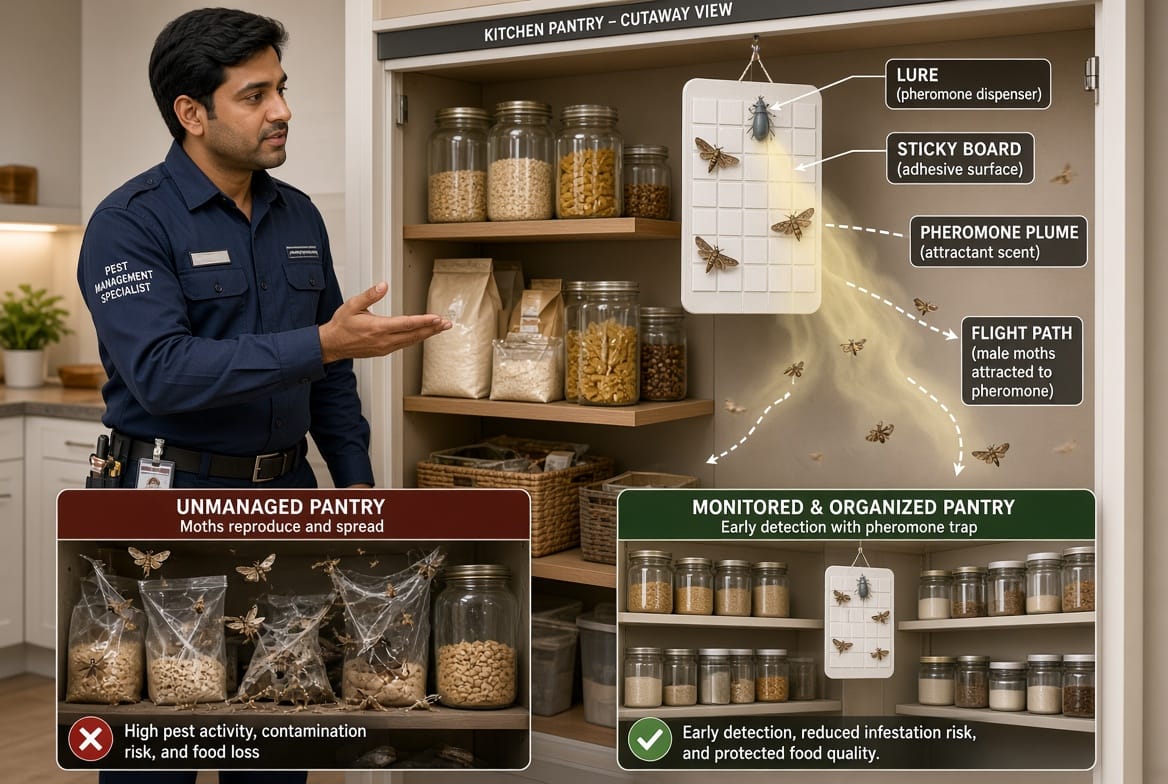
Pheromone traps exploit the moth’s own communication system. Female Indian meal moths release a species-specific sex pheromone that signals readiness to mate. Manufacturers isolate and synthesize that exact chemical blend and impregnate a small lure with it. The lure is then placed inside a sticky cardboard or plastic trap.
Male moths detect the odor plume from several feet away and fly toward the source. Once they land on the adhesive surface they become trapped and cannot escape. Two important results follow:
- Mating opportunities decline because fewer males reach females.
- You obtain a visible, countable record of moth activity that reveals whether an infestation is present, growing, or declining.
The traps do not attract females or larvae, nor do they eliminate an established population by themselves. Their primary value lies in monitoring. When used consistently they tell you whether sanitation and exclusion steps are succeeding or whether additional action is required.
Strategic Placement in Pantries and Kitchens
Correct placement determines whether a trap delivers useful data. Follow these proven guidelines:
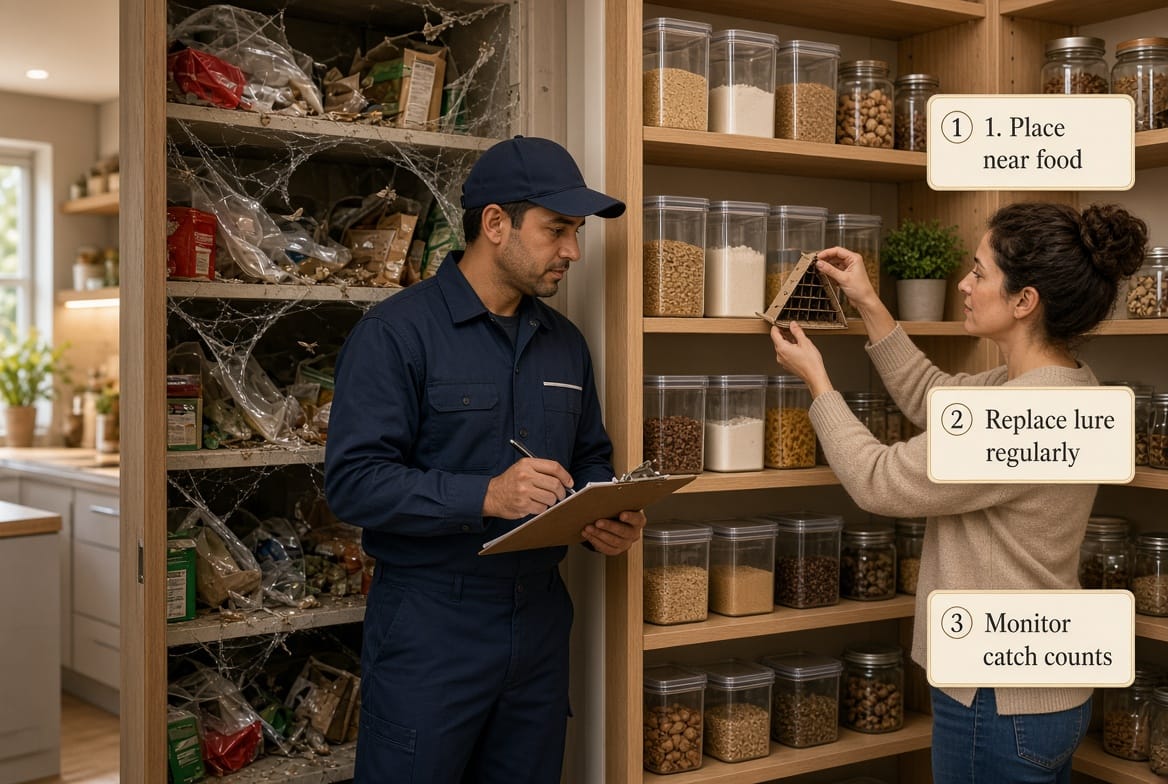
- Hang or stand the trap inside the pantry or kitchen cabinet where dry goods are stored, not in the middle of an open room.
- Position it 4–6 feet above the floor, roughly at eye level when you open the door, so the odor plume remains in the zone where moths fly.
- Keep the trap within 3–6 feet of known or suspected food sources such as flour bins, cereal boxes, or pet-food bags.
- Avoid placing traps directly in strong air currents from vents or open windows; moving air can disperse the pheromone too quickly.
- In larger kitchens or walk-in pantries use two or three traps spaced several feet apart rather than relying on a single unit.
- Never set a trap on a countertop where it can be knocked over or contaminated by cooking splatters.
A trap placed too high near the ceiling or too far from food often records few moths even when an infestation exists. Conversely, a well-sited trap quickly reveals activity and lets you act before larvae spread to additional packages.
Combining Traps with Other Control Methods
Pheromone traps work best as one component of an integrated approach. Pair them with the following proven practices:
- Inspect and discard. Open every package of grain, nut, dried fruit, and pet food. Look for live larvae, webbing, or clumped particles. Seal suspect items in a plastic bag and dispose of them outside the home. Do not attempt to salvage heavily webbed products.
- Deep clean. Vacuum pantry shelves, cracks, and the backs of cabinets. Pay special attention to corners where larvae often pupate. Wipe surfaces with a mild detergent and allow them to dry completely.
- Store remaining food in airtight containers. Transfer flour, rice, cereal, and similar items into heavy-duty plastic, glass, or metal containers with tight-fitting lids. This simple step denies larvae access to new food.
- Inspect incoming groceries. Examine new purchases at the store or immediately upon arrival home. A few minutes of checking prevents a single infested bag from restarting the cycle.
- Rotate stock. Use older packages first and avoid long-term storage of bulk dry goods in warm, humid conditions that favor moth development.
When trap counts remain high after these steps, the source may lie in an overlooked item—perhaps a bag of birdseed in the garage, a box of baking mixes in a seldom-used cupboard, or pet food stored in an adjacent room. The trap data guide you to those hidden reservoirs.
Interpreting Catch Counts and Maintaining the Traps
Check each trap at least once a week. Record the number of moths captured and note the date. A sudden increase signals that new adults have emerged and that additional inspection or cleaning is needed. A steady decline after sanitation work confirms that your efforts are succeeding.
Replace the pheromone lure according to the manufacturer’s schedule, typically every four to eight weeks, because the chemical gradually evaporates. Replace the entire sticky trap when the surface becomes covered with moths, dust, or debris. A saturated trap no longer captures insects and can even begin to repel them.
Keep a simple log. Over several weeks the numbers tell a clear story: whether the problem is localized, spreading, or under control. That record also proves valuable if you later consult a professional.
Common Mistakes That Reduce Effectiveness
Even high-quality traps fail when used incorrectly. Avoid these frequent errors:
- Relying on a single trap in a large or multi-room storage area.
- Placing the trap far from actual food items.
- Forgetting to replace the lure on time.
- Assuming zero captures means the problem has vanished; larvae may still be present in hidden packages.
- Using the trap as the only control measure while leaving infested food in place.
Correcting these oversights usually restores the trap’s value within one generation of moths.
When to Seek Professional Pest Control Advice
Most households can manage a modest Indian meal moth problem with consistent monitoring and sanitation. However, certain situations call for expert help:
- Trap counts stay high for more than four weeks despite thorough cleaning.
- Moths appear in multiple rooms or in commercial-style pantries.
- You discover larvae in structural voids or behind appliances.
- The infestation coincides with other stored-product pests.
A licensed technician can perform a detailed inspection, identify hidden sources, and recommend additional targeted treatments if needed. Combining professional insight with your ongoing use of pheromone traps produces the most reliable long-term results.
Maintaining Peace of Mind in the Kitchen
The Indian meal moth pheromone trap is not a miracle device, yet it is one of the most practical tools available for pantry pest management. By attracting male moths, revealing infestation trends, and supporting sanitation and exclusion work, it puts you in control rather than leaving you to react after damage has already occurred. Place the traps correctly, check them regularly, and pair them with airtight storage and prompt disposal of infested goods. The combination reliably reduces risk and protects the food you keep on hand.
Monitor for moths with pheromone traps. For personalized pest control advice tailored to your home and take the next confident step toward a moth-free pantry.
Call Now for Reliable Moth Infestation Control