The HVAC Vacuum Pump: Why Deep Evacuation Removes Moisture and Non-Condensables
In the world of HVAC systems, proper installation and repair practices separate reliable, long-lasting comfort from frequent breakdowns and costly repairs. At the heart of these best practices lies the HVAC vacuum pump and the critical process of deep evacuation. This essential step removes harmful moisture and non-condensables (such as air) from the refrigerant lines, protecting your system from the inside out.
Protect Your System from Moisture Damage – Call Now!
Homeowners and property managers often overlook this behind-the-scenes procedure, but professionals understand its vital role. A thorough deep vacuum—typically reaching below 500 microns—ensures your HVAC unit operates at peak efficiency while preventing acid formation, ice blockages, and premature compressor burnout.
In this comprehensive guide, we’ll explore why deep evacuation matters, the science behind it, best practices for installation and repair, signs that your system may have suffered from poor evacuation, and how qualified professionals deliver superior results. Whether you’re installing a new system or addressing repairs, understanding this process empowers you to make informed decisions for your home’s comfort.
Understanding the Role of the HVAC Vacuum Pump
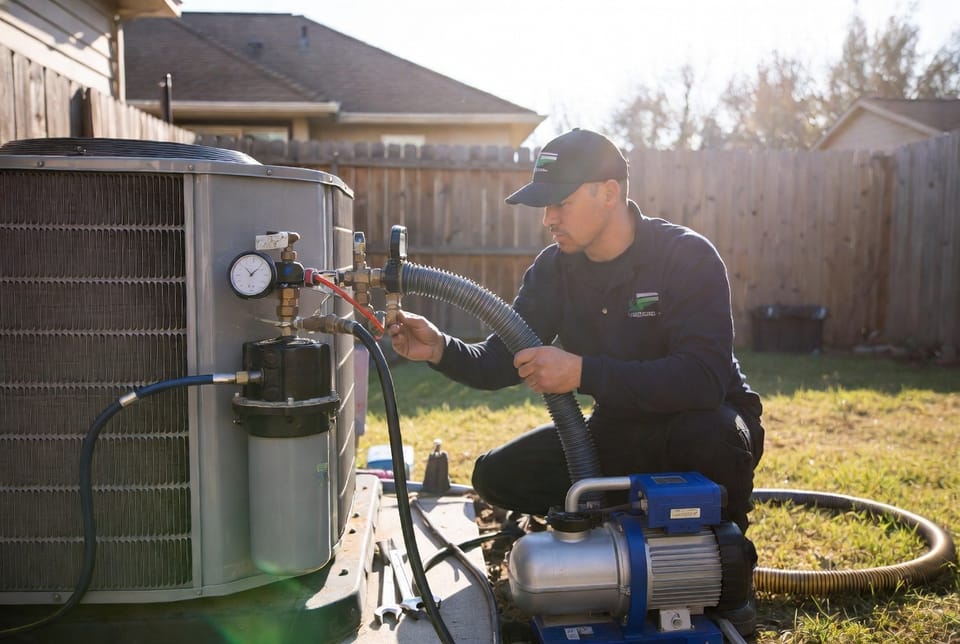
An HVAC vacuum pump is a specialized tool designed to create a powerful vacuum within the refrigerant circuit. Unlike simple air removal, it lowers the pressure inside the system dramatically, allowing trapped moisture to boil off at room temperature and be extracted along with non-condensable gases.
Non-condensables include air, nitrogen, or other gases that don’t condense into liquid like refrigerant. Even small amounts raise head pressure, reduce efficiency, and force the compressor to work harder. Moisture, on the other hand, is particularly destructive. It mixes with refrigerant and oil to form acids that corrode components over time.
Why is this step non-negotiable after repairs or new installations? Anytime the system is opened to the atmosphere, contaminants enter. Skipping or rushing evacuation leaves these issues behind, leading to reduced performance and expensive failures down the line.
The Science: How Deep Vacuum Removes Moisture and Non-Condensables
Under normal atmospheric pressure (around 760,000 microns), water boils at 212°F. But in a deep vacuum, the boiling point drops significantly. At 500 microns or lower, moisture vaporizes even at ambient temperatures, allowing the vacuum pump to pull it out effectively.
Non-condensables are removed simultaneously as the pump evacuates the system to these low pressures. This dual action—degassing (removing gases) and dehydration (removing moisture)—creates a clean environment ready for refrigerant charging.

Failing to reach these depths leaves residual moisture that can freeze at metering devices, form sludge, or generate acids that attack the compressor windings.
Why Target Below 500 Microns? Industry Standards and Benefits
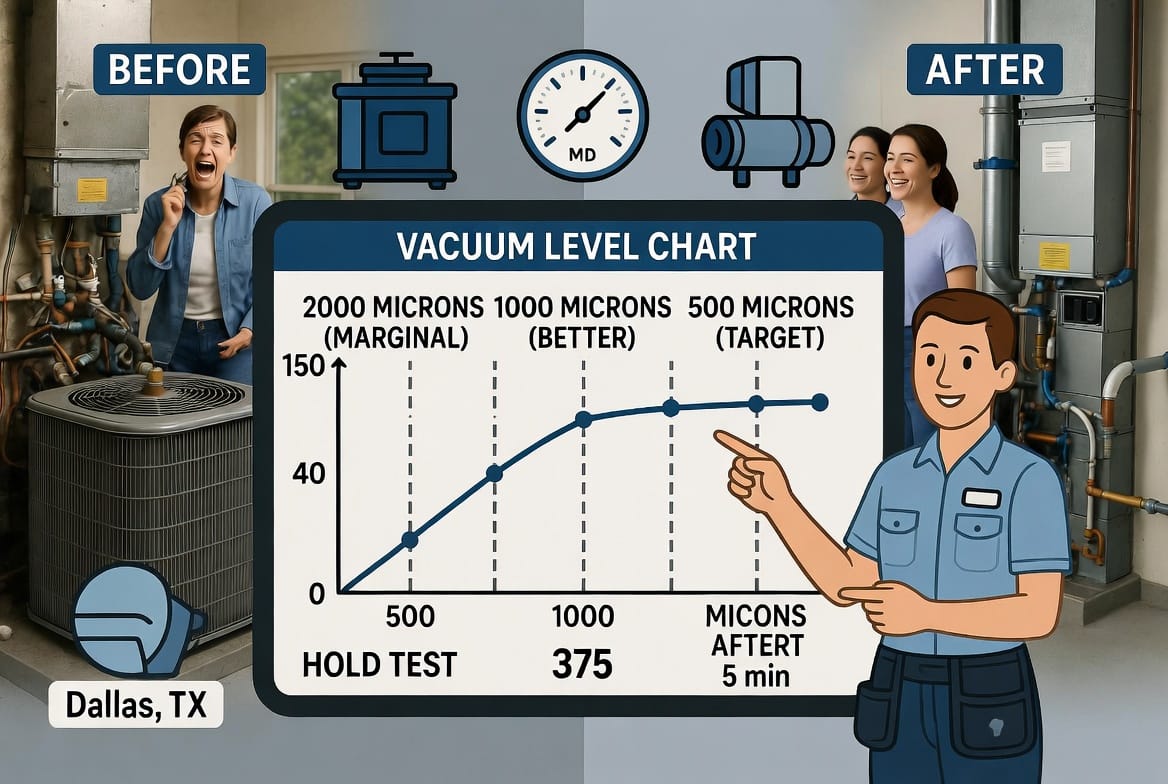
The industry standard for most systems is a deep vacuum of 500 microns or lower, with many professionals aiming even deeper (250-300 microns) for optimal results, especially with modern POE oils in R-410A and similar systems.
- Prevents acid formation: Moisture + refrigerant/oil = acids that corrode internals.
- Avoids ice blockages: Residual water freezes in expansion valves or capillary tubes.
- Maintains efficiency: Non-condensables increase pressure and reduce cooling capacity.
- Extends equipment life: Clean systems experience less stress on the compressor.
- Reduces callbacks: Proper evacuation means fewer warranty issues and happier customers.
A standing vacuum test (or decay test) follows: Isolate the system and monitor for pressure rise. Minimal rise confirms a leak-free, dry system.
Signs of Poor Evacuation and System Failure
How do you know if a system wasn’t properly evacuated? Watch for these warning signs:
- Frequent short cycling or reduced cooling performance.
- Unusual noises from the compressor as it struggles.
- Higher-than-normal energy bills due to inefficiency.
- Premature compressor burnout, often accompanied by acidic refrigerant smells or discolored oil.
- Intermittent freezing at coils or metering devices.
Compressor burnout is particularly devastating. Acid from moisture attacks motor windings, leading to electrical failure and widespread contamination that requires extensive flushing and component replacement.
Early detection through acid test kits can help, but prevention through proper deep evacuation is far better and more cost-effective.
Best Practices for HVAC Vacuum During Installation and Repairs
Professionals follow rigorous protocols to ensure success. Here’s what sets quality work apart:
1. Equipment Preparation
Use a high-quality two-stage vacuum pump (5-10 CFM or larger for bigger systems) with fresh, clean oil. Test the pump alone first—it should pull below 50-100 microns quickly.
Pair it with a digital micron gauge (not just compound gauges) placed as far from the pump as possible for accurate readings.
2. Proper Connections
- Use large-diameter, short vacuum hoses to minimize restrictions.
- Remove Schrader cores for better flow.
- Connect to both high and low sides when possible.
3. The Evacuation Process
- Pull an initial vacuum, then perform a triple evacuation with dry nitrogen sweeps if significant moisture is suspected.
- Achieve and hold below 500 microns.
- Conduct a decay/hold test (typically 10-15 minutes with minimal rise).
4. Safety and Verification
Break the vacuum with refrigerant or nitrogen only after confirming stability. Never introduce air.
What Professionals Do Differently
Experienced technicians don’t cut corners. They:
- Invest in premium tools and maintain them meticulously.
- Take the time for thorough leak checks before evacuation.
- Monitor the micron gauge continuously rather than relying on time alone.
- Document readings for quality assurance.
- Educate homeowners on the value of these steps.
This attention to detail translates to fewer breakdowns, lower operating costs, and greater peace of mind for homeowners.
Common Mistakes to Avoid
- Using undersized or poorly maintained pumps.
- Relying solely on time-based evacuation without micron verification.
- Using refrigerant hoses instead of dedicated vacuum hoses.
- Skipping the decay test.
- Failing to change pump oil regularly, which reduces performance.
Avoiding these ensures your system starts clean and stays that way.
The Long-Term Impact on Your HVAC System
A properly evacuated system delivers consistent comfort, higher efficiency, and extended lifespan. In contrast, shortcuts lead to acid-related damage, reduced SEER ratings, and higher repair frequency. Investing in quality installation pays dividends for years.
For Dallas-area homeowners dealing with Texas heat, this reliability is especially crucial. A well-maintained HVAC system keeps your home comfortable without unexpected failures during peak summer months.
Conclusion: Proper Vacuum Prevents Future Breakdowns
The HVAC vacuum pump and deep evacuation process may be invisible to most homeowners, but its impact is profound. By removing moisture and non-condensables, it safeguards against acid formation, protects the compressor, and ensures optimal performance.
Don’t leave your system’s health to chance. Trust experienced professionals who prioritize best practices for installation and repairs.
We deliver thorough deep evacuations and reliable solutions that keep your home comfortable for years to come.
Avoid Compressor Burnout – Call for Proper Vacuum Service