The HVAC Reversing Valve: How Heat Pumps Switch Between Heating and Cooling
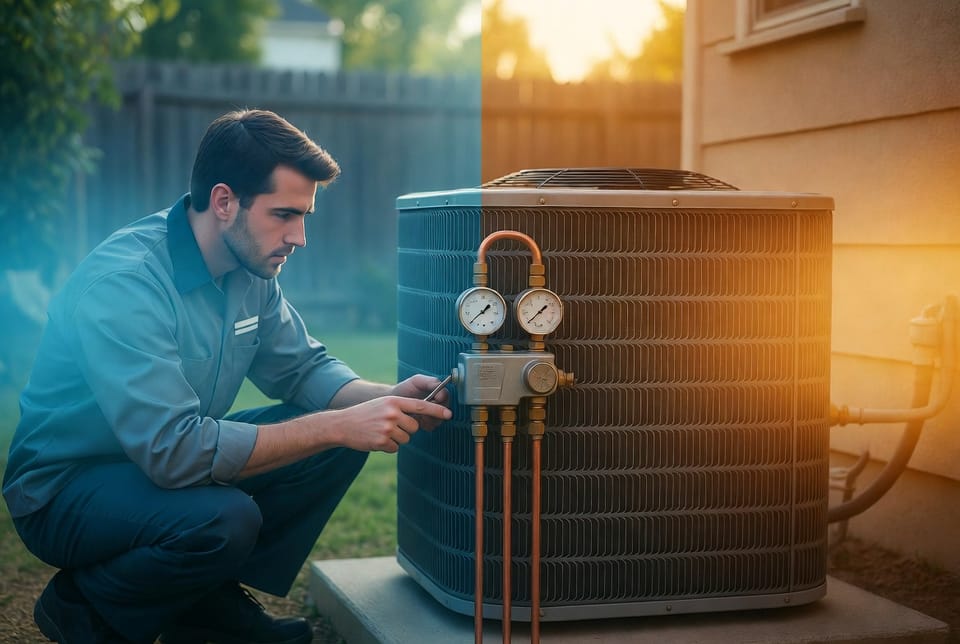
Heat pumps have become one of the most efficient and versatile solutions for year-round home comfort. At the heart of their ability to provide both heating and cooling lies a critical component: the HVAC reversing valve. This small but powerful part allows a single system to deliver opposite functions by simply changing the direction of refrigerant flow.
Fix Your Heat Pump Reversing Valve – Call Now!
Understanding how the reversing valve works helps homeowners recognize when something isn’t right and why professional service matters. In this comprehensive guide, we’ll explore its function, common issues, signs of failure, and what to expect during repair or replacement.
What Is a Reversing Valve in a Heat Pump?
The reversing valve is a specialized solenoid-operated valve installed in the refrigerant circuit of a heat pump. Unlike traditional air conditioners that only cool, heat pumps can reverse their operation to provide warmth during colder months.
This valve sits on the outdoor unit and features four refrigerant line connections:
- One from the compressor discharge
- One returning to the compressor suction
- One to the indoor coil
- One to the outdoor coil
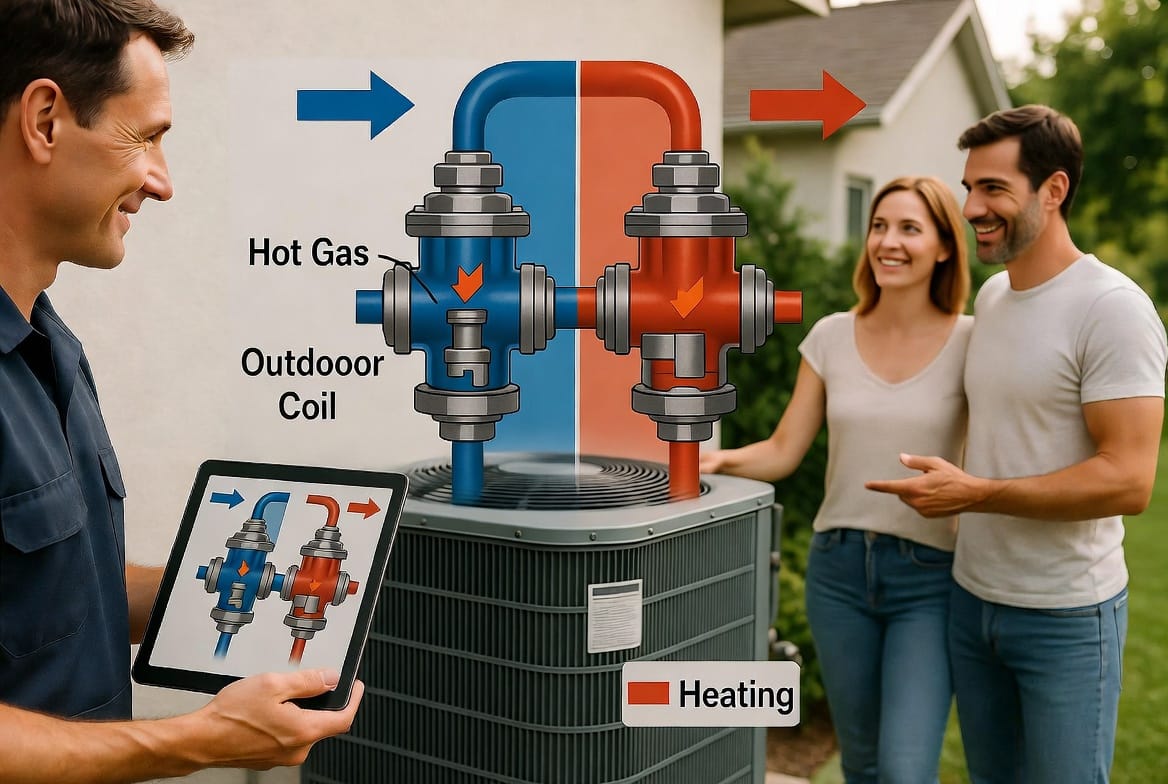
By sliding an internal piston, the valve directs hot refrigerant gas either to the indoor coil (for heating) or to the outdoor coil (for cooling). This seamless switch makes heat pumps highly energy-efficient compared to separate heating and cooling systems.
Key benefit: One system handles both seasons, reducing equipment costs and energy consumption when properly maintained.
How the Reversing Valve Enables Mode Switching
The process is elegantly simple yet technically sophisticated:
In Cooling Mode:
- The reversing valve remains de-energized
- Hot refrigerant flows from the compressor to the outdoor coil (condenser)
- Heat is released outside
- Cooled refrigerant travels indoors to absorb heat
In Heating Mode:
- The reversing valve is energized by the control board
- Hot refrigerant is redirected to the indoor coil (now acting as condenser)
- Heat is released inside your home
- The outdoor coil absorbs heat from outdoor air
This reversal allows the system to extract heat from outside air even when temperatures are moderately cold, making modern heat pumps effective down to very low temperatures.
Why the Reversing Valve Is Essential for Efficiency
Without a properly functioning reversing valve, your heat pump loses its dual-purpose advantage. The valve ensures optimal refrigerant flow direction, maintaining high Seasonal Energy Efficiency Ratio (SEER) and Heating Seasonal Performance Factor (HSPF) ratings.
Regular operation of this valve during seasonal changes also helps prevent refrigerant stratification and maintains system balance.
Common Signs of a Failing Reversing Valve
Recognizing problems early can prevent bigger system failures. Here are the most frequent symptoms:
- System stuck in one mode — The heat pump only cools or only heats regardless of thermostat setting
- Inadequate heating or cooling — Temperature output feels weak even after running for long periods
- Hissing or unusual noises — Audible leaks or pressure equalization sounds near the outdoor unit
- Thermostat changes have no effect — Mode switches don’t produce expected results
- Higher than normal energy bills — The system works harder to compensate for improper flow
- Frosting on lines or coils — Uneven refrigerant distribution causes ice buildup
Bold warning: If your heat pump is stuck in cooling mode during winter or heating mode during summer, the reversing valve is often the culprit.
What Causes Reversing Valve Failure?
Several factors can lead to reversing valve problems:
- Solenoid coil burnout — Electrical failure prevents the valve from shifting
- Internal piston sticking — Debris, oil breakdown, or corrosion locks the mechanism
- Refrigerant leaks — Low charge affects pressure needed for proper valve operation
- Electrical control issues — Faulty relays or wiring problems
- Age and wear — Valves typically last 10–15 years under normal conditions
Because the valve operates under high pressure and temperature fluctuations, proactive maintenance is crucial.
Diagnosing Reversing Valve Issues
Professional diagnosis is essential because symptoms can overlap with other problems like compressor failure or low refrigerant. A qualified technician will:
- Check voltage to the solenoid coil during mode changes
- Measure temperature differences across the valve
- Use specialized gauges to verify pressure behavior
- Listen for proper shifting sounds
- Inspect for leaks at all four connections
Important: Never attempt to manually force the valve or apply direct power to the solenoid without proper training. This can cause serious damage or safety hazards.
Reversing Valve Replacement: What to Expect
Replacing a reversing valve is considered a moderate to complex repair. The process involves:
- Recovering all existing refrigerant
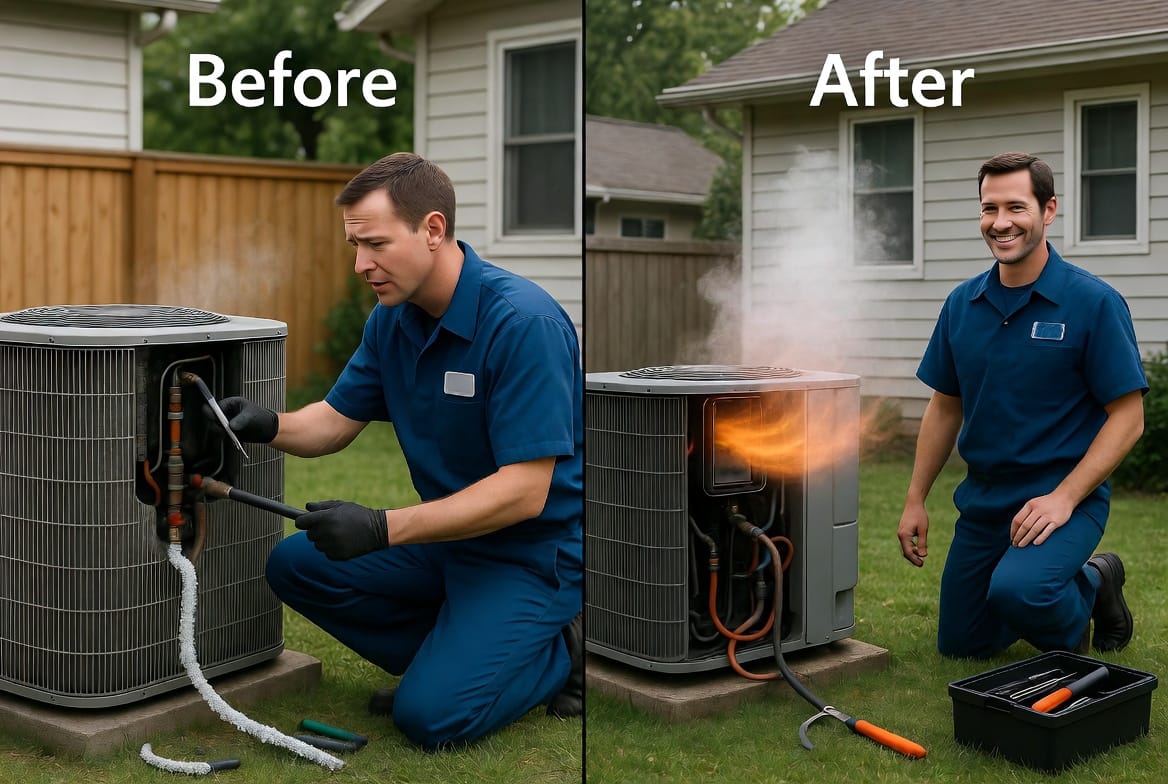
- Cutting and removing the old valve (it’s brazed in place)
- Installing the new valve with proper orientation
- Pressure testing and deep vacuum
- Recharging with the correct refrigerant amount
- Testing both heating and cooling modes thoroughly
Time requirement: Most replacements take 4–8 hours depending on accessibility and system condition.
Cost factors: Parts plus labor typically range from moderate to higher-end HVAC repairs, but exact pricing depends on system size and local rates.
Preventive Maintenance for Longer Valve Life
Extend the life of your reversing valve and entire heat pump with these practices:
- Schedule annual professional tune-ups before seasonal changes
- Keep the outdoor unit clean and free of debris
- Change air filters regularly to reduce system strain
- Address minor issues promptly before they affect the valve
- Consider surge protection for the control board
Consistent maintenance helps ensure reliable mode switching for years.
The Broader Impact on Your HVAC System
A malfunctioning reversing valve doesn’t just affect comfort — it puts additional stress on the compressor, reduces overall efficiency, and can lead to premature system failure if left unaddressed.
Modern heat pumps rely on precise coordination between the reversing valve, expansion devices, and control systems. When one component fails, the entire system efficiency drops significantly.
When to Call a Professional
If you notice any signs of reversing valve trouble, it’s best to contact a qualified HVAC technician immediately. Attempting DIY fixes on pressurized refrigerant systems can be dangerous and may void warranties.
Professional service ensures:
- Accurate diagnosis
- Proper refrigerant handling per EPA regulations
- Correct installation and testing
- System optimization after repair
Conclusion: Trust Experts for Heat Pump Reliability
The HVAC reversing valve is the key component that makes heat pumps so versatile. When it functions properly, your system delivers efficient heating in winter and powerful cooling in summer with seamless transitions.
A stuck reversing valve needs professional diagnosis.
Our experienced technicians understand the complexities of heat pump systems and can quickly restore your comfort and efficiency. Don’t wait until extreme weather hits — address reversing valve issues promptly for reliable year-round performance.
Heat Pump Stuck in One Mode? Call Now for Professional Repair