The HVAC Compressor Oil: Why Proper Lubrication Prevents Burnout

Your heating and cooling system works tirelessly to maintain comfort through every season. At its core sits the compressor, the hardworking component that circulates refrigerant and creates the pressure differential essential for heat transfer. Just as a vehicle engine depends on clean motor oil to avoid catastrophic damage, an HVAC compressor relies on specialized compressor oil to stay cool, quiet, and efficient.
Protect Your HVAC Compressor with Proper Oil Maintenance – Call Today
When compressor oil levels drop, the wrong type is used, or the oil becomes contaminated, the results can be devastating. Compressor burnout ranks among the most expensive failures a homeowner can face, often requiring full unit replacement or major repairs costing thousands of dollars. The good news is that most lubrication-related failures are preventable with proper understanding and professional care.
This guide explains exactly how compressor oil protects your system, why oil level and type matter so much, and how to recognize early warning signs before irreversible damage occurs. By the end, you will understand why oil truly is the lifeblood of your compressor and what steps keep your HVAC investment running smoothly for years.
The Essential Functions of Compressor Oil
Compressor oil performs far more than simple lubrication. It is a carefully engineered fluid that supports the entire refrigeration cycle in three vital ways.
Lubrication of Critical Moving Parts
Inside every compressor, whether reciprocating piston or scroll design, precision components move at high speed under extreme pressure. Bearings, crankshafts, pistons, and scroll plates require a continuous protective oil film to prevent direct metal-to-metal contact.
When this film remains intact, friction stays minimal and wear occurs at a normal, predictable rate. Insufficient oil allows metal surfaces to grind against each other. Microscopic scoring quickly becomes visible damage. Clearances increase, efficiency drops, and the compressor motor must work harder to achieve the same cooling output. Over months or years, this accelerated wear leads to mechanical failure.
Heat Transfer and Thermal Protection
Compression generates intense heat. The compressor oil absorbs this heat directly from motor windings, mechanical friction points, and the hot discharge gas. As the oil returns to the crankcase or sump, it carries thermal energy away from the most vulnerable components.
Without adequate oil volume or proper circulation, localized hot spots develop. Motor insulation begins to degrade. The oil itself thins at higher temperatures, further weakening the protective film. This creates a dangerous feedback loop where rising temperatures accelerate oil breakdown and component damage. Proper lubrication breaks this cycle by keeping operating temperatures within safe design limits.
Acid Neutralization and Contaminant Transport
Moisture, air, or previous electrical stress can cause refrigerant and oil to form acids inside the sealed system. Quality compressor oil contains additive packages that help neutralize these acids or transport them to the filter-drier for safe removal.
When acid levels rise unchecked, they attack motor windings, bearings, and copper tubing. A single burnout event can leave behind acidic residues that contaminate the entire refrigerant circuit. Subsequent compressors installed without thorough cleanup often fail quickly for the same reason. Regular professional acid testing catches contamination early, allowing corrective action before the next compressor is placed at risk.
How Proper Lubrication Directly Prevents Compressor Burnout
Compressor burnout occurs when the electric motor windings overheat to the point of insulation failure, resulting in shorted or open windings. While electrical issues or liquid slugging can contribute, lubrication problems are a leading underlying cause in many failures.
Low oil levels allow friction to generate excess heat. This heat raises the temperature of the motor windings. As insulation degrades, electrical resistance changes and current draw increases. The compressor runs hotter still, accelerating the damage until the motor fails completely. In many cases, the root cause traces back to oil starvation that began months earlier.
Correct oil type matters equally. Modern systems using R-410A or R-32 refrigerants require POE (polyol ester) oil. Older R-22 systems typically used mineral oil. Using the wrong viscosity or incompatible formulation reduces film strength, promotes foaming, or prevents proper oil return from the evaporator. Either situation starves the compressor of lubrication over time.
Oil level is equally critical. Too little oil causes starvation. Too much oil can lead to foaming, reduced heat transfer, and liquid slugging during startup. Only a trained technician using proper recovery equipment, vacuum procedures, and manufacturer specifications can verify and correct oil charge safely.
Oil Circulation Through the Refrigerant System
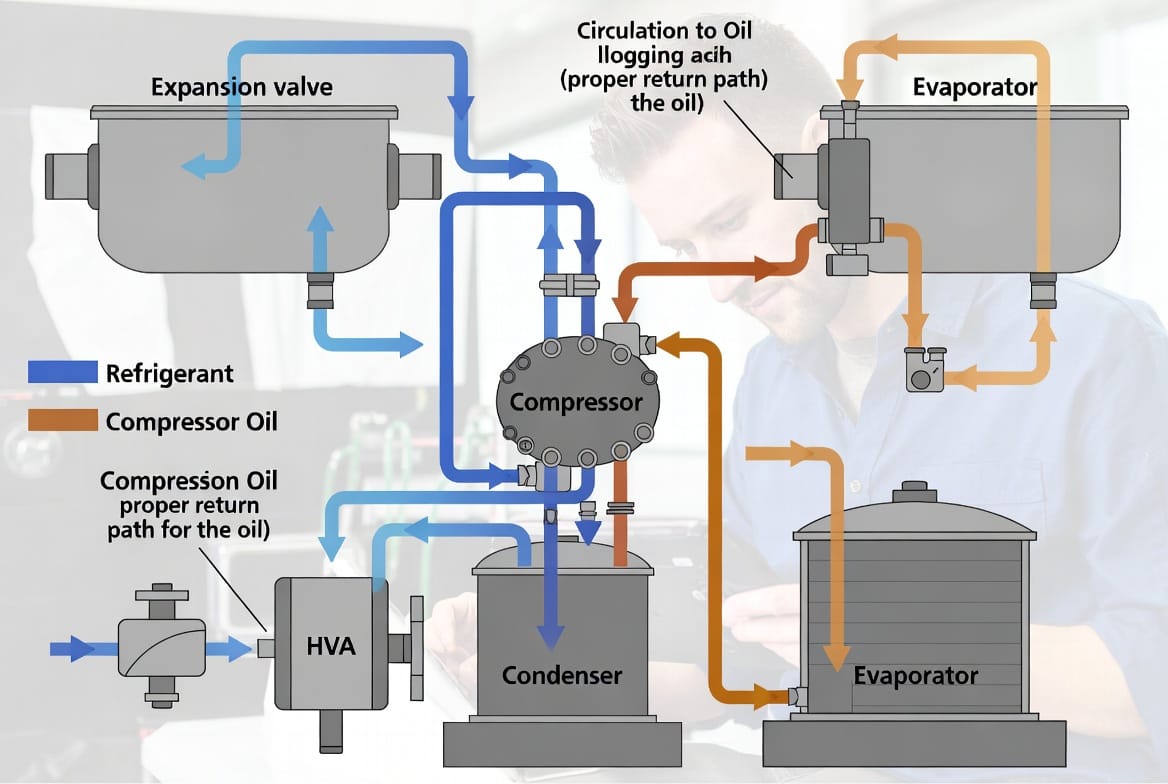
Oil does not stay inside the compressor. It travels throughout the entire system mixed with refrigerant vapor and liquid. In the evaporator, oil can separate and accumulate if refrigerant velocity is too low. Proper system design, correct refrigerant charge, and clean filter-driers ensure oil returns to the compressor sump where it belongs.
When any part of this circulation is disrupted—by low refrigerant charge, dirty coils, or improper piping—oil logging occurs. The compressor gradually loses its lubricant reserve. Professional maintenance includes verifying superheat and subcooling values that indirectly confirm healthy oil return rates.
Warning Signs of Compromised Compressor Oil

Homeowners can often spot early trouble before complete failure occurs. Watch and listen for these common indicators:
- Unusual compressor noises — Grinding, knocking, or rattling sounds that were not present before often signal inadequate lubrication allowing metal components to contact.
- System running excessively hot — The outdoor unit feels significantly hotter than normal, or supply air temperatures are warmer than expected despite the system running continuously.
- Positive acid test results — During professional service, technicians can perform an acid test on recovered oil. A positive result indicates contamination that threatens the compressor and requires immediate system flushing and oil replacement.
- Hard starting or frequent tripping — The compressor struggles to start or causes circuit breakers to trip as mechanical resistance increases from poor lubrication.
- Reduced cooling performance — Longer run times and higher energy bills can reflect the compressor working harder due to internal wear and oil-related inefficiencies.
Any of these signs warrants an immediate call to a qualified HVAC technician. Early detection dramatically improves the chances of saving the compressor rather than replacing it.
Why Oil Level and Type Are Non-Negotiable
Not all compressor oil is interchangeable. Manufacturers specify exact viscosity grades and chemical formulations for each compressor model and refrigerant type. Using the wrong oil can cause immediate performance issues or long-term chemical incompatibility that leads to sludge and acid formation.
Oil levels must be verified with the system off and at proper temperatures. Many modern compressors include sight glasses for quick visual checks. Others require precise weighing or level measurement during service. Adding oil without recovering refrigerant, pulling a proper vacuum, and following manufacturer procedures risks introducing air and moisture—two of the fastest ways to create acids and future burnouts.
Professional technicians also perform oil analysis when indicated. Dark color, burnt smell, or visible metal particles in the oil provide valuable clues about internal wear long before complete failure.
Protecting Your HVAC Investment Through Professional Maintenance
The single most effective way to prevent compressor burnout related to lubrication is regular professional service. During annual or biannual tune-ups, technicians:
- Check and correct refrigerant charge to ensure proper oil return
- Inspect and test for acid contamination when indicated
- Verify compressor amperage draw and operating temperatures
- Examine filter-driers and replace as needed
- Confirm correct oil type and level for your specific equipment
These steps cost far less than a compressor replacement and keep your system operating at peak efficiency. In addition, many manufacturers require documented professional maintenance to maintain warranty coverage on major components.
Never attempt to add oil yourself. The process involves refrigerant recovery, which is regulated for environmental and safety reasons. Improper handling can damage the compressor further, void warranties, and create serious safety hazards.
The True Cost of Neglect
When lubrication issues progress to full compressor burnout, homeowners face difficult choices. Compressor replacement on an older system often costs nearly as much as installing a new, higher-efficiency unit. In severe acid burnout cases, the entire refrigerant circuit may require extensive flushing or component replacement, multiplying the expense.
Beyond the financial impact, system downtime during peak summer or winter months creates uncomfortable living conditions and potential secondary damage from humidity or frozen pipes. Proactive oil maintenance eliminates these risks for the vast majority of systems.
Oil Is the Lifeblood of Your Compressor
Proper compressor oil lubrication, cooling, and contaminant management stand between reliable comfort and expensive failure. By understanding the warning signs, respecting the importance of correct oil type and level, and scheduling regular professional inspections, you protect both your equipment and your budget.
Do not wait for strange noises or warm air to take action. Our certified technicians will evaluate your compressor oil condition, verify proper circulation, and give you clear recommendations to keep your HVAC system running efficiently for years to come.
Compressor Oil Is the Lifeblood of Your System – Call for a Check Now