The HVAC Backup Heat Source: Electric Heat Strips vs. Gas Furnace
When winter temperatures drop sharply, your heat pump needs reliable support to maintain consistent indoor comfort. This is where HVAC backup heat sources become essential. Homeowners often face a key decision: rely on electric heat strips or opt for a gas furnace in a dual fuel system.
Get Expert Backup Heat Advice – Call Today for Free Consultation
Both options integrate seamlessly with heat pumps, but they differ significantly in performance, efficiency, installation, and long-term costs. In this comprehensive guide, we explore the strengths and considerations of each to help you make an informed choice tailored to your climate and home needs.
Whether you're upgrading an existing system or planning a new installation, understanding these heat pump backup options ensures optimal comfort, energy savings, and peace of mind.
Why Heat Pumps Need Backup Heat
Heat pumps excel at moving heat rather than generating it, making them highly efficient in moderate climates. However, as outdoor temperatures fall below 30–40°F, their capacity diminishes. Backup heat activates automatically to supplement or replace the heat pump’s output, preventing cold indoor spaces and maintaining system reliability.
Electric heat strips and gas furnaces represent the two primary backup solutions. Electric strips are the standard auxiliary heat in many packaged units and air handlers. Gas furnace backups create dual fuel systems, which many experts consider superior for colder regions due to better efficiency in extreme conditions.
Choosing the right backup isn’t just about staying warm — it impacts your monthly energy bills, system longevity, and overall home comfort for years to come.
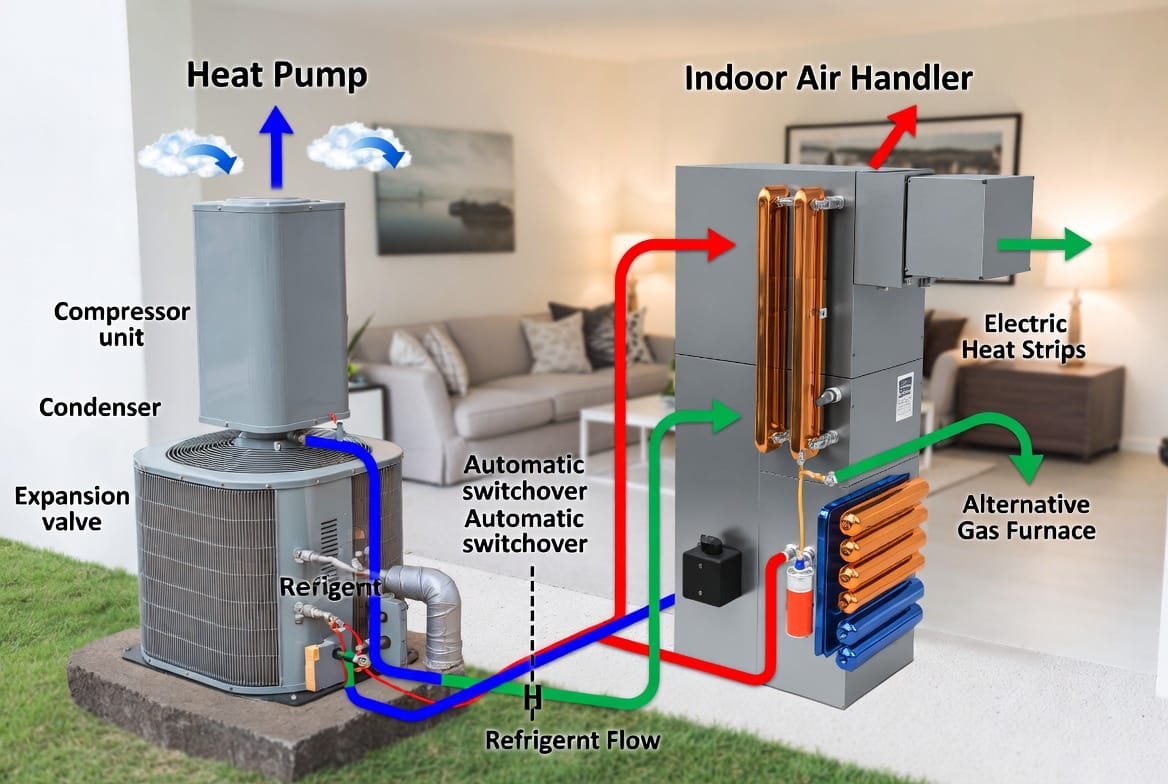
Understanding Electric Heat Strips as Backup Heat
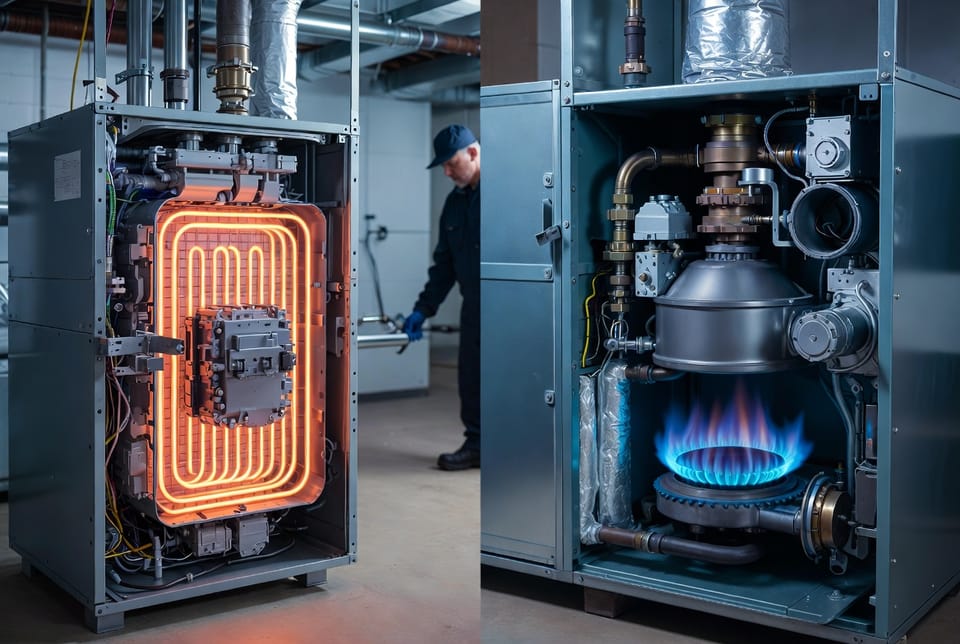
Electric heat strips, also known as electric resistance heaters, are compact heating elements installed directly inside the air handler or furnace cabinet. When the heat pump struggles in cold weather, these strips energize to provide supplemental heat by warming the air passing over them.
Key Characteristics of Electric Heat Strips:
- Quick activation: They respond almost instantly when needed.
- Simple integration: Commonly factory-installed in many heat pump systems.
- Lower upfront installation cost: Ideal for budget-conscious homeowners.
- Versatility: Work effectively in various home layouts.
While reliable, electric heat strips consume significant electricity. Because they generate heat through resistance (similar to a toaster or space heater), they are less efficient than the heat pump’s primary operation. In prolonged cold snaps, this can lead to noticeable spikes in your electric bill.
Homeowners in milder climates often find electric strips perfectly adequate as occasional backup. They require minimal additional maintenance beyond standard HVAC tune-ups and provide consistent, even heating without introducing combustion byproducts.
Gas Furnace Backup: The Dual Fuel Advantage
A gas furnace backup transforms your heat pump into a dual fuel system. The furnace takes over or supplements heating during extreme cold, while the heat pump handles milder conditions. This hybrid approach leverages the strengths of both technologies.
How Dual Fuel Systems Work:
- The system automatically switches between the heat pump and gas furnace based on outdoor temperature or efficiency calculations.
- Modern smart thermostats optimize the switchover point for maximum savings.
- Natural gas or propane provides powerful, rapid heating even in sub-zero temperatures.
Gas furnaces deliver higher heat output per unit of energy compared to electric strips in very cold weather. This efficiency advantage often translates to lower operating costs over time, especially in regions with harsh winters.
Performance Comparison: Electric Strips vs. Gas Furnace
Performance varies greatly depending on your local climate.
In moderate areas where temperatures rarely drop below freezing, electric heat strips perform admirably with minimal runtime. They maintain comfort without complexity.
In colder climates, a gas furnace backup shines. It provides robust heating capacity that electric strips may struggle to match during extended cold periods. Dual fuel systems prevent the heat pump from overworking, reducing wear and potential breakdowns.
Key performance factors include:
- Temperature threshold: Electric strips work but become costly below 25–30°F.
- Heating capacity: Gas furnaces typically deliver more BTUs efficiently in extreme cold.
- System response time: Both are fast, but gas provides stronger initial heat surge.
- Humidity control: Properly designed systems with either backup maintain excellent indoor air quality.
Cost Analysis: Installation and Operating Expenses
Installation costs for electric heat strips are generally lower since they often come pre-installed or require simple addition to existing air handlers. Expect fewer modifications to ductwork or gas lines.
Gas furnace backups involve higher initial investment due to:
- Furnace unit cost
- Gas line installation or verification
- Proper venting requirements
- Enhanced system controls for seamless dual fuel operation
However, operating costs often tell a different story. Electric resistance heating has a coefficient of performance (COP) of 1.0 — every unit of electricity produces one unit of heat. Gas furnaces, even when used as backup, frequently offer better overall economics in cold climates due to lower fuel costs.
Over 10–15 years, the savings from a dual fuel system can offset the higher upfront cost for many households. Always consider local utility rates, home size, and insulation levels when calculating long-term value.
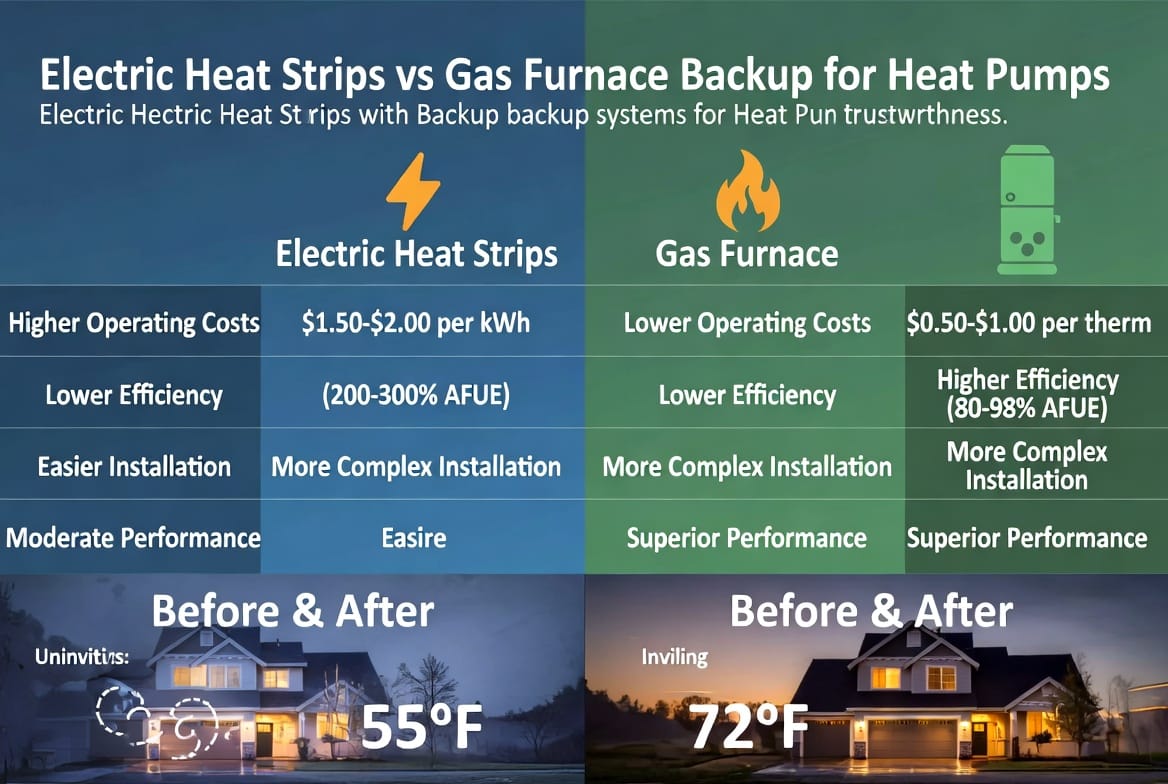
Pros and Cons of Each Backup Heat Option
Electric Heat Strips:
Advantages:
- Lower initial cost
- Easy installation and maintenance
- No combustion or venting concerns
- Reliable supplemental heat
Considerations:
- Higher electricity consumption during heavy use
- Less efficient in prolonged cold weather
- Potential for higher seasonal energy bills
Gas Furnace Backup (Dual Fuel):
Advantages:
- Superior efficiency in extreme cold
- Lower operating costs in many regions
- Greater heating capacity
- Extended system lifespan through balanced operation
Considerations:
- Higher installation investment
- Requires gas supply and proper venting
- Annual safety inspections recommended
- Slightly more complex controls
Energy Efficiency and Environmental Impact
Modern dual fuel systems often achieve excellent energy efficiency ratings, particularly when paired with high-SEER heat pumps and high-AFUE gas furnaces. This combination minimizes waste and reduces your carbon footprint compared to relying solely on electric resistance heat during cold periods.
Electric strips provide clean operation with no direct emissions at the home. Gas options benefit from highly efficient modern condensing furnaces that extract maximum heat from fuel.
Both solutions, when professionally designed and installed, support sustainable home comfort while meeting today’s stringent efficiency standards.
Maintenance and Longevity Tips
Regular professional maintenance keeps either backup option performing optimally:
- Annual HVAC tune-ups
- Filter changes every 1–3 months
- Ductwork inspection for leaks
- Thermostat calibration
Electric heat strips are relatively low-maintenance. Gas furnaces require additional attention to burners, heat exchangers, and venting for safety and efficiency.
With proper care, both systems deliver reliable service for 15+ years.
Selecting the Best Backup Heat for Your Climate
The ideal choice depends on several factors:
- Local climate patterns
- Current utility rates (electricity vs. natural gas/propane)
- Home size and insulation quality
- Long-term budget and comfort priorities
In warmer southern regions, electric heat strips often suffice perfectly. Northern homeowners or those experiencing frequent deep freezes frequently benefit from dual fuel gas furnace backups.
A qualified HVAC professional can perform a detailed load calculation and recommend the most suitable configuration for your specific property.
Conclusion: Choose the Right Backup Heat for Your Climate
Your HVAC backup heat source plays a critical role in year-round comfort and efficiency. Whether you select dependable electric heat strips or a powerful gas furnace in a dual fuel setup, the right system keeps your home warm, your energy bills manageable, and your family comfortable through every season.
Don’t leave your heating performance to chance. Professional system design ensures optimal integration, efficiency, and reliability tailored to your home and local conditions.
We help homeowners select and install the perfect heat pump backup solution for lasting comfort and peace of mind.
Get Expert Backup Heat Advice – Call Today for Free Consultation