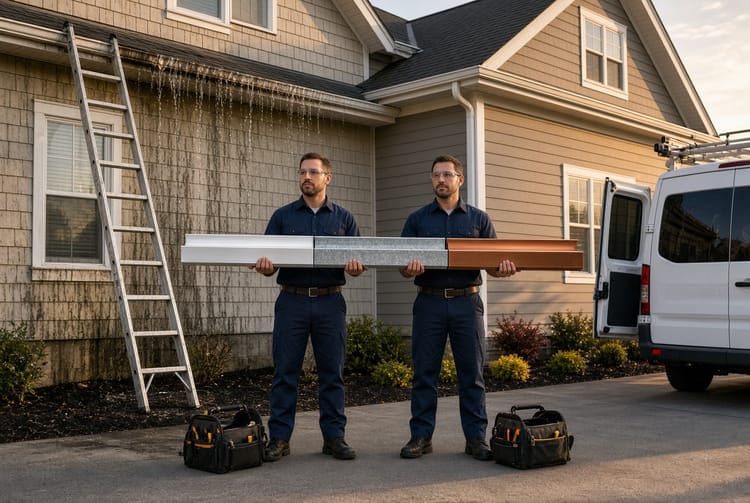
The Gutter Downspout Crimping: Tool-Free Connectors vs. Screws
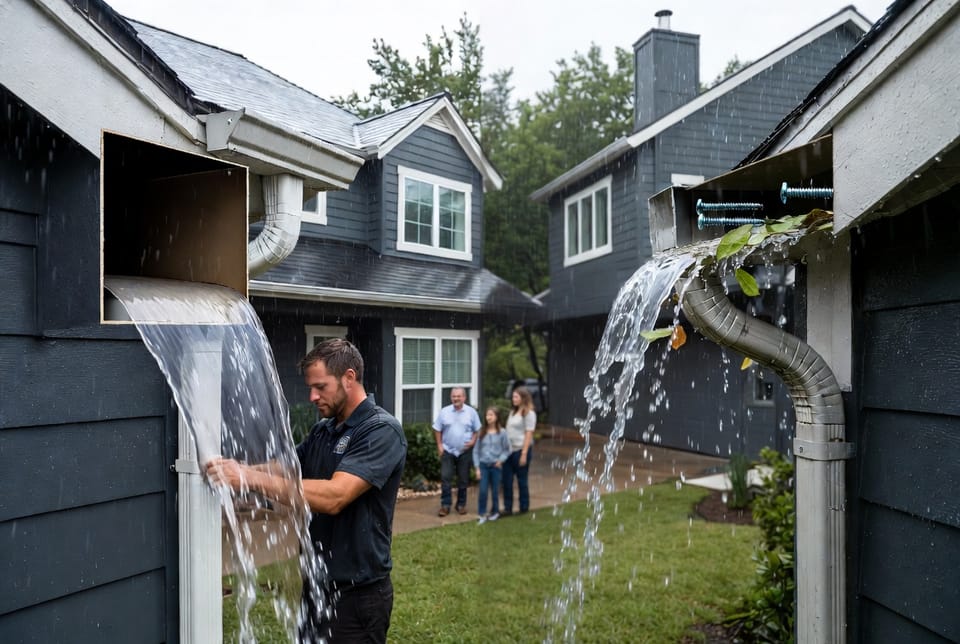
Proper gutter downspout connections are essential for protecting your home’s foundation from water damage. Many homeowners overlook this critical detail until clogs, leaks, or erosion appear. In this comprehensive guide, we compare two primary methods for joining downspout sections: traditional sheet metal screws and modern tool-free crimp connectors.
Get Expert Gutter Downspout Installation Today
Understanding these options helps you make informed decisions during gutter installation, repair, or replacement. Whether maintaining an existing system or installing new gutters, the right connection method significantly impacts long-term performance, maintenance needs, and overall home protection.
Why Downspout Connections Matter for Your Home
Downspouts channel rainwater from gutters to the ground or drainage system. Sections often need joining due to height or modular design. The connection type directly affects water flow efficiency and system durability.
Poor connections lead to:
- Frequent clogs from trapped debris
- Leaks that damage siding and foundation
- Loose parts during storms
- Higher maintenance costs over time
Choosing between screws and crimp connectors influences how well your gutter system handles Texas storms and seasonal leaf fall common in the Dallas area.
Crimp connectors (also called snap or tool-free connectors) offer a modern solution designed for smoother flow and easier installation. Traditional screws remain common but come with notable drawbacks.
Understanding Traditional Sheet Metal Screws for Downspouts
Sheet metal screws have been the standard for decades. Installers drill or drive self-tapping screws through overlapping downspout sections to secure them.
How Screw Connections Work
- Overlap the downspout sections by several inches.
- Pre-drill small holes if needed.
- Insert and tighten screws (usually 2-4 per joint).
- Seal with caulk or tape for weatherproofing.
This method creates a sturdy mechanical bond but introduces internal protrusions.
Key risks include:
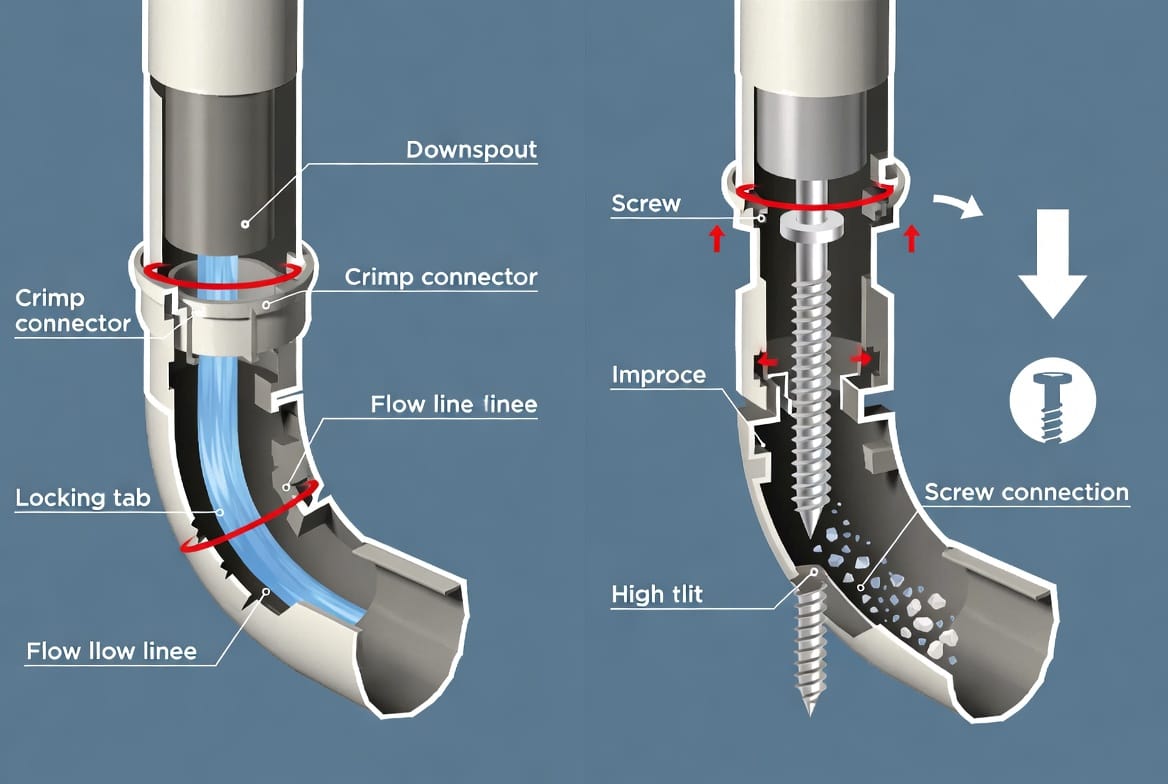
- Screw heads and tips protruding inside the downspout, catching leaves, twigs, and sediment.
- Potential for screws to loosen over time due to vibration and thermal expansion.
- More labor-intensive installation requiring tools and precise alignment.
In high-debris environments like suburban Dallas yards with mature trees, these internal obstacles accelerate clogging, forcing water to overflow gutters and erode soil near the foundation.
The Advantages of Tool-Free Crimp Connectors
Tool-free crimp connectors represent an innovative advancement in gutter systems. These pre-formed metal or heavy-duty plastic fittings allow sections to snap or crimp together without additional fasteners.
Installation Process for Crimp Connectors
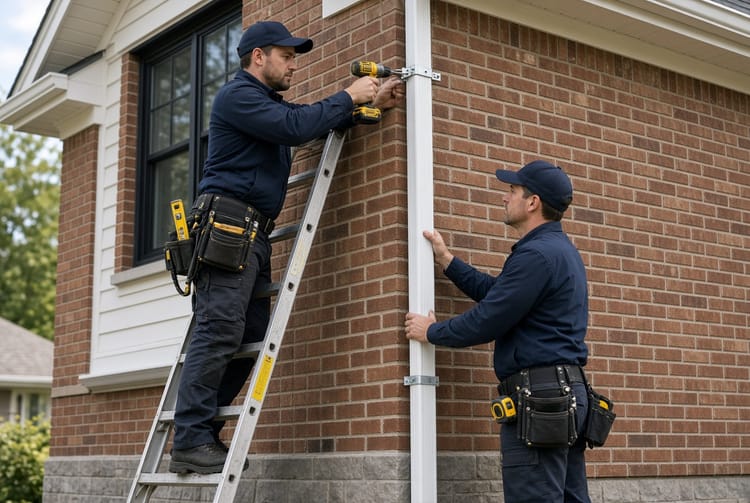
- Align the downspout sections with the connector.
- Use a simple crimping tool or hand pressure (many designs are tool-free) to lock the connection securely.
- The connector creates a smooth, seamless interior channel.
This method eliminates internal obstructions, promoting unrestricted water flow.
Benefits of crimp connectors:
- Reduced clogging — Smooth interior prevents debris buildup.
- Faster installation — No drilling or screwing required.
- Better durability — Secure fit resists loosening in wind or heavy rain.
- Professional appearance — Cleaner look without visible fasteners.
- Easier maintenance — Fewer blockages mean less frequent cleaning.
Homeowners in areas with heavy rainfall or autumn leaf drop particularly appreciate the low-maintenance nature of crimp systems.
Direct Comparison: Screws vs. Crimp Connectors
When comparing gutter downspout crimping options, several factors stand out:
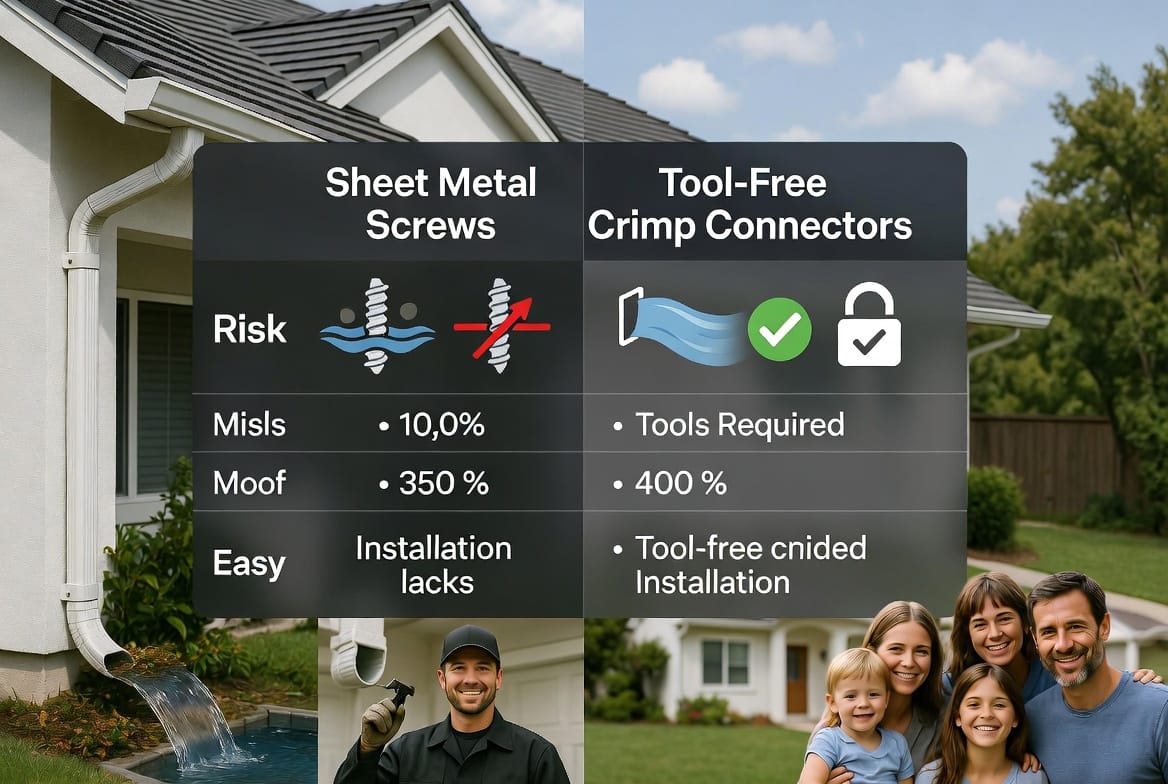
- Flow Efficiency: Crimp connectors provide a smooth interior pathway. Screws create turbulence and catch points that slow water and trap material.
- Installation Time: Tool-free crimps significantly reduce labor. Screw methods require more steps and tools.
- Longevity: Crimp joints maintain integrity longer without loosening. Screws may need periodic tightening.
- Clog Resistance: Dramatic difference — crimps minimize buildup; screws increase maintenance frequency.
- Cost Effectiveness: Initial costs are comparable, but crimps save money over time through reduced repairs and cleaning.
Installation Best Practices for Optimal Results
Successful downspout connection depends on proper technique regardless of method.
For Screw Connections:
- Ensure adequate overlap (at least 4-6 inches).
- Use corrosion-resistant screws.
- Apply high-quality exterior sealant.
- Check alignment to prevent leaks.
For Crimp Connectors:
- Select connectors matching your downspout dimensions and material (aluminum, steel, etc.).
- Follow manufacturer crimping instructions carefully.
- Test the joint by running water through the system.
- Combine with proper downspout brackets for full support.
Professional installers recommend evaluating your specific property needs. Homes with extensive tree cover or poor drainage benefit most from crimp technology.
Common Problems and How to Address Them
Many Dallas-area homeowners face recurring issues traceable to downspout connections:
- Overflow during storms: Often caused by partial clogs at screw joints.
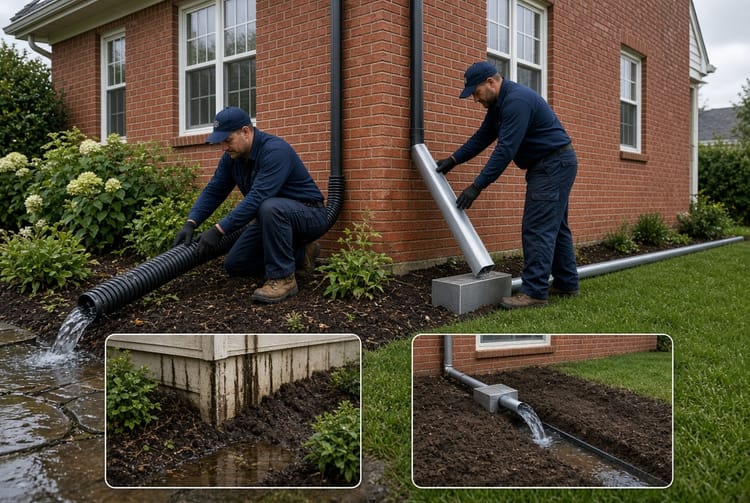
- Foundation erosion: Water splashing from loose or clogged downspouts.
- Noisy rattling: Loose screws vibrating in wind.
- Premature gutter failure: Repeated stress from poor connections.
Switching to or incorporating tool-free crimp connectors during repairs resolves many of these challenges effectively.
Long-Term Benefits of Choosing the Right Connection Method
Investing in quality downspout connections protects your largest asset — your home.
Key advantages include:
- Extended gutter system lifespan
- Reduced risk of water damage claims
- Lower maintenance demands
- Enhanced curb appeal with cleaner lines
- Better overall water management for your property
In Texas climate conditions, where sudden heavy rains are common, reliable downspouts make a measurable difference in home preservation.
When to Consider Professional Gutter Services
While DIY installation is possible for handy homeowners, professional assessment ensures optimal results. Experts evaluate roof pitch, downspout placement, local rainfall patterns, and soil conditions to recommend the best connection strategy.
Professional teams use high-quality materials and have the experience to integrate crimp connectors seamlessly into existing or new systems. They also ensure compliance with local building practices for maximum performance.
Maintaining Your Downspout System Year-Round
Regular maintenance complements good connections:
- Inspect joints seasonally for signs of wear.
- Flush downspouts to clear minor buildup.
- Clear surrounding areas of debris.
- Address issues promptly before small problems escalate.
With crimp connectors, maintenance becomes far less frequent and intensive.
Making the Smart Choice for Your Dallas Home
The decision between sheet metal screws and tool-free crimp connectors ultimately comes down to prioritizing long-term performance and convenience.
Modern crimp technology offers clear advantages in flow efficiency, ease of installation, and reduced maintenance. For most homeowners, the upgrade to crimps provides excellent return on investment through fewer headaches and better protection.
Choose the right downspout connection method today to safeguard your home tomorrow. Whether upgrading existing gutters or planning a full installation, tool-free crimp connectors represent the superior choice for reliable, efficient water management.
Ready to improve your gutter system with professional-grade downspout solutions? Our experienced team specializes in high-quality gutter installation and repair tailored to Dallas-area homes.
Don’t wait for the next storm to reveal hidden problems — secure reliable protection with expert help today.
Switch to Tool-Free Crimp Downspouts – Free Consultation