The Grain Mite: Tiny Pest of Stored Grains and Flour
In the quiet corners of every home pantry, restaurant storage room, and commercial grain facility, an almost invisible threat can quietly multiply and compromise the safety of our most basic food supplies. The grain mite is a microscopic arachnid that thrives in damp conditions and turns valuable stored grains and flour into contaminated waste. Though barely visible to the naked eye, this tiny pest creates significant problems through its rapid reproduction and the distinctive mite dust it leaves behind. Understanding its behavior, recognizing early signs, and applying thorough control measures are essential steps every homeowner and food handler should take to protect their provisions.
Eliminate Grain Mites Today – Call Now!
This comprehensive guide explores the biology of the grain mite, the clear indicators of an infestation, and the practical, effective strategies required to eliminate the problem and prevent its return. With authoritative knowledge and consistent action, the risk posed by these pests can be reduced to nearly zero, restoring confidence in every bag of flour and every container of cereal.
Understanding Grain Mite Behavior
Grain mites belong to a group of microscopic creatures that specialize in feeding on stored food products high in carbohydrates and protein. Measuring less than half a millimeter in length, they remain invisible without magnification yet possess a remarkable ability to colonize large quantities of grain in a short time. Their soft, translucent bodies allow them to move easily between the particles of flour, wheat, oats, and similar products.
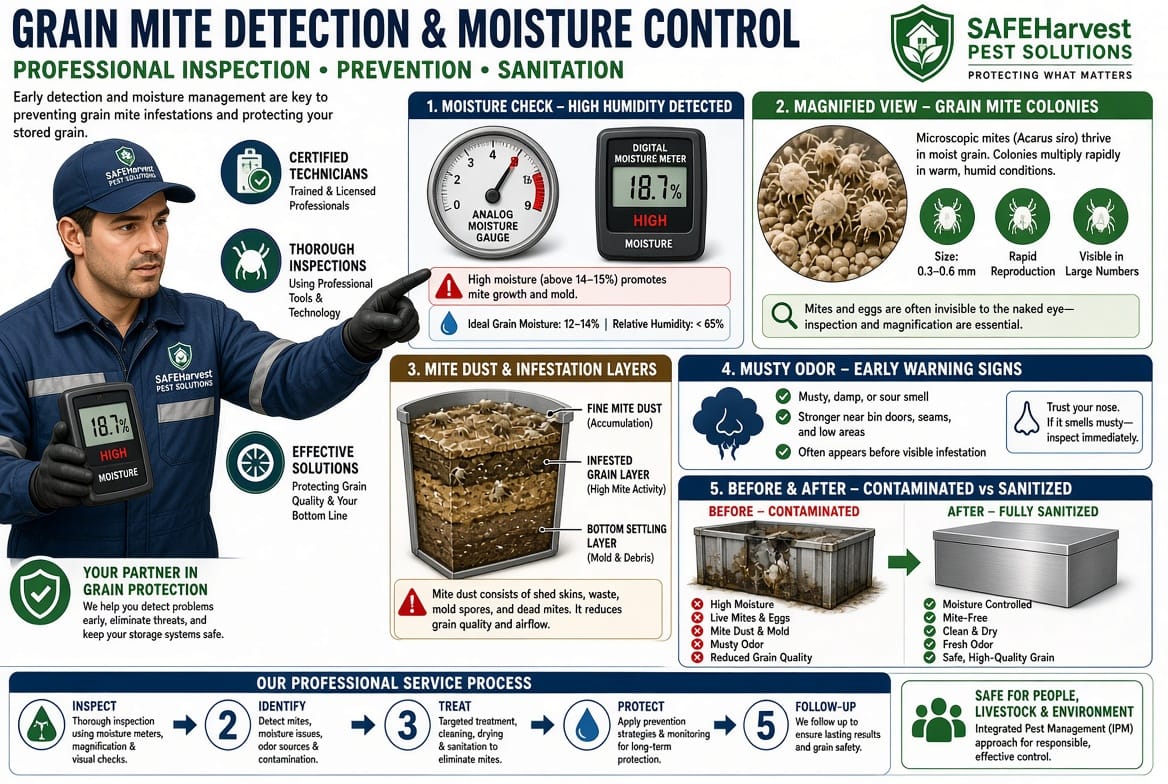
The single most important factor driving grain mite success is moisture. These pests cannot survive long in dry environments. Relative humidity above 65 percent combined with temperatures between 70 and 85 degrees Fahrenheit creates ideal conditions for rapid population growth. When grain or flour absorbs even modest amounts of humidity from the surrounding air—whether through poor storage, leaking pipes, or seasonal dampness—the mites respond by multiplying exponentially.
As colonies expand, the mites and their shed skins, feces, and dead bodies accumulate into a fine brownish powder commonly called mite dust. This powder coats the surface of the product and often becomes airborne when containers are disturbed. The mites themselves remain active within the mass, feeding continuously and producing more of the characteristic dust. Because they prefer the upper layers of stored material where oxygen and moisture levels are highest, the infestation frequently appears first as a dusty film on the top of open bags or bins.
Grain mites also demonstrate a strong preference for products that have already begun to deteriorate slightly. Flour that has absorbed ambient humidity, grains showing early signs of mold, or pet food left in partially sealed packaging become prime targets. Once established, the colony can spread to neighboring packages through tiny gaps or by hitchhiking on utensils and hands. Their ability to remain dormant for short periods when conditions worsen allows them to persist until favorable moisture returns, making complete elimination more challenging without systematic intervention.
Recognizing the Signs of Infestation
Early detection is the most reliable way to limit damage. Several unmistakable indicators reveal the presence of grain mites before the problem becomes severe.
The most obvious visual clue is the appearance of brown dust or a powdery coating on the surface of flour, cereal, or whole grains. Unlike ordinary flour dust, this material feels slightly gritty and often carries a distinctive musty odor. When a container is gently tapped or stirred, the dust may rise in a fine cloud, and closer inspection under good light sometimes reveals tiny moving dots—the living mites themselves.
A persistent musty smell emanating from pantry shelves or storage bins is another reliable warning. This odor results from the metabolic activity of large mite populations and the secondary growth of molds that often accompany high moisture. The smell intensifies as the infestation progresses and can permeate cardboard packaging and plastic containers.
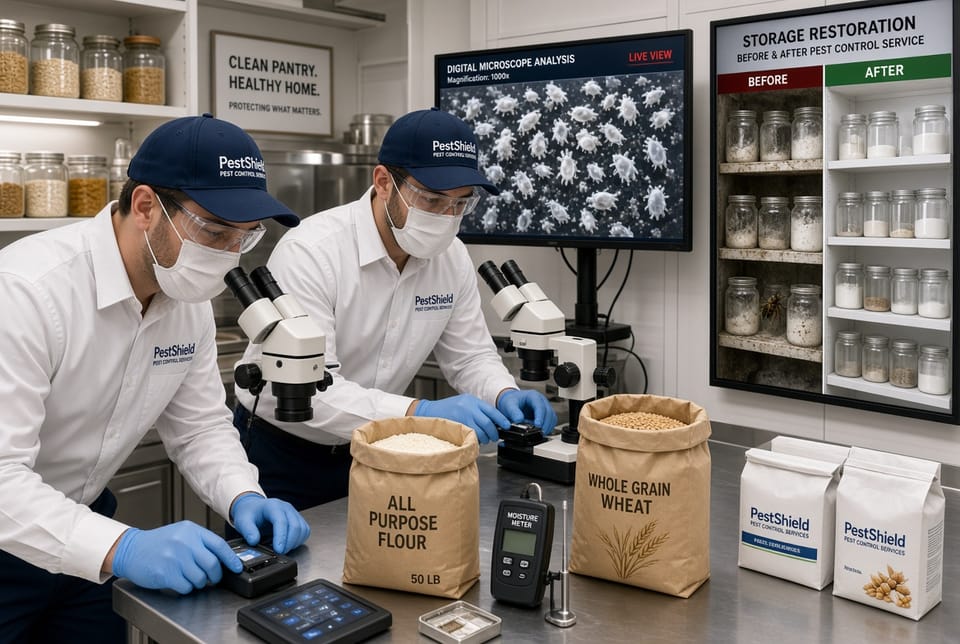
Direct observation of moving mites confirms the diagnosis. Although individual mites are difficult to see without magnification, clusters of them appear as shifting brown or tan patches when the product is examined under a bright lamp or with a simple hand lens. In heavy infestations the surface of the flour or grain may seem to shimmer with activity.
Additional secondary signs include clumping of flour caused by mite secretions and elevated moisture, the presence of fine webbing-like strands formed by accumulated debris, and the discovery of mites on nearby surfaces such as shelf edges or utensil drawers. Pet food, bird seed, and dried baking mixes frequently show the same symptoms and should be inspected with equal care.
Effective Control Strategies
Successful elimination of grain mites rests on three interconnected actions: discarding infested materials, reducing moisture, and cleaning thoroughly. Each step reinforces the others and creates an environment hostile to future colonization.
Begin by isolating and discarding every package that shows signs of mite dust, musty odor, or visible activity. Transferring contents to new containers is rarely sufficient because microscopic mites and their eggs remain attached to the original packaging. Seal discarded items in heavy plastic bags before removal from the home to prevent spreading the pests during transport. In commercial settings, larger quantities may require professional disposal protocols to meet food-safety regulations.
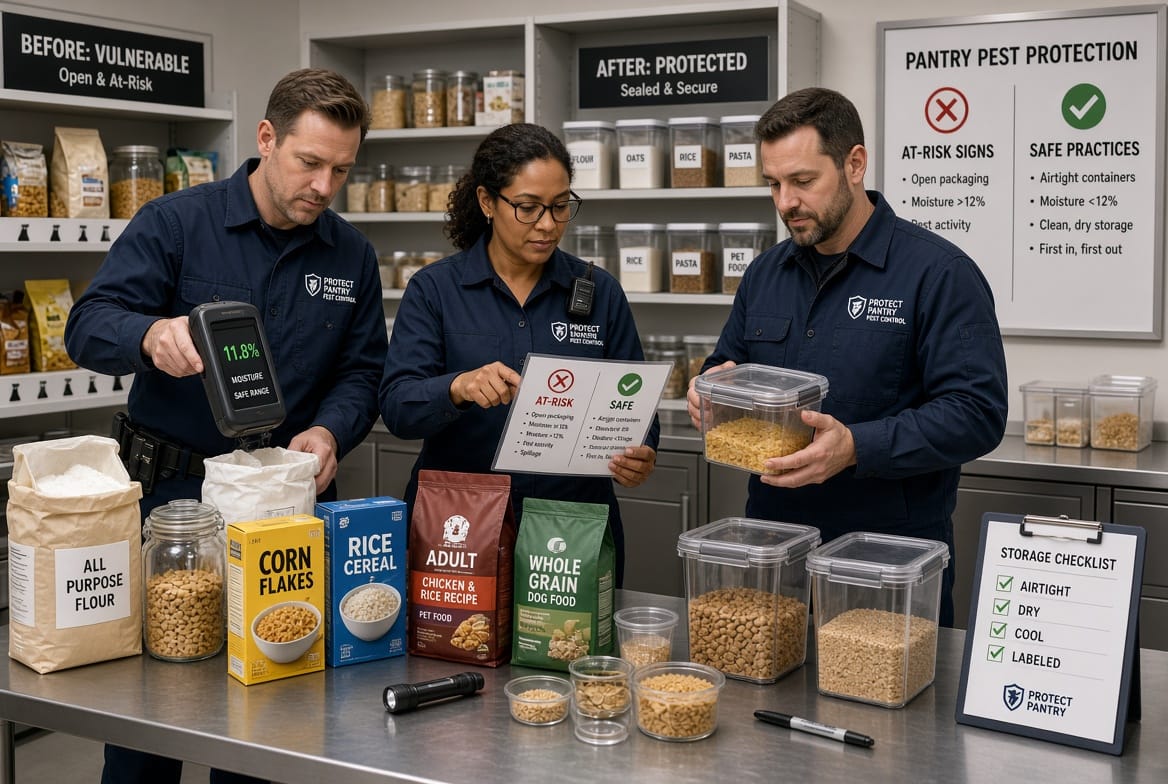
Next, focus relentlessly on moisture reduction. Grain mites cannot reproduce when relative humidity stays below 60 percent. Use a reliable hygrometer to monitor pantry conditions and address any sources of excess humidity. Repair leaking pipes, improve ventilation, install a small dehumidifier if necessary, and avoid storing dry goods near dishwashers, sinks, or exterior walls that experience temperature fluctuations. Transfer remaining uninfested products into airtight glass or heavy plastic containers that limit both moisture absorption and pest entry.
Thorough cleaning forms the final and equally critical phase. Empty the entire storage area and vacuum every shelf, corner, and crevice, paying special attention to joints and under-shelf surfaces where dust accumulates. Follow vacuuming with a wipe-down using a mild detergent solution, then dry all surfaces completely. For added protection, a light application of food-safe diatomaceous earth in cracks can deter residual mites, although the primary goal remains physical removal and moisture control rather than chemical reliance.
After cleaning, allow the storage area to remain empty and well-ventilated for at least 24 hours so residual moisture can dissipate. Only then return cleaned, inspected products to the shelves. Ongoing monitoring for the next several weeks ensures that any overlooked eggs have not hatched into a new generation.
Prevention Practices for Long-Term Protection
Prevention is far simpler and less costly than repeated remediation. Store all grains, flour, cereals, and pet foods in airtight containers immediately after purchase. Choose packaging that creates a true moisture barrier and inspect every new bag for early signs of dampness or dust before bringing it into the main storage area.
Rotate stock regularly using a first-in, first-out system so older products are consumed before newer ones. Keep pantry temperatures moderate and avoid placing storage units against exterior walls or near heat-generating appliances. In humid climates, periodic checks with a moisture meter provide early warning of rising humidity levels that could favor mite development.
Commercial kitchens and grain-handling facilities benefit from scheduled professional inspections that combine visual examination with moisture mapping. These proactive visits catch small problems before they escalate into large-scale contamination events.
Why Professional Assistance Matters
While many light infestations can be resolved with careful home measures, heavier or recurring problems often require specialized expertise. Professional pest control technicians possess the training, equipment, and experience to locate hidden moisture sources, identify the full extent of an infestation, and implement integrated strategies that address both the mites and the environmental conditions supporting them. Their systematic approach reduces the chance of incomplete treatment and helps restore full confidence in the safety of stored food.
Grain mites may be microscopic, yet their impact on food quality and household peace of mind is substantial. By recognizing the importance of moisture control, acting quickly when brown dust or musty odors appear, and maintaining rigorous cleaning and storage standards, anyone can keep these tiny pests from gaining a foothold. The combination of informed vigilance and decisive action transforms a potential pantry crisis into a manageable and temporary inconvenience.
Call for Professional Pantry Pest Control Now