The Freezer Evaporator Coil Ice Buildup: Causes and Defrost System Repair
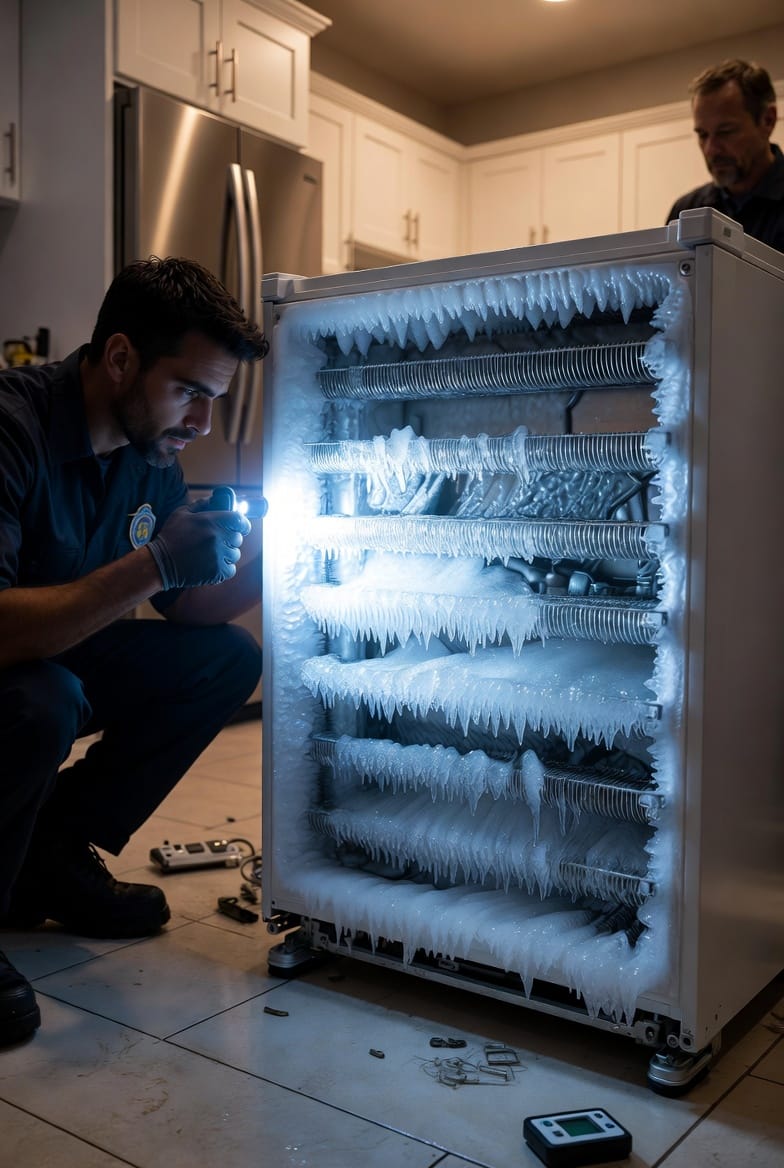
When your frost-free freezer suddenly stops performing, one of the most common yet overlooked culprits is freezer evaporator coil ice buildup. At first glance, it may seem like a minor frost issue, but this problem signals a failure in the defrost system that can quickly lead to spoiled food, higher energy bills, and even permanent damage to your appliance if left unaddressed.
Restore Your Freezer Today – Expert Defrost Repair!
Our team of certified technicians has resolved thousands of these cases with reliable, long-lasting defrost system repair. In this comprehensive guide, we explain exactly why ice builds up on evaporator coils in frost-free models, the clear warning symptoms, and the professional repair process that restores your freezer to peak performance. You’ll finish reading with full confidence that this issue is fixable — quickly, safely, and affordably.
Understanding Frost-Free Technology and the Role of the Evaporator Coil
Frost-free freezers are designed for convenience. Unlike older manual-defrost models, they use an automatic defrost system to prevent ice from accumulating on the evaporator coil — the hidden component at the back of the freezer that absorbs heat and keeps temperatures at 0°F or below.
The evaporator coil works by circulating refrigerant, but moisture from the air inside the freezer naturally condenses on its cold surface. In a properly functioning system, a timed heating cycle melts this frost before it becomes a problem. When that cycle fails, ice grows unchecked, eventually encasing the entire coil and blocking airflow.
This is not normal wear and tear. It is a clear indicator of defrost system failure — most often involving the defrost heater, timer/control board, or sensor. Ignoring it risks food safety and forces your compressor to run nonstop, shortening the life of your appliance.
What Causes Ice Buildup on Freezer Evaporator Coils?
Three primary components must work in perfect harmony for the defrost cycle to succeed. Failure in any one of them triggers rapid freezer evaporator coil ice buildup.
- Defrost Heater Failure: The electric heating element that warms the coil during the defrost cycle burns out or develops an open circuit. Without heat, frost never melts and continues to accumulate layer after layer.
- Defrost Timer or Control Board Malfunction: Modern freezers use either a mechanical timer or an electronic control board to initiate the defrost cycle every 8–12 hours. When this component sticks, fails to advance, or loses power, the heater never turns on.
- Defrost Sensor (Thermostat) Issues: This temperature-sensitive switch tells the system when the coil has reached a safe melting temperature (usually around 40–50°F) and shuts off the heater. A faulty sensor may keep the heater off too long or prevent the cycle from starting altogether.
Additional contributing factors can accelerate the problem, such as poor door seals allowing humid air to enter, but the root cause in 90% of frost-free failures traces directly back to the defrost system. Our technicians always perform a complete diagnostic to identify the exact failed part rather than guessing.
Common Symptoms of Defrost System Failure
Recognizing the early signs helps you act before major damage occurs. Watch for these key symptoms:
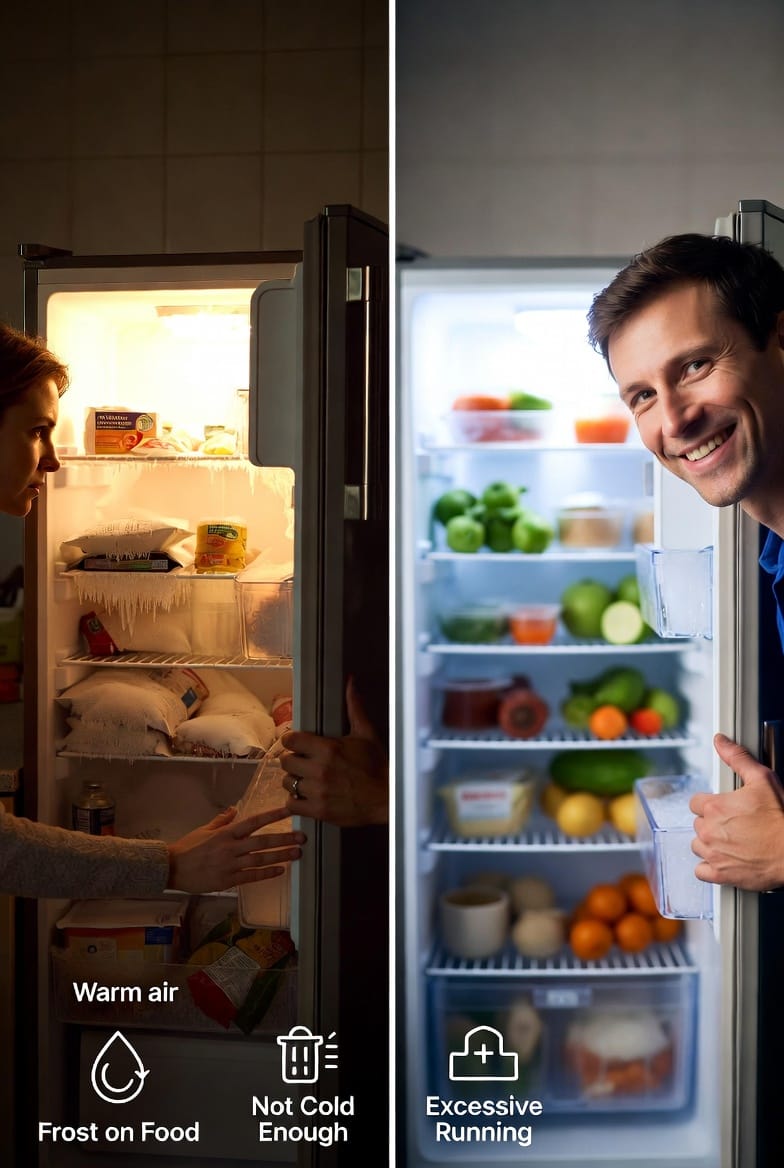
- Heavy frost or ice on food packages and interior walls — even though the model is supposed to be frost-free.
- Freezer not cold enough, with temperatures rising above 10°F, causing partial thawing of items.
- Excessive compressor running — the unit cycles almost constantly because blocked airflow prevents proper cooling.
- Unusual noises or longer run times leading to higher electricity bills.
- Visible ice blocking vents inside the freezer compartment.
If you notice any combination of these, ice buildup means defrost failure. The good news? Professional repair restores full function in a single service visit for most households.
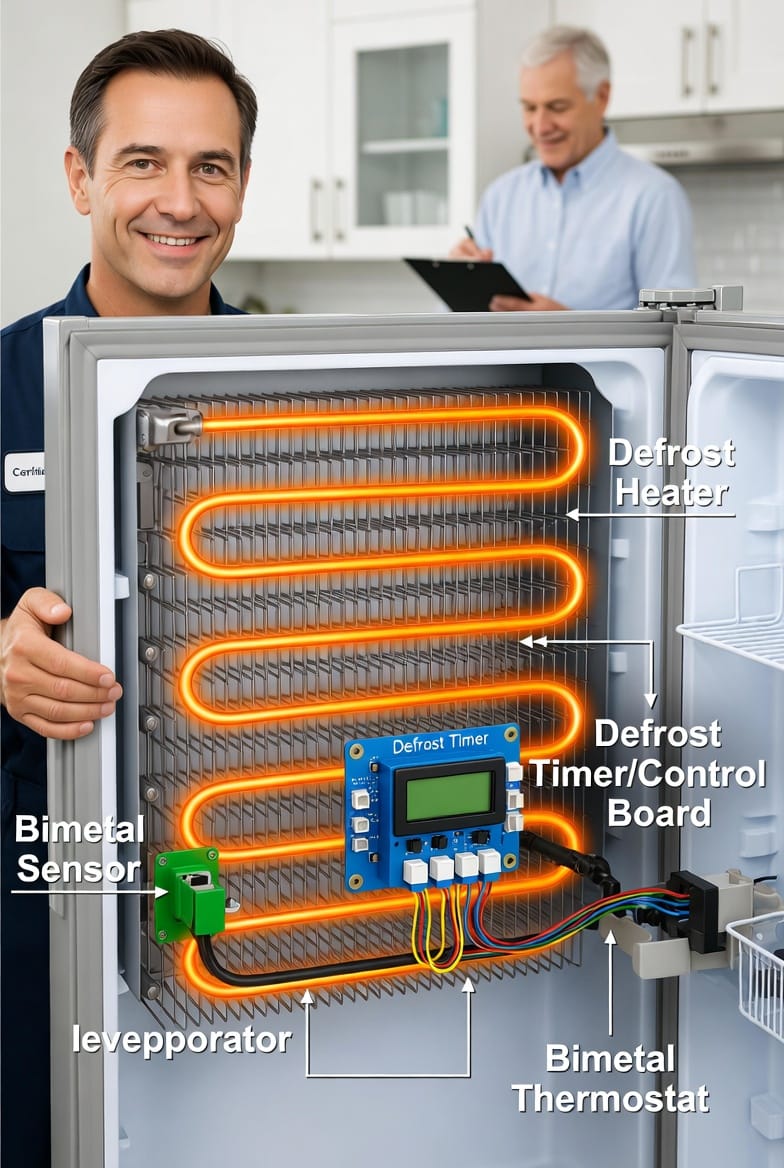
How the Defrost System Works in Your Frost-Free Freezer
During normal operation, the defrost timer or control board activates the heater for 20–30 minutes several times daily. The heater warms the evaporator coil, melting accumulated frost. Meltwater drains through a tube into an evaporation pan beneath the refrigerator, where it harmlessly evaporates. The defrost sensor ensures the cycle stops once the coil reaches the proper temperature, preventing unnecessary energy use or overheating.
When any single component fails, the entire automatic process collapses. Ice forms faster than the system can handle, creating the very buildup you see. This cycle explains why the problem worsens gradually — small frost turns into a solid block within weeks.
Professional Diagnosis: What Our Technicians Check First
Upon arrival, our experts follow a proven, systematic approach:
- Confirm the complaint and measure actual freezer temperature.
- Remove the rear evaporator cover to visually inspect the coil for ice thickness.
- Test the defrost heater for continuity and proper resistance.
- Verify the defrost timer or control board advances correctly through its cycles.
- Check the defrost sensor for accurate temperature response.
This thorough diagnosis takes less than 30 minutes and eliminates guesswork. We never replace parts unnecessarily — only what has truly failed.
The Defrost System Repair Process – Step by Step
Our defrost system repair is designed to be efficient, clean, and long-lasting. Here’s what happens during a typical service call:
- Safe access and ice removal: We carefully thaw and remove all ice from the evaporator coil without damaging fins or tubing.
- Component replacement: Faulty heater, timer, control board, or sensor is swapped with OEM-quality parts.
- System testing: We run multiple full defrost cycles while monitoring temperatures and electrical readings.
- Final cleanup and verification: The freezer is reassembled, tested for proper airflow and cooling, and left spotless.
Most repairs are completed in one visit, with your food returned safely to the freezer the same day. Customers consistently report quieter operation, lower energy use, and rock-solid temperatures after service.
Why Prompt Repair Matters – Risks of Delaying Service
Continued freezer evaporator coil ice buildup does more than inconvenience you. Blocked airflow forces the compressor to work overtime, raising energy costs by up to 30%. Over time, the compressor may overheat or fail entirely — an expensive replacement that can exceed the cost of your original unit. Food safety is also compromised when temperatures fluctuate.
The reassuring truth: this is a routine repair for our team. We carry the most common parts on every truck, so you avoid multiple visits and long downtime.
Prevention Tips to Keep Your Freezer Running Efficiently
After repair, simple habits help prevent recurrence:
- Check door seals monthly for gaps or wear.
- Avoid overloading the freezer, which restricts airflow.
- Keep the condenser coils beneath or behind the unit clean and dust-free.
- Schedule annual professional maintenance for peace of mind.
Ice Buildup Means Defrost Failure – Take Action Today
If your frost-free freezer is showing signs of freezer evaporator coil ice buildup, don’t wait for complete failure. Ice buildup means defrost failure, and the longer you delay, the greater the risk to your food and appliance.
Our expert technicians provide fast, reliable defrost system repair that gets your freezer back to factory performance. We bring confidence and cold air back to your kitchen — every single time.
Expert Freezer Coil Repair – Book Your Fix Today!