The Federal Pacific Panel Hazard: Identifying and Replacing a Known Fire Risk
In the world of home electrical systems, safety should always come first. If you're a homeowner, especially in older properties, you might be unaware of a lurking danger in your electrical panel. Federal Pacific Electric (FPE) panels, equipped with Stab-Lok breakers, have been identified as a significant fire risk due to their tendency to fail when needed most. This article delves into the specifics of this hazard, how to spot it in your home, and why prompt replacement is essential. With a reassuring approach grounded in expertise, we'll guide you through the steps to ensure your family's safety and peace of mind.
Replace Your Dangerous FPE Panel Now – Call for Safety!
As an authoritative voice in electrical safety, we emphasize that while this issue is serious, it's entirely manageable with professional intervention. By understanding the problem and taking action, you can transform a potential threat into a secure, reliable system. Let's explore this in detail.
Understanding Federal Pacific Panels: A Historical Overview
Federal Pacific Electric Company, often abbreviated as FPE, was a prominent manufacturer of electrical panels from the 1950s through the 1980s. These panels were widely installed in homes across the United States, particularly in suburban developments during the post-war housing boom. At their peak, FPE panels were praised for their innovative design, but time and testing have revealed critical flaws.
The core component of these panels is the Stab-Lok breaker, a unique circuit breaker design that "stabs" into the bus bar for connection. Unlike modern breakers, which use more robust mechanisms, Stab-Lok breakers were intended to provide overcurrent protection by tripping during overloads or short circuits. However, extensive investigations have shown that these breakers often fail to perform this vital function.
Why does this matter? Electrical panels are the heart of your home's power distribution. They protect against overloads that could lead to overheating wires, melted insulation, and ultimately, electrical fires. When a breaker doesn't trip, it allows dangerous conditions to persist, turning a minor issue into a catastrophe. According to industry reports, homes with FPE panels are at a higher risk of fire incidents compared to those with updated systems.
To put this in perspective, consider the scale: Millions of these panels were installed nationwide. While not every FPE panel will fail immediately, the risk accumulates over time, especially in homes with increasing electrical demands from modern appliances like air conditioners, electric vehicles, and home offices.
The Hidden Danger: How Stab-Lok Breakers Fail
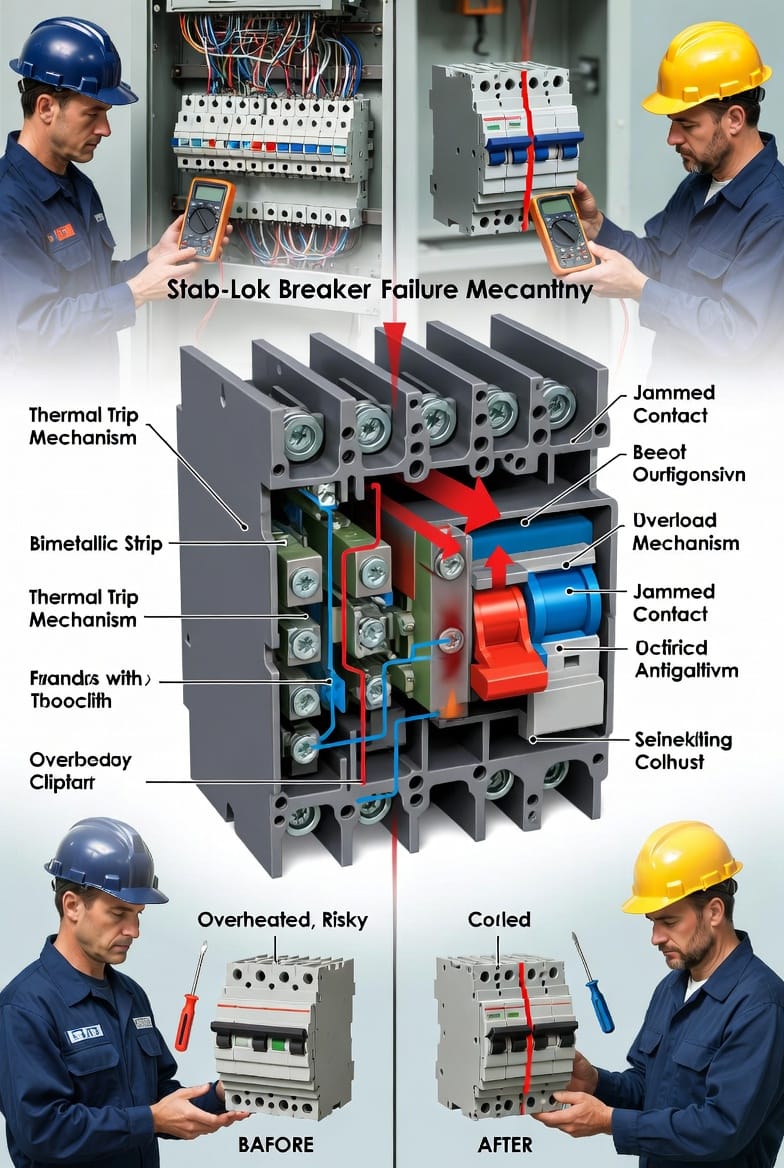
At the root of the Federal Pacific panel hazard is the failure mechanism of the Stab-Lok breakers. These breakers are supposed to detect excessive current and interrupt the flow to prevent damage. However, independent testing by organizations like the Consumer Product Safety Commission (CPSC) and Underwriters Laboratories (UL) has demonstrated alarming failure rates.
- Jamming Issues: The breaker's internal components can jam due to wear, corrosion, or manufacturing defects, preventing it from tripping even under severe overload.
- Arcing and Overheating: Without proper tripping, electrical arcing can occur at the bus bar connections, leading to hotspots that ignite nearby materials.
- False Sense of Security: Breakers may appear functional during routine checks but fail catastrophically during real overloads.
Studies from the 1980s onward revealed that up to 25-50% of Stab-Lok breakers tested did not trip at rated currents. This isn't just a theoretical risk; real-world incidents have linked FPE panels to numerous house fires, resulting in property damage, injuries, and even fatalities.
But here's the reassuring part: Awareness is the first step toward resolution. Homeowners who identify and replace these panels significantly reduce their risk. Modern panels, such as those from reputable brands like Square D or Siemens, incorporate advanced technology like arc-fault circuit interrupters (AFCIs) and ground-fault circuit interrupters (GFCIs), providing layers of protection that FPE systems lack.
Identifying a Federal Pacific Panel in Your Home
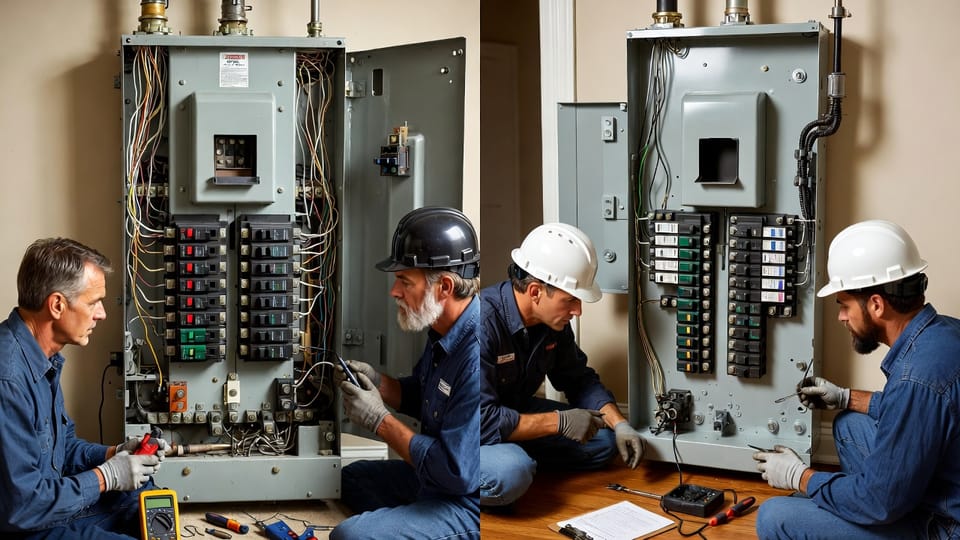
Spotting an FPE panel isn't always straightforward, but with a few key indicators, you can confirm its presence. Safety first: Never open your electrical panel without proper precautions, and always consult a licensed electrician for inspections.
Here's how to identify one:
- Labeling and Branding: Look for the "Federal Pacific Electric" or "FPE" logo on the panel door or interior. Panels often have a distinctive silver or gray exterior.
- Breaker Design: Stab-Lok breakers feature a red stripe on the switch handle, a hallmark that's easy to spot. They come in single-pole (1/2-inch wide) and double-pole (1-inch wide) varieties.
- Installation Era: If your home was built or renovated between 1950 and 1990, especially in regions like the Northeast or Midwest where FPE was popular, it's worth checking.
- Location: Typically found in basements, garages, or utility closets. Serial numbers starting with "FP" or "Stab-Lok" confirm the model.
If you're unsure, a quick visual inspection by a professional can verify. Remember, even if your panel seems fine now, the latent risk warrants attention. Procrastination isn't an option when it comes to electrical safety.
The Broader Context: Other Problematic Panel Brands
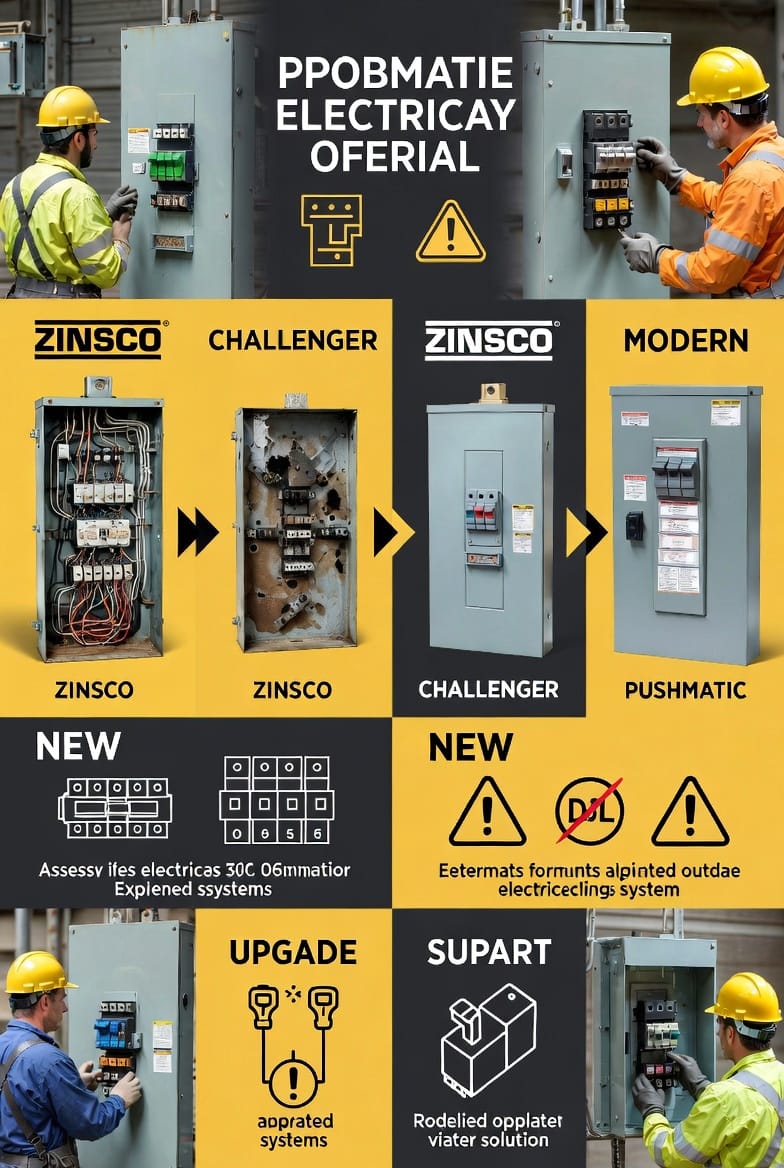
While FPE panels are notorious, they're not alone in posing risks. Several other outdated or defective brands have similar issues, often involving faulty breakers or poor connections. Recognizing these can help if your home has mixed systems or if you're buying an older property.
- Zinsco Panels: Known for aluminum bus bars that corrode, leading to arcing and fires. Breakers may not trip reliably.
- Challenger Panels: Certain models from the 1980s have breakers prone to melting or failing under load.
- Pushmatic Panels: While generally reliable, older versions can have stiff breakers that don't operate smoothly, increasing hazard potential.
These brands, like FPE, were once standard but have been phased out due to safety concerns. If you encounter any, treat them with the same urgency.
Why Replacement Is Crucial: Benefits and Process
Replacing a Federal Pacific panel isn't just about avoiding risks; it's an investment in your home's future. Modern electrical systems offer enhanced capacity, energy efficiency, and compliance with current codes, which can increase property value and lower insurance premiums.
The replacement process typically involves:
- Initial Assessment: A licensed electrician evaluates your panel, checks for signs of damage like burn marks or loose connections, and recommends a suitable upgrade.
- Permitting and Planning: Obtaining necessary permits ensures compliance with local building codes.
- Installation: Removing the old panel and installing a new one, often with 100-200 amp service to handle contemporary needs.
- Testing and Certification: Thorough testing to confirm everything operates safely.
Costs can range from $1,500 to $3,000, depending on your home's size and location, but consider it preventive maintenance that averts far costlier fire damage. Many homeowners report peace of mind as the top benefit, knowing their system is robust against overloads.
From a SEO perspective, searching for "Federal Pacific panel replacement near me" or "Stab-Lok breaker fire risk" often leads to resources like this, highlighting the importance of informed decisions.
Common Myths and Reassurances
Myth: "My FPE panel has worked fine for decades, so it's safe." Reality: Failures can occur suddenly, especially with aging components.
Myth: "Replacement is too disruptive." Reality: Professionals complete the job in a day, with minimal downtime.
We're here to reassure you: With expert help, this transition is smooth and empowering. You're not alone; countless homeowners have successfully upgraded.
Real-Life Impacts and Statistics
Data from the National Fire Protection Association (NFPA) indicates that electrical failures cause around 51,000 home fires annually in the U.S., with outdated panels contributing significantly. Case studies from the CPSC detail FPE-related incidents where non-tripping breakers led to extensive damage.
In one documented event, a Maryland home suffered a fire starting in the panel box, traceable to a Stab-Lok failure. Fortunately, early detection limited harm, but it underscores the stakes.
By replacing, you join a growing number of proactive homeowners reducing these statistics.
Choosing the Right Professional
Select an electrician with experience in FPE replacements. Look for certifications from the National Electrical Contractors Association (NECA) and positive reviews. They should provide a detailed quote and warranty.
Final Warning and Call to Action
If you have a Federal Pacific panel, replacement is urgent. Our team is ready to assess your system and guide you toward a safer home.
In conclusion, addressing the Federal Pacific panel hazard through identification and replacement safeguards your loved ones and property. Stay informed, act decisively, and enjoy the security of a modern electrical setup.
Eliminate the Federal Pacific Hazard – Free Evaluation, Call Now