The Drugstore Beetle vs. Cigarette Beetle: How to Tell Them Apart
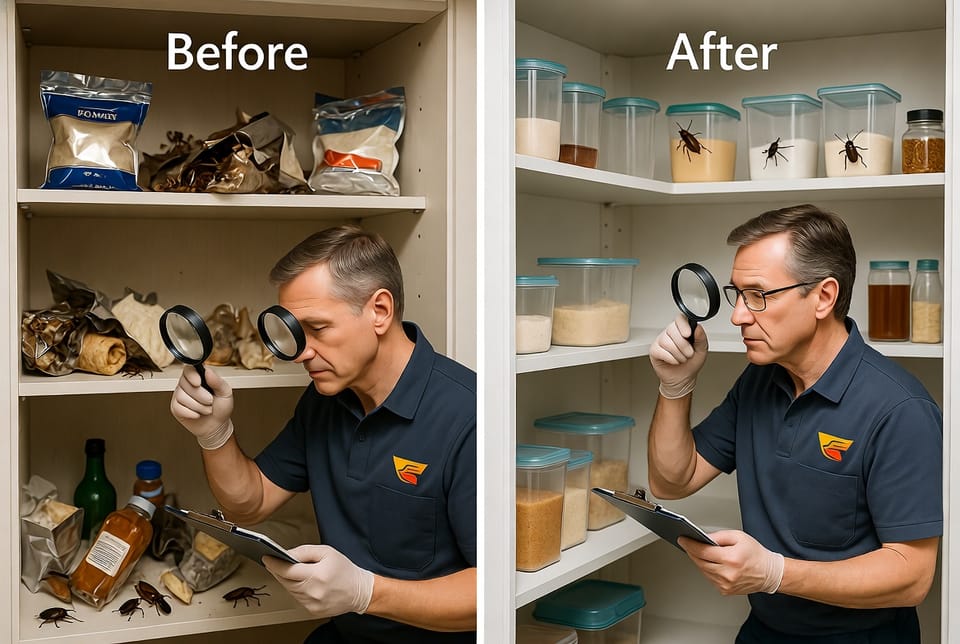
In the world of household and commercial pest control, few challenges cause more frustration and confusion than tiny beetles invading stored foods. Homeowners and business owners often struggle to distinguish between the drugstore beetle (Stegobium paniceum) and the cigarette beetle (Lasioderma serricorne). This identification confusion can lead to ineffective treatments, recurring infestations, and unnecessary stress.
Identify & Eliminate Beetles Today – Call Now!
At our professional pest management service, we emphasize that accurate identification is the foundation of successful control. Understanding the subtle yet critical differences between these two stored-product pests empowers you to protect your home, pantry, and valuable goods effectively. In this comprehensive guide, we'll explore their biology, appearance, behaviors, and tailored management strategies.
Why Proper Identification Matters for Effective Pest Control
Misidentifying these beetles often results in wasted time and resources. Both species are small, reddish-brown, and target similar pantry items, leading many to assume a one-size-fits-all approach works. However, their slight biological variations influence optimal treatment timing, methods, and prevention.
Correct identification means effective treatment — and peace of mind for your family or business. Our experienced technicians are here to help with expert pest ID and customized solutions. Call (855) 321-2977 today for prompt assistance.
Understanding the Drugstore Beetle
The drugstore beetle earns its name from its historical tendency to infest medicinal drugs and a vast array of dry goods. These resilient insects thrive in temperate environments but adapt well to human dwellings worldwide.
Key Physical Characteristics:
- Size and Shape: Adults measure approximately 2.25 to 3.5 mm long, with a more elongated, cylindrical body compared to their relatives.
- Color: Uniform reddish-brown to brown.
- Elytra (Wing Covers): Feature distinct longitudinal grooves or rows of pits, giving a striated appearance.
- Antennae: End in a prominent 3-segmented club — a crucial diagnostic feature. No serration along the length.
Life Cycle and Behavior
Females lay up to 75 eggs directly on or near food sources. Larvae are small, white, C-shaped grubs that tunnel through materials, creating frass (powdery waste). The full life cycle typically spans 40-50 days under ideal conditions but can extend to several months in cooler temperatures. Adults are strong fliers and are often seen near windows or light sources.
These beetles infest flours, cereals, spices, chocolates, dried fruits, seeds, and even non-food items like books, leather, or pharmaceutical products. Their ability to penetrate packaging makes them particularly persistent.
The Cigarette Beetle: A Close but Distinct Cousin
The cigarette beetle, also known as the tobacco beetle, is notorious in warmer climates and tobacco-related industries but readily infests homes and warehouses.
Key Physical Characteristics:
- Size and Shape: Slightly smaller and more rounded/oval, about 2-3 mm long, with a humpbacked appearance from the side due to the tucked head.
- Color: Reddish-brown to yellowish-brown.
- Elytra: Smooth or with very faint grooves, lacking the distinct striations of the drugstore beetle.
- Antennae: Uniformly serrated (saw-like) along their length, without a clubbed tip.
Life Cycle and Behavior
Similar egg-laying habits, but both adults and larvae actively feed. Larvae are C-shaped with longer hairs. The cycle completes in 40-90 days, with multiple overlapping generations possible in warm conditions. They are highly mobile fliers, often swarming around lights.
Common targets include tobacco, dried herbs, spices, pet food, grains, dried flowers, and more. They are especially problematic in pantries and storage areas with aromatic or plant-based materials.
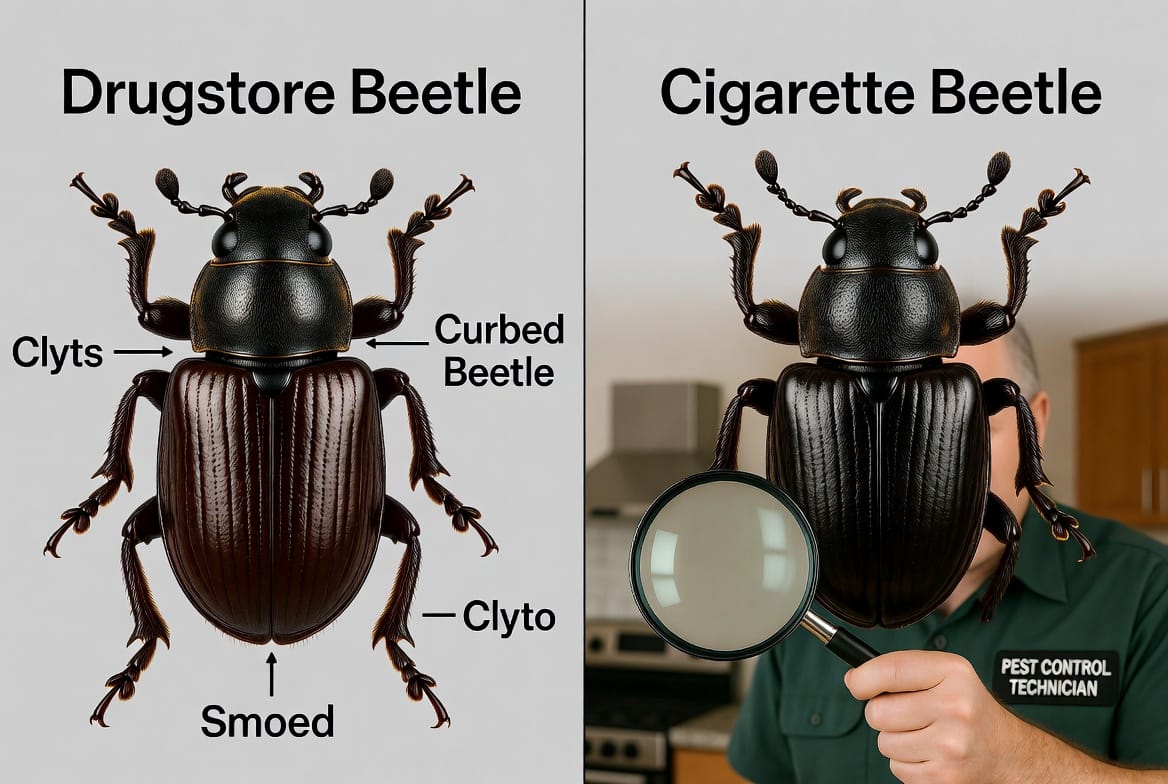
Side-by-Side Comparison: Drugstore Beetle vs. Cigarette Beetle
| Feature | Drugstore Beetle | Cigarette Beetle |
|---|---|---|
| Body Shape | More elongated, cylindrical | Rounded, oval, humpbacked |
| Elytra | Grooved/striated with pits | Smooth or faintly grooved |
| Antennae | 3-segmented club at tip | Serrated (saw-like) throughout |
| Larval Hairs | Shorter hairs | Longer, yellowish-brown hairs |
| Primary Feeding | Larvae mainly | Both adults and larvae |
| Preferred Climate | More temperate | Thrives in tropical/subtropical |
These differences, especially antennae structure and elytra texture, are reliable under magnification. If you're unsure, professional inspection ensures accuracy.
Common Signs of Infestation in Your Home or Business
Early detection prevents widespread issues:
- Small round exit holes in packaging or products.
- Fine powdery frass accumulating on shelves.
- Live or dead beetles near windows, pantries, or storage.
- Unusual odors or webbing in severe cases.
- Damage to spices, flour, pet food, or tobacco products.
Both species contaminate food with frass and cast skins, posing risks to food safety and quality. Bold action at the first sign protects your investments.
Why Treatments Differ: Tailored Approaches for Success
Although both beetles respond to sanitation and exclusion, nuances matter:
- Drugstore Beetle: Focus on thorough larval habitat removal since adults feed less. Freezing or heat treatments target hidden stages effectively.
- Cigarette Beetle: Address active adult populations with monitoring traps, as they fly and spread quickly.
Integrated Pest Management (IPM) strategies we recommend include:
- Sanitation: Empty and clean all cabinets, vacuum cracks thoroughly.
- Inspection: Check all stored goods, including rarely used items.
- Proper Storage: Use airtight glass or plastic containers.
- Monitoring: Pheromone traps help detect early activity.
- Professional Treatment: Safe, targeted applications when needed.
Avoid generic sprays alone — they rarely solve the root issue. Our team uses science-backed methods for long-term results.

Prevention Strategies: Building Long-Term Defense
Prevention is always more effective (and less costly) than reaction. Implement these proactive measures:
- Rotate stock using the FIFO (first-in, first-out) method.
- Store susceptible items in the freezer for 4-7 days upon purchase.
- Maintain low humidity and good ventilation in storage areas.
- Seal entry points around windows, doors, and pipes.
- Regular deep-cleaning schedules for pantries and warehouses.
- Professional annual inspections for high-risk properties.
By staying vigilant, you minimize risks significantly.
Real-World Scenarios and Case Insights
Consider a typical kitchen infestation: A homeowner notices small beetles in spice jars. Upon closer look and professional evaluation, it's identified as cigarette beetles due to serrated antennae. Treatment focused on discarding affected items, deep cleaning, and installing traps yielded rapid resolution without recurrence.
In another case, grooved-wing beetles in a pharmaceutical storage area pointed to drugstore beetles. Tailored heat treatment and enhanced sealing protected valuable inventory.
These examples highlight why expert identification saves time and ensures success.
Health and Economic Impacts
Beyond visible damage, these pests can introduce allergens and contaminate food supplies. In commercial settings, infestations lead to product recalls, lost revenue, and reputational harm. Prompt, professional intervention mitigates these risks effectively.
When to Call the Experts
DIY efforts work for minor issues, but persistent or large-scale problems demand expertise. Our certified technicians provide:
- Accurate on-site identification.
- Customized treatment plans.
- Follow-up monitoring.
- Preventive guidance.
Don't let confusion between drugstore and cigarette beetles compromise your space. Correct identification paves the way for swift, lasting solutions.
We're committed to delivering authoritative, reliable service that restores your peace of mind.
With the right knowledge and support, you can confidently manage and prevent these common pantry pests. Protect what matters most — contact us now.
Protect Your Pantry from Drugstore & Cigarette Beetles – Call Now