The Drugstore Beetle: Pests of Spices, Flour, and Dry Goods

Pantry pests can turn your carefully stocked kitchen into an unexpected challenge, and few are as persistent or widespread as the drugstore beetle. These small storage pests have earned their reputation by thriving in everyday household staples that many homeowners assume are safe. Whether you run a busy restaurant, manage a large family kitchen, or simply value a well-organized pantry, understanding this insect is the first step toward lasting peace of mind.
Eliminate Drugstore Beetles Today – Call for Inspection
At first glance, the drugstore beetle may seem insignificant, yet its ability to infest a surprising variety of dried goods makes it a formidable opponent. From aromatic spices to fine flour and even non-food items like books or furniture, this pest quietly compromises your storage areas. The good news is that with the right knowledge, prompt action, and professional support when needed, you can eliminate the threat and safeguard your home. This comprehensive guide walks you through identification, behavior, risks, and proven elimination strategies so you can protect what matters most.
Identifying the Drugstore Beetle
Accurate identification is essential for effective pest control. The drugstore beetle is a small, cylindrical insect measuring roughly 2 to 3 millimeters in length. Its body is typically a uniform reddish-brown to dark brown color, with a distinctive hump-backed appearance when viewed from the side. One of its most reliable visual markers is the way its head is partially tucked under the thorax, giving it a compact, rounded profile.
Unlike some larger pantry beetles, the drugstore beetle has relatively long antennae that are segmented and slightly clubbed at the tips. Adults are capable flyers, which allows them to move between storage areas more easily than many people realize. If you notice tiny beetles crawling across shelves or flying near light sources in your kitchen, take a closer look—their size and shape often confirm the presence of this particular species.
Larvae, which do most of the actual feeding damage, are creamy-white, C-shaped grubs with tiny legs and brown head capsules. They are rarely seen because they remain hidden inside packaging, boring through paper, cardboard, or even thin plastic. The presence of fine, powdery frass (insect waste) resembling tiny coffee grounds near packages is another telltale sign that should prompt immediate attention.
Early detection prevents small problems from becoming major infestations. Because these beetles can complete their life cycle in as little as two months under warm conditions, regular pantry checks are a simple yet powerful habit that every homeowner should adopt.
Understanding Drugstore Beetle Behavior and Life Cycle
The drugstore beetle is a true generalist when it comes to food sources. It readily infests spices, herbs, flour, dried fruits, cereals, pet food, dried flowers, and even tobacco products. Historically, the name “drugstore beetle” arose because these insects were frequently found in pharmacies feeding on medicinal herbs and powdered drugs. Today, they continue to target any dried organic material that provides nutrition.
Their life cycle follows four distinct stages—egg, larva, pupa, and adult—each contributing to the spread of infestation. Females lay up to 100 eggs directly on or near suitable food sources. Once hatched, the larvae tunnel into packaging and feed voraciously for several weeks, leaving behind contamination and structural damage. After pupating, the new adults emerge, mate, and continue the cycle. Because adults can live for several months and are mobile, a single unnoticed package can quickly lead to widespread issues across your entire pantry.
What makes this pest particularly challenging is its ability to survive on minimal resources and to infest items you might not immediately associate with food storage. They have been known to bore into books (feeding on the glue), wooden furniture (if it contains organic residues), and even wool fabrics in some cases. This broad host range means that a seemingly isolated problem in the spice cabinet can migrate to other areas of the home if left unchecked.
Professional insight shows that temperature and humidity play major roles in how quickly these beetles multiply. Warm, dry kitchens accelerate development, which is why pantries in warmer climates often require extra vigilance. Understanding this behavior empowers you to stay one step ahead rather than reacting after damage has already occurred.
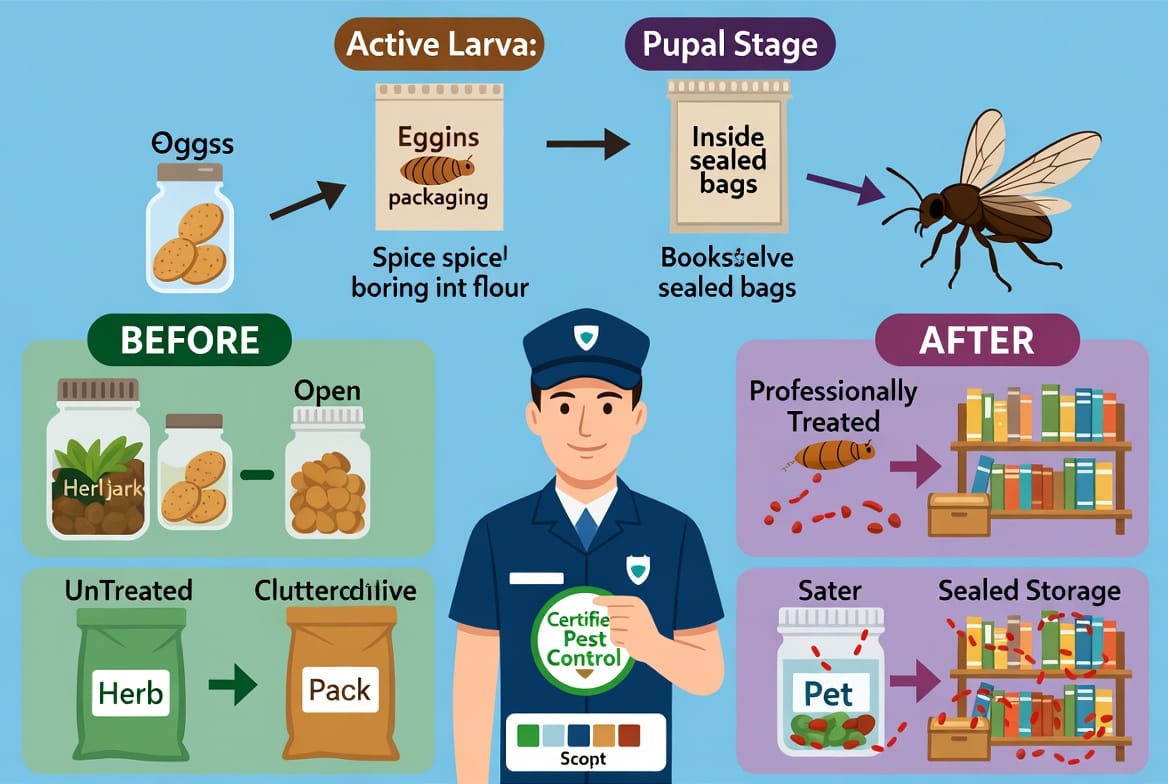
Items Most Vulnerable to Drugstore Beetles
Knowing which household items are at highest risk helps you focus your inspection efforts. The following categories represent the most common targets:
- Spices and dried herbs – Paprika, chili powder, cumin, oregano, and bay leaves are especially attractive due to their concentrated flavors and oils.
- Flour and baking mixes – Any wheat-based or grain product stored in paper or thin plastic packaging can become a breeding ground.
- Pet food and treats – Dry kibble, bird seed, and chews often go overlooked but provide ideal nutrition.
- Dried flowers and potpourri – Decorative items containing plant material are surprisingly susceptible.
- Books, papers, and furniture – The glue and organic binders in older books or wooden pieces can sustain larvae.
- Wool and natural fabrics – In rare cases, these beetles may damage stored wool items if other food sources are limited.
By keeping these vulnerable items in mind, you can create a targeted monitoring routine that protects your entire home.

Recognizing the Signs of Infestation Early
Look for these practical indicators during routine checks:
- Small round exit holes in packaging
- Fine powdery residue accumulating on shelves
- Adult beetles crawling or flying near windows or lights
- Clumping or unusual odors in flour and spices
- Webbing or silk-like threads inside containers (though less common than with other pests)
Catching these signs promptly limits the scope of the problem and makes elimination far simpler.
The Real Risks and Why Action Matters
While drugstore beetles do not transmit diseases like some other household pests, they create significant secondary issues. Contaminated food must be discarded, leading to unnecessary waste and expense. Their presence can also affect the flavor and quality of remaining items, and in commercial settings, it may raise compliance concerns. Most importantly, an unchecked infestation erodes confidence in your kitchen’s cleanliness.
The reassuring truth is that these risks are entirely manageable. Early intervention combined with proper storage practices virtually eliminates long-term problems.
Proven Elimination and Prevention Strategies
Effective control begins with discarding infested items. Remove and dispose of any packages showing signs of activity—do not attempt to salvage them, as larvae may already be inside. Thoroughly vacuum shelves, cracks, and crevices, then wipe surfaces with a mild vinegar solution to remove residual odors and eggs.
Prevention is equally important:
- Store all dry goods in airtight glass or thick plastic containers
- Check new purchases carefully before adding them to your pantry
- Maintain cool, dry conditions whenever possible
- Rotate stock so older items are used first
- Schedule periodic deep-cleaning sessions
When an infestation has already taken hold or when you prefer guaranteed results, professional inspection provides the authoritative solution. Trained technicians use targeted methods to locate hidden sources and apply safe, effective treatments that reach areas homeowners often miss.
When to Call for Professional Inspection
If you discover beetles in multiple locations, notice recurring activity after cleaning, or simply want expert reassurance, do not hesitate to reach out. A single visit can identify the extent of the issue, eliminate the current population, and establish preventive barriers that keep your pantry protected for the long term.
Protecting Your Home with Confidence
The drugstore beetle may be small, but its impact on your pantry and peace of mind can be significant if ignored. By understanding its identification, behavior, and the items it targets, you gain the power to act decisively. Consistent monitoring, smart storage habits, and professional support when needed ensure that your spices, flour, dry goods, and other valuables remain safe and usable.
Take a moment today to check your pantry for hidden pests. A quick inspection now can prevent weeks of frustration later. For thorough assessment and reliable pest control solutions tailored to your home. Our team is ready to help you restore order and confidence to your kitchen storage areas—quickly, safely, and completely.
Secure Your Spices & Flour – Professional Help Now