The Downspout Extension Guide: Lengths, Materials, and Discharge Options for Foundation Protection
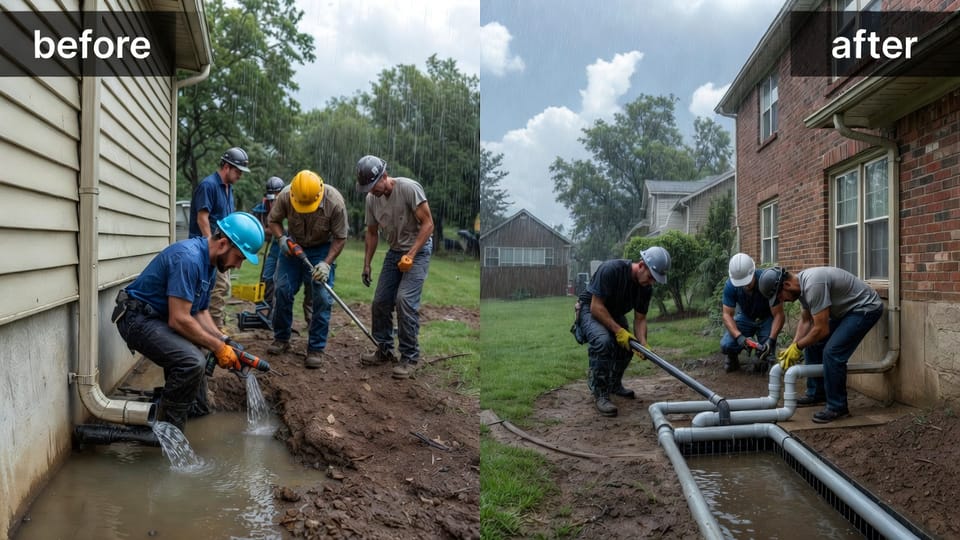
Protecting your home's foundation from water damage is a homeowner's top priority, and the downspout extension serves as the critical final step in any effective gutter system. Without it, even the best gutters can fail, leading to costly repairs like basement flooding or structural cracks. In this comprehensive guide, we'll explore everything you need to know about downspout extensions: their ideal lengths, material choices, and discharge options. Whether you're dealing with a sloped yard or urban landscaping, choosing the right extension ensures water is directed far from your home's base. Rest assured, with the right knowledge, you can safeguard your property effectively and affordably.
Get Expert Downspout Extensions Today – Call Now
Why Downspout Extensions Matter for Foundation Protection
Downspout extensions are more than just add-ons; they're essential for preventing erosion, soil saturation, and foundation instability. Rainwater from your roof can accumulate thousands of gallons during a storm, and if it's discharged too close to your home, it creates splashback – water rebounding against walls or seeping into the ground near the foundation. Over time, this leads to hydrostatic pressure, where water pushes against your foundation walls, potentially causing cracks, leaks, or even shifts in the structure.
Experts recommend extending downspouts at least 5-10 feet away from the foundation, but this can vary based on your soil type, roof size, and local rainfall patterns. For instance, in areas with clay-heavy soil, which expands when wet, longer extensions are crucial to avoid heaving. By investing in proper extensions, you're not just protecting your home – you're enhancing its longevity and value. Don't worry; we'll break down the options so you can select what's best for your setup.
Understanding Downspout Extension Lengths
The length of your downspout extension is pivotal for effective water diversion. Too short, and you risk immediate splashback; too long without proper support, and it could sag or detach. Here's how to determine the right length:
- Assess Your Landscape: Measure the distance from your downspout to a safe discharge point, like a grassy area or storm drain. Aim for a minimum of 5 feet on flat ground, but increase to 10-20 feet if your yard slopes toward the house.
- Roof Size and Rainfall Considerations: Larger roofs collect more water, so extensions should be longer in high-rainfall regions. For a 1,500-square-foot roof, a 10-foot extension is often ideal to handle average storms without overflow.
- Custom Adjustments: In compact urban lots, you might need shorter, angled extensions to avoid neighboring properties. Always ensure the endpoint is downhill to promote natural flow.
By calculating these factors, you can avoid common pitfalls like pooling water or ice dams in winter. Remember, proper length isn't guesswork – it's a calculated step toward robust foundation protection.
Exploring Material Options for Durability and Performance
Downspout extensions come in various materials, each suited to different needs and budgets. We'll cover the main types, highlighting their strengths to help you decide confidently.
Flexible Vinyl Extensions: Affordable and Temporary Solutions
Flexible vinyl extensions are the go-to for quick, budget-friendly fixes. Made from lightweight, corrugated plastic, they unroll easily and connect via simple adapters.
- Pros: Inexpensive (often under $10 per unit), easy to install without tools, and highly adaptable to uneven terrain. They're perfect for temporary use during heavy rain seasons.
- Cons: Less durable, prone to cracking in extreme cold or UV degradation over time. Not ideal for permanent setups as they can kink or flatten under foot traffic.
- Best For: Renters or homeowners testing drainage before committing to something more robust. Extend them 4-6 feet for basic protection.
While not a long-term hero, vinyl options provide immediate relief, buying you time to plan a more permanent solution.
Rigid Plastic or Metal Extensions: Permanent and Reliable Choices
For lasting foundation safeguarding, rigid plastic or metal extensions shine. These straight, sturdy pieces – often in PVC, aluminum, or galvanized steel – offer superior strength.
- Plastic Variants: Lightweight and corrosion-resistant, PVC extensions are cost-effective ($15-30) and easy to cut to length. They handle moderate flows well but can brittle in freezing temps.
- Metal Options: Aluminum or steel provides unmatched durability against weather and impacts. Priced higher ($20-50), they're rust-resistant with proper coatings and ideal for high-traffic areas.
- Installation Tips: Secure with brackets or elbows for stability. Opt for 6-12 foot lengths to direct water far, reducing erosion risks.
These materials ensure water is channeled efficiently, giving you peace of mind through seasons of rain and snow.
Roll-Out Extensions: Automatic Convenience
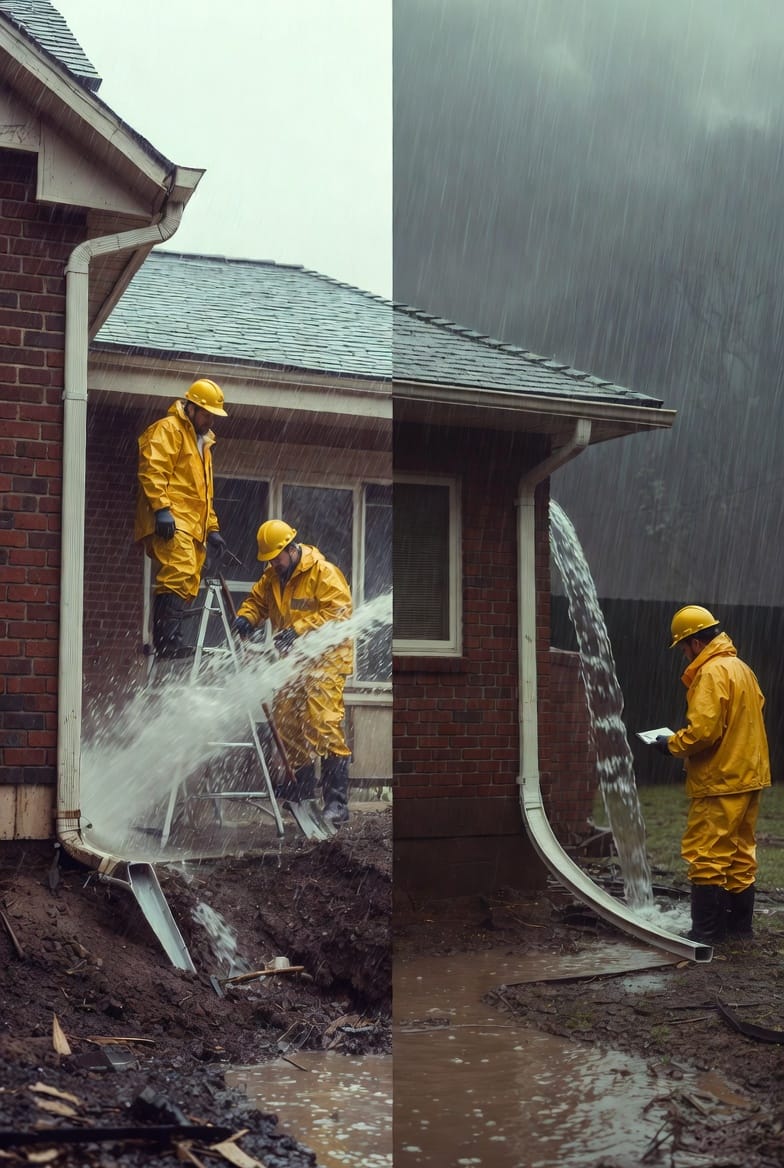
Roll-out extensions, also known as automatic or retractable types, combine flexibility with innovation. These perforated hoses expand when water flows through them and retract when dry.
- How They Work: Connected to your downspout, they unroll up to 50 feet during rain, then coil back for a tidy appearance. Made from durable vinyl or fabric, they're mower-friendly.
- Advantages: No manual adjustments needed; they prevent tripping hazards and maintain lawn aesthetics. Moderately priced ($20-40), they're effective for variable weather.
- Drawbacks: Can clog with debris if not cleaned regularly, and they're less suitable for very steep slopes where gravity might not fully retract them.
Ideal for busy homeowners, roll-outs automate water management, ensuring consistent protection without effort.
Buried Pipes: Discreet and Advanced Discharge
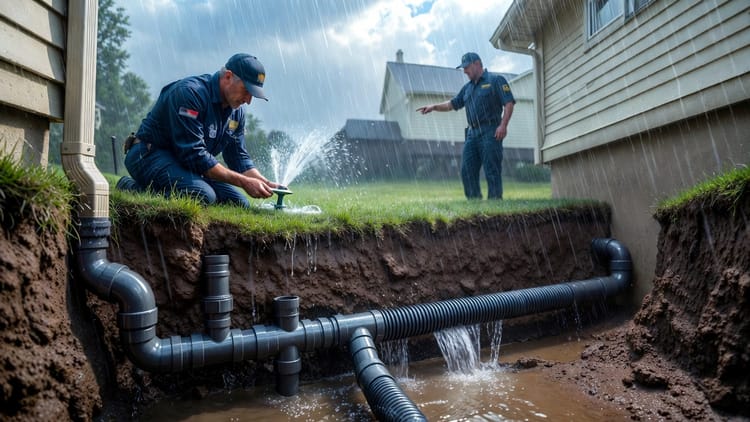
For a seamless, professional look, buried pipes (or underground extensions) are the ultimate choice. These involve PVC or corrugated pipes trenched below ground.
- Design and Setup: Pipes run from the downspout to a pop-up emitter or dry well, discharging water invisibly. Depths of 6-12 inches prevent freezing, with lengths up to 50 feet or more.
- Benefits: Eliminates visible clutter, reduces maintenance, and handles large volumes. Great for landscaped yards, preventing surface erosion.
- Considerations: Higher cost ($50-200, plus labor) and requires digging – ensure no utility lines are hit. Professional installation is recommended for slopes over 5%.
Buried systems provide discreet, high-performance foundation defense, blending functionality with curb appeal.
Discharge Options: Where and How to Release Water Safely
Once extended, where does the water go? Proper discharge options prevent new problems like yard flooding or neighbor disputes.
- Surface Discharge: Direct to permeable areas like grass or mulch beds. Use splash blocks to diffuse flow and avoid soil washout.
- Dry Wells or French Drains: For poor-draining soils, bury a gravel-filled pit to absorb water gradually.
- Storm Drains or Swales: Connect to municipal systems if permitted, or natural low points in your yard.
Always comply with local codes to avoid fines. Effective discharge turns potential hazards into managed resources, like irrigating gardens.
Choosing the Right Extension Based on Landscape and Needs
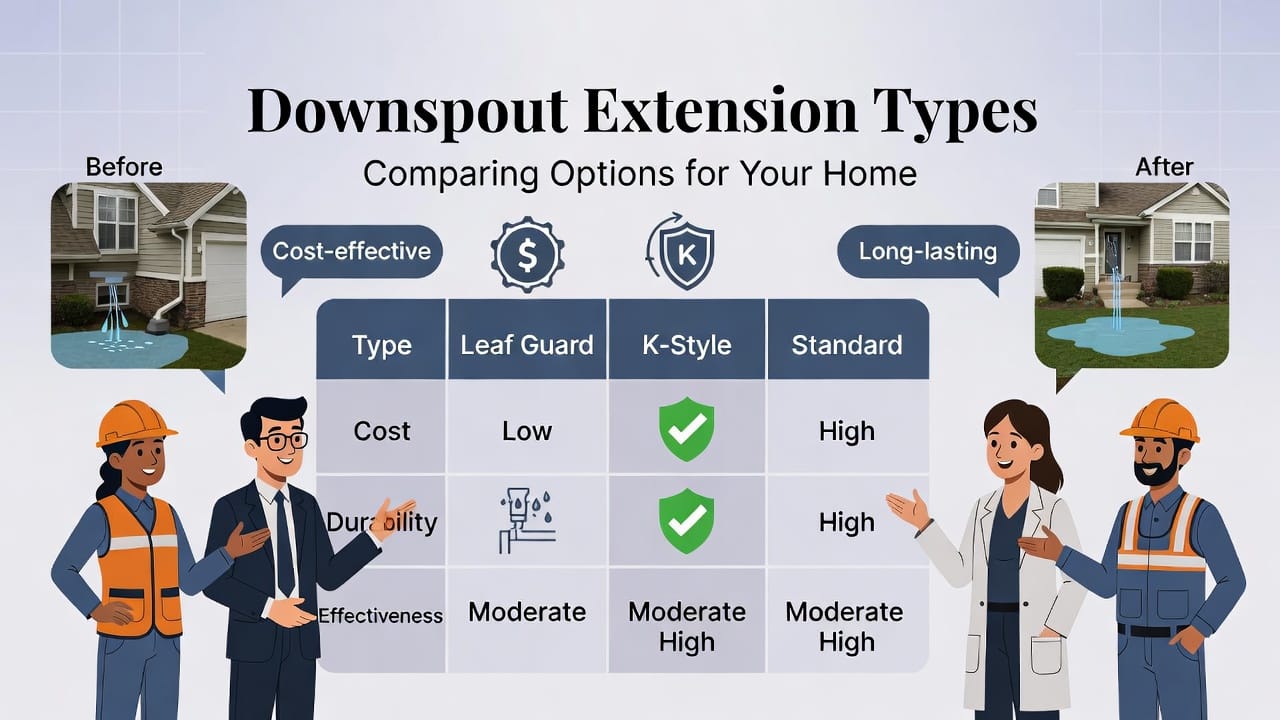
Selecting the best downspout extension boils down to your property's specifics. Here's authoritative guidance:
- Flat Yards: Opt for longer rigid or buried options to push water away effectively.
- Sloped Landscapes: Flexible or roll-outs adapt well, preventing uphill backflow.
- Budget Constraints: Start with vinyl, upgrade to metal for longevity.
- Aesthetic Preferences: Buried pipes for invisibility; roll-outs for convenience.
Factor in maintenance: Metal lasts 20+ years, vinyl 2-5. By matching to your needs, you'll achieve optimal water redirection without overcomplicating things.
Installation Best Practices and Common Mistakes to Avoid
Proper installation maximizes effectiveness. Follow these steps:
- Gather Tools: Screwdrivers, sealants, measuring tape.
- Attach Securely: Use elbows and straps to prevent detachment.
- Test Flow: Run water to check for leaks or blockages.
Avoid errors like ignoring slope (water won't flow uphill) or skipping debris guards. If unsure, consult pros – it's a small investment for big protection.
Maintenance Tips for Long-Term Success
Keep extensions performing with routine care:
- Clean Regularly: Remove leaves and dirt quarterly.
- Inspect for Damage: Check for cracks after storms.
- Winter Prep: Disconnect flexibles to avoid ice buildup.
Consistent upkeep ensures your system remains a reliable shield against water threats.
Environmental and Cost Benefits
Beyond protection, extensions promote sustainability by reducing runoff pollution and conserving water. Cost-wise, preventing foundation repairs (averaging $5,000+) far outweighs extension expenses. It's a smart, eco-friendly choice.
In conclusion, the downspout extension is your gutter system's unsung hero, directing water safely and preserving your foundation. Whether you choose flexible vinyl for quick relief, rigid metal for endurance, roll-outs for automation, or buried pipes for discretion, the key is action. Move water far from your foundation today.
Upgrade Your Gutters & Save Your Foundation – Call for Expert Advice