The Door Reinforcement Strike Plate: Strengthening Entry Points
Your front door is the primary barrier between your family and the outside world. Yet many homeowners underestimate how easily a determined intruder can defeat a standard entry point with a simple kick. Door reinforcement strike plates offer one of the most effective, affordable upgrades in physical home security. By replacing weak factory hardware with a heavy-duty plate secured by long screws, you create a connection to the structural framing of your home that resists forced entry far better than anything else.
Stop Kick-In Attacks Now – Get Reinforced Doors
In this comprehensive guide, we explore why standard strike plates fail, how 3-4 inch screws transform door security, and the step-by-step process to strengthen your entry points. Whether you own a single-family home, townhouse, or apartment, these proven upgrades deliver peace of mind without complicated technology or expensive overhauls.
The Hidden Vulnerability: Why Standard Strike Plates Fail
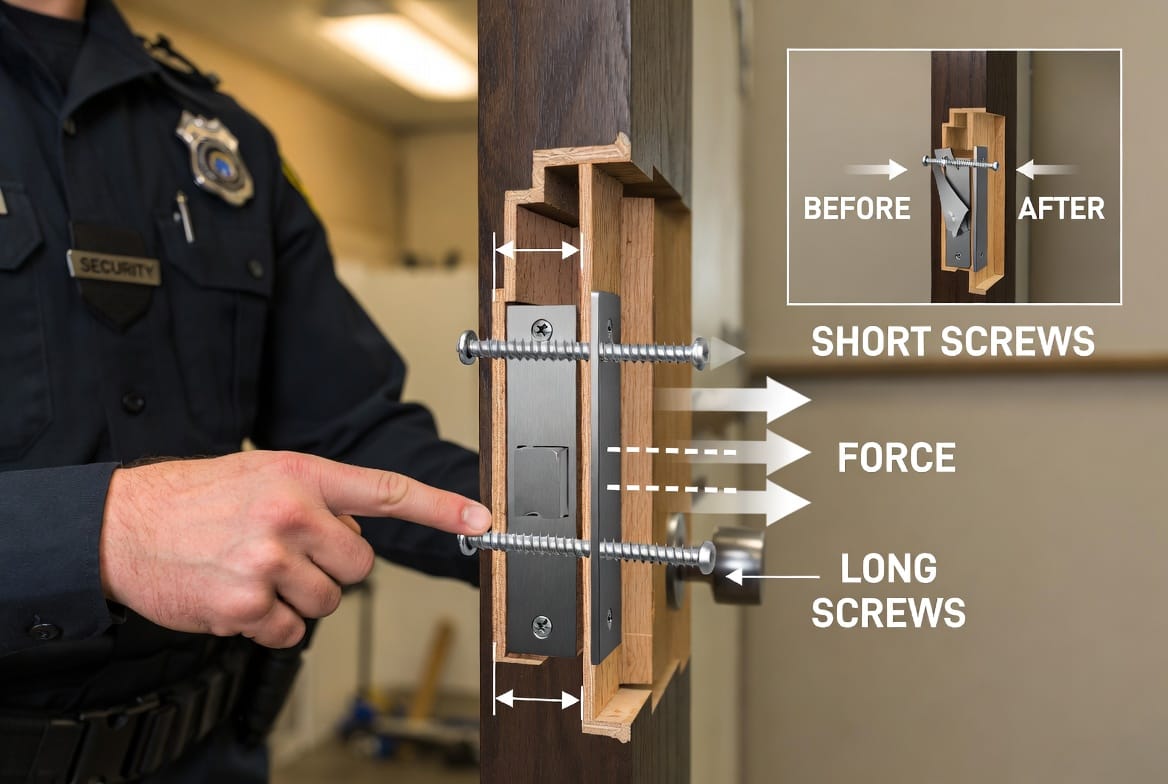
Most residential doors come equipped with a basic strike plate – the small metal rectangle mounted on the door jamb that the deadbolt or latch slides into. These plates are typically held in place by short screws, often only ¾ inch to 1 inch long. Those screws anchor solely into the thin door jamb, which is usually made of soft pine or composite material.
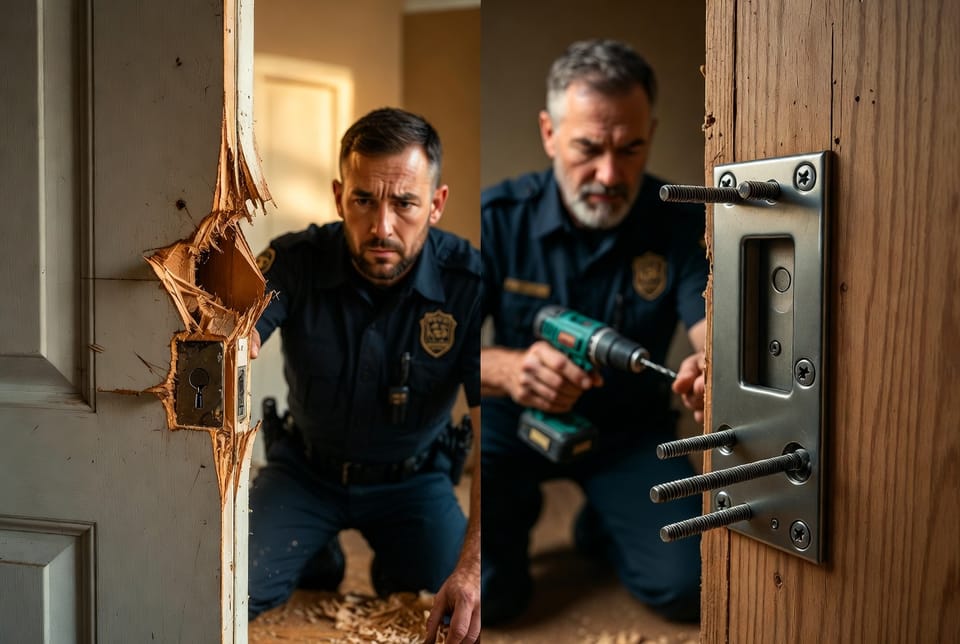
When an intruder delivers a powerful kick near the lock area, the force concentrates on those short screws and the narrow jamb. The jamb simply splits or tears away from the frame, allowing the door to swing open in seconds. Law enforcement reports consistently show that kick-in attacks account for a significant portion of residential break-ins because they require no tools, make minimal noise, and take less than 10 seconds to execute.
Standard strike plates create a false sense of security. They look adequate, but they do not tie the door to the house’s structural elements. The result? A door that feels solid yet collapses under targeted pressure. Upgrading to a door reinforcement strike plate changes this equation entirely by distributing force across the entire door frame and into the wall studs.
Understanding the Mechanics of a Kick-In Attack
Imagine the physics at play. A forceful kick applies hundreds of pounds of pressure directly to the lock area. The latch or deadbolt pushes against the strike plate, which then transfers that energy to the short screws. Because those screws have minimal thread engagement in the jamb, they pull out easily, often ripping the plate and surrounding wood with them.
This vulnerability exists on both exterior doors and interior entry points from garages or side entrances. Even doors with high-quality deadbolts remain weak if the strike plate cannot hold. The jamb itself becomes the weakest link – a thin strip of wood that was never designed to withstand blunt force.
Homeowners often discover this reality the hard way after an incident. The repair involves replacing not just the strike plate but frequently the entire jamb and frame, leading to higher costs and prolonged exposure. Preventing the problem with a reinforced strike plate is far smarter and more economical.
The Solution: How a Door Reinforcement Strike Plate Works
A quality door reinforcement strike plate is constructed from heavy-gauge steel, typically 12- or 14-gauge, and features a larger surface area than standard plates. It wraps around or extends along the door jamb for maximum support. The real strength, however, comes from the mounting hardware.
Instead of short screws, these plates use 3-4 inch screws that penetrate completely through the jamb and deep into the solid framing studs behind it. These studs – usually 2x4 or 2x6 lumber – form the structural backbone of your walls. By anchoring directly into them, the strike plate essentially makes the door part of the house’s framework.
The difference is dramatic. Where a standard setup might withstand a few kicks before failing, a properly installed reinforced plate can resist repeated heavy impacts. The long screws create a mechanical bond that transfers force away from the vulnerable jamb and into the much stronger studs.
Key benefits include:
- Dramatically increased resistance to kick-in attacks
- Minimal visual change – the upgrade remains discreet
- Compatibility with most wood, fiberglass, and metal doors
- Quick installation that homeowners or professionals can complete in under an hour
- Long-term durability with no ongoing maintenance required
Why 3-4 Inch Screws Deliver Superior Strength
The magic lies in the length and placement of the screws. A 3- to 4-inch screw travels through the strike plate, the door jamb, and at least 1.5 to 2 inches into the king stud or header framing. This creates a rock-solid connection that distributes impact force across a much larger and stronger area.
Short screws rely only on the jamb’s thin material for holding power. Longer screws engage the structural framing, which is engineered to support the weight of the entire house. The result is exponential improvement in holding strength – often 10 to 20 times greater than factory hardware.
Professional installers recommend 3-inch screws for standard residential framing and 4-inch screws when extra depth is available. These screws should be high-quality hardened steel with deep threads designed specifically for wood. Avoid drywall screws or generic fasteners; they lack the shear strength needed for security applications.
When installed correctly, the reinforced strike plate prevents the door from being pried or kicked open. The frame itself becomes the defender rather than the victim. Homeowners report a noticeable difference in door solidity immediately after installation – the door feels heavier and more substantial when closed.
Professional Installation: Step-by-Step Guide
Installing a door reinforcement strike plate is straightforward and requires only basic tools. For best results, follow these steps:
- Remove the existing strike plate and screws
- Align the new reinforced plate precisely with the deadbolt and latch positions
- Mark and pre-drill pilot holes to prevent wood splitting
- Drive the 3-4 inch screws firmly into the framing studs
- Test the door operation to ensure smooth closing and locking
- Add matching screws to the hinge side for balanced security
While many homeowners complete this upgrade themselves, professional installation ensures perfect alignment and maximum strength. A trained technician can also inspect the entire door system and recommend complementary upgrades.
Comprehensive Door Hardening: Building Layers of Protection
A reinforced strike plate forms the foundation, but complete entry-point security involves additional layers. Pair it with a deadbolt featuring a 1-inch throw for deeper engagement into the reinforced plate. Choose a solid core door whenever possible – these resist battering far better than hollow-core models.
Essential door hardening tips include:
- Reinforced strike plate with 3-4 inch screws
- Deadbolt with 1-inch throw for secure locking
- Solid core door rated for security applications
- Reinforced hinges with long security screws
- Security film or bars on nearby windows
- Proper door alignment and weatherstripping maintenance
These upgrades work together to create multiple obstacles for would-be intruders. Each layer buys precious time for law enforcement response while deterring casual criminals who seek quick, easy targets.
Real-World Impact and Why This Upgrade Matters
Homeowners who install door reinforcement strike plates consistently report greater confidence in their property’s safety. The upgrade is cost-effective – often under $50 in parts – yet delivers professional-grade protection. Unlike electronic systems that require power and maintenance, this physical solution works 24/7 without batteries or Wi-Fi.
In high-risk areas or for families with valuable possessions, this simple change can deter threats before they escalate. Insurance companies sometimes offer premium discounts for documented security improvements, adding financial benefits to the safety gains.
The psychological advantage cannot be overstated. Knowing your entry points are structurally reinforced allows you to sleep soundly, travel confidently, and focus on what matters most – your family’s well-being.
Stop Kicks with Simple Hardware Upgrades
Strengthening your doors does not require a complete security overhaul. A door reinforcement strike plate secured with 3-4 inch screws provides immediate, measurable improvement in physical security. This upgrade addresses the most common point of failure and creates a robust barrier that intruders cannot easily overcome.
At just a fraction of the cost of other security measures, it delivers outsized protection. Your home deserves entry points as strong as the family living behind them.
Ready to fortify your doors? Contact our security specialists today to discuss professional door reinforcement options tailored to your property.
Upgrade Your Door Security – Free Assessment Today